Puma Yu's
Our verdict
Puma Yu's occupies a suite address in Athens, Georgia's Oneta Street, operating at the quieter edge of the city's independent dining circuit. Athens, GA carries a genuinely active food scene shaped by university culture and a preference for locally sourced, independent operators.

Pearl is the En Primeur Club membership app — saves, bookings, and concierge access live there. Same editors, same standards.
- Address
- 355 Oneta St Suite D400A, Athens, GA 30601
- Phone
- (706) 850-0709
- Hours
- Mon–Thu 5–9:30 PMFri–Sat 12–10:30 PMSun Closed
- Website
- pumayus.com
- Directions
- Get directions
- Booking
- Book on Resy
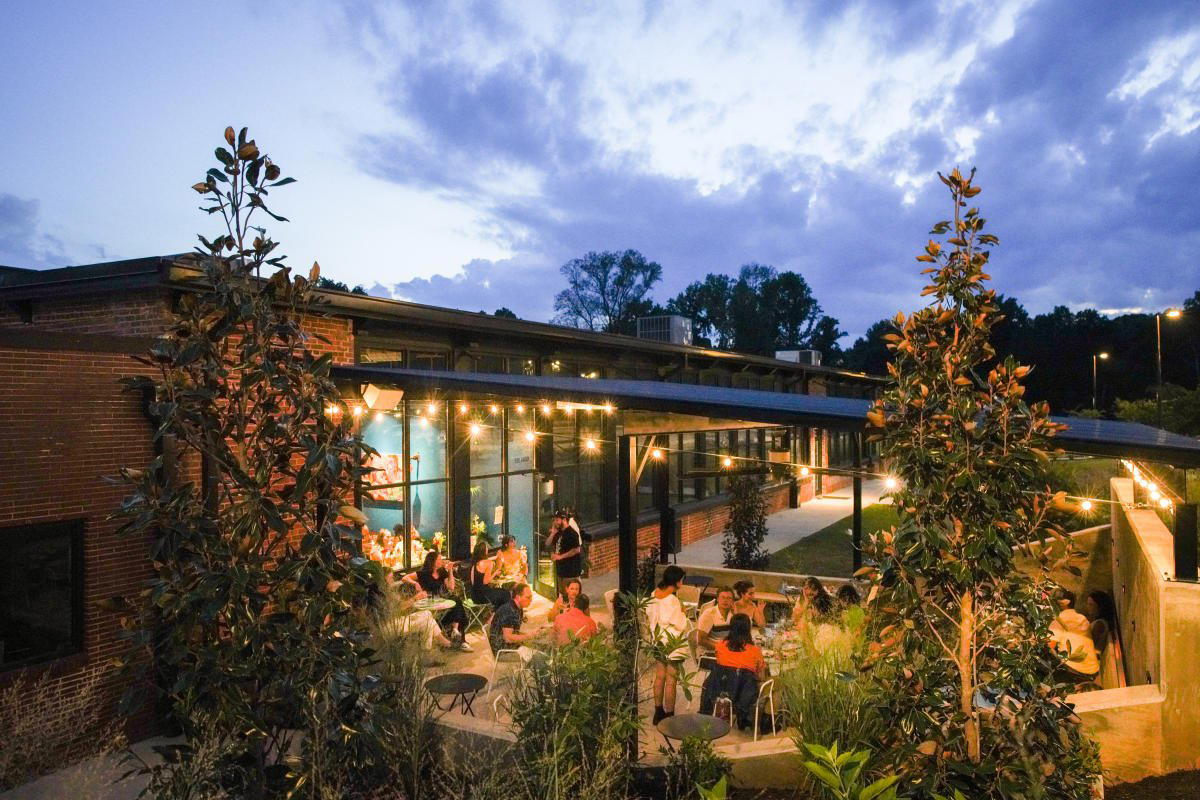
The menu
What to order
- Bone-in Pork Chop
- Yellow Curry Catfish
- Lamb Shank Hung Lay Curry
- Fried Whole Branzino
Athens, Georgia and the Independent Dining Circuit
Athens, Georgia does not follow the script of a typical mid-sized Southern city. The presence of the University of Georgia has, over decades, generated an unusually engaged dining public: people who travel for food, read menus carefully, and return to places that do something with specificity. That pressure on operators has produced a cluster of independent restaurants across the city that compete less on scale and more on clarity of concept. Puma Yu's, at 355 Oneta Street, Suite D400A, sits within that broader pattern. The Oneta Street address places it at some remove from the more trafficked corridors of downtown Athens, in a configuration that tends to attract deliberate visitors rather than passing trade.
The American South has seen a meaningful shift in how its smaller cities approach sourcing. Across Georgia, Alabama, and the Carolinas, a generation of operators has moved away from broad-spectrum supply chains toward regional and hyper-local sourcing networks, often built on relationships with farms within two to three hours of the kitchen. That shift is not cosmetic: it changes what appears on menus seasonally, what the kitchen can commit to in advance, and how a concept positions itself against chain competitors. Where that sourcing ethos takes hold, it tends to define a venue's identity more durably than interior design or celebrity association. Puma Yu's address in Athens places it within a city where that philosophy has gained real traction among independent operators.
Ingredient Sourcing and the Athens Food Culture
Georgia's agricultural calendar is longer and more varied than most of the American interior. The state produces pecans, Vidalia onions, peaches, blueberries, peanuts, and a wide range of coastal and freshwater seafood from the Atlantic side. For kitchens that choose to work within state boundaries, there is genuine raw material to build from, particularly across spring, summer, and the early autumn months when the market offer is at its widest. Restaurants in Athens that have made local sourcing a structural commitment rather than a marketing note tend to shift their menus on shorter cycles, responding to what growers can actually deliver week to week rather than holding to a fixed printed card.
This approach carries tradeoffs. A kitchen built around seasonal and regional supply cannot guarantee the same dish across twelve months. It asks more of the kitchen in terms of adaptation, and it asks more of the diner in terms of flexibility. The restaurants in Athens that have navigated this framework most successfully are the ones with enough technical fluency to work with unfamiliar or surplus ingredients without the menu reading like a farmers' market stall list. The distinction between a restaurant that sources locally and one that cooks locally, in the sense of having absorbed the flavor logic of a region, is a meaningful one. Athens sits at the intersection of both pressures, and the better operators reflect that.
For context on how sourcing-led dining functions at the upper register of American restaurant culture, the model at Blue Hill at Stone Barns in Tarrytown represents the most architecturally complete version: the farm and the kitchen are on the same property, and the menu is dictated by what that system produces. Single Thread Farm in Healdsburg operates on a similar integration model, with farming, winemaking, and hospitality under one roof. At the ambitious end of urban sourcing programs, Lazy Bear in San Francisco and Providence in Los Angeles represent kitchens that built their reputations on sourcing discipline applied to tasting-menu formats. Puma Yu's operates in a different tier and at a different scale, but the cultural logic of prioritizing where food comes from over production convenience is a thread that connects independent operators across American cities regardless of price point.
Placing Puma Yu's in the Athens Context
Athens supports a range of independent dining formats, and the city's better-known venues offer useful reference points for understanding where newer or quieter operators position themselves. In the premium Greek restaurant world — a comparison set that becomes relevant if Puma Yu's menu draws on Mediterranean or Hellenic influence — venues like Botrini's and Hytra in Athens, Greece operate at the €€€ to €€€€ tier with strong editorial recognition. That bracket rewards consistency and sourcing integrity over opening-night buzz.
The Oneta Street location is a practical signal worth noting. Suite designations in that format often indicate a converted or subdivided space, which in American cities of Athens's size frequently houses the most interesting independent operators: lower overhead supports more experimentation, and distance from the main dining corridors tends to filter for guests who are coming specifically rather than accidentally. Comparable dynamics have produced some of the more interesting restaurant programs across the South, where physical modesty and culinary ambition frequently share the same address.
For readers building a broader Georgia or Southeast dining itinerary, the Atlanta-to-Athens corridor offers natural sequencing. At the national level, Addison in San Diego, Alinea in Chicago, The French Laundry in Napa, and Le Bernardin in New York City represent the upper anchors of American fine dining for trip planning context. For Southern dining specifically, Emeril's in New Orleans and The Inn at Little Washington in Washington illustrate how regionally inflected American cooking has been formalized at the highest level. Atomix in New York City and 8 1/2 Otto e Mezzo Bombana in Hong Kong round out the international comparison set for readers mapping global dining across a trip.
Planning a Visit
Puma Yu's current hours, reservation policy, and menu format are best confirmed directly with the venue, as public records for this address are limited. The 355 Oneta Street, Suite D400A location in Athens, GA 30601 is the confirmed address. Given the suite configuration, arriving with a confirmed booking rather than walking in is the more reliable approach. Athens is accessible from Atlanta via a roughly 90-minute drive on US-78, and the city's dining scene is concentrated enough that a one-night stay can cover multiple venues across the independent bracket. For a fuller map of the city's restaurant options, the EP Club Athens restaurants guide provides a broader picture of where the scene currently sits across price points and cooking styles.
Frequently asked questions
What part of town is Puma Yu's in?
Puma Yu's is located at 355 Oneta St Suite D400A, Athens, GA 30601, Athens.
Where exactly is Puma Yu's located in Athens, and what does the surrounding area offer?
Puma Yu's is at 355 Oneta St Suite D400A, Athens, GA 30601, a suite-format address that reflects the converted and shared commercial spaces increasingly common in Athens' independent food scene. The city's dining circuit in this part of Georgia has grown alongside UGA's cultural influence, meaning the surrounding area supports a mix of independent operators rather than chain-heavy corridors.
What's the best thing to order at Puma Yu's?
Puma Yu's current menu format and signature dishes are best confirmed directly with the venue at its 355 Oneta St location, as the kitchen's output reflects Athens' longer agricultural calendar and the city's preference for ingredient-led independent cooking. Athens restaurants in this circuit tend to rotate offerings around Georgia's seasonal produce, including Vidalia onions, pecans, and peaches, so what leads the menu shifts through the year.
Do I need a reservation for Puma Yu's?
Reservation policy at Puma Yu's, located at 355 Oneta St Suite D400A in Athens, GA, is best confirmed directly with the venue, as public booking records for this address are limited. Athens' stronger independent dining spots do fill on weekend evenings, so contacting the restaurant ahead of a visit is the practical approach.
What is Puma Yu's known for?
Puma Yu's operates within Athens, Georgia's independent dining circuit, a scene shaped over decades by the University of Georgia's presence and a consistent appetite for locally driven, non-chain restaurants. The venue's Oneta Street address places it in a part of Athens that supports distinctive, owner-operated food projects rather than franchise formats.
Is Puma Yu's good for vegetarians?
Athens restaurants drawing on Georgia's agricultural output, including vegetables like Vidalia onions and seasonal produce, frequently work plant-forward options into their menus, but this should be verified with the kitchen.
Similar Picks
Comparable venues nearby, for context on price, style, and recognition.
| Venue | Cuisine | Price | Awards | Notes |
|---|---|---|---|---|
| Puma Yu'sThis venue — the venue you are viewing | Southeast Asian Small Plates | $30–50 | Not listed | Not listed |
| N Oconee River Greenway | Dining | Not listed | Not listed | Athens Clarke County |
| Weaver D's | Southern Soul Food | Not listed | James Beard Award America's Classics | East Athens |
| White Tiger Athens | Southern BBQ and Burgers | Not listed | Not listed | Historic Boulevard District |
| Flama Brazilian Steak House | Brazilian Churrascaria | $30–50 | Not listed | University of Georgia area |
| Osteria Olio | Modern Northern Italian with Southern Twist | $50–100 | Not listed | Rivet House |