Prince's Hot Chicken Shack
Prince's Hot Chicken Shack is the Nashville institution that put hot chicken on the American culinary map. The format is stripped back and unapologetic: fried chicken coated in a cayenne-heavy paste, served on white bread with pickle chips. Among Nashville's diverse dining options, it represents the format in its most direct, least mediated form.
Pearl is the En Primeur Club membership app — saves, bookings, and concierge access live there. Same editors, same standards.
- Address
- Nashville, United States
- Website
- princeshotchicken.com
- Directions
- Get directions
 Saves & bookings on Pearl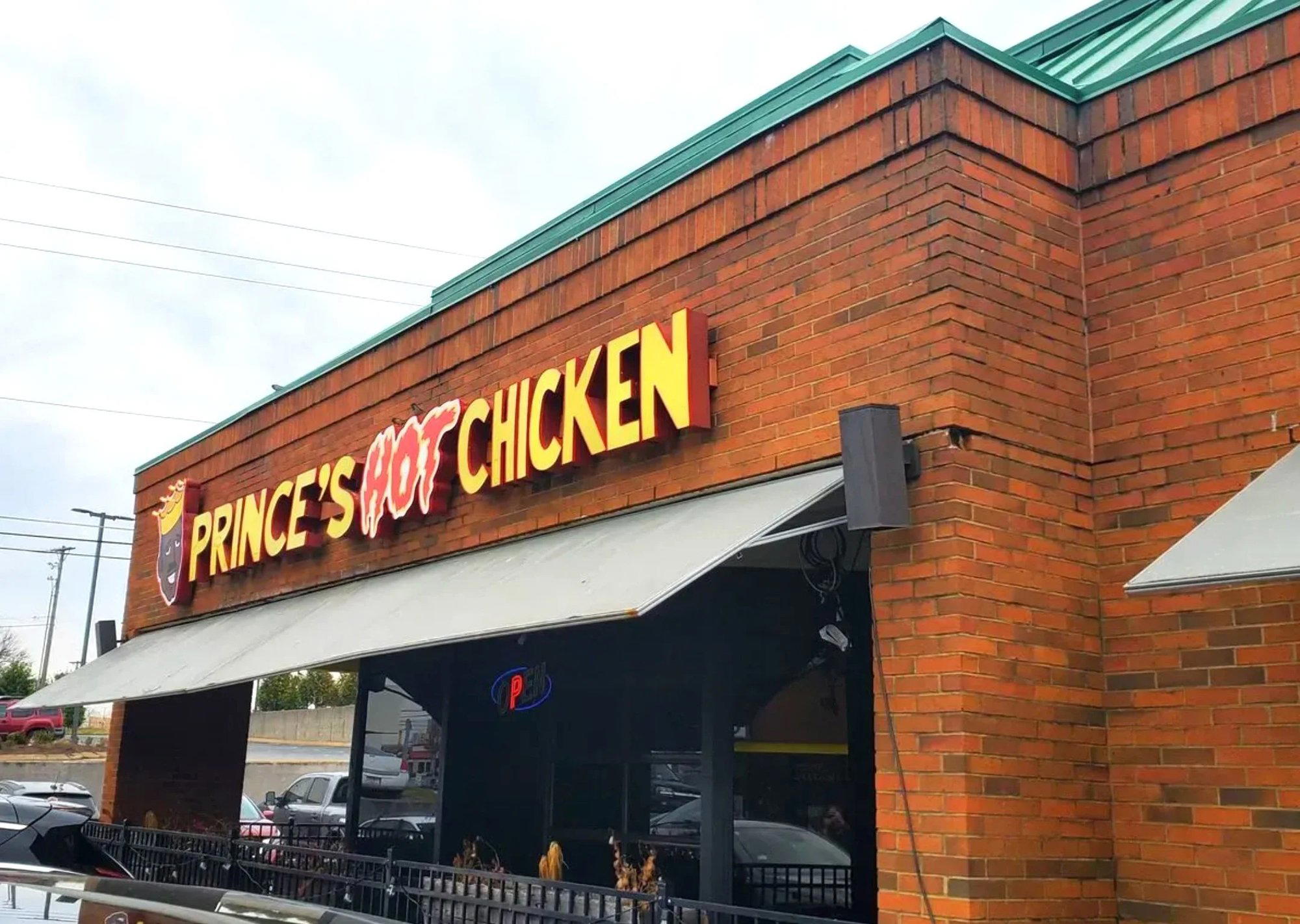
Where Nashville's Hot Chicken Tradition Runs Deepest
The smell reaches you before the signage does. Cayenne and frying oil carry through the air around Prince's Hot Chicken Shack in a way that no amount of climate control or architectural refinement could soften. This is not a space designed to soften anything. The counter-service format, the communal tables, the paper-lined trays: all of it signals that the food is the only point, and the food pulls no punches.
Hot chicken as a genre has traveled far since Prince's codified it. Nashville now has dozens of variations, from fast-casual chains to white-tablecloth reinterpretations. The Catbird Seat and Bastion represent the fine-dining end of the city's ambition; Locust and Peninsula the progressive Southern register. Prince's sits at none of those coordinates. It occupies the originating point of a tradition that those venues occasionally reference but cannot replicate, because the tradition here is not a technique borrowed from elsewhere. It grew on this site, in this format, over decades.
The Cayenne Paste and What It Actually Contains
Hot chicken's defining ingredient is not chicken. It is the spice paste applied after frying, a mixture built around cayenne pepper combined with fat rendered from the fry, plus a combination of spices that varies by heat level. The paste does not sit on top of the crust. It penetrates it, so that the outer layer carries heat throughout rather than delivering it only on contact. The result is sustained, cumulative: heat that builds rather than peaks and fades.
The sourcing logic embedded in this format is worth examining. Nashville hot chicken, at its foundational practitioners, was never about premium ingredient provenance in the sense that drives editorial discussion at places like Blue Hill at Stone Barns or Single Thread Farm in Healdsburg, where the sourcing story is the primary frame. Here, the sourcing is democratic by design. The cayenne is not estate-grown. The bird is not heritage breed. What matters is the ratio, the temperature of the fry, and the timing of the paste application. The craft is in the process, not the supply chain, which makes it a different kind of discipline from what drives the tasting-menu tier.
This distinction matters for understanding why the format has proven so durable. Ingredient-forward restaurants are tethered to seasonal availability and supplier relationships. Hot chicken in the Prince's tradition is tethered to technique and consistency. The dish you receive in February should be indistinguishable from the dish in August. That repeatability is itself a form of mastery, one that gets less editorial credit than farm-to-table lineage but requires no less attention to maintain.
Nashville's Dining Range and Where Prince's Sits Within It
Nashville's food scene has diversified sharply over the past decade. The city now supports a Catbird Seat operating at a level comparable to serious tasting-menu formats in any major American city, alongside neighborhood anchors like 12 South Taproom and Grill and quick-service staples drawing locals and visitors in roughly equal measure. Within that range, Prince's Hot Chicken Shack occupies a specific position: it is the reference point against which every subsequent hot chicken interpretation in the city is measured, whether the newer operators acknowledge that or not.
The comparison set for Prince's is not regional fine dining. It is not Le Bernardin, not The French Laundry, not Atomix. The relevant comparable set is the small group of American counter-service formats that have become load-bearing parts of their city's food identity: places that anchor a tradition rather than interpret one. Emeril's in New Orleans, for instance, operates in a different format tier but serves a similar cultural function as a marker of civic pride. Lazy Bear in San Francisco and Smyth in Chicago demonstrate how American dining can codify and refine regional instinct into a formal experience; Prince's demonstrates that some of those instincts require no elevation to carry weight.
Among Nashville's soul food and Southern institutions, Arnold's Country Kitchen offers one useful direct comparison: a meat-and-three format with comparable longevity and cultural authority, operating without fanfare in a similarly no-frills physical space. Both venues demonstrate that Nashville's most deeply rooted food traditions tend to exist in inverse proportion to their interior design budgets.
Heat Levels and the Order of Operations
The heat scale at hot chicken counters like Prince's is not a marketing device. Each level corresponds to a meaningfully different paste composition and spice volume, and the gap between adjacent levels is substantial enough that first-time visitors frequently misjudge. The Nashville convention runs from plain through mild, medium, hot, and extra hot, with some establishments adding a beyond-hot tier. At the source-tradition level, the hottest options are not performative. They are calibrated to a customer base that has built tolerance over years, not a tourist looking for a shareable moment.
The white bread underneath the chicken is functional, not incidental. It absorbs the spice-laden fat that drains from the bird, which means the last piece of bread on the tray carries as much flavor information as the first bite of chicken. The pickle chips cut the fat and reset the palate between bites. This is the complete delivery mechanism for the dish, and altering any component changes the experience in ways that matter to anyone eating seriously.
Planning Your Visit
Know Before You Go
- Format: Counter service. Order at the counter, collect when called.
- Heat levels: Plain, mild, medium, hot, and extra hot are the standard increments. First-time visitors should treat the labels conservatively.
- Timing: Waits are standard during weekend lunch and evening hours. Weekday visits before the lunch peak reduce wait time.
- Payment: Confirm cash and card acceptance on arrival, as policies at long-running counter-service venues can differ from newer operations.
- Context: Prince's is one of several Nashville institutions worth building a visit around.
The Minimal Set
Comparable venues nearby, for context on price, style, and recognition.
| Venue | Cuisine | Price | Notes |
|---|---|---|---|
| Prince's Hot Chicken ShackThis venue — the venue you are viewing | Maplewood, Nashville Hot Chicken | $ | Not listed |
| Hermitage Cafe | Downtown, Classic Southern Diner | $ | Not listed |
| Pelican & Pig | Not listed | $$ | East Nashville, Modern American Wood-Fired |
| Gathre | Music Row, Contemporary American | $$ | Not listed |
| Fido | Midtown, American All-Day Cafe | $$ | Not listed |
| Frothy Monkey | Not listed | $$ | 8th Ave South, All-day American Cafe |
Continue exploring
More in Nashville
Restaurants in Nashville
Browse all →
Bars in Nashville
Browse all →
Hotels in Nashville
Browse all →


Wineries in Nashville
Browse all →
At a Glance
- Well Known
- Rustic
- Lively
- Casual Hangout
- Late Night
- Historic Building
Casual, no-frills shack atmosphere with a focus on the sizzlin' heat and flavor of the chicken, evoking classic Southern roadside diner vibes.