
Tabelog 100 #66
Our verdict
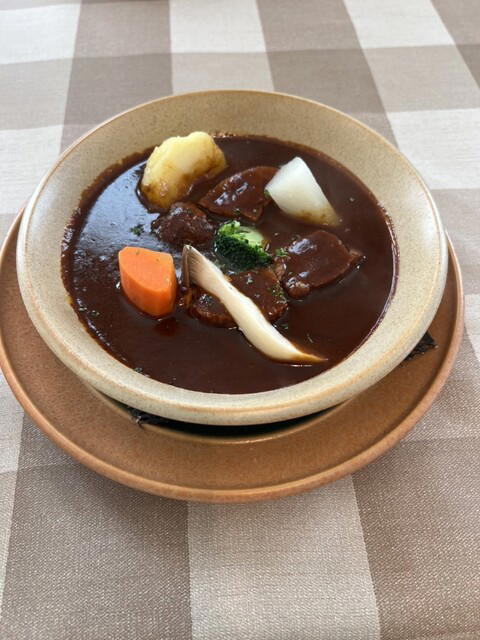
Pot-au-feu places Sapporo’s yoshoku tradition in a modest Kiyota Ward house-restaurant rather than a hotel dining room or station-front chain. Its Tabelog 100 Yoshoku EAST 2025 selection, 20-seat scale, and lunch-focused format make it a useful read on how Japanese-style Western cooking holds serious local status at everyday prices.

Pearl is the En Primeur Club membership app, where members save venues, book tables and use the concierge.
The menu
What to order
- Pot-au-feu stew
- Hokkaido seafood stew
- Homemade bread with Hokkaido wheat
Approaching Pot-au-feu in Sapporo sets a different expectation from the city’s most familiar dining narratives. Sapporo’s food reputation is often read through ramen, soup curry, seafood, and beer-hall abundance, but yoshoku has its own quieter grammar: Western forms translated through Japanese habits of portioning, rice, sauces, frying, simmering, and everyday lunch rhythm. Pot-au-feu belongs to that grammar. Its value is not in spectacle, nor in a chef-as-celebrity narrative, but in the way an unshowy Sapporo restaurant can carry enough confidence to be selected for Tabelog 100 Yoshoku in 2025.
That recognition matters because yoshoku is a category where nostalgia can blur into convenience food. Recognition in a Tabelog 100 Yoshoku list separates the serious specialist from the merely familiar. It also puts Sapporo into a wider Japanese dining conversation rather than treating Hokkaido as a separate culinary island. For travellers who understand Japan through sushi counters and kaiseki rooms, this is a useful corrective: an affordably priced lunch can say as much about local taste as a formal tasting menu.
Yoshoku in Sapporo works through restraint, not luxury signals
Yoshoku is often misunderstood outside Japan as a loose category of Western-ish comfort food. In practice, it is more disciplined than that. The cooking depends on sauces held in balance, fried textures that do not collapse under weight, and familiar plates made consistent enough to become personal benchmarks. Sapporo adds its own context: a cold-weather city with a strong appetite for curry, noodles, and other everyday dining forms, where lunch can carry more cultural information than dinner.
Pot-au-feu sits in the affordable end of that conversation while carrying a recognition signal usually associated with competitive dining rooms. The listed spend of JPY 1,000 to JPY 1,999 keeps it in the same everyday bracket as several serious casual addresses in the city, including Tenjiku Sapporo kiyota honten, soup curry tom tom kikir, and Hana Maru. Ramen RS Kai and TORA help define the wider casual field: yoshoku here is not luxury dining, but it occupies a meal-structured lane within Sapporo’s everyday restaurant culture.
The beverage angle is instructive precisely because this is not a restaurant whose reputation depends on luxury signals. In Sapporo, the dining map splits between places where service rituals announce ambition and places where the plate carries the entire argument. Pot-au-feu belongs to the second group. The focus shifts back to what the category has always asked for: sauces, timing, heat, and the kind of repeatable cooking that earns local trust without requiring ceremony.
For a broader read on how this fits into the city, compare it with other Sapporo dining rooms for spice-driven noodle culture, specialist curry, and different sides of Hokkaido dining. Together, they show a city where casual formats can carry serious identity.
The format changes the meal's tempo
Scale shapes expectation, but Pot-au-feu is better understood through format than through luxury cues. An everyday specialist does not behave like a broad-service destination restaurant, even when the category is accessible. The meal puts pressure on timing, patience, and attention. It also makes focus relevant: yoshoku benefits from concentration because the pleasure often lies in execution rather than rarity.
The format places it closer to Japan’s everyday specialist culture than to reservation-led fine dining. That distinction is useful for travellers. A Michelin-style plan rewards calendar control; this kind of meal rewards flexibility and a willingness to build the day around lunch rather than treating it as a gap between sightseeing blocks. Sapporo also changes the calculus. This is not a meal to understand only through the most obvious itinerary logic; part of the point is that the city’s serious food culture extends beyond its easiest tourist circuits.
The setting also keeps the experience grounded. There is no need to force grand dining-room choreography onto the meal. Its approachable price and yoshoku category make it more accessible than its award listing might suggest. That kind of detail matters in Japan, where excellent restaurants can remain operationally modest even when their reputation has widened.
How to place it in a Sapporo itinerary
Pot-au-feu is strongest as a lens on Sapporo’s non-obvious dining culture. Visitors often allocate the city’s meals by category: ramen, soup curry, sushi, izakaya, jingisukan. Yoshoku deserves its own slot because it shows how imported culinary forms became local, domestic, and deeply Japanese. The Tabelog 100 Yoshoku 2025 selection gives the meal an external credential, but the deeper reason to care is the category itself.
Use the meal as a counterpoint to the city’s most familiar eating patterns rather than as a replacement for them. The broader Sapporo map is easier to understand through clusters: Our full Sapporo restaurants guide covers the dining spread, while Our full Sapporo hotels guide, Our full Sapporo bars guide, Our full Sapporo wineries guide, and Our full Sapporo experiences guide help frame the rest of the trip. For readers comparing how Japanese casual dining translates across regions and contexts, the same lesson applies: casual formats can be serious without looking luxurious.
The editorial case is clear: this is not a luxury address and should not be forced into that frame. It is an award-recognised yoshoku specialist in Sapporo, priced for lunch rather than occasion dining. That combination is exactly why it belongs on a serious food itinerary. It shows the city’s range at human scale.
Frequently asked questions
What part of town is Pot-au-feu in?
Sapporo.
What time does Pot-au-feu open and close?
Published hours are not provided in the available ground-truth details for Pot-au-feu.
What does dinner at Pot-au-feu typically cost?
Pricing at Pot-au-feu is listed as JPY 1,000 - JPY 1,999, with the available budget detail showing lunch at JPY 1,000 - JPY 1,999 and no dinner budget listed.
What has Pot-au-feu built its reputation on?
Pot-au-feu has been selected for Tabelog 100 in Yoshoku in 2025. In Sapporo, that recognition matters more than any glossy framing, especially at a listed price of JPY 1,000 - JPY 1,999.
Is Pot-au-feu allergy-friendly?
The available details do not set out a dedicated allergy protocol. The practical move is to discuss any restrictions with the restaurant before going.
Is Pot-au-feu good for families?
The available ground-truth details do not specify a family policy. What can be said is that Pot-au-feu is a Sapporo yoshoku restaurant with listed pricing of JPY 1,000 - JPY 1,999.
Cuisine Lens
Comparable venues to anchor price and recognition.
| Venue | Cuisine | Price | Awards | Notes |
|---|---|---|---|---|
| Pot-au-feuThis venue (the venue you are viewing) | Stew & yoshoku restaurant | $10–20 | Tabelog 100 #66 | Not listed |
| Spice Bar TARA | Soup curry & spice bar | $20–30 | Tabelog 100 #27 | Chūō |
| Kokopelli | Neighborhood bakery & bread shop | $1–10 | Tabelog 100 #100 | Chūō |
| The Bar Nano Femto | Cocktail Bar | $20–30 | Tabelog 100 #26 | Chūō |
| Deux Hermitage | Cocktail Bar | $30–50 | Tabelog 100 #18 | Chūō |
| Sumibi Yakiniku Horumon Nikushiki | Charcoal-grilled yakiniku & offal | $30–50 | Tabelog 100 #69 | Kita |
Recognition history
Dated appearances from independent guides and award organizations, with the underlying list record or original source where available.
Tabelog 100 #66 · No. 66
Tabelog · Tabelog 100 - Yoshoku - EAST - 2025
Continue exploring
More in Sapporo
Restaurants in Sapporo
All restaurants in Sapporo →
Bars in Sapporo
All bars in Sapporo →



Details
- Cozy
- Classic
- Solo
- Family
- Casual Hangout
- Group Dining
- Standalone
- Local Sourcing
- Sustainable Seafood
- A La Carte
- Counter Dining
- Pescatarian Friendly
Current opening hours
- Monday
- 11:30 AM–2 PM
- Tuesday
- 11:30 AM–2 PM
- Wednesday
- 11:30 AM–2 PM
- Thursday
- Closed
- Friday
- 11:30 AM–2 PM
- Saturday
- 11:30 AM–1:30 PM
- Sunday
- 11:30 AM–1:30 PM
Hours can change for holidays and private events. Hours as of .
A small, house-like neighborhood restaurant with a warm, relaxed feel; simple, stylish decor and counter plus table seating create an intimate, unhurried atmosphere suited to quietly enjoying hearty stews.