Pollitena jatetxea
Pollitena jatetxea occupies a quietly respected address on Calle de San Jerónimo in San Sebastián's Parte Vieja, sitting within one of Europe's most concentrated dining districts. The restaurant draws from the Basque tradition of treating local ingredients as the fixed point around which technique can flex and evolve. For visitors orienting themselves in the city's mid-tier dining scene, it offers a grounded entry point into what the region does distinctively well.
Pearl is the En Primeur Club membership app — saves, bookings, and concierge access live there. Same editors, same standards.
- Address
- C. de San Jerónimo, 3, 20003 Donostia / San Sebastián, Gipuzkoa, Spain
- Phone
- +34 943 42 57 79
- Website
- restaurantepollitena.com
- Directions
- Get directions
 Saves & bookings on Pearl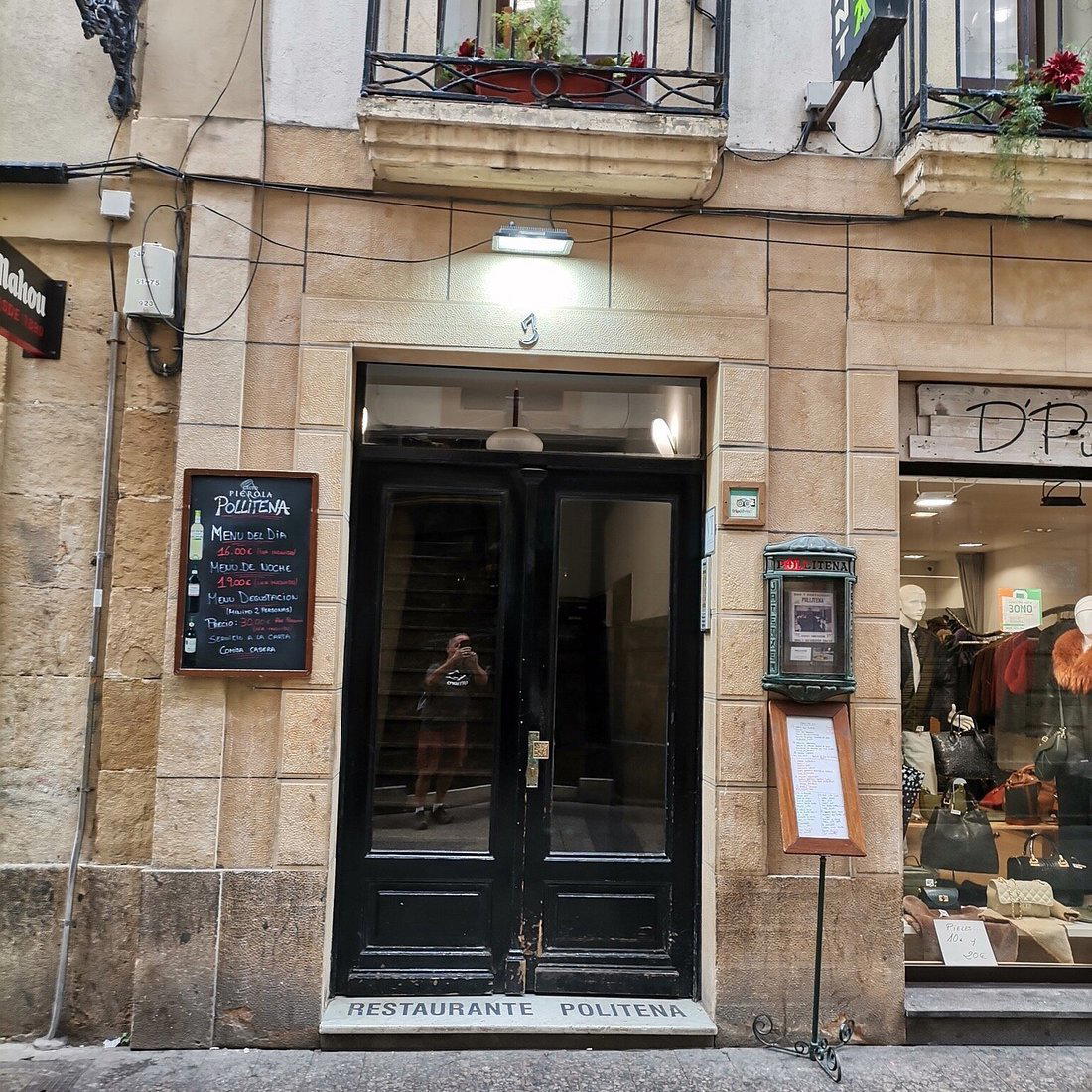
A Street Where Eating Is the Point
Calle de San Jerónimo runs through the Parte Vieja, the old quarter of San Sebastián, in a neighbourhood where the density of serious eating establishments per square metre has few equivalents in Europe. The pintxos bars and sit-down restaurants here are not a tourist overlay on an older civic life, they are the civic life. Walking the street on a Thursday evening, the sound of the pelota court a few blocks away competing with the low roar of a full dining room, you understand quickly that food in this city is not a leisure category but a defining cultural institution. Pollitena jatetxea sits at number 3 on that street, within this concentrated world.
San Sebastián's dining scene has historically operated in two distinct registers. At the leading sits the constellation of Michelin-recognised restaurants, Arzak in San Sebastián, Mugaritz in Errenteria, and the broader Basque Country landmarks like Azurmendi in Larrabetzu and Martin Berasategui in Lasarte-Oria, that have made northern Spain a reference point for high-technique cooking globally. Below that, and often more revealing of the city's actual character, is the stratum of neighbourhood restaurants and bars where the same obsessive relationship with produce plays out at a lower volume, without the ceremony. The Parte Vieja houses a significant portion of this second register, and it is here that the real continuity of Basque culinary culture is legible on a daily basis.
Local Ingredients as the Fixed Axis
The editorial frame that applies most usefully to a restaurant in this district is the relationship between indigenous product and applied technique. Basque cooking has never been hermetically sealed from outside influence, the region's fishing fleets historically connected it to Atlantic trade routes, and twentieth-century exchanges with French gastronomy shaped many of the technical instincts that later defined what the world now calls nueva cocina vasca. What has remained constant is the primacy of the ingredient itself. The Bay of Biscay's anchovy season, the autumn mushroom harvests from the surrounding hills, the particular sweetness of Gernika peppers, the weight and fat of the region's dairy cattle, these are not decorative elements in Basque cooking. They are the argument around which technique organises itself.
This matters for how to read a restaurant like Pollitena jatetxea. In a city where the culinary conversation is shaped by giants, where El Celler de Can Roca in Girona and operations like DiverXO in Madrid set the register for Spanish haute cuisine at the national level, the neighbourhood restaurant occupies a different and more diagnostic role. It is where you can read what a culinary culture actually eats, as opposed to what it performs for critical audiences. The intersection of imported technique and local produce that defines Basque cooking at its most thoughtful does not require a tasting menu format or a starred kitchen to express itself. It can operate just as clearly in a more modest register.
The Parte Vieja Dining Ecosystem
For visitors assembling a coherent picture of San Sebastián's eating culture, the Parte Vieja offers a useful cross-section. Establishments like Astelena, Aizepe Elkartea, and Aldamar Kalea cluster in the same district, each representing a slightly different angle on the same underlying tradition. Across the city, venues like Bodega Donostiarra Gros and Casa Senra Donostia extend that map into adjacent neighbourhoods. The cumulative effect is a dining district with genuine redundancy, meaning you are unlikely to eat badly here by accident, but you do need a framework to distinguish between places that are trading on location and those that are doing something more considered with it.
The Basque culinary tradition has also been a significant export. Its technical vocabulary, particularly around the precise handling of fish and the confidence with salt-cure and fire, has influenced kitchens far beyond the region. Chefs trained in this corridor have carried its logic to restaurants as different as Le Bernardin in New York City and the produce-first ethos that defines places like Lazy Bear in San Francisco. Closer to home, the dialogue between Basque product-centrism and broader Spanish creativity is visible in the work of chefs like Ricard Camarena in València, Quique Dacosta in Dénia, Aponiente in El Puerto de Santa María, and Cocina Hermanos Torres in Barcelona. The upstream source of much of that discipline is the cooking culture of this region, encoded in restaurants of every scale.
Planning Your Visit
Pollitena jatetxea's address on Calle de San Jerónimo places it in the heart of the Parte Vieja, within easy walking distance of the city's main pintxos circuit and the covered market of La Bretxa. The Parte Vieja is most alive from Thursday through Sunday, when the combination of locals and visitors keeps restaurants and bars at capacity through the evening. If you are visiting outside peak season, the autumn months, when wild mushroom and game products enter the regional kitchen, give the local cooking some of its most seasonally distinct character. Summer brings the anchovy season to a close and shifts menus toward the later catches, while spring is when the city's food calendar rebuilds its energy after winter.
Comparable Options
Comparable venues nearby, for context on price, style, and recognition.
| Venue | Cuisine | Price | Notes |
|---|---|---|---|
| Pollitena jatetxeaThis venue — the venue you are viewing | Traditional Basque | $$ | Not listed |
| Juantxo Taberna | Traditional Basque Taberna | $$ | Parte Vieja |
| Drinka | Basque Pintxos | $$ | Gros |
| Zazpi Stm | Modern Basque restaurant & pintxos bar | $$$ | Parte Vieja / San Telmo Museum area |
| La Perla Taberna Jatetxea | Contemporary Basque Cuisine with Mediterranean Influences | $$$ | Playa de la Concha |
| Geralds Bar | Modern Basque Small Plates | $$$ | Gros |
Continue exploring
More in San Sebastián
Restaurants in San Sebastián
Browse all →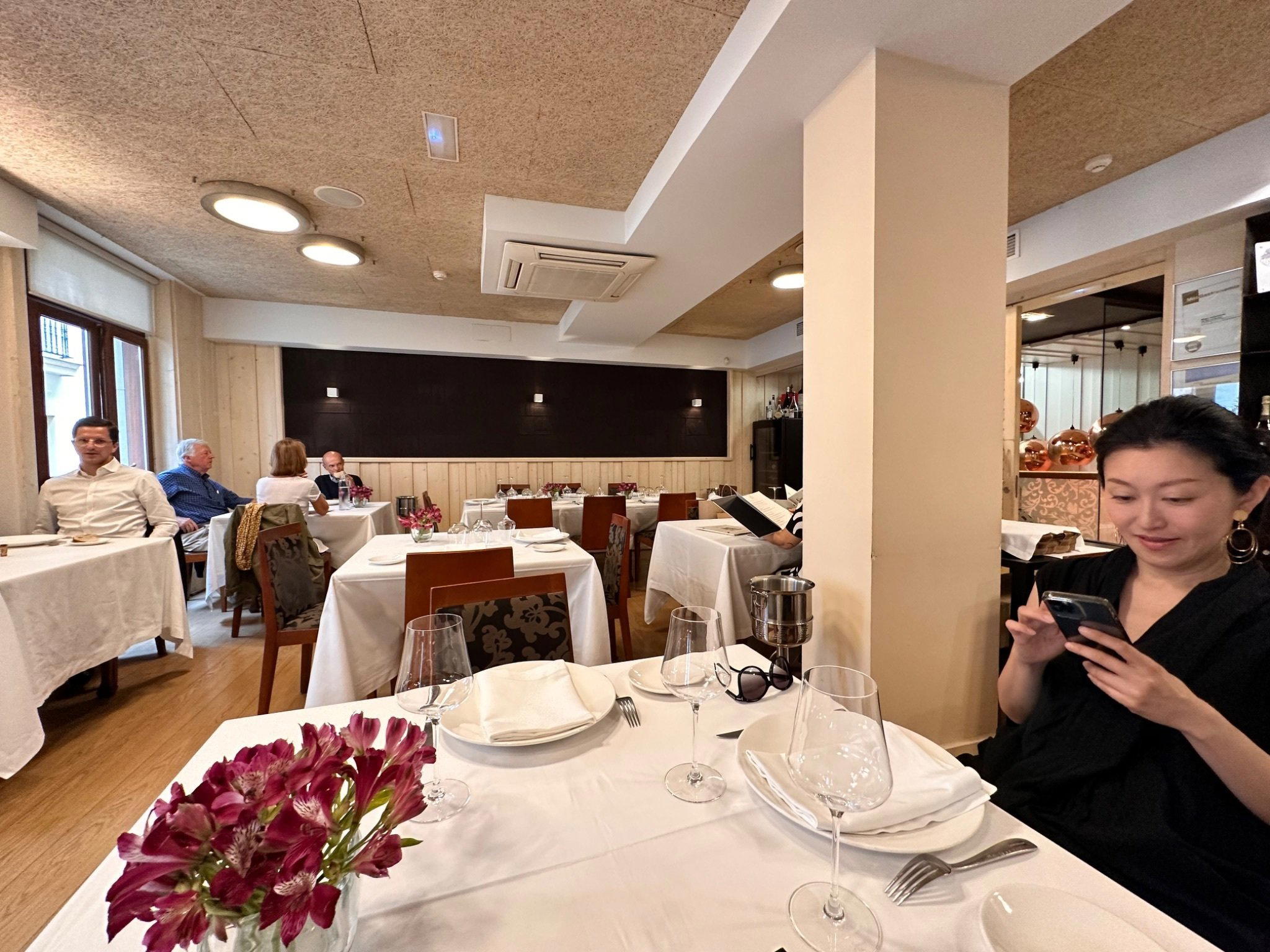
Bars in San Sebastián
Browse all →
At a Glance
- Rustic
- Classic
- Cozy
- Intimate
- Casual Hangout
- Group Dining
- Family
- Historic Building
- Standalone
- Beer Program
- Local Sourcing
Current opening hours
- Monday
- 1–3:30 PM, 8–10:45 PM
- Tuesday
- 1–3:30 PM
- Wednesday
- Closed
- Thursday
- 1–3:30 PM, 8–10:45 PM
- Friday
- 1–3:30 PM, 8–10:45 PM
- Saturday
- 1–3:30 PM, 8–10:45 PM
- Sunday
- 1–3:30 PM
Hours can change for holidays and private events. Last verified .
Classic and cozy decor with time-honoured furnishings including original windows, cupboards, and radiators; first-floor location keeps noise levels low; welcoming and familiar atmosphere designed to feel like coming home.