Our verdict
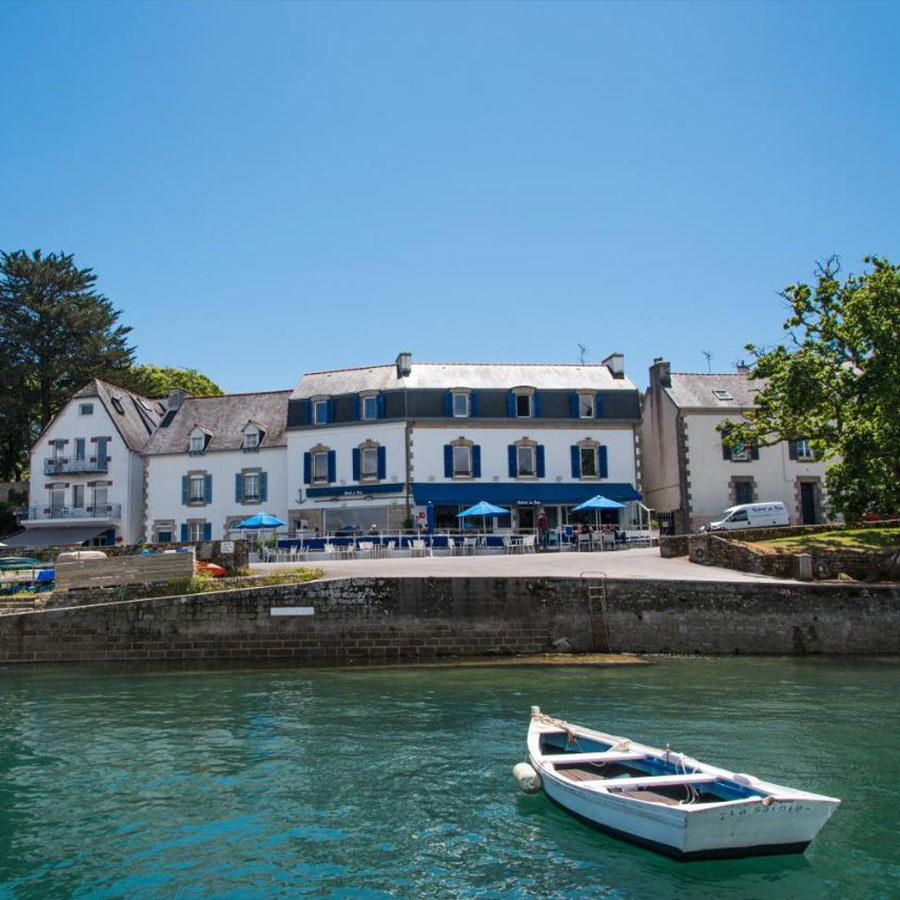
In Guilvinec, one of Brittany's most active fishing ports, Poisson d'Avril sits on Rue de Men-Meur at the edge of a working harbour where the morning catch arrives daily. The kitchen draws on that proximity in a region where sourcing is not a marketing point but a structural reality — the trawlers are visible from the table. For anyone tracing France's Atlantic seafood tradition outside the Michelin circuit, this is a serious address.

Pearl is the En Primeur Club membership app — saves, bookings, and concierge access live there. Same editors, same standards.
- Address
- 19 Rue de Men-Meur, 29730 Guilvinec, France
- Phone
- +33298582383
- Website
- lepoissondavril.fr
- Directions
- Get directions
- Booking
- Book on the venue's website
The menu
What to order
- Assiette Langoustines et Huîtres
- Plateau Fruits de Mer
- Saint Jacques Poêlées
Where the Catch Dictates the Menu
Guilvinec is not a destination that announces itself. The town sits at the southern tip of Finistère, on a stretch of Breton coast where the economy has been organised around fishing for generations, and where the afternoon return of the fleet is treated as routine rather than spectacle. It is one of France's highest-volume fishing ports by landed tonnage, a fact that shapes everything about what ends up on a plate here. In that context, Poisson d'Avril, at 19 Rue de Men-Meur, operates inside a sourcing logic that most coastal restaurants elsewhere in France can only approximate.
The editorial case for restaurants in working port towns like Guilvinec rests less on kitchen ambition and more on proximity. The supply chain that connects a trawler to a plate in Paris — with its overnight transport, intermediate markets, and markups — simply does not apply here. What arrives at the quayside in the late afternoon has a direct and short path to service. That compression of time between sea and kitchen is the defining condition of Breton port dining, and it is what separates a place like Guilvinec from the coastal restaurants of more touristic Breton towns further north.
The Breton Seafood Tradition in Context
To understand what Poisson d'Avril represents, it helps to map the wider field. French seafood dining has splintered into distinct registers. At one end, three-Michelin-star institutions like Christopher Coutanceau in La Rochelle and La Marine in Noirmoutier-en-l'île treat Atlantic seafood as a canvas for technique, with tasting menus priced accordingly. At the other end, the port bistro tradition, where the menu changes with the catch and the room is unremarkable, operates on a different set of values entirely: availability, seasonality, and directness.
That bistro register is not a lesser category. Some of France's most considered seafood eating happens in rooms that would not photograph well, in towns where the fishing industry still runs the calendar. The Breton coast, from Concarneau to Guilvinec and out to the Île de Sein, is the country's most concentrated zone for this kind of eating. Our full Guilvinec restaurants guide maps this wider picture for visitors planning time in the area.
The contrast with France's grand restaurant tradition is instructive. Places like Alléno Paris au Pavillon Ledoyen, Mirazur in Menton, or Flocons de Sel in Megève build their sourcing narratives around relationships with specific producers, a deliberate curation of ingredients that takes years to develop. In Guilvinec, the sourcing relationship is geographic and immediate rather than curated. The port delivers what the sea provides. That lack of curation is, paradoxically, its own form of rigour.
Approaching the Address
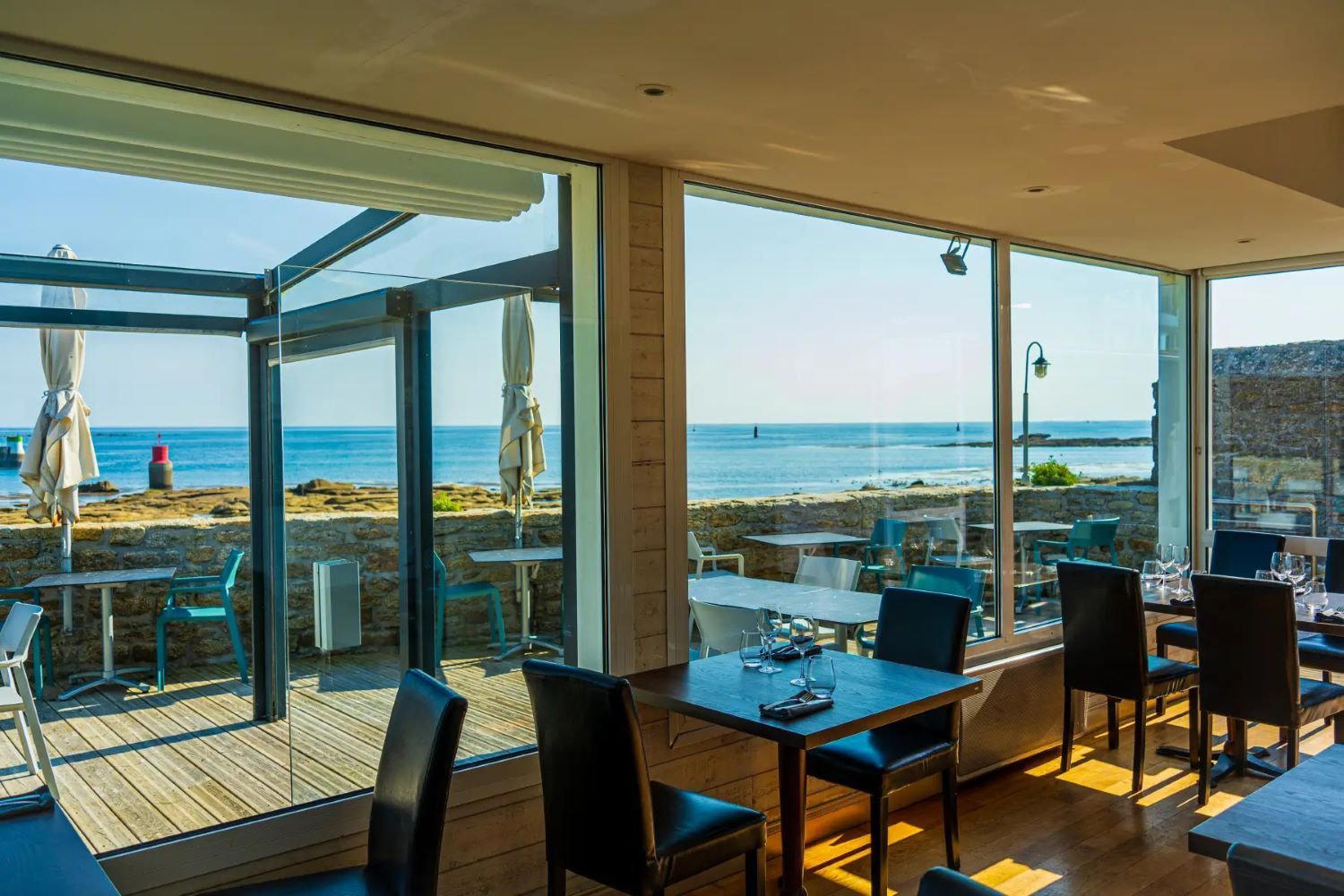
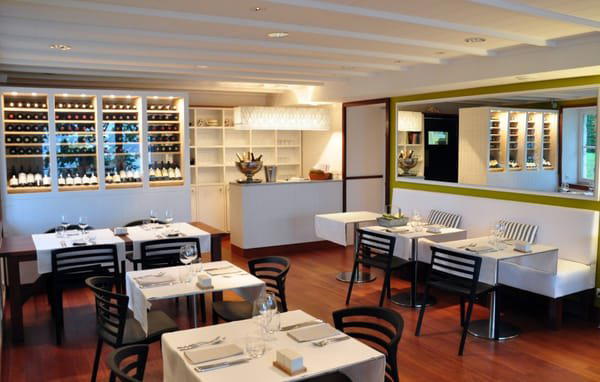
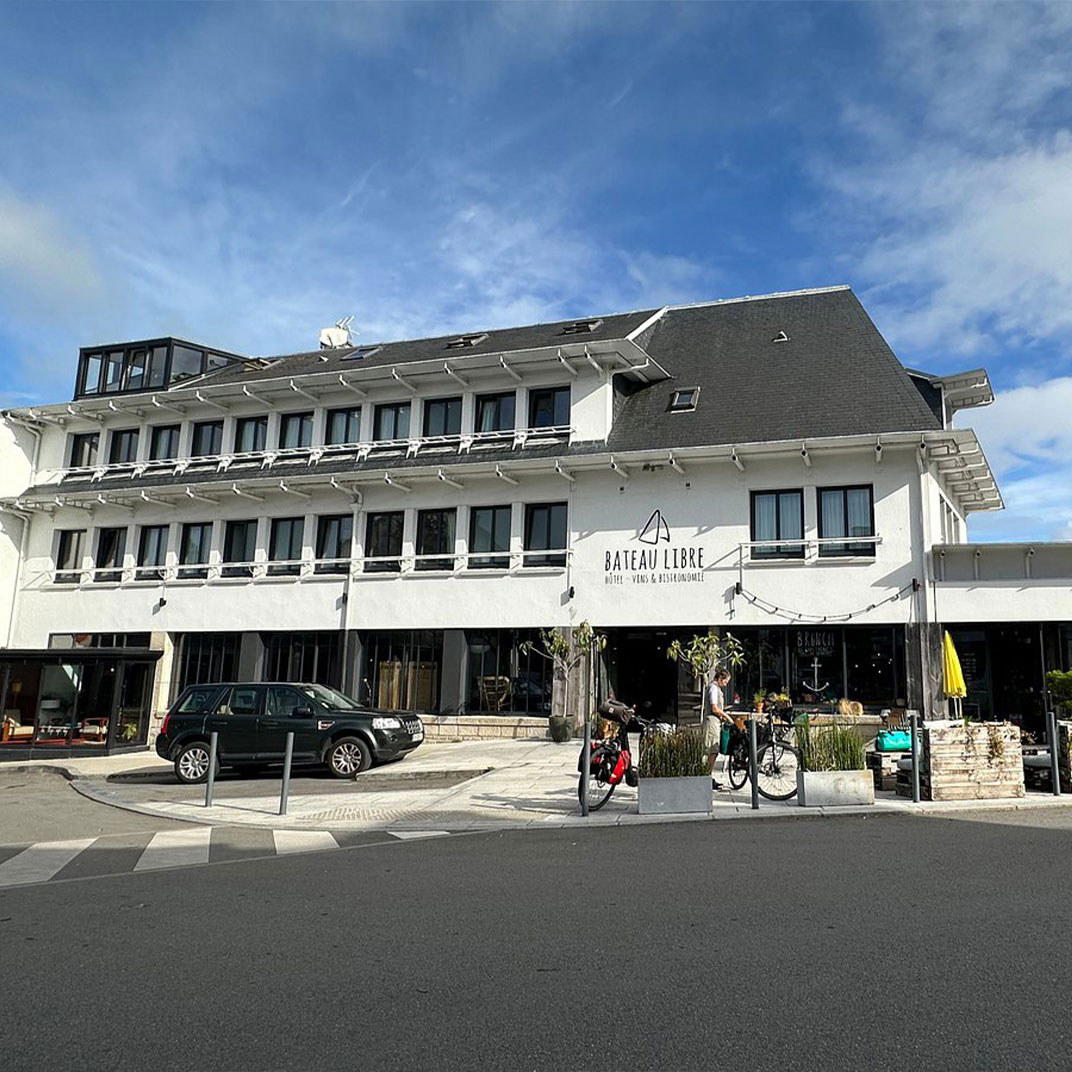
Rue de Men-Meur runs close to the water, and the approach to Poisson d'Avril gives you the functional reality of Guilvinec before you reach the door: working buildings, harbour infrastructure, the smell of salt and diesel that characterises an active fleet town rather than a resort. The atmosphere is neither preserved nor polished. It is a port, and the restaurant sits inside that fact rather than decorating around it.
This is not the kind of room that invites extended description. Breton port restaurants of this type tend toward the practical: tables arranged for turnover, a menu that reflects what came off the boats, a service register that is professional without being formal. The seasonal dimension matters here more than it would in a kitchen with a stable supply chain. What is available in February, primarily shellfish, some pelagic species, whatever the weather has permitted the fleet to land, differs substantially from September, when the range broadens.
What the Sourcing Argument Actually Means
The sourcing logic at play in Guilvinec is worth taking seriously as an editorial matter, not just as atmosphere. France's Atlantic ports supply the restaurants of Paris, Lyon, and beyond, the fish that appears on tasting menus at Paul Bocuse's Auberge du Pont de Collonges or Assiette Champenoise in Reims often originates from this stretch of Breton coast. Eating at the source, in the port itself, removes several layers of that distribution chain and, typically, several layers of cost.
The species that dominate the Guilvinec catch include langoustines (for which the port has a particular regional reputation), monkfish, sea bass, and various flatfish. These are not obscure or fashionable ingredients; they are the workhorses of French seafood cookery, and their quality in a port-direct context is different in texture and freshness from what travels to urban markets. Restaurants elsewhere on the French Atlantic coast that have built serious reputations on this proximity include AM par Alexandre Mazzia in Marseille on the Mediterranean side, and the broader tradition represented by places like Auberge du Vieux Puits in Fontjoncouse, where regional produce shapes the entire proposition.
Transatlantic dimension of this tradition extends further: Le Bernardin in New York City built its reputation on French-trained seafood technique applied to premium Atlantic product, a lineage that traces back to exactly this kind of Breton port-kitchen culture. The distance between Guilvinec and a room like that is measurable not just in miles but in format, price, and ambition, though the raw material at the origin point is not inferior.
Planning a Visit
Guilvinec is reachable by road from Quimper, roughly 25 kilometres to the north, which is the nearest city with regular rail connections from Paris Montparnasse. The drive from Quimper takes under 30 minutes. The town is small enough that Rue de Men-Meur is direct to locate, and parking near the harbour is generally available outside peak summer weeks. The fleet typically lands by mid-afternoon, which means lunch kitchens in Guilvinec have access to the previous evening's catch at minimum, and often same-day product.
For visitors building an itinerary around French seafood dining at different points on the quality and price spectrum, the Breton coast rewards that kind of sequencing. The contrast between a port bistro in Guilvinec and a destination restaurant like Bras in Laguiole or L'Oustau de Baumanière in Les Baux clarifies what each register is actually doing with French culinary tradition. Both are serious, but in entirely different ways.
Frequently asked questions
Is Poisson d'Avril good for families?
Guilvinec is a working port town, and Poisson d'Avril sits within that unpretentious context on Rue de Men-Meur. The format suits families who are comfortable with a seafood-led menu shaped by the daily catch rather than a broad à la carte. Younger diners with an interest in fish will find the setting genuinely engaging, given the proximity to the harbour and its visible activity.
What should I expect atmosphere-wise at Poisson d'Avril?
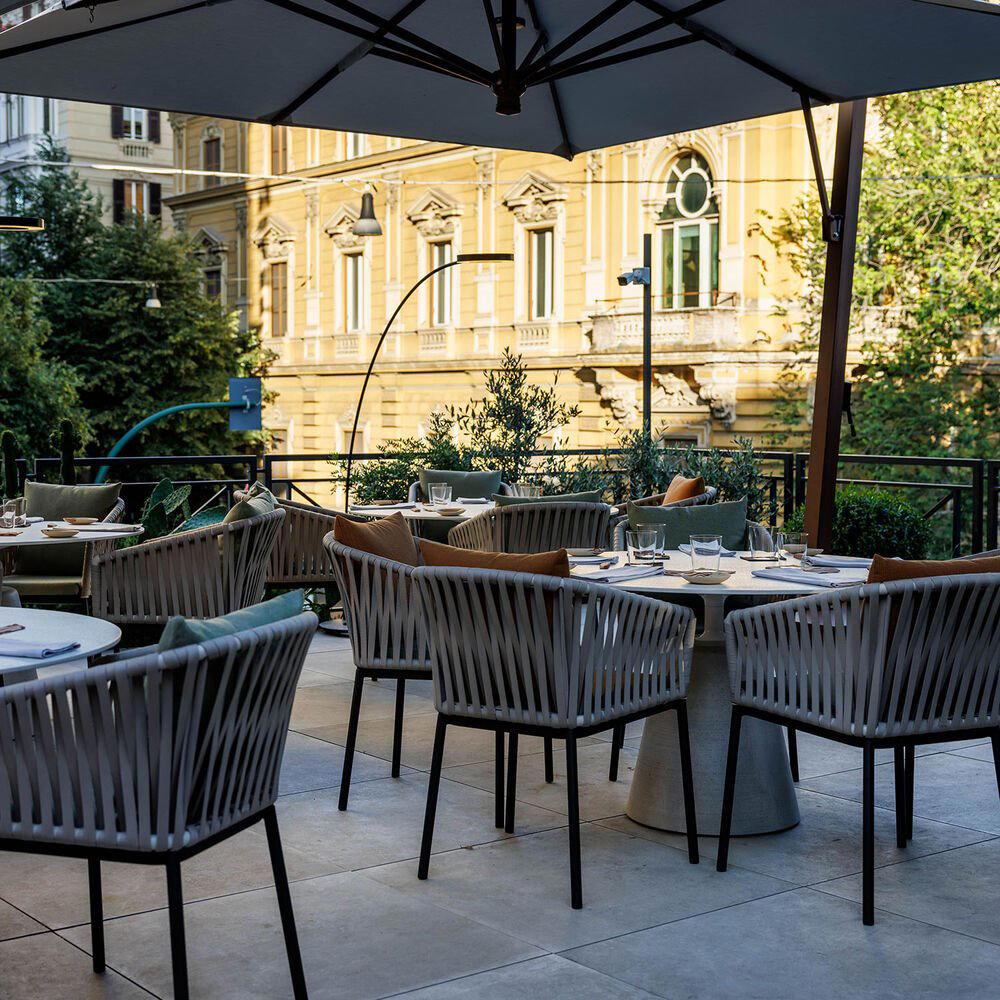
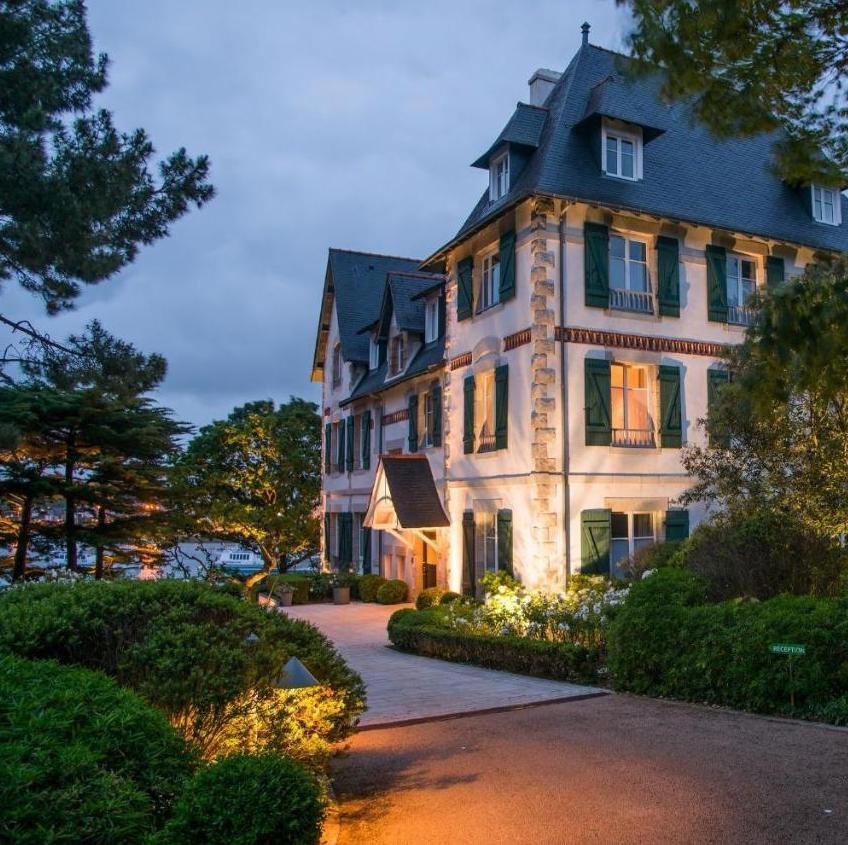
The setting reflects Guilvinec itself: a serious fishing port at the southern edge of Finistère, not a resort town dressed up for tourists. Expect a room oriented around the catch rather than performance, where the sourcing logic is the main event. The address on Rue de Men-Meur places you close enough to the water that the working character of the port is part of the experience before you sit down.
Is Poisson d'Avril worth a special trip from Quimper or further afield?
Guilvinec sits roughly 25 kilometres from Quimper, the nearest city with direct rail connections to Paris Montparnasse, making Poisson d'Avril a realistic half-day or full-day excursion. The case for the journey rests on Guilvinec's status as one of Brittany's most active Atlantic fishing ports, which gives the kitchen a sourcing position few inland or urban seafood restaurants can replicate. Visitors who treat the port visit and the meal as a single itinerary tend to get more from the trip.
What do regulars order at Poisson d'Avril?
The menu at Poisson d'Avril follows the catch, so what regulars order shifts with the season and what Guilvinec's fleet brings in. In practical terms, that means the decision is often made for you by availability rather than preference. Arriving with flexibility rather than a fixed order in mind is the approach that fits the restaurant's sourcing model.
Side-by-Side Snapshot
| Venue | Cuisine | Price | Awards | Notes |
|---|---|---|---|---|
| Poisson d'AvrilThis venue — the venue you are viewing | Inventive French Seafood | $50–100 | Not listed | Not listed |
| Alléno Paris au Pavillon Ledoyen | Modern French Fine Dining | $150–200 | 3 Michelin Stars · World's 50 Best #79 | Creative |
| Kei | Modern French with Japanese Influences | $300–500 | 3 Michelin Stars · World's 50 Best #93 | Contemporary French, Modern Cuisine |
| L'Ambroisie | Classic French Haute Cuisine | $300–500 | 2 Michelin Stars · World's 50 Best #23 | French, Classic Cuisine |
| Le Cinq - Four Seasons Hôtel George V | Modern French Fine Dining | $300–500 | 3 Michelin Stars · World's 50 Best #24 | French, Modern Cuisine |
| Mirazur | Modern French Fine Dining | $300–500 | 3 Michelin Stars · World's 50 Best #1 | Modern French, Creative |
Continue exploring
More in Guilvinec
Restaurants in Guilvinec
Browse all →
Details
- Scenic
- Cozy
- Elegant
- Date Night
- Special Occasion
- Waterfront
- Terrace
- Extensive Wine List
- Local Sourcing
- Sustainable Seafood
- Waterfront
- A La Carte
- Vegetarian Friendly
Convivial atmosphere with attentive service, charming sea views, and pleasant terrace dining in good weather.