Pimento Jamaican Kitchen & Rumbar
On Nicollet Avenue in south Minneapolis, Pimento Jamaican Kitchen & Rumbar brings the direct flavors of Jamaican cooking into a city better known for Scandinavian and Somali food traditions. The kitchen works with ingredients central to Caribbean cuisine, from allspice-forward jerk seasoning to scotch bonnet heat, while the rum bar offers a parallel education in island spirits. It occupies a distinct position in the Minneapolis dining scene, where Caribbean kitchens remain comparatively rare.
Pearl is the En Primeur Club membership app — saves, bookings, and concierge access live there. Same editors, same standards.
- Address
- 2524 Nicollet Ave, Minneapolis, MN 55404
- Phone
- +16123455637
- Website
- pimento.com
- Directions
- Get directions
 Saves & bookings on Pearl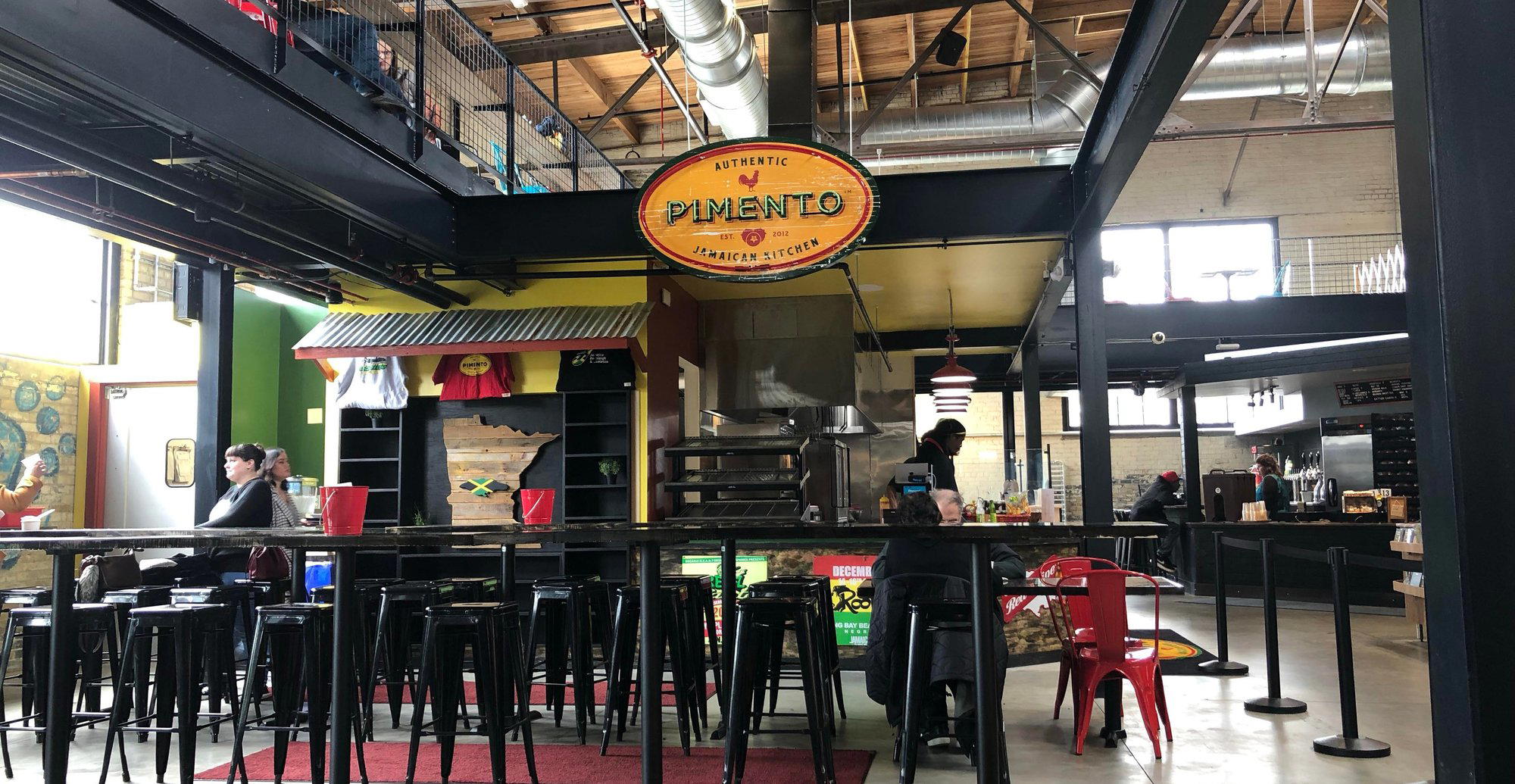
Where Nicollet Avenue Meets the Caribbean
Nicollet Avenue south of downtown Minneapolis runs through a mixed dining corridor, where Ethiopian injera houses sit alongside Vietnamese pho shops and the occasional Midwest steakhouse holdout. In that context, the warm, spiced air that greets you at the door of Pimento Jamaican Kitchen & Rumbar reads as something specifically placed rather than accidentally arrived. The interior signals the Caribbean without leaning on kitsch: it is the kind of room where the smell of allspice and scotch bonnet announces the food's origins before the menu does.
Caribbean restaurants in the upper Midwest are not common, and Jamaican kitchens specifically are rarer still. Minneapolis has built a notable dining scene, with spots like Owamni redefining Indigenous American cooking and Spoon & Stable anchoring the city's New American ambitions, but Caribbean representation in that conversation has lagged. Pimento fills a gap that would be conspicuous in a coastal city and is even more conspicuous here.
The Sourcing Logic Behind Jamaican Cooking
Jamaican cuisine is, at its structural core, a cuisine of specific ingredients grown in specific conditions. Allspice berries, the cornerstone of jerk, grow prolifically in Jamaica and carry a flavor profile that does not replicate cleanly through substitution. Scotch bonnet peppers carry a fruity, sharp heat distinct from habaneros despite sharing a botanical family. Ackee, the national fruit, is visually unusual and requires careful preparation before it is edible. These are not ingredients that a kitchen can approximate with pantry-shelf swaps; sourcing them correctly is the baseline requirement for cooking the food honestly.
That sourcing discipline is what separates a working Jamaican kitchen from a fusion interpretation. Where a menu that borrows Jamaican flavors might use generic chili heat and mixed spice blends, a kitchen serious about the tradition builds its pantry around the actual inputs. The result is a flavor profile that is warmer and more complex than the common shorthand of "Caribbean spicy" suggests, with the allspice providing a low, aromatic depth under the scotch bonnet's upper-register punch. This ingredient specificity is the difference between cultural representation and cultural approximation. Restaurants like Blue Hill at Stone Barns have made sourcing fidelity the entire editorial premise of their cooking; in Jamaican cuisine, that fidelity has always been structural rather than programmatic.
At Pimento, the rum bar sits alongside the kitchen as a parallel expression of Caribbean ingredient culture. Rum's flavor profile is inseparable from the sugarcane regions where it is produced, and Jamaican rum specifically has a fermentation and aging character different from Barbadian or Cuban styles. A bar program built around that distinction offers a more coherent companion to Jamaican food than a generalist spirits list would.
Minneapolis's Dining Scene and Where Caribbean Fits
The past decade in Minneapolis dining has seen the city move into a more credible national conversation. Hai Hai, a James Beard-nominated restaurant, has demonstrated that Southeast Asian-influenced cooking can anchor a serious dining destination in the Twin Cities. 112 Eatery has long held a position as one of the city's more reliably sharp neighborhood restaurants. The trajectory has been toward greater culinary range and more specific regional authenticity rather than a drift toward safe, broadly appealing formats.
Caribbean food fits logically into that trajectory, though it has arrived later than other global traditions in the city. That context makes Pimento's presence on Nicollet more deliberate than incidental: this is a kitchen making a case for a cuisine that does not have automatic built-in audience the way that, for example, Somali or Mexican food does in the city. It has to earn its regulars through the food itself.
For a broader sense of how Minneapolis's dining culture is developing across cuisines and neighborhoods, our full Minneapolis restaurants guide maps the current scene with more granularity.
What to Order and How to Approach the Menu
Jerk preparation is the anchor of most Jamaican restaurant menus in diaspora contexts, and it functions as a useful benchmark for a kitchen's seriousness. The spice blend, the wood smoke where it is used, the resting time, and the accompanying rice and peas all carry information about how closely the kitchen is following the tradition. Escovitch fish, oxtail, curry goat, and festival bread are the other coordinates that define the Jamaican repertoire in restaurant form; any of them will indicate how much the kitchen trusts the original technique versus how much it adapts for a local palate.
The rum bar is worth approaching as a deliberate second act rather than a backdrop. Jamaican rum carries a heavier ester profile than most other rum styles, which means it interacts differently with mixers and is often better assessed neat or in simple combinations that let the spirit read clearly. If the bar stocks aged Jamaican expressions alongside lighter agricole-style or blended Caribbean rums, the comparison across a single sitting is instructive.
Pimento is located at 2524 Nicollet Ave in Minneapolis. The address puts it in the Whittier neighborhood, south of downtown and within range of the broader Eat Street corridor.
Planning Your Visit
Given the relatively thin representation of Caribbean kitchens in the Minneapolis dining scene, Pimento draws from a wide geographic radius within the city. Evenings and weekends are likely particularly active periods.
Peers You’d Cross-Shop
Comparable venues nearby, for context on price, style, and recognition.
| Venue | Cuisine | Price | Notes |
|---|---|---|---|
| Pimento Jamaican Kitchen & RumbarThis venue — the venue you are viewing | Authentic Jamaican Jerk | $$ | Not listed |
| Moose & Sadie's | American Cafe | $$ | North Loop |
| Ted Cooks 19th Hole BBQ | Pit-Smoked BBQ | $$ | Standish |
| Longfellow Grill | American Comfort Grill | $$ | Cooper |
| Hell's Kitchen | American Comfort Food & Gastropub | $$ | WeDo |
| The Monte Carlo | Classic American Gastropub | $$ | North Loop |
Continue exploring
More in Minneapolis
Restaurants in Minneapolis
Browse all →
Bars in Minneapolis
Browse all →





At a Glance
- Lively
- Energetic
- Cozy
- Casual Hangout
- Group Dining
- Family
- Open Kitchen
- Craft Cocktails
- Local Sourcing
Current opening hours
- Monday
- 11 AM–10 PM
- Tuesday
- 11 AM–10 PM
- Wednesday
- 11 AM–10 PM
- Thursday
- 11 AM–10 PM
- Friday
- 11 AM–2 AM
- Saturday
- 11 AM–2 AM
- Sunday
- 11 AM–10 PM
Hours can change for holidays and private events. Last verified .
Energetic atmosphere with light background reggae music and nice vibe for family meals or dinner meetings.