







Piazza Duomo holds three Michelin stars and a consistent place inside the World's 50 Best Restaurants, operating from a pink-walled dining room on Alba's central square. Chef Enrico Crippa structures the menu around four tasting formats, with vegetables, herbs, and seasonal produce from the restaurant's own gardens driving the kitchen's approach. The wine program runs to 30,000 bottles across three distinct lists.
 Discover on Pearl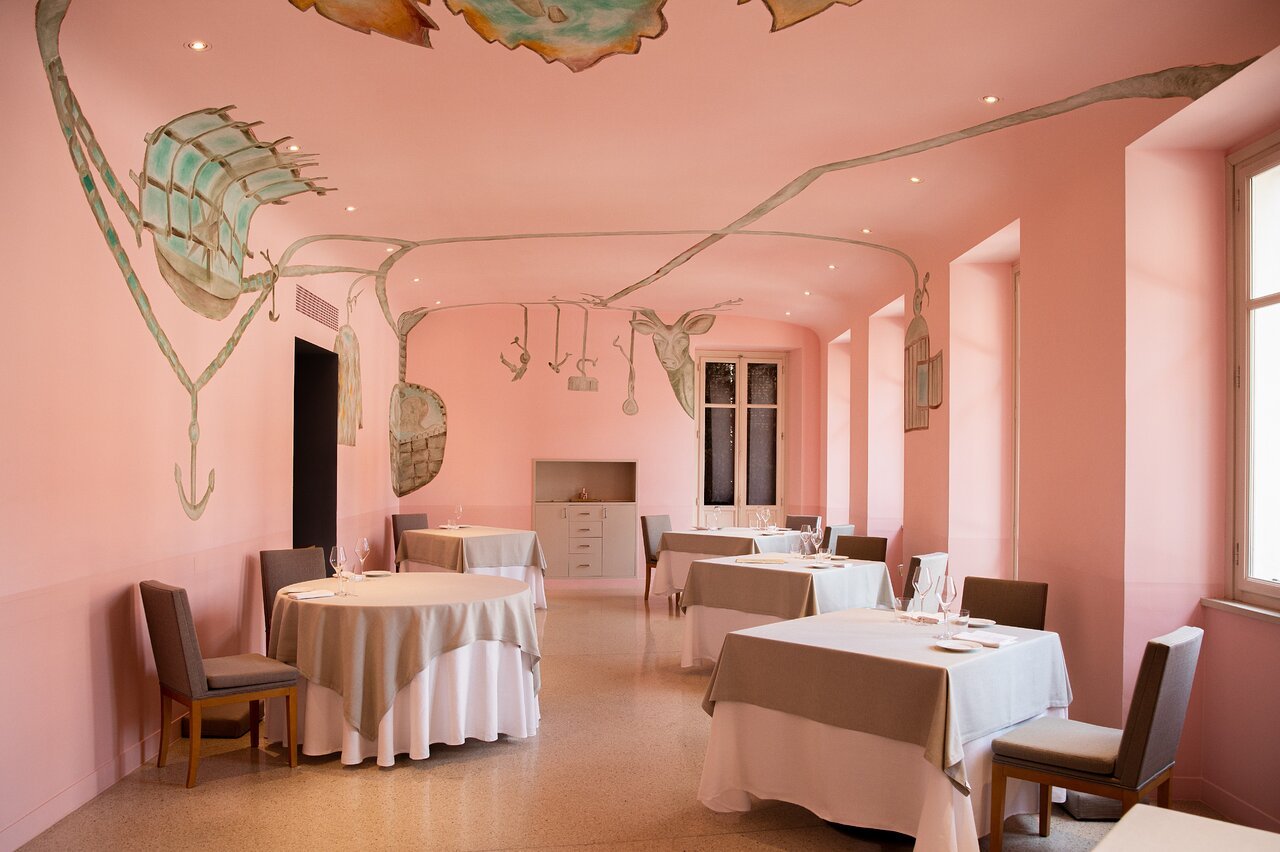
Alba's Highest Table and What It Tells You About the Town
Most towns Alba's size don't anchor a three-Michelin-star restaurant at the geographic and psychological centre of public life. The square outside is where the truffle market sets up in autumn, where locals eat gelato on Sunday evenings, where the cathedral dominates the skyline. The fact that one of Europe's most decorated restaurants sits directly adjacent to all of that — rather than isolated on a country estate or tucked into a design hotel lobby — says something particular about how Piedmontese food culture works. Prestige here doesn't separate itself from the neighbourhood. It inhabits it.
Piazza Duomo has held three Michelin stars continuously and ranked inside the World's 50 Best Restaurants every year from 2013 through 2024, reaching as high as #15 in 2017 and sitting at #39 in 2024. La Liste placed it at 97.5 points in 2025 and again at 96 points in 2026. Opinionated About Dining ranked it #22 among European restaurants in 2025. These are not scattered data points. Taken together, they position the restaurant within a small cohort of Italian three-stars that have sustained international recognition across more than a decade , alongside places like Osteria Francescana in Modena, Enoteca Pinchiorri in Florence, and Le Calandre in Rubano.
The Room Before the Food
The entrance deserves attention before anything else. A distinctive red door opens onto an alley slightly set back from the main square, which means first-time visitors will walk past it unless they know where to look. Once through, the dining room occupies the first floor, and what greets you is not what most people expect from a restaurant at this price level. The walls are pink. The light comes in generously through windows that frame the cathedral and the piazza below. The frescoes are by Francesco Clemente, the Italian painter associated with the transavantgarde movement, which gives the room an art-world register that sits unusually well alongside the agricultural produce arriving from the kitchen.
The room doesn't perform grandeur. There's no marble entrance, no heavy drape, no conspicuous silver service. The front-of-house team is described consistently, across multiple Michelin inspector notes, as friendly rather than formal. Meals run approximately three hours, and accounts suggest that span passes without the weight that formal dining rooms sometimes impose. That quality , being serious about food without being serious about ceremony , is something the Langhe region does better than almost anywhere in Italy, from the osterie in the hills up to Piazza Duomo itself.
Four Menus, One Philosophy
Chef Enrico Crippa structures the kitchen around four tasting formats. The first, Seasonal Things, runs to eleven courses built from produce grown in the restaurant's own greenhouses and biodynamic gardens, with vegetables, cultivated and wild herbs, and edible flowers treated as primary rather than supporting ingredients. This positions Piazza Duomo within a broader European movement toward plant-led fine dining, but the execution predates that trend becoming fashionable. Crippa was named leading vegetable restaurant in Italy in 2019, and the approach has been consistent well before that recognition arrived.
The second menu, Barolo, takes the region's signature wine as both subject and framework , the wine appears in guests' glasses and is reflected on the plate. The third, the Journey menu, runs eight courses and moves between French technique, Italian instinct, and Japanese precision in a format that reflects the chef's training history without making biography the point of the meal. The fourth is a shorter lunch option, four courses, available midweek from January to mid-September, which makes it the most accessible entry into the kitchen's approach by both time and price.
An autumn visit unlocks a fifth variation: a white truffle menu, eight courses, built around the most famous product of the Langhe. The truffle market in Alba runs through October and November, and the surrounding hills supply restaurants across Europe for that two-month window. Eating a truffle menu at Piazza Duomo during that period is the most direct expression of what the region does at its apex.
Several dishes carry historical weight that extends beyond plating. A course featuring snails and polenta draws on escargot bred by Benedictine monks, using the same herbs those monks cultivated for medicine and infusion. The dish is a record of regional continuity, not just an ingredient combination.
The Trattoria Instinct Inside a Three-Star Frame
What distinguishes Piazza Duomo from more formally constructed three-star experiences , say, Atelier Moessmer Norbert Niederkofler in Brunico or Enrico Bartolini in Milan , is its refusal to put distance between itself and the city it operates in. The entrance is off an alley. The chef comes out at the end to say goodbye, not to give a speech. The service is attentive but not theatrical. These are trattoria instincts applied at a three-star level, and they are not accidental. The Ceretto family, who co-own the restaurant alongside Crippa, built their reputation in Barolo and Barbaresco producing wines that prioritised terroir legibility over showmanship. That sensibility runs through the operation.
Alba's broader restaurant scene reflects the same values at lower price points. La Piola, also connected to the Ceretto family, handles regional cooking in a less formal register a short distance away. Locanda del Pilone occupies the mid-tier creative space with Piemontese foundations and a country-house setting in the hills. Ape Vino e Cucina and Enoclub handle Piedmontese wine-focused dining at more accessible prices. Hostaria dai Musi fills the neighbourhood trattoria role directly. The full picture of eating in Alba is visible in our complete Alba restaurants guide.
For visitors planning around the restaurant, our Alba hotels guide, bars guide, wineries guide, and experiences guide cover the broader city in detail.
The Wine Program
Three separate lists manage the wine service. Solopiemonte covers the region comprehensively. Tuttoilresto splits into two volumes , white and red , and focuses on French wines. The inventory runs to 30,000 bottles across approximately 3,000 selections. Pricing sits at the premium end, with many bottles above the $100 threshold. Wine Director Jacopo Dosio oversees the program, supported by sommeliers Davide Impagnatiello, Alex Roppo, and Carlo Salino. The depth in Barolo, Barbaresco, and Burgundy is particularly noted across external rankings. Italy and Burgundy are listed as the program's primary strengths, with Bordeaux as a third anchor. Corkage is offered at $100 for those arriving with bottles from their own cellar.
The Piedmontese wine context outside the restaurant is equally serious. The Langhe and Barolo zones sit within driving distance, and the surrounding hills contain estates that supply Piazza Duomo and define the regional identity that runs through every menu format. Visitors treating the restaurant as part of a wider wine trip will find the broader Langhe experience reinforces what Crippa's kitchen is doing , and vice versa. Quattro Passi in Marina del Cantone, Lido 84 in Fasano del Garda, and Dal Pescatore in Runate offer points of comparison for readers tracking how Italy's leading regional tables operate across different zones.
Planning a Visit
Piazza Duomo is at Piazza Risorgimento 4 in the centre of Alba, with the entrance slightly recessed off the main square beside the cathedral. The kitchen runs Wednesday through Saturday, with service at 12:30 for lunch and 7:30 for dinner; Monday, Tuesday, and Sunday are closed. Reservations at this level require advance planning, and the autumn truffle season , October and November , fills further ahead than the rest of the year. The four-course lunch menu represents the shorter and more economical path into the kitchen, available midweek between January and mid-September. Prices sit firmly in the €€€€ bracket for the full tasting menus. General Manager Davide Franco oversees the front of house. There is no dress code in the database record, but the room's character, and the three-hour meal format, suggest a considered approach to what you wear rather than a formal requirement.
Frequently Asked Questions
Price and Positioning
A small comparison set for context, based on the venues we track.
| Venue | Price | Awards | Notes |
|---|---|---|---|
| Piazza Duomo | €€€€ | Michelin 3 Stars, Les Grandes Tables Du Monde Award (2025) | This venue |
| Lalibera | €€ | Piemontese, €€ | |
| Osteria dell'Arco | € | Piemontese, Piedmontese, € | |
| Locanda del Pilone | €€€ | Michelin 1 Star | Piemontese, Creative, €€€ |
| La Piola | Piemontese | ||
| Ape Vino e Cucina | €€ | Piedmontese, €€ |
Need a table?
Our members enjoy priority alerts and concierge-led booking support for the world's most difficult tables.
Get Exclusive Access