
Under the arcades of Piazza Michele Ferrero in the heart of Alba, Enoclub holds consecutive Michelin Plate recognition for 2024 and 2025, presenting Piedmontese cuisine across both à la carte and tasting menu formats. Wine coverage is a particular strength, with walls lined with bottles and a cellar selection that tracks the Langhe and Barolo zones closely. The room runs efficiently and the price point sits at the mid-tier of Alba's restaurant scene.
Pearl is the En Primeur Club membership app — saves, bookings, and concierge access live there. Same editors, same standards.
- Address
- Enoclub, Piazza Michele Ferrero, 12151 Alba CN, Italy
- Phone
- +39 0173 33994
- Website
- caffeumberto.it
- Directions
- Get directions
 Saves & bookings on Pearl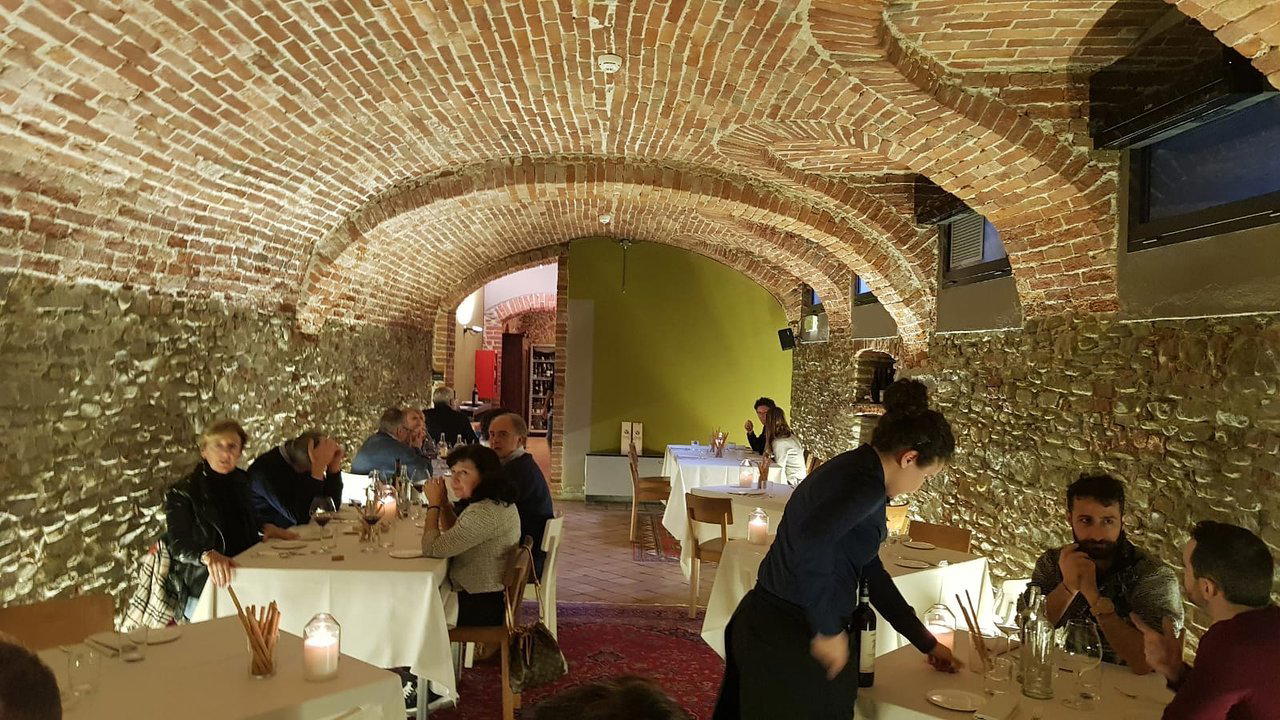
Alba's Mid-Tier Piedmontese Tradition, and Where Enoclub Sits Within It
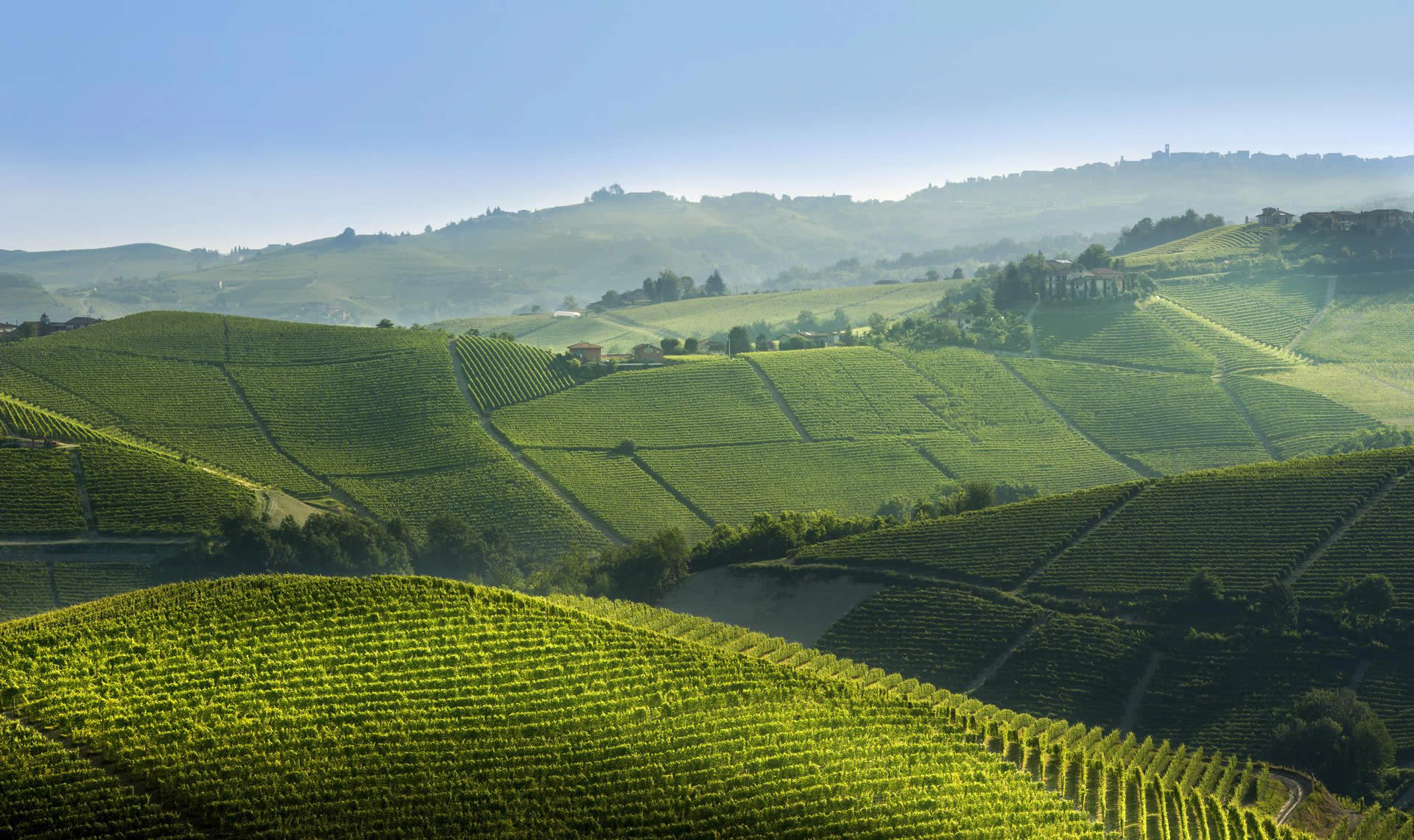
The arcaded piazzas of Alba carry a specific kind of culinary gravity. This is a town where Barolo and Barbaresco vineyards begin almost at the city limits, where white truffle season restructures the dining calendar each autumn, and where Piedmontese cooking, tajarin, vitello tonnato, brasato al Barolo, is not a style choice but a baseline expectation. Restaurants operating at the mid-tier price point in this environment face a harder editorial test than the same category would in most Italian cities: the raw materials are notable, the local knowledge is deep, and the competition across every price bracket is serious.
Alba's dining scene organises itself into recognisable tiers. At the upper end, Piazza Duomo operates at three Michelin stars with creative Italian cuisine at €€€€ pricing, occupying its own bracket entirely. One step below, Locanda del Pilone holds a Michelin star with creative Piedmontese at €€€. The mid-tier Piedmontese category, Enoclub's territory, includes Lalibera and, at the budget end, Osteria dell'Arco. What separates the better operators in this band is not ambition (most have it) but consistency and wine depth. Enoclub's recognition in 2024 and 2025 signals that Michelin's inspectors find it meeting a standard worth noting.
The Room: Wine as Architecture
The Piazza Michele Ferrero address places the restaurant under Alba's historic arcade system, the kind of covered walkway that makes this part of Piedmont navigable even in November rain. The address carries its own resonance: the piazza bears the name of the late Michele Ferrero, the chocolatier behind Nutella and Ferrero Rocher, who was born in Alba and whose family's industrial legacy is embedded in the town's identity in ways both commercial and cultural.
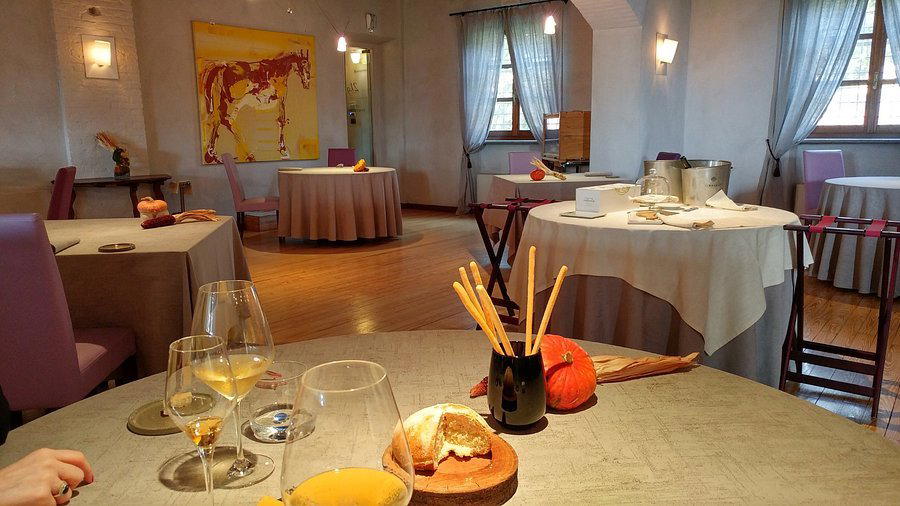
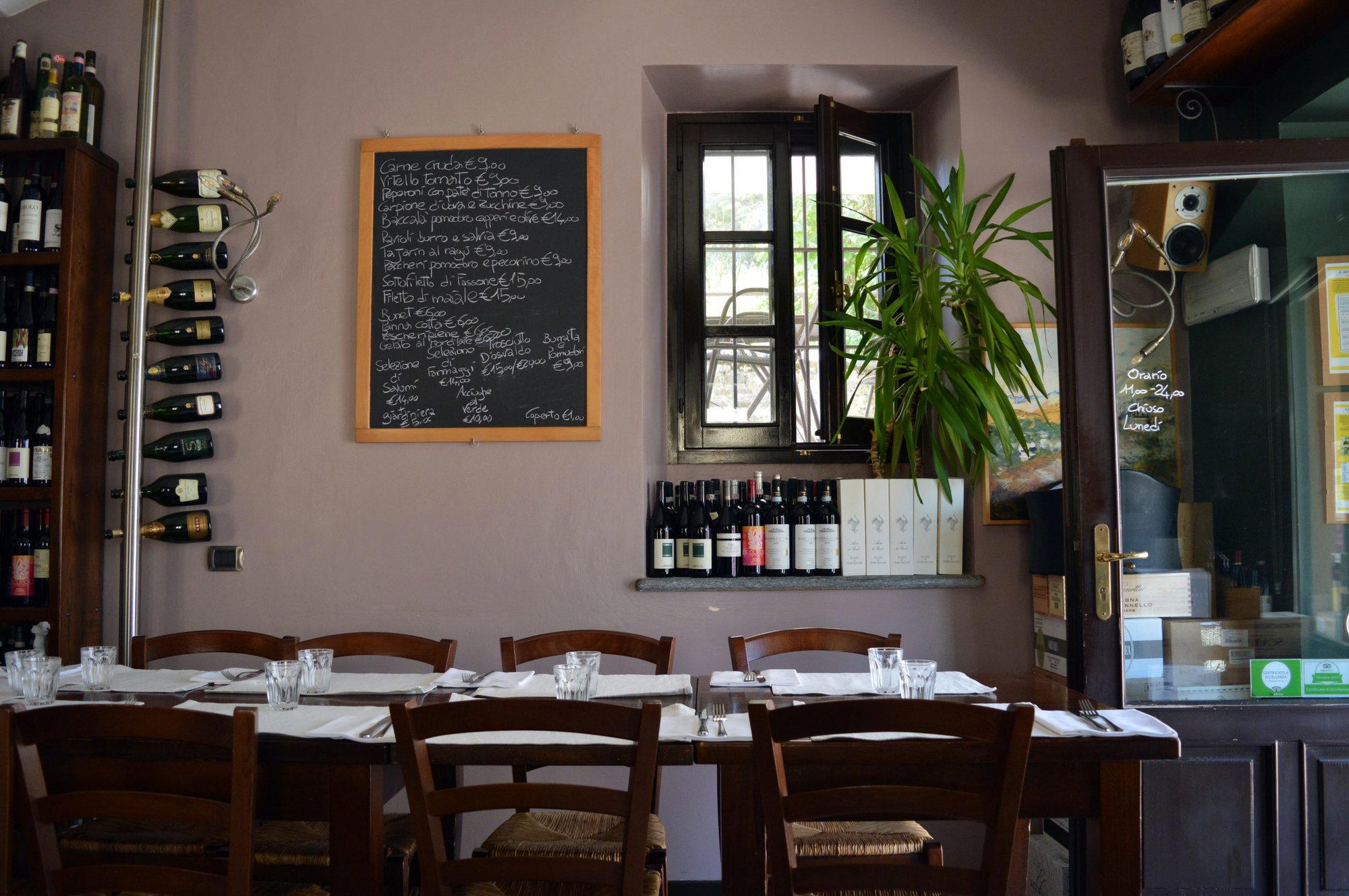
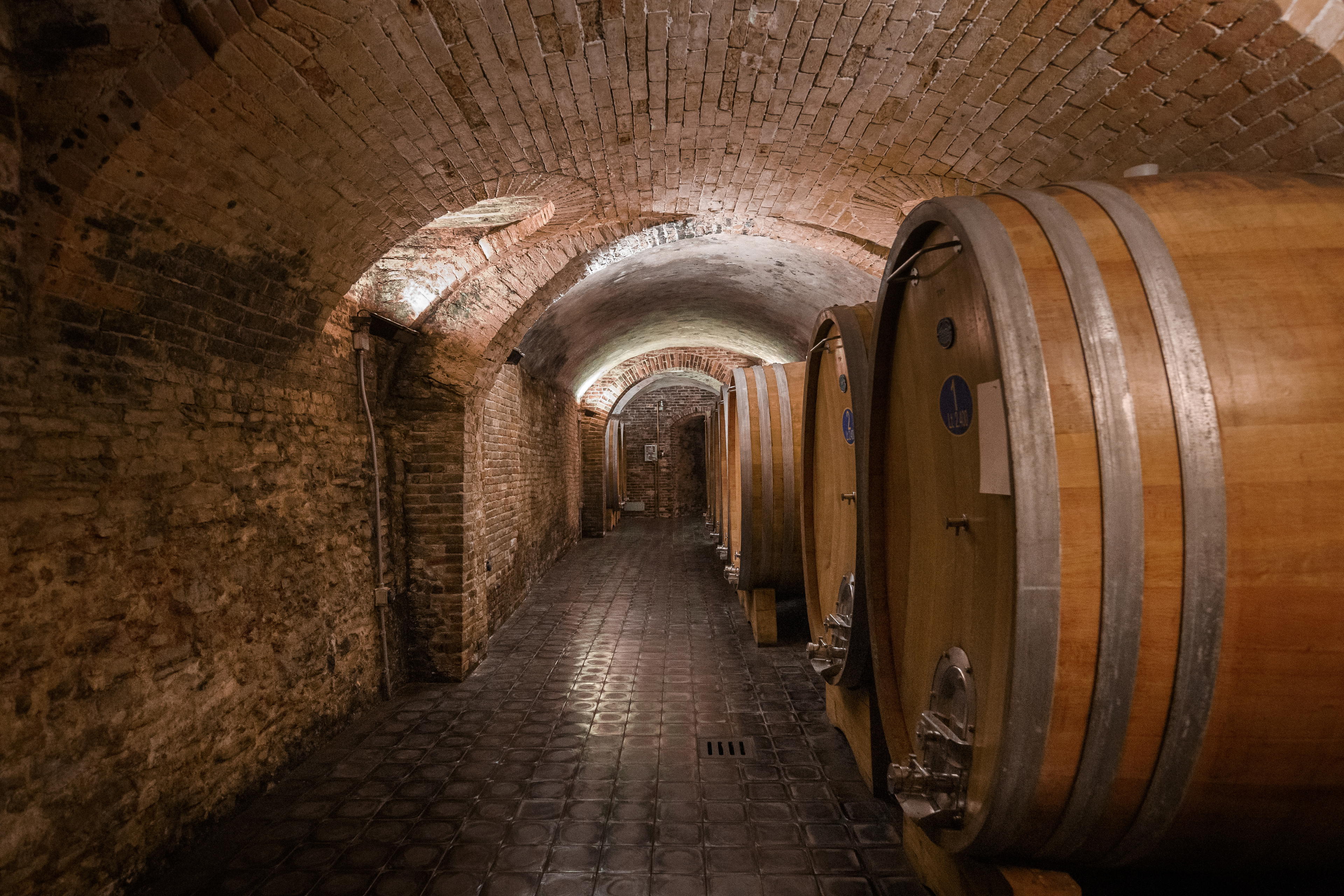
Inside, the design read is modern rather than rustic. The dominant visual element is wine, bottles covering the walls in a format that functions both as cellar storage and as a statement about the restaurant's priorities. Piedmontese restaurants with serious wine programs tend to telegraph that commitment visually, and the bottle-lined walls here sit within that tradition. The room avoids the heavy wood-and-exposed-beam aesthetic common to trattorie in the region, landing instead on a cleaner contemporary register that suits the à la carte and tasting menu format the kitchen runs.
Service here is handled by an all-female front-of-house team, described in Michelin's own coverage as friendly and efficient. In a town where formal service at the upper-end restaurants can feel mannered, the more direct approach at mid-tier Piedmontese operators is often where visitors find comfortable dining rhythm.
The Cuisine: Piedmontese as a Precision Category
Piedmontese cooking is among the more regionally specific cuisines in northern Italy. Its foundations rest on a handful of techniques and ingredients: egg-rich tajarin pasta cut finely and served with ragù or simply with butter and truffle, vitello tonnato presented cold with a tuna-caper sauce, agnolotti del plin pinched into small parcels, raw beef fassona dressed with olive oil and lemon. These dishes have a centuries-long record and appear across every price bracket in Alba, from modest osteria to starred dining rooms.
What shifts across the price brackets is execution precision, sourcing depth, and how the kitchen handles the relationship between tradition and refinement. The Michelin Plate designation, applied consistently to Enoclub in both 2024 and 2025, indicates cooking that is good quality within its category, the Plate is Michelin's signal of a restaurant that prepares food to a recognised standard even when it does not reach the star threshold. For a mid-tier Piedmontese operator in a city as competitive as Alba, that consistency has value.
Piedmontese cuisine elsewhere in Italy rarely achieves the same depth as it does in Alba and the surrounding Langhe. For comparison, restaurants carrying similar regional credentials include Antica Corona Reale in Cervere and Locanda Sant'Uffizio Enrico Bartolini in Cioccaro, both operating with Piedmontese cooking as their core framework but at different price and ambition levels. Enoclub at €€ pricing represents a more accessible entry point to serious regional cooking than either of those addresses.
The Wine Program: Depth in the Right Postcode
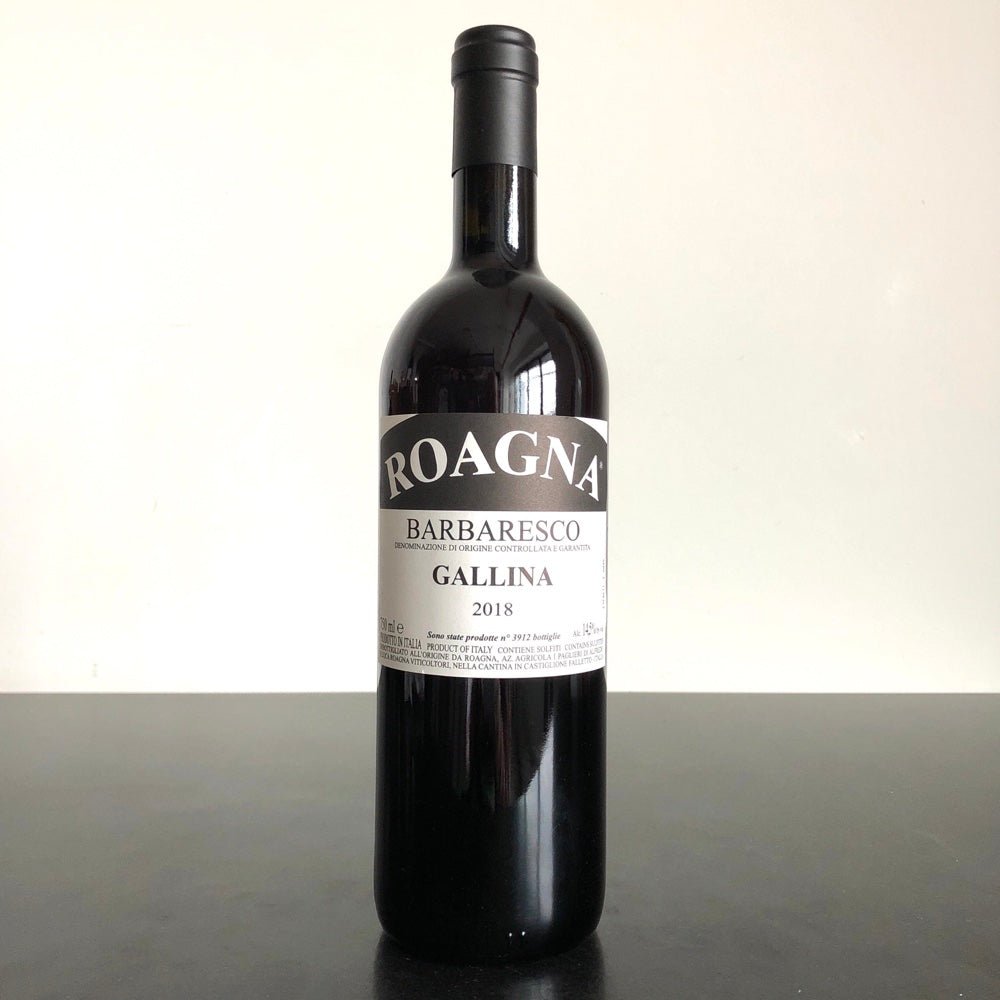
A restaurant with wine bottles covering its walls in Langhe is making a specific promise, and the quality of the wine list here is described in Michelin's own coverage as an impressive selection. In this part of Piedmont, that means the cellar should speak credibly to Barolo and Barbaresco producers, a zone that has seen substantial investment and critical attention over the past two decades, with producers across the traditional and modernist camps now represented in serious restaurants throughout the region. A mid-tier Piedmontese restaurant with wine as a visible priority sits in a direct line with venues like Ape Vino e Cucina in Alba's wine-bar-restaurant category, though Enoclub's kitchen output and tasting menu format place it in a slightly more formal register.
For context on how deep wine programs operate at the premium end of Italian dining, Enoteca Pinchiorri in Florence represents the extreme end of wine-led Italian restaurant culture, with a cellar operation that has defined the category for decades. Enoclub occupies a different scale, but the emphasis on wine as a defining element of the experience connects it to that broader Italian tradition where the cellar is as much the restaurant's identity as the kitchen.
Planning a Visit
Enoclub is located at Piazza Michele Ferrero in central Alba, accessible on foot from the main pedestrian zone and the town's hotel cluster. Alba sits in the Cuneo province of southern Piedmont, roughly an hour south of Turin by car or regional rail, with the town well-connected to the Langhe wine route for those planning a broader regional trip. The restaurant operates at the €€€ price tier, positioning it as one of the more accessible addresses in Alba for serious Piedmontese cooking with wine depth. Both à la carte and tasting menu formats are available, which gives visitors the option to eat at their own pace or follow the kitchen's structured sequence. Booking in advance is advisable during the white truffle season (October through December), when Alba fills substantially and reservation pressure across the mid-tier and upper-tier restaurant categories increases across the board. Outside that window, lead times are generally shorter, but the restaurant maintains consistent demand year-round.
Other mid-register Piedmontese addresses in Alba worth considering alongside Enoclub include Hostaria dai Musi and Ventuno.1. For a wider frame on what serious Italian regional cooking looks like across the north, Dal Pescatore in Runate, Le Calandre in Rubano, Osteria Francescana in Modena, Enrico Bartolini in Milan, and Atelier Moessmer Norbert Niederkofler in Brunico all represent different registers of how regional Italian cooking operates at ambitious levels.
Price Lens
Comparable venues nearby, for context on price, style, and recognition.
| Venue | Cuisine | Price | Awards | Notes |
|---|---|---|---|---|
| EnoclubThis venue — the venue you are viewing | main square, Traditional Piedmontese | $$$ | Michelin Plate | Not listed |
| Lalibera | San Giovanni, Modern Piedmontese Osteria | $$$ | Michelin Plate | Not listed |
| Hostaria dai Musi | Central Alba, Modern Italian Seafood | $$$ | Michelin Plate | Not listed |
| Ventuno.1 | Not listed | $$$ | Michelin Plate | Alba city center, Modern Piedmontese-Neapolitan |
| Osteria dell'Arco | Not listed | $$ | Michelin Plate | Piazza Michele Ferrero, Traditional Piedmontese Trattoria |
| La Piola | Not listed | $$$ | Not listed | Piazza Risorgimento, Traditional Piedmontese Osteria |
Recognition history
Dated appearances from independent guides and award organizations, with the underlying list record or original source where available.
Michelin Plate
Michelin
Michelin Plate
Michelin
Michelin Plate
Michelin
Continue exploring
More in Alba
Restaurants in Alba
Browse all →
Bars in Alba
Browse all →
Hotels in Alba
Browse all →
At a Glance
- Cozy
- Elegant
- Intimate
- Date Night
- Special Occasion
- Extensive Wine List
- Sommelier Led
- Local Sourcing
Simple, modern ambience in a cozy underground barrel-vaulted cave with brick walls covered in wine bottles, creating a warm and cellar-like atmosphere.