
Michelin Plate
Our verdict
At the single-euro price point, it represents the Michelin Guide's clearest endorsement of Paris's working pho tradition, serious cooking at street-level prices.

Pearl is the En Primeur Club membership app, where members save venues, book tables and use the concierge.
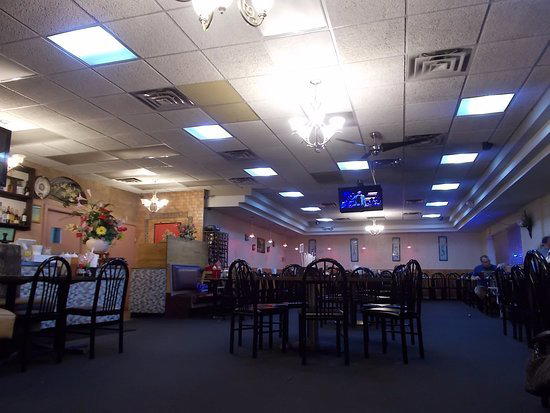
The 13th and the Pho Tradition It Carries
Paris has two distinct registers of Vietnamese dining. The first operates in the 1st and 2nd arrondissements, where modernist kitchens apply French technique to Southeast Asian ingredients, a register occupied by places like Mắm From Hanoï and Kei, which blends Japanese and French influences at the €€€€ tier. The second register is the 13th arrondissement, specifically the stretch around Avenue de Choisy and its tributaries, where Vietnamese families settled in significant numbers after 1975 and built a food culture answerable to community standards rather than tourist traffic. Pho Tai belongs to the second register, and the Michelin Guide, in awarding it both a Bib Gourmand in 2024 and a Plate in 2025, has formally acknowledged that the 13th's pho houses belong in the same conversation as any other serious cooking in the city.
That recognition matters in context. The Bib Gourmand designation exists specifically to flag good cooking at prices below the starred tiers. Pho Tai's single-euro price bracket is the appropriate frame: this is not a place making gestures toward fine dining at accessible prices, but a place doing one thing at depth. At that volume, the rating is harder to sustain than at a low-traffic restaurant, and it signals a kitchen that holds its standards across service conditions that less consistent operations cannot match.
What the Bowl Actually Involves
Phở is one of the more technically demanding soups in the Vietnamese canon, and the distance between a competent bowl and a serious one is almost entirely in the broth. A properly made phở bò broth requires a long simmer of beef bones, typically ten hours or more, with charred onion and ginger added at the outset and spices including star anise, cinnamon, cloves, and coriander seed introduced in the middle period. The goal is a broth that carries depth without cloudiness, sweetness without heaviness, and a distinct aromatic signature that does not reduce to any single spice. This is a process where shortcuts show immediately, and where a kitchen's commitment to the work is legible in the result.
The "Tai" in Pho Tai refers to the thin-sliced raw beef that finishes cooking in the bowl at the table, a standard northern Vietnamese preparation that requires the broth to arrive at a temperature high enough to carry through that final cook. It is both a quality signal and a practical test: broth that has dropped in temperature or sits in a batch for too long will not do the job. The condiment table, bean sprouts, fresh herbs, lime, fresh chili, and hoisin and sriracha at the side, operates on a philosophy of addition rather than correction. At a serious pho house, the base bowl should be complete on its own terms, and the condiments should extend rather than compensate.
Paris's Vietnamese community in the 13th has maintained this standard with limited outside pressure to change it. The arrondissement's pho houses have not generally pivoted toward fusion formats or tasting menus, partly because the community dining room model does not support those price points, and partly because the clientele, including significant numbers of Vietnamese-French diners who grew up eating this food, holds the standard firm. Pho Tai sits within that tradition.
The 13th in Its Broader Context
The arrondissement's restaurant culture is worth understanding separately from the Paris dining scene that produces the three-starred institutions along the Seine. Restaurants like Alléno Paris au Pavillon Ledoyen, Arpège, and L'Ambroisie represent a different project entirely, haute cuisine at €€€€ pricing, with tasting menus that run to multiple hours. The 13th operates on an entirely different logic: high frequency, low margin, repeat community traffic, and a quality floor set by diners who know the reference dish from the source.
That dynamic is not unique to Paris. Vietnamese diasporic communities across France, and in cities like Hanoi where Tầm Vị represents the contemporary end of the capital's own pho culture, have produced a distributed tradition where the same fundamental bowl appears at wildly different price points and contexts. The 13th's version is not the cheapest nor the most refined, but it has earned a consistency record, Michelin acknowledgment two years running, that places it above the neighbourhood average.
For international visitors, the comparison to Vietnamese restaurants in other cities is instructive. Camille in Orlando represents the modernist direction Vietnamese cooking takes in the American market, where distance from the source community allows more interpretive freedom. The 13th's pho houses, Pho Tai among them, have stayed closer to the northern Vietnamese template, and that conservatism is a feature rather than a limitation.
Visiting: What the Practical Picture Looks Like
The 13th arrondissement is not Paris's most navigated dining destination for visitors staying in the central arrondissements, which means Pho Tai draws a crowd that skews toward locals and in-the-know repeat visitors rather than tourists following a standard itinerary. The €-bracket pricing and Bib Gourmand status tend to produce queues at peak lunch and dinner hours; arriving outside those windows is the practical solution. The address at 13 Rue Philibert Lucot places it in the quieter residential grid east of Avenue de Choisy, slightly off the main artery that most visitors walk.
For those building a broader Paris dining trip, the city's dining range runs from Pho Tai's price point up through the full starred tier. The full Paris restaurants guide covers that range, and the Paris hotels guide, bars guide, wineries guide, and experiences guide extend the planning scope. France's broader fine dining circuit, from Flocons de Sel in Megève to Mirazur in Menton, Troisgros in Ouches, Paul Bocuse in Collonges-au-Mont-d'Or, Bras in Laguiole, and Auberge de l'Ill in Illhaeusern, represents the opposite end of the price and format spectrum, but the Michelin Guide that endorses those institutions is the same one that gave Pho Tai its Bib Gourmand. That consistency of standard across price tiers is one of the more useful things Michelin does.
Know Before You Go
- Address: 13 Rue Philibert Lucot, 75013 Paris, France
- Price range: € (single-euro bracket; Bib Gourmand pricing)
- Awards: Michelin Plate 2025; Michelin Bib Gourmand 2024
- Cuisine: Vietnamese (pho-focused)
- Booking: Walk-in; arrive outside peak lunch and dinner service to reduce wait times
- Neighbourhood: 13th arrondissement, Paris's Vietnamese quarter east of Avenue de Choisy
Frequently asked questions
Where is Pho Tai in Paris?
Pho Tai is located at 13 Rue Philibert Lucot, 75013 Paris, France, Paris.
What awards or recognition does Pho Tai have?
Pho Tai has received recognition including: Michelin Plate (2025); Michelin Bib Gourmand (2024).
What do regulars order at Pho Tai?
The restaurant's name answers that directly: phở tái, the bowl built around thin-sliced raw beef that finishes cooking in hot broth, is the reference order here. The 2024 Michelin Bib Gourmand recognition, awarded for quality at a price-accessible level, signals that the kitchen's credibility runs through its core bowls rather than peripheral dishes.
What price level is Pho Tai?
Pricing at Pho Tai is listed as €.
Can I walk in to Pho Tai?
Yes. Pho Tai operates on the community dining room model typical of the 13th arrondissement's Vietnamese restaurants, where walk-in traffic is the norm rather than the exception. The price range sits at the lower end of the Paris spectrum, which keeps turnover moving and makes a same-visit seat realistic at most hours.
Side-by-Side Snapshot
| Venue | Cuisine | Price | Awards | Notes |
|---|---|---|---|---|
| Pho TaiThis venue (the venue you are viewing) | Authentic Vietnamese Pho | $20–30 | Michelin Plate | Not listed |
| Alléno Paris au Pavillon Ledoyen | Modern French Fine Dining | $150–200 | 3 Michelin Stars · World's 50 Best #79 | Creative |
| Kei | Modern French with Japanese Influences | $300–500 | 3 Michelin Stars · World's 50 Best #93 | Contemporary French, Modern Cuisine |
| L'Ambroisie | Classic French Haute Cuisine | $300–500 | 2 Michelin Stars · World's 50 Best #23 | French, Classic Cuisine |
| Le Cinq - Four Seasons Hôtel George V | Modern French Fine Dining | $300–500 | 3 Michelin Stars · World's 50 Best #24 | French, Modern Cuisine |
| Plénitude | Modern French Sauce-Led Fine Dining | $300–500 | 3 Michelin Stars · World's 50 Best #14 | Contemporary French |
Recognition history
Dated appearances from independent guides and award organizations, with the underlying list record or original source where available.
Michelin Plate
Michelin
Full recognition history (3 entries)
Michelin Plate
Michelin
Michelin Bib Gourmand
Michelin
Continue exploring
More in Paris
Restaurants in Paris
All restaurants in Paris →
Bars in Paris
All bars in Paris →



Details
- Lively
- Cozy
- Casual Hangout
- Standalone
- A La Carte
- Vegetarian Friendly
Current opening hours
- Monday
- Closed
- Tuesday
- 12–3 PM, 6:45–10:15 PM
- Wednesday
- 12–3 PM, 6:45–10:15 PM
- Thursday
- 12–3 PM, 6:45–10:15 PM
- Friday
- 12–3 PM, 6:45–10:15 PM
- Saturday
- 12–3 PM, 6:30–10:15 PM
- Sunday
- 12–3 PM, 6:45–10:15 PM
Hours can change for holidays and private events. Hours as of .
Boisterous and chaotic with tightly packed tables in a small, simple space.