
A Michelin Plate recipient in consecutive years (2024 and 2025), Petit Boutary operates in Paris's 17th arrondissement as a modern cuisine address that has built a following through consistency and craft rather than spectacle.
Pearl is the En Primeur Club membership app — saves, bookings, and concierge access live there. Same editors, same standards.
- Address
- 16 Rue Jacquemont, 75017 Paris, France
- Phone
- +33 1 46 27 76 23
- Website
- petitboutary.com
- Directions
- Get directions
 Saves & bookings on Pearl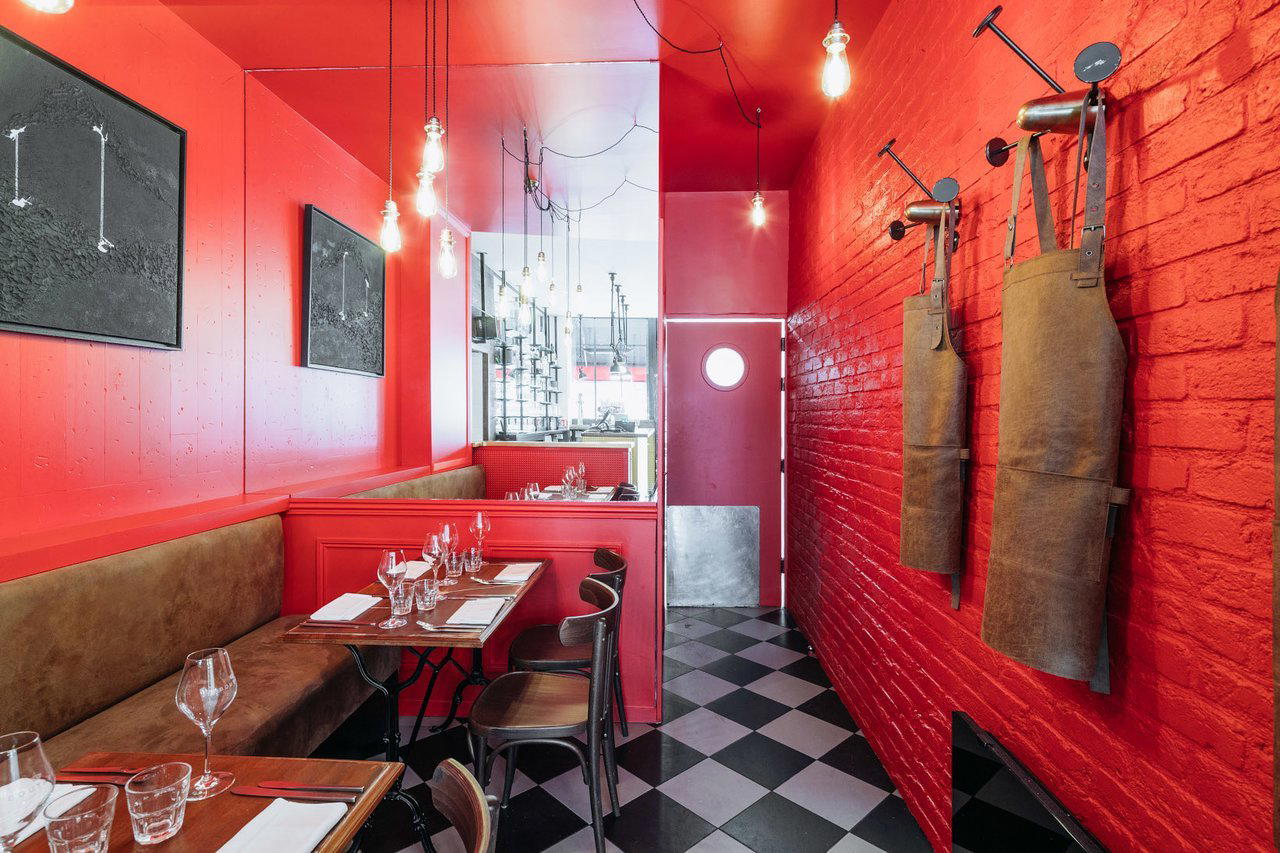
Modern Cuisine in the 17th: Where Paris Eats Without an Audience
The story of Paris dining in the past decade is partly a story of geographic redistribution. The grand houses of the 8th arrondissement, places like 114, Faubourg and the constellation of €€€€ addresses anchored around the Champs-Élysées, have long defined how international visitors picture French fine dining. But the more telling evolution has happened in the outer arrondissements, where modern cuisine has quietly taken root without the overhead of tourist footfall or palace-hotel economics. The 17th, historically a residential neighbourhood with few reasons to detain a visitor, has become one of the more interesting sites of that shift. Petit Boutary is a Modern French Bistro in Paris's 17th arrondissement, at 16 Rue Jacquemont, with a price point around $80 per person.
Two Consecutive Michelin Plates: What the Recognition Signals
Michelin's Plate designation, awarded for two consecutive years in 2024 and 2025, is one way the restaurant has been recognized. It does not carry the star-count prestige of Mirazur in Menton or the generational weight of Troisgros in Ouches, but the Plate signals something specific: Michelin inspectors found the cooking worth noting and returning to. For a neighbourhood modern cuisine address in the mid-price tier, back-to-back recognition of this kind indicates a kitchen operating with discipline and directional clarity, not a one-season experiment. In Paris, where the density of competition ensures that Michelin's attention is genuinely selective at every tier, the sustained Plate signals that Petit Boutary has moved past its opening phase and established a working culinary identity.
The broader context is useful here. Paris's modern cuisine mid-tier has expanded considerably since the bistronomie wave of the 2000s. Addresses like Accents Table Bourse and Anona demonstrate what this tier looks like when it operates with creative ambition inside accessible price points. Petit Boutary occupies a similar competitive band, where the cooking is expected to carry intellectual weight without the ceremony or the bill of the city's starred houses.
The Evolution of a Neighbourhood Address
The editorial angle here is the restaurant's place in the neighborhood dining map. The restaurant's trajectory across 2024 and 2025 suggests a kitchen that has refined rather than reinvented itself. In French restaurant culture, this kind of incremental consolidation is often more telling than dramatic pivots. The grand French tradition, represented by landmarks like Paul Bocuse's Auberge du Pont de Collonges or Auberge de l'Ill in Illhaeusern, is built on sustained excellence across decades rather than seasonal reinvention. The restaurant is not operating at that scale, but the principle translates: consecutive Michelin recognition in a competitive city suggests that the kitchen's current direction is working and that it has chosen to deepen rather than diverge.
This is also a defining characteristic of what the 17th arrondissement now produces culinarily. Unlike the 11th, where restaurant culture tends toward rapid iteration and format experimentation, or the 6th, where classic brasserie identity is fiercely protected, the 17th's newer generation of modern cuisine addresses has settled into a register of careful, neighbourhood-scaled craft. Amâlia represents another facet of this residential-arrondissement approach to serious cooking.
Reading the Review Data
8 across 770 reviews is not incidental data. At that volume, statistical noise is largely eliminated: the score reflects an accumulated pattern of experience rather than a cluster of enthusiastic early reviewers. For context, many Parisian addresses at the starred level accumulate reviews more slowly, partly because their price point limits return frequency and partly because their clientele skews toward infrequent special-occasion dining. An address with more than a thousand reviews at 4.9 is drawing a broader audience and, crucially, converting first-time visitors into repeat endorsers at scale. That combination, Michelin plate recognition plus high-volume public approval, places the restaurant in a tier that Paris produces reliably but that often goes unnoticed by international editorial coverage focused on starred houses.
The comparison is instructive when set against the city's higher-end modern cuisine tier. Contemporary French addresses operating at the €€€€ level, places with the architectural ambition and brigade size of Flocons de Sel in Megève or the global-format reach of Frantzén in Stockholm and its Dubai iteration, are targeting a different traveller entirely. The restaurant's appeal is rooted in something more local and less performative, which is precisely what makes it a useful signal of where Paris neighbourhood dining stands at the mid-tier.
The 17th Arrondissement as Dining Context
Understanding the restaurant requires understanding what Rue Jacquemont represents in the city's dining geography. The northern 17th sits at the border of Batignolles, a neighbourhood that has attracted younger residents and small independent food businesses over the past decade. It lacks the concentration of addresses found in more visitor-dense arrondissements, which means the restaurants that sustain themselves here do so primarily on local trade and word-of-mouth rather than tourism volume. That structural reality produces a specific kind of cooking: precise, consistent, and calibrated for diners who return regularly rather than for those seeking a single marquee meal. The mid-price point (€€) reflects this context; the kitchen is cooking for the neighbourhood as much as for the destination diner.
The Auberge de Montfleury represents another facet of greater Paris dining worth considering if exploring the region more broadly.
Planning Your Visit
Address: 16 Rue Jacquemont, 75017 Paris. Cuisine: Modern Cuisine. Budget: €€€. Recognition: Michelin Plate 2024 and 2025. Ratings: 4.8 on Google across 770 reviews. Reservations: Recommended. Getting there: The 17th arrondissement is well served by Paris metro lines; Brochant (line 13) is the nearest station to the Batignolles end of the arrondissement.
Cuisine and Credentials
Comparable venues nearby, for context on price, style, and recognition.
| Venue | Cuisine | Price | Awards | Notes |
|---|---|---|---|---|
| Petit BoutaryThis venue — the venue you are viewing | Modern French Bistro | $$$ | Michelin Plate | Not listed |
| 24 - Le Restaurant | Modern French Bistro | $$$ | Michelin Plate | 8th Arr. - Élysée |
| Mâche | Modern French Creative | $$$ | Michelin Plate | Poissonnière |
| L’Oyat | Modern French Bistronomic | $$$ | Michelin Plate | Arts-et-Métiers |
| L'Initial | Modern French with Japanese Precision | $$$ | Michelin Plate | Quartier Latin |
| Atelier Maître Albert | French Rotisserie | $$$ | Michelin Plate | Quartier Latin |
Recognition history
Dated appearances from independent guides and award organizations, with the underlying list record or original source where available.
Michelin Plate
Michelin
Michelin Plate
Michelin
Michelin Plate
Michelin
Continue exploring
More in Paris
Restaurants in Paris
Browse all →

Bars in Paris
Browse all →
Hotels in Paris
Browse all →



At a Glance
- Cozy
- Elegant
- Intimate
- Modern
- Date Night
- Special Occasion
- Celebration
- Open Kitchen
- Extensive Wine List
Current opening hours
- Monday
- Closed
- Tuesday
- 12–3 PM, 7–11:30 PM
- Wednesday
- 12–3 PM, 7–11:30 PM
- Thursday
- 12–3 PM, 7–11:30 PM
- Friday
- 12–3 PM, 7–11:30 PM
- Saturday
- 12–3 PM, 7–11:30 PM
- Sunday
- Closed
Hours can change for holidays and private events. Last verified .
Cozy setting with lively colors, black and white chequered floors, zinc bar, leather banquettes, and warm lighting creating an intimate bistro atmosphere.