Our verdict
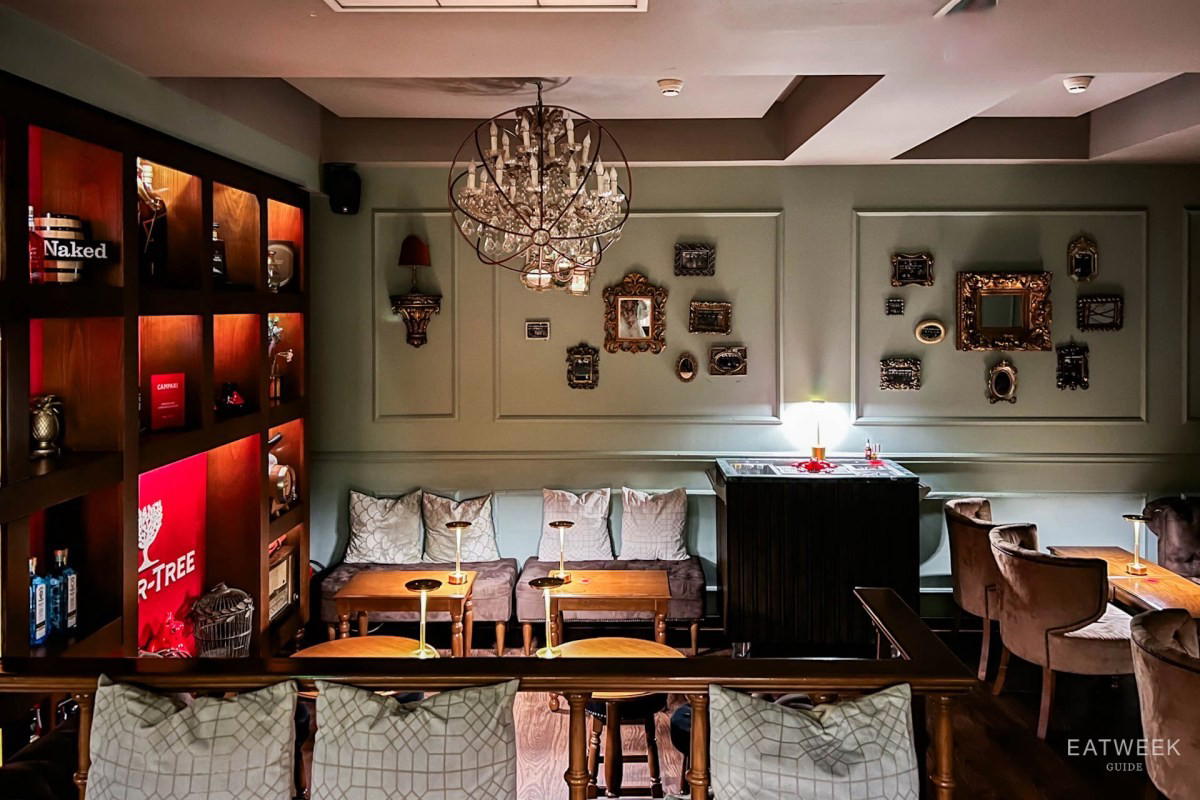
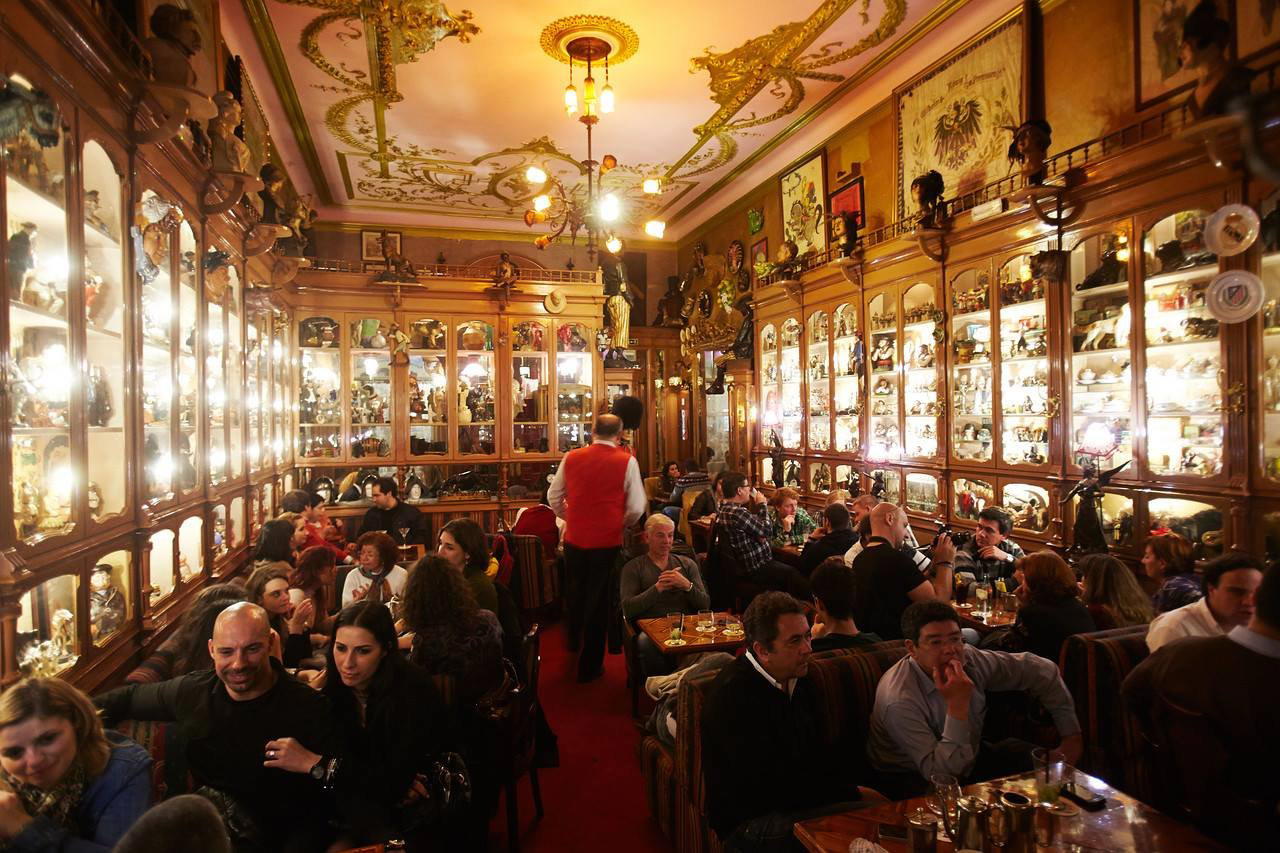
The bar is less a cocktail destination than a cabinet of wonders that happens to serve drinks — one of Lisbon's most visually arresting interiors, and a reference point for understanding the city's layered relationship with ornament and empire.

Pearl is the En Primeur Club membership app — saves, bookings, and concierge access live there. Same editors, same standards.
- Address
- R. Dom Pedro V 89, 1250-093 Lisboa, Portugal
- Phone
- +351213424729
- Hours
- Mon–Sat 6 PM–2 AMSun 9 PM–2 AM
- Directions
- Get directions
The menu
What to order
- Cosmopolitan
- Alexander
- Grasshopper
- Rob Roy
Príncipe Real itself is worth understanding as a context. The neighbourhood climbs the hill west of Bairro Alto, historically aristocratic, now split between independent design shops, concept stores, and a handful of bars and restaurants that attract a mix of local residents and visitors who have done their research. Pavilhão Chinês sits at the junction of that older Lisbon — the city of elaborate ornament, of Portuguese tile work and azulejo panels, of empire-era collecting, and the contemporary bar culture that has taken hold in the city over the past decade.
Lisbon's Bar Culture and Where This Fits
Lisbon's drinking culture has developed in ways that mirror broader European patterns: a first wave of neighbourhood tascas and simple wine bars, followed by a cocktail-focused wave that brought technical menus and trained bartenders, and now a more fragmented scene where different formats coexist. Pavilhão Chinês does not sit in the technical cocktail tier, it has never been that kind of destination. Its position is closer to the European tradition of the grand café-bar, where the physical environment carries as much weight as what is served, and where the point is duration rather than precision.
That distinction matters when placing it alongside the city's other well-known addresses. The high-end dining operations in Lisbon, Belcanto, CURA, Eleven, 50 Seconds from Martin Berasategui, operate in the €€€€ bracket with tasting menus and formal service. 2Monkeys represents a more casual creative format. Pavilhão Chinês operates in a different register entirely: it is a bar with a strong identity, not a restaurant with a bar, and the comparison set is more usefully European café-bars and curiosity-cabinet interiors than Lisbon's Michelin-tracked dining rooms.
The Logic of Accumulated Objects
The collecting logic at Pavilhão Chinês connects to something specific in Portuguese material culture. The country's maritime history produced centuries of exchange with Asia, Africa, and South America, a flow of objects, motifs, and techniques that left traces across Portuguese decorative arts. The chinoiserie influence referenced in the bar's name sits inside that longer story: the Portuguese were among the first Europeans to trade extensively with China, and the resulting aesthetic hybrids appear throughout Lisbon's tiles, furniture, and architecture. The bar's accumulated objects, spanning toy soldiers, model transport, vintage domestic items, and Asian-influenced porcelain, read as an informal museum of that collecting impulse, compressed into a single room.
This is also why the venue connects meaningfully to the editorial angle of imported methods meeting indigenous products. The bar form itself, drinks served in a fixed counter environment, is a European convention applied to a space whose visual logic is entirely rooted in Portuguese historical accumulation. Along the Algarve, addresses like Ocean in Porches, Bon Bon in Lagoa, and Al Sud in Lagos have developed serious dining programs away from the capital. In the north, Antiqvvm in Porto and A Cozinha in Guimarães anchor a distinct regional food culture. Casa de Chá da Boa Nova in Leça da Palmeira occupies one of the country's architecturally significant dining settings. On Madeira, Il Gallo d'Oro in Funchal represents the island's upward trajectory. In the south, The Yeatman pairs wine country access with a serious dining room. In the Algarve's east, A Ver Tavira in Tavira works a quieter register. Our full Lisbon restaurants guide maps the capital's dining options by neighbourhood and format.enprimeurclub.com/restaurants/le-bernardin">Le Bernardin in New York City and the more technique-intensive programs at Atomix, both of which represent the international standard against which Lisbon's serious kitchens are increasingly measured. The bar is a standard inclusion on evening itineraries in the neighbourhood, it functions well as either an opening drink before dinner at one of the nearby restaurants or as a later-evening destination in its own right. Phone and booking information are not published by the venue; the format traditionally operates on a walk-in basis, with capacity set by the room rather than a reservation system. Evenings earlier in the week tend to be quieter; Friday and Saturday nights fill the room and can make the experience less comfortable for those who want to take in the objects at a pace. The bar draws a mixed crowd, Lisbon residents who have been coming for years alongside visitors who found it through word of mouth or editorial coverage. That mix is part of what sustains its character.
Frequently asked questions
Where do I go for Pavilhão Chinês?
Pavilhão Chinês is located at R. Dom Pedro V 89, 1250-093 Lisboa, Portugal, Lisbon.
What makes Pavilhão Chinês different from other Lisbon bars?
The interior is the defining characteristic: every surface from floor to ceiling is lined with display cases holding thousands of accumulated objects — tin soldiers, model planes, porcelain figurines, and assorted curiosities — making the room itself the primary attraction at Rua Dom Pedro V 89. Most Lisbon bars in the Príncipe Real and Chiado area compete on cocktail lists or wine selections; Pavilhão Chinês is the one where the architecture of objects predates any given drink order.
What dish is Pavilhão Chinês famous for?
Pavilhão Chinês is a bar, not a kitchen — food is not its focus, and the venue at Rua Dom Pedro V 89 is known for drinks served inside one of Lisbon's most densely decorated interiors. Guests come for cocktails and the atmosphere of a room lined floor-to-ceiling with accumulated objects, not for a signature plate.
Can I walk in to Pavilhão Chinês?
Walk-ins are the norm at Pavilhão Chinês — the bar on Rua Dom Pedro V 89 in Príncipe Real does not operate on a reservation model in the way that Lisbon's tasting-menu restaurants do. Arriving early in the evening improves your chances of securing a seat, particularly on weekends when Príncipe Real draws significant foot traffic.
Credentials Lens
Comparable venues nearby, for context on price, style, and recognition.
| Venue | Cuisine | Price | Notes |
|---|---|---|---|
| Pavilhão ChinêsThis venue — the venue you are viewing | Cocktail Bar & Gastropub | $20–30 | Not listed |
| SecAdegas | Portuguese Petiscos | Not listed | Estefania |
| Le Chat | Rooftop Lounge Bar with Small Plates | Not listed | Madragoa |
| Tricky's | Modern Portuguese Small Plates | $30–50 | Bairro Alto |
| Zé da Mouraria | Traditional Portuguese | $10–20 | Mouraria |
| La Serra | Italian Bistro with Wood Oven Pizzas | $20–30 | Alcantara |