Pastificio Remelli
In Valeggio sul Mincio, the town that treats tortellini as civic identity, Pastificio Remelli sits within a pasta-making tradition that predates modern restaurant culture. The pastificio format, part shop, part producer, represents a different register from the region's white-tablecloth dining, one where craft and locality anchor the offer rather than tasting menus or celebrity chefs.
Pearl is the En Primeur Club membership app — saves, bookings, and concierge access live there. Same editors, same standards.
- Address
- Via Alessandro Sala, 30, 37067 Valeggio sul Mincio VR, Italy
- Phone
- +39457951630
- Website
- pastificioremelli.it
- Directions
- Get directions
 Saves & bookings on Pearl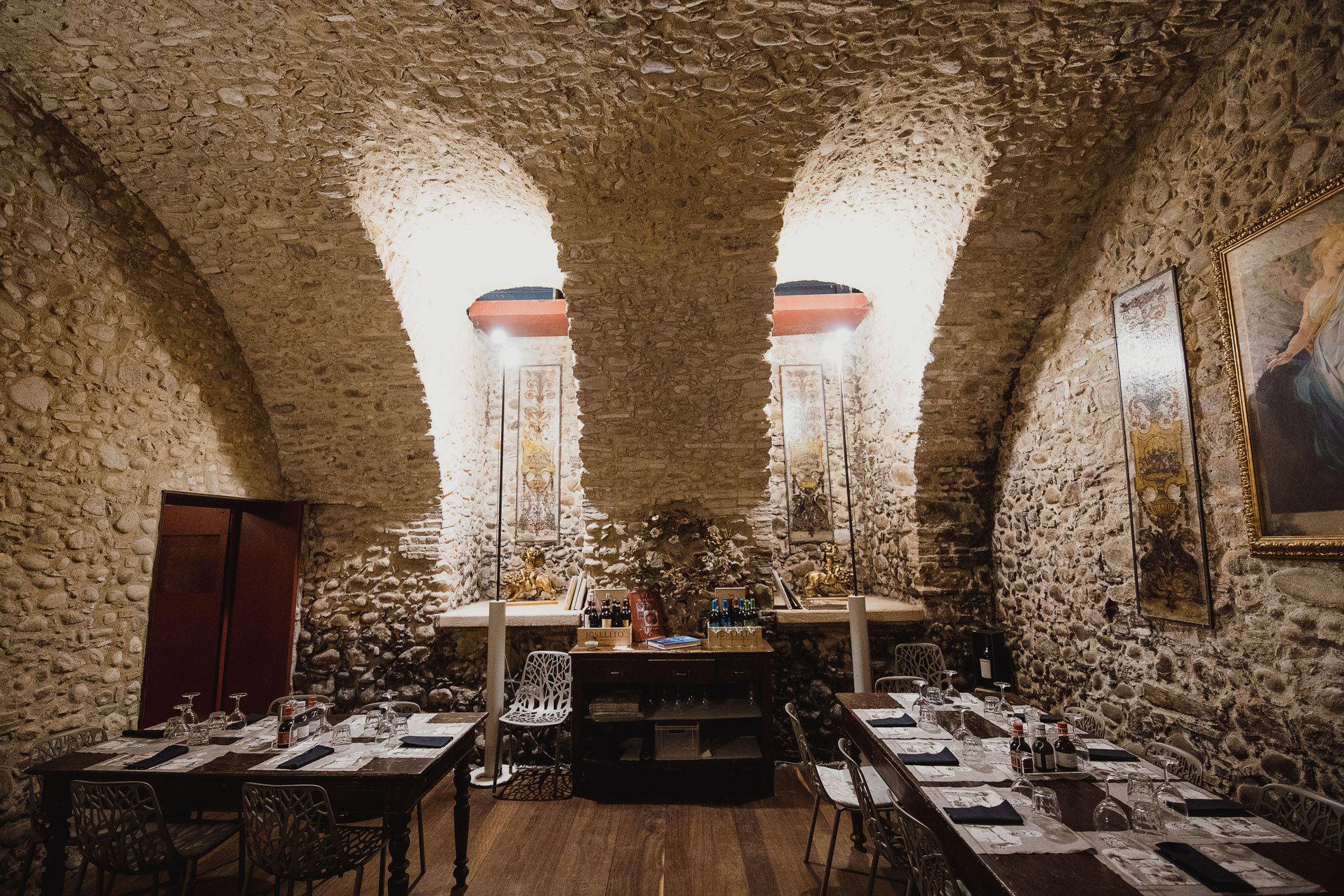
Where Pasta Is the Point, Not the Prelude
Valeggio sul Mincio has built an entire civic identity around a single pasta format. The town's tortellini, smaller and more delicate than the Bolognese version, traditionally wrapped around a meat filling and folded by hand, have been documented in local gastronomy for centuries, and the town's annual Feast of the Nodo (the knot-shaped pasta) draws visitors to the banks of the Mincio river each June. Within this context, a pastificio is not simply a shop. It is a production unit embedded in a living tradition, the kind of establishment that makes the ingredient sourcing question not incidental but structural.
Pastificio Remelli operates inside that tradition on Via Alessandro Sala. The pastificio format itself is worth understanding before arriving: these are not restaurants in the conventional sense, though many sell prepared pasta for immediate consumption alongside dried or fresh product to take home. The draw is proximity to production, pasta made on the premises, from local eggs and flour, shaped by hand or mechanical press, sold at the point of origin. In a region where the Dal Pescatore in Runate represents the apex of the white-tablecloth pasta tradition (three Michelin stars, decades of Italian culinary authority), the pastificio occupies a complementary but distinct position: production over performance, material over theatre.
The Ingredient Logic of the Po Valley
The sourcing argument for fresh pasta in this part of northern Italy is direct to make from geography alone. The Po Valley, of which Valeggio sul Mincio sits at the eastern edge, where the Mincio flows south from Lake Garda toward Mantua, has historically supplied the raw materials for some of Italy's most ingredient-driven cooking: eggs from free-range farmyard flocks, soft wheat from the plains, butter and aged cheeses from the Grana Padano and Parmigiano-Reggiano production zones within reach to the west. The argument for buying fresh pasta here rather than importing it from a distant industrial producer rests on that proximity.
Northern Italian pasta culture differs from its southern counterpart in ways that matter to sourcing. Where the south built its tradition on dried semolina pasta, durable, suited to long storage, designed for a drier climate, the north developed an egg-rich, soft-wheat tradition that demanded local supply chains and short turnaround times. Tortellini that dry out lose their structural integrity. The pastificio model exists precisely because this pasta needs to be made close to where it is eaten, ideally on the day.
This is the broader argument that operations like Pastificio Remelli represent within Valeggio's food economy: a supply-chain logic that keeps production local, ingredients traceable, and the product connected to the agricultural base of the Mincio valley. It is a different kind of trust signal from the awards trail followed by Osteria Francescana in Modena or Le Calandre in Rubano, but it is legible to anyone who has spent time thinking about where Italian food actually comes from.
Valeggio Sul Mincio as a Dining Destination
The town sits roughly 30 kilometres southwest of Verona and is accessible by car via the SS249. It is small enough that the dining scene is concentrated and walkable, with a cluster of restaurants and pasta producers in and around the historic centre near the Visconti bridge. Alla Borsa is the other well-documented name in town, representing the seated restaurant tier. The pastificio model sits alongside that tier, not below it, it answers a different question about how to eat here.
Casa Perbellini 12 Apostoli anchors the city's fine dining offer, or with a longer drive toward the reference points of northern Italian haute cuisine: Villa Crespi in Orta San Giulio, Enrico Bartolini in Milan, or the South Tyrol's Atelier Moessmer Norbert Niederkofler in Brunico. Against that backdrop of formal, tasting-menu-led Italian fine dining, Valeggio's pastificio culture reads as a corrective: a reminder that the ingredient itself, made carefully and sourced locally, does not require architectural plating or a starred kitchen to justify attention.
The country's most discussed restaurants, Piazza Duomo in Alba, Uliassi in Senigallia, Reale in Castel di Sangro, frame their menus around hyper-local sourcing as a point of creative departure. The pastificio predates that framing by generations; it embeds the same logic into an older, less self-conscious format.
Planning Your Visit
Valeggio sul Mincio is best reached by car; the town is not well-served by rail. The peak season for pasta tourism in Valeggio is early summer, when the Feast of the Nodo draws visitors specifically for the tortellini tradition, arriving outside that window means a quieter experience of the town's everyday food culture, which has its own appeal. Pastifici in northern Italian towns typically operate on daytime hours with a midday break, and Pastificio Remelli is open Tuesday through Saturday from 8 AM to 7:30 PM and Sunday from 8 AM to 3:30 PM; it is closed Monday.
FAQs: Pastificio Remelli
- Does the restaurant work for a family meal? Valeggio sul Mincio's pastificio format is generally well-suited to families, the town's pasta tradition is accessible, unthreatening in price relative to formal Italian dining, and rooted in a food culture that does not require a particular dining vocabulary to appreciate.
- What is the vibe at the restaurant? If you arrive expecting the kind of formal service architecture that marks Enoteca Pinchiorri in Florence or Da Vittorio in Brusaporto, recalibrate: a pastificio in a small Veneto town runs on production rhythms and local custom, not hospitality theatre. If you are comfortable in that register, the directness of the format is an asset rather than a shortcoming.
- What is the signature dish at the restaurant? Tortellini in the Valeggio style, hand-folded, locally sourced, tied to the town's documented pasta tradition, is the format that defines this category of producer in Valeggio sul Mincio.
- How does the restaurant fit into Valeggio sul Mincio's pasta-making heritage? Valeggio sul Mincio's tortellini tradition is among the more geographically specific pasta cultures in the Veneto, the town's nodo d'amore (love knot) pasta shape has local festival status and a production history tied to the Mincio river valley's agricultural supply. The restaurant operates within that producer community alongside other local makers, representing the craft-production tier of a town whose food identity is built almost entirely around this single pasta format. For comparable reference points in northern Italian ingredient-driven dining, Quattro Passi in Marina del Cantone and La Pergola in Rome show how different Italian regional traditions translate ambition into distinctly local terms; the pastificio model does the same at a different scale and with a different set of priorities. Internationally, the distance between a Valeggio pastificio and a destination like Le Bernardin in New York City or Atomix in New York City is not simply one of geography, it is a difference in what kind of knowledge about food the experience is designed to convey.
At-a-Glance Comparison
Comparable venues nearby, for context on price, style, and recognition.
| Venue | Cuisine | Price | Notes |
|---|---|---|---|
| Pastificio RemelliThis venue — the venue you are viewing | Traditional Italian Pasta with Tortellini di Valeggio | $$ | Not listed |
| Alla Borsa | Traditional Italian with handmade tortellini | $$$ | Valeggio Sul Mincio |
| Café Carducci | Historic Italian Café-Bistro | $$ | Veronetta |
| Osteria Del Fil De Fero | Traditional Italian Osteria | $$ | city center |
| Antica Trattoria Bellinazzo | Traditional Italian Trattoria | $$ | Villa Bartolomea |
| Sofia | Traditional Italian Trattoria | $$ | Ronco all'Adige |
Continue exploring
More in Valeggio Sul Mincio
Restaurants in Valeggio Sul Mincio
Browse all →
Bars in Valeggio Sul Mincio
Browse all →
Hotels in Valeggio Sul Mincio
Browse all →
At a Glance
- Rustic
- Classic
- Cozy
- Family
- Casual Hangout
- Open Kitchen
- Local Sourcing
Current opening hours
- Monday
- Closed
- Tuesday
- 8 AM–7:30 PM
- Wednesday
- 8 AM–7:30 PM
- Thursday
- 8 AM–7:30 PM
- Friday
- 8 AM–7:30 PM
- Saturday
- 8 AM–7:30 PM
- Sunday
- 8 AM–3:30 PM
Hours can change for holidays and private events. Last verified .
Cozy with a lit fire, attentive service, and a welcoming pasta shop atmosphere.