Pasta Ripiena

On a short, narrow street in central Bristol, Pasta Ripiena runs a daily-changing menu of fresh stuffed pasta with a discipline rarely found at this price point. The format is simple: focaccia, antipasti, a handful of filled pastas, dessert. Booking is advisable, particularly for the fixed-price lunch, which represents one of the stronger value propositions in the city's Italian dining scene.
Pearl is the En Primeur Club membership app — saves, bookings, and concierge access live there. Same editors, same standards.
- Address
- 33a St Stephen's St, Bristol BS1 1JX, United Kingdom
- Phone
- +44 117 329 3131
- Website
- pastaripiena.co.uk
- Directions
- Get directions
 Saves & bookings on Pearl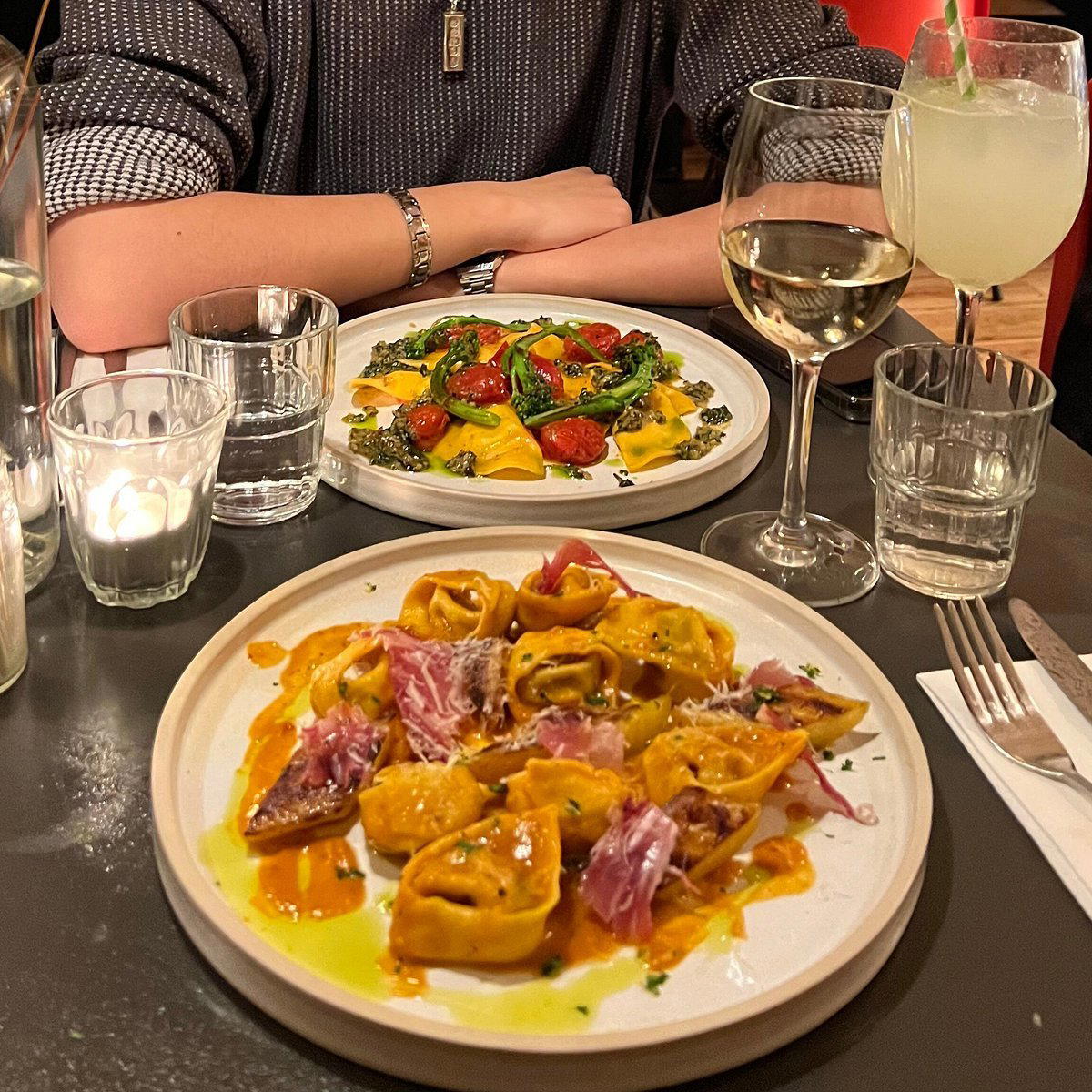
St Stephen's Street and the Case for Restraint
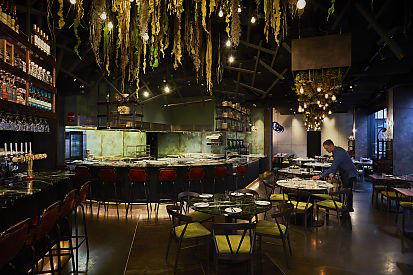
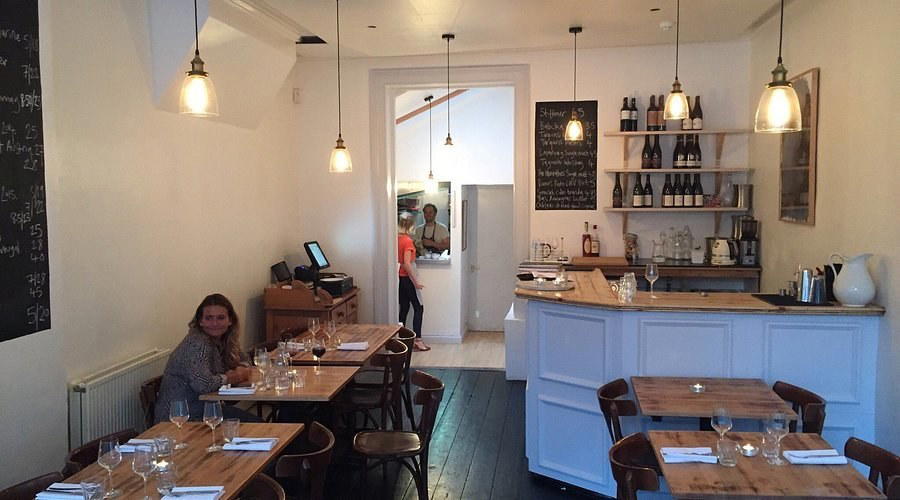
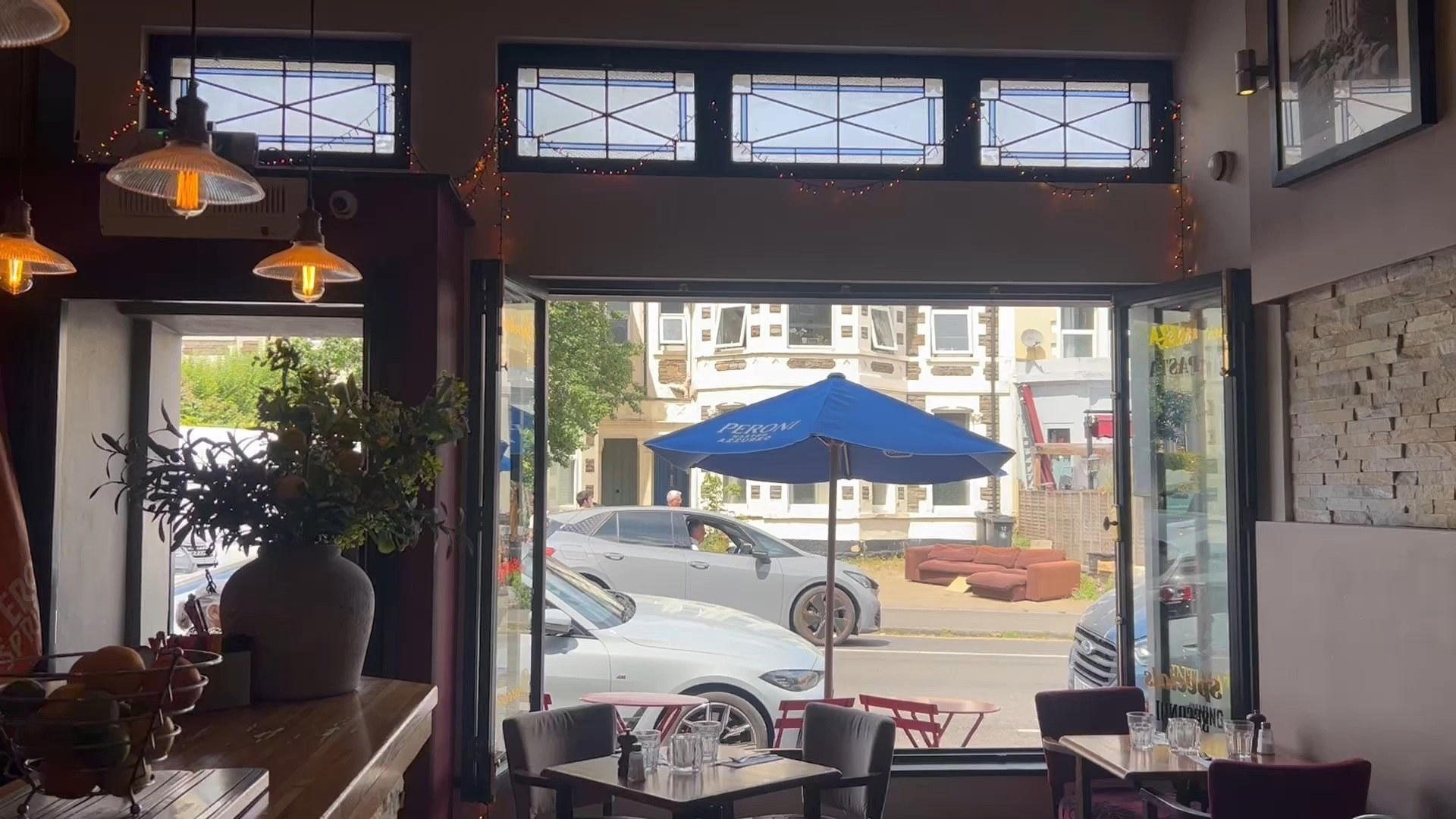
Bristol's restaurant culture has expanded considerably over the past decade, pulling in ambitious modern British cooking at places like Bulrush and technically precise European work at Adelina Yard. Against that backdrop, Pasta Ripiena at 33a St Stephen's Street takes an opposite position: a short menu, a tight room, and a single-category focus on filled pasta. The dining room is small and deliberately informal, with square wooden tables arranged along either side of the space in close proximity. There is no theatrical gesture here, no wide-angle kitchen theatre designed to impress from the doorstep. What you get instead is an open kitchen operating at close range, a room where the cooking is audible and the smell of fresh pasta and sauces arrives before the menu does.
That physical compression is worth understanding before you book. The closely packed tables mean the room fills quickly and conversation carries. It is not a venue for a long, spacious dinner with distance from neighbouring guests. It is, however, a venue where the kitchen's work is genuinely difficult to ignore, which is largely the point.
What the Kitchen Is Actually Doing
Fresh stuffed pasta is a deceptively demanding format. The pasta itself must be thin enough to yield on the tooth while holding its fill under heat and sauce, and the fill must be flavoured with enough intensity to read through both. Getting one of those right is direct; getting both right consistently, on a menu that changes daily, is a different exercise entirely.
The documented menu at Pasta Ripiena gives a clear signal of how the kitchen approaches that problem. Casoncelli parcels, the Bergamo-style folded pasta typically associated with butter and sage in Lombardy, are here filled with ox cheek ragù and served on a bed of celeriac purée, dressed with bresaola and Parmesan. That combination layers rendered collagen richness from the cheek against the clean, slightly bitter note of celeriac, then cuts through with the cured salinity of bresaola. It is the kind of construction that looks simple on paper and requires precise execution to balance in the bowl.
The antipasti section follows a similar logic. Sourdough focaccia and a salad of Italian tomatoes with ricotta, balsamic vinegar, and grass-green virgin olive oil are not complex dishes, but they depend entirely on ingredient quality and seasoning discipline. The olive oil is described with enough specificity in available records that it functions almost as a recurring ingredient signature across courses: it reappears in a pistachio panna cotta at dessert, where its grassy character becomes a counterpoint to the sweetness of the nut. An Italian cheese course with homemade flatbread and mustard fruits provides the alternative route to a close.
Wine list runs to around a dozen reds and whites, weighted toward Italian producers but extending into France, the New World, and, notably, Essex. That last inclusion is worth a pause: English wine production in the eastern counties has developed a credible sparkling programme over the past fifteen years, and its appearance on an Italian-focused list in Bristol reads as genuine curiosity rather than tokenism. For a room at this price point and format, a carefully chosen list of that range signals that the floor team is paying attention to what goes in the glass as much as what arrives on the plate.
The Team Dynamic Behind a Short Menu
A daily-changing menu creates a specific kind of operational pressure. There is no settled service muscle memory for a dish that was retired the night before. The kitchen team must re-calibrate quantities, timing, and seasoning ratios each day, while front-of-house must explain new dishes to guests without printed support. That the menu at Pasta Ripiena changes daily suggests a kitchen that runs on a close relationship between whoever is sourcing ingredients, whoever is making the pasta, and whoever is composing and adjusting sauces in service. In a small room with an open kitchen, those relationships are visible to anyone paying attention.
The wine list, likewise, points to a front-of-house team that has been given some latitude in curation. A list that moves from Italian classics through France and New World producers to Essex is not assembled by accident. It reflects a consistent editorial position that the room's Italian identity does not have to be a constraint on what goes in the glass. That kind of decision-making at floor level, exercised within a coherent framework rather than arbitrarily, is one of the markers that separates a well-run small restaurant from a merely competent one.
Pasta Ripiena is also described in available records as not quite reaching the popularity of its sibling venue Pasta Loco, which has been one of Bristol's most recognised Italian addresses. That positioning in the city's Italian dining pair is relevant context. Bianchis and other Italian-leaning addresses in Bristol operate at different price tiers and with different ambitions, but Pasta Ripiena's fixed-price lunch and daily-changing format place it in a specific and relatively underserved niche: ingredient-led fresh pasta at accessible prices, without the volume or the wait that Pasta Loco now attracts.
Where It Sits in Bristol's Dining Map
Bristol has a range of serious dining options across price points and traditions. At the upper end, restaurants like 1 York Place and Bank operate with broader menus and more formal service structures. The city's modern British contingent, well represented by Bulrush and Adelina Yard, takes a different approach to sourcing and technique. Pasta Ripiena does not compete in those categories.
For readers building a Bristol itinerary across categories, the full picture is available through our Bristol restaurants guide, our Bristol bars guide, our Bristol hotels guide, and our Bristol experiences guide. For those interested in how Bristol's wine culture extends beyond the restaurant floor, our Bristol wineries guide covers the regional producers worth tracking.
It is also worth placing this style of cooking in a broader UK context. The discipline required to execute a short, daily-changing stuffed pasta menu at this level is of a different order than the kitchen scale brought to bear at destinations like Moor Hall, L'Enclume, or The Ledbury. Internationally, the concentrated focus on a single pasta category echoes the specialist philosophy found at venues like Le Bernardin in its devotion to seafood, or the ingredient-centred rigour of Emeril's in New Orleans. Different scales, different categories, but a shared understanding that depth of focus tends to produce better cooking than breadth of ambition.
Planning Your Visit
Pasta Ripiena is at 33a St Stephen's Street, BS1 1JX, in central Bristol, within walking distance of the city's main transport corridors. The menu changes daily, so there is no reliable way to predict which filled pasta will be on service. That is either an inconvenience or an argument for repeat visits, depending on your appetite for variables. For readers accustomed to the scale and format of destination restaurants like The Waterside Inn or Gidleigh Park, Pasta Ripiena is a deliberate step in the opposite direction: informal, close, daily-changing, and focused on getting one category of Italian cooking right.
How Pasta Ripiena Bristol compares with similar nearby venues.
| Venue | Cuisine | Price |
|---|---|---|
| Marmo | Italian | ££ |
| Adelina Yard | Modern Cuisine | £££ |
Recognition history
Dated appearances from independent guides and award organizations, with the underlying list record or original source where available.
The Good Food Guide GFG Good
The Good Food Guide

At a Glance
- Cozy
- Intimate
- Modern
- Date Night
- Special Occasion
- Open Kitchen
- Extensive Wine List
- Local Sourcing
Current opening hours
- Monday
- Closed
- Tuesday
- 5–11 PM
- Wednesday
- 12–4 PM, 5–11 PM
- Thursday
- 12–4 PM, 5–11 PM
- Friday
- 12–4 PM, 5–11 PM
- Saturday
- 12–11 PM
- Sunday
- Closed
Hours can change for holidays and private events. Last verified .
Intimate and cozy with closely packed tables, open kitchen, relaxed and informal atmosphere.
Know Before You Go
- Getting there
- 33a St Stephen's St, Bristol BS1 1JX, United Kingdom