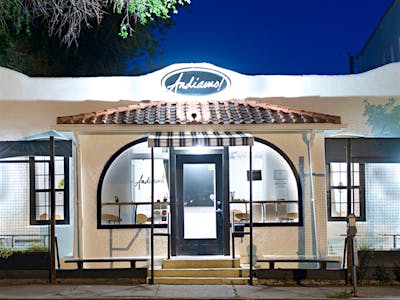
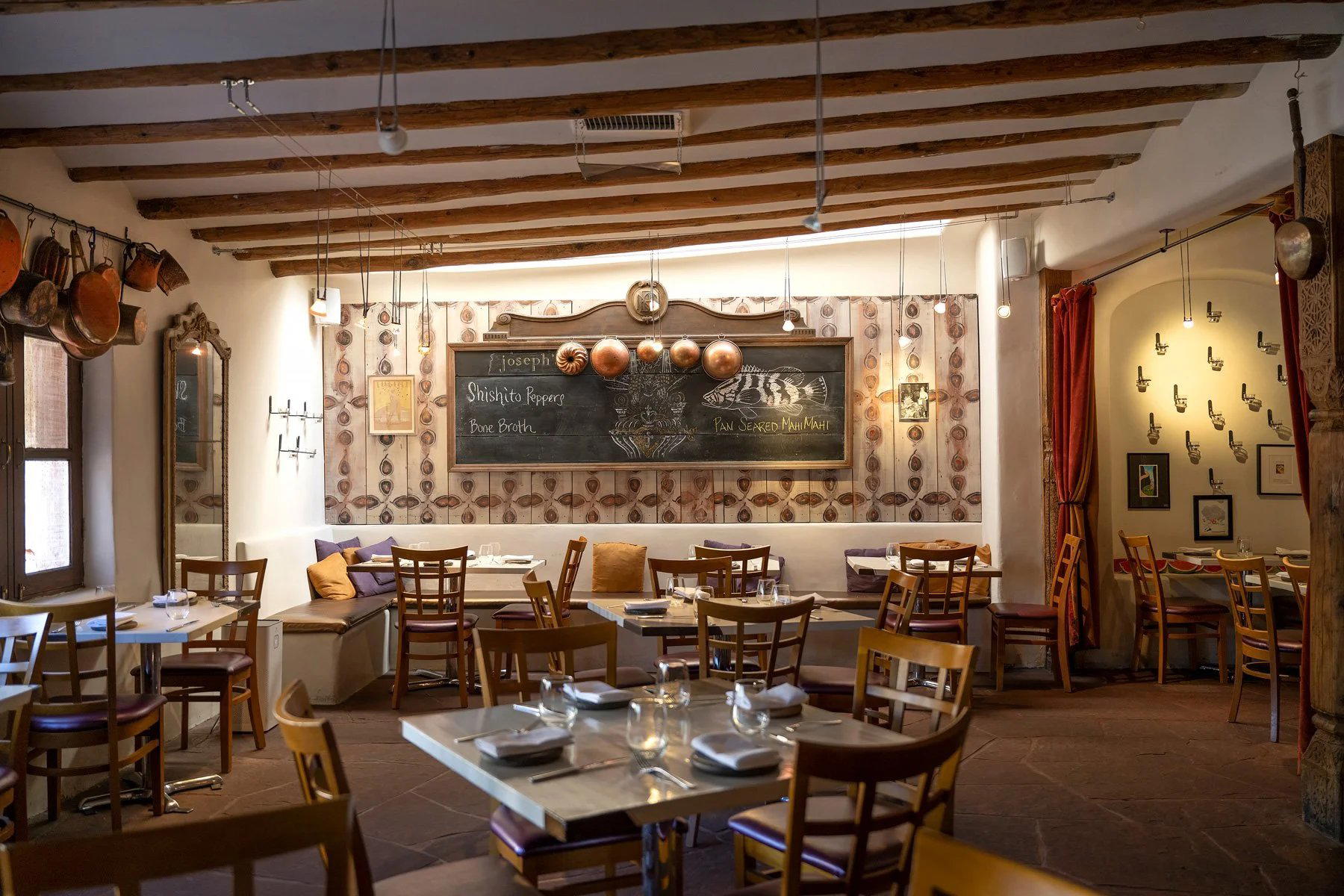
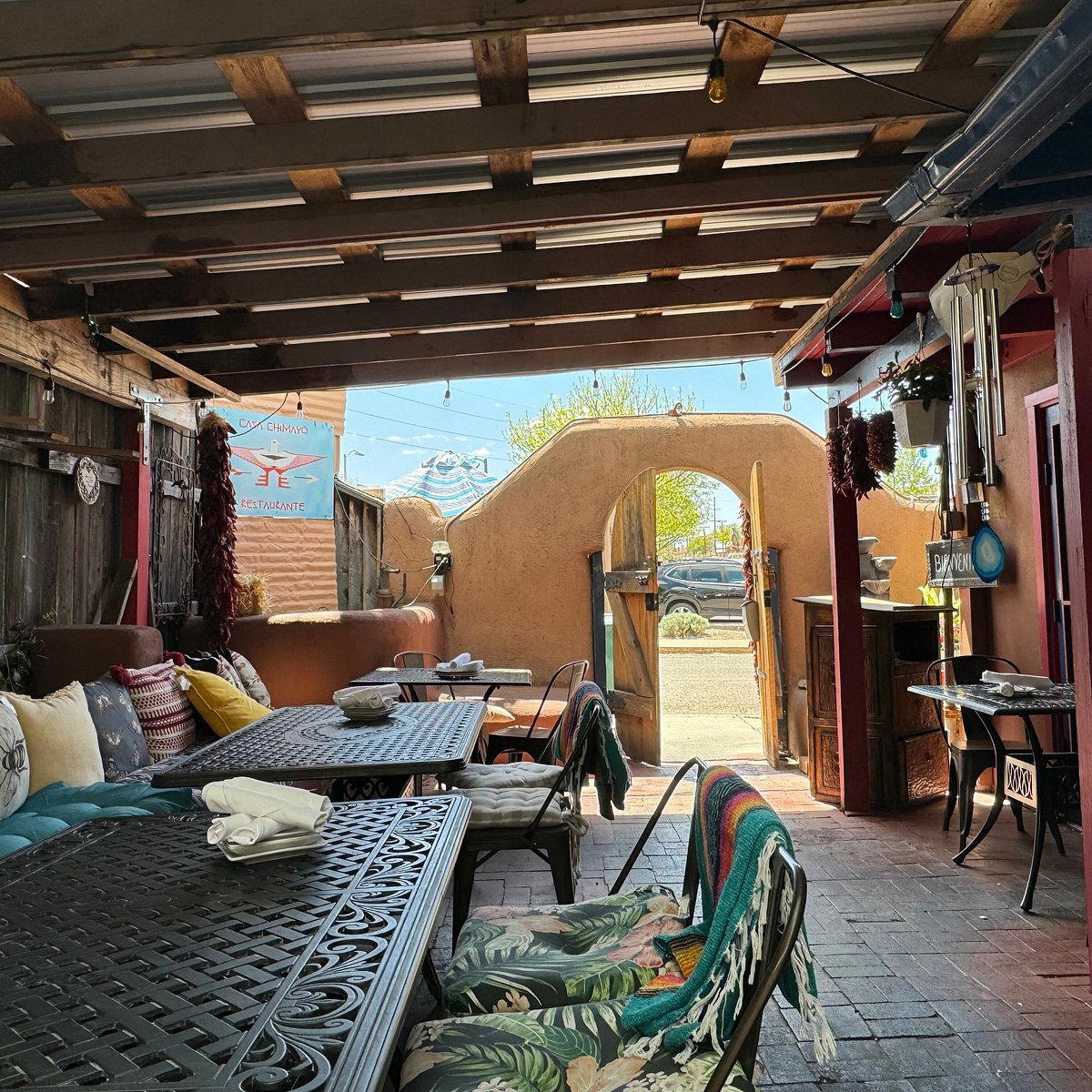
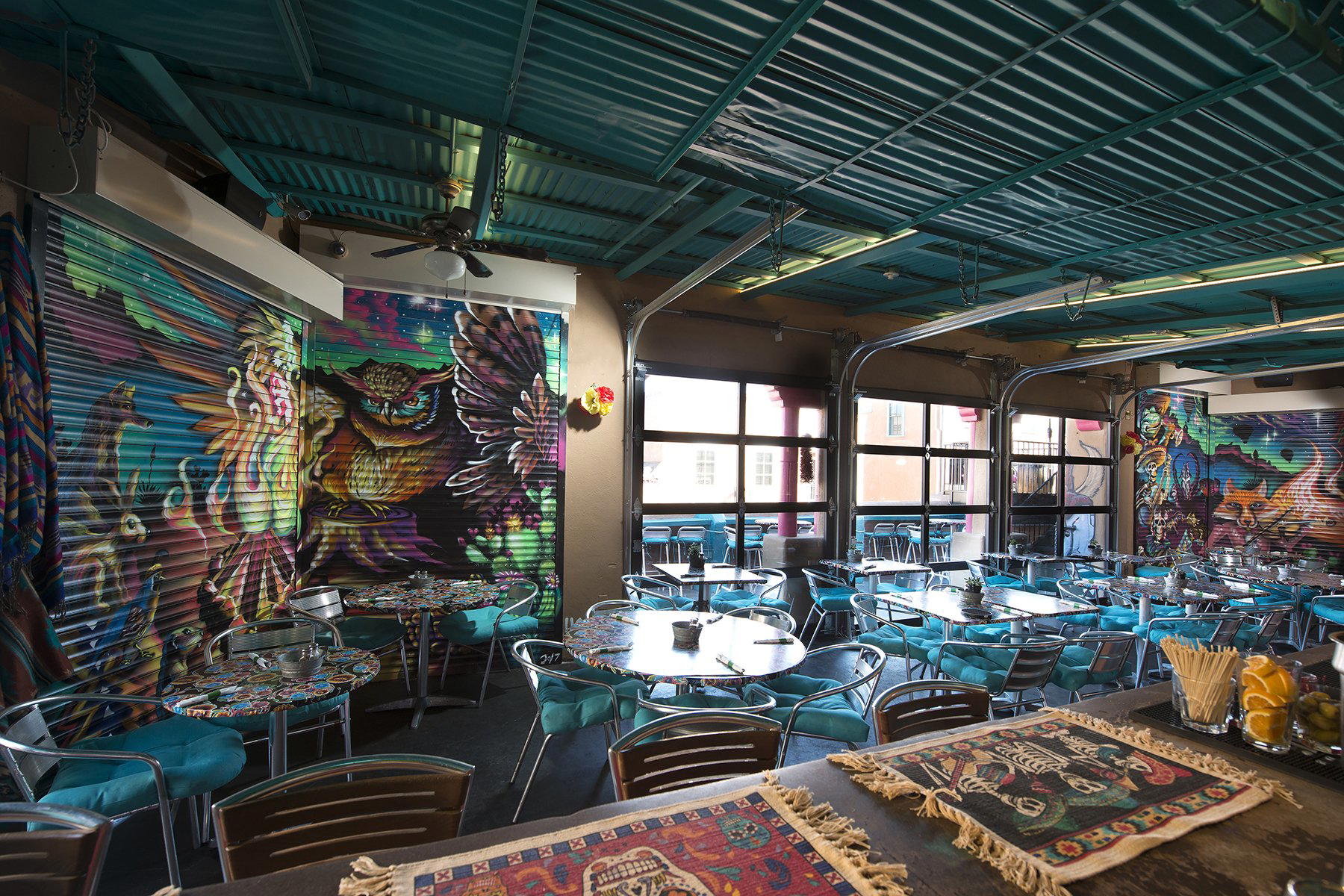
Paloma Restaurant

Michelin Plate
Our verdict
Paloma Restaurant occupies a Railyard-adjacent address on South Guadalupe Street, positioning it within Santa Fe's most actively evolving dining corridor. The kitchen works within a city where ingredient sourcing carries particular weight — high desert terroir, chile cultivation traditions, and proximity to northern New Mexico farms shape what serious restaurants put on the plate. For context on the broader Santa Fe scene, see our full city guide.

Pearl is the En Primeur Club membership app — saves, bookings, and concierge access live there. Same editors, same standards.
- Address
- 401 S Guadalupe St, Santa Fe, NM 87501
- Phone
- (505) 467-8624
- Hours
- Mon ClosedTue–Sun 5–9 PM
- Website
- palomasantafe.com
- Directions
- Get directions
- Booking
- Book on OpenTable
The menu
What to order
- Squash blossom enmoladas
- Short rib adobo
- Tlayuda con smoked chicken
- Hand-pressed corn tortillas
South Guadalupe and the Railyard's Emerging Dining Identity
Santa Fe's dining geography has shifted meaningfully over the past decade. The Plaza-adjacent blocks remain dominant in visitor traffic, but the Railyard district and its South Guadalupe corridor have drawn a different kind of restaurant: properties more interested in the local sourcing conversation than in trading on historic adobe atmosphere. Paloma Restaurant, at 401 S Guadalupe St, sits squarely in that newer corridor, a detail that tells you something before you've read a menu.
The Railyard area developed its current character partly through the presence of the Santa Fe Farmers Market — one of the more serious producers' markets in the Mountain West, operating since 1968 and held in the Railyard pavilion. That proximity matters. Restaurants on this stretch have a shorter supply chain to local chiles, heritage corn, grass-fed beef from the Estancia Valley, and stone-fruit from Velarde than almost anywhere else in the city. It creates a specific kind of kitchen culture, one where seasonal shifts in the menu aren't a marketing posture but a structural reality dictated by what's available at the stalls on Tuesday and Saturday mornings.
What Ingredient Sourcing Means in Northern New Mexico
New Mexico's agricultural identity is older and more specific than most American states. The Hatch and Española valleys have cultivated distinct chile varieties for centuries, and the state's official question — "Red or green?", is less a quirk than a genuine expression of a bifurcated growing tradition. For any restaurant operating in Santa Fe with serious sourcing intentions, the chile supply chain is the first decision. Green chiles, roasted in late summer, and red ristras hanging through winter represent genuinely different flavor profiles drawn from the same plant at different stages, and kitchens that source both from named growers operate in a different register than those working from commodity distributors.
Beyond chile, northern New Mexico's high desert elevation (Santa Fe sits above 7,000 feet) produces a short but intense growing season. Stone fruits from the Rio Grande valley, blue corn from Pueblo growers, lamb from local ranches, and piñon nuts harvested from the surrounding forests all carry a geographic specificity that conscientious menus can either honor or flatten. The sourcing conversation in Santa Fe restaurants is, at its most substantive, a conversation about whether the kitchen is treating these ingredients as local color or as the actual point.
This is the context in which Paloma's address on South Guadalupe becomes meaningful. To see how the same ingredient-sourcing emphasis plays out across different cuisine types in Santa Fe, Sazón (New Mexican) represents the format where those traditions are made most explicit, while 229 Galisteo St approaches the local-ingredient framework through a more contemporary lens. Alkemē sits in a similar neighborhood tier. For casual registers on the same street network, Back Road Pizza and Bert's Burger Bowl each anchor a different price point in the local dining circuit.
How Santa Fe Fits Into the Broader American Fine Dining Map
Santa Fe occupies an unusual position in American restaurant culture. It is a small city (fewer than 90,000 residents) with a dining scene disproportionate to its population, sustained by a large arts-tourism economy, a significant second-home ownership base, and a culinary tradition that pre-dates American statehood. That combination produces a restaurant environment where a kitchen can charge serious prices to a knowledgeable audience without needing the metropolitan density that drives markets in New York, Chicago, or Los Angeles.
Nationally, the farms-to-table sourcing model has become the standard frame for premium American restaurants. Properties like Blue Hill at Stone Barns in Tarrytown and Single Thread Farm in Healdsburg have established the benchmark for ingredient-driven fine dining, building menus around their own farm operations in ways that smaller urban restaurants can't replicate directly. Smyth in Chicago applies a similar sourcing discipline within a city setting. In New Mexico, the dynamic shifts: restaurants don't need to own farms because the producer network is embedded in the region and accessible through the farmers market infrastructure. The supply chain is shorter by geography.
That's a structural advantage that distinguishes Santa Fe from markets like Providence in Los Angeles or Le Bernardin in New York City, where sourcing requires active logistics management across longer distances. The parallel isn't scale, it's the primacy of place in the ingredient conversation.
Other American kitchens navigating comparable sourcing commitments within distinct regional traditions include Lazy Bear in San Francisco, Emeril's in New Orleans, The French Laundry in Napa, The Inn at Little Washington in Washington, and Atomix in New York City, each of which translates a regional ingredient logic into a high-attention dining format. Santa Fe's version of that logic runs through chile cultivation and Pueblo agricultural traditions rather than through coastal fishery or Midwest grain.
Planning Your Visit
Paloma Restaurant is located at 401 S Guadalupe St in Santa Fe's Railyard district, within walking distance of the Railyard Park and the Santa Fe Farmers Market pavilion. The South Guadalupe corridor is accessible on foot from the Plaza in roughly fifteen minutes, or by a short drive with parking available along the street and in Railyard lots. For the most current hours, booking availability, and menu information, checking directly with the restaurant before your visit is advisable, as seasonal programming in Santa Fe kitchens tends to shift with the growing calendar. For a broader look at where Paloma fits within Santa Fe's dining options across all price points and cuisine types, our full Santa Fe restaurants guide maps the city's dining character neighborhood by neighborhood.
Frequently asked questions
What part of town is Paloma Restaurant in?
Paloma Restaurant is located at 401 S Guadalupe St, Santa Fe, NM 87501, Santa Fe.
How does Paloma Restaurant reflect the broader Santa Fe dining scene compared to Plaza-area restaurants?
The Railyard district, where Paloma occupies its address at 401 S Guadalupe St, represents a deliberate shift in Santa Fe's dining geography away from the Plaza-adjacent blocks that dominate tourist traffic. Restaurants in this corridor tend to serve a higher proportion of local regulars, which often translates to tighter sourcing relationships and menus that change with the northern New Mexico agricultural calendar. For visitors, it offers a different register of the city's food culture than the historic center provides.
What should I eat at Paloma Restaurant?
Paloma sits squarely in the northern New Mexico culinary tradition, where Hatch and Española valley chiles are the defining ingredient rather than a garnish. Given the restaurant's position in Santa Fe's Railyard district, near the Santa Fe Farmers Market, the kitchen has direct access to regional producers whose growing seasons shape what's on the plate. Order with that agricultural context in mind: dishes rooted in New Mexico's specific chile culture will reflect the kitchen's strengths.
Do I need a reservation for Paloma Restaurant?
Santa Fe's dining scene punches well above its population of under 90,000 residents, meaning the better rooms fill faster than most comparably sized American cities. Paloma's address at 401 S Guadalupe St in the Railyard district draws both local regulars and visitors to a neighborhood that has gained significant dining momentum over the past decade. Booking in advance is the reliable approach, particularly on weekends and during the summer and fall high seasons.
Nearby-ish Comparables
Comparable venues nearby, for context on price, style, and recognition.
| Venue | Cuisine | Price | Awards | Notes |
|---|---|---|---|---|
| Paloma RestaurantThis venue — the venue you are viewing | Modern Mexican | $50–100 | Michelin Plate | Not listed |
| Coyote Cafe | Modern Southwestern Cuisine | $50–100 | James Beard Award Best Chefs | Downtown |
| Bouche Bistro | French Bistro | Not listed | Not listed | near Plaza |
| The Pantry | New Mexican Diner | $10–20 | Not listed | Cerrillos Road |
| 229 Galisteo St | Classic New Mexican | $20–30 | Not listed | Downtown |
| La Boca | Modern Spanish Tapas | $30–50 | Not listed | Downtown |
Recognition history
Dated appearances from independent guides and award organizations, with the underlying list record or original source where available.
Michelin Plate
Michelin