Oun Lido's

Esquire Best New Restaurants #15
Our verdict
Oun Lido's brings Cambodian-Chinese fusion to Portland's Old Port at 30 Market Street, earning a spot on Esquire's Best New Restaurants list for 2024 at number fifteen. Under chef Masayuki Otaka, the kitchen reinterprets classic Chinese technique through a Cambodian lens, producing one of the more distinctive menus in the city's already competitive dining corridor.

Pearl is the En Primeur Club membership app, where members save venues, book tables and use the concierge.

The menu
What to order
- Loc lac
- Kathew cha
- Neorm
- Pork potstickers
- Oyster mushrooms
- Mi goreng
- Hot lemon chicken
Where Portland's Chinese Tradition Gets a Cambodian Reframe
The Old Port end of Market Street has accumulated enough serious kitchens in the past decade to function as a reliable cross-section of Portland's dining ambitions. Oun Lido's arrived into that context in 2024 and landed immediately: a number-fifteen placement on Esquire's Leading New Restaurants list is a signal that travels beyond the local market, placing it in the same cohort of nationally recognised openings as kitchens with considerably longer institutional histories. What made the recognition notable was not simply the speed of it, but the specificity of what the kitchen is doing, Cambodian-Chinese fusion, executed through chef Masayuki Otaka's command of both culinary traditions, on a street where the competition includes established players across Italian, Vietnamese, and Thai formats.
The Cambodian-Chinese pairing is less arbitrary than it might first appear. Chinese culinary influence has been woven into Cambodian cooking for centuries, through the country's substantial Sino-Khmer population and the movement of Teochew and Cantonese techniques across Southeast Asia. What contemporary kitchens in this mode explore is how to make that layered inheritance visible rather than absorbed, to surface the tension between wok technique and Khmer spice logic, between the structural discipline of Chinese cooking and the more herbaceous, coconut-inflected vocabulary of Cambodia. Oun Lido's operates in that productive friction.
The Approach: Chinese Technique, Cambodian Register
Editorial angle worth tracking at Oun Lido's is how chef Otaka approaches the reinterpretation of classical Chinese dishes and methods through a Cambodian register. Across the broader category of modern Asian-fusion restaurants that have emerged in American cities over the past five years, the most considered examples tend to treat one culinary tradition as the structural frame and the other as the interpretive layer. At the less successful end, this produces novelty without coherence. At the sharper end, it produces dishes where the technique is recognisably Chinese but the flavour outcome shifts decisively.
This is the territory Oun Lido's is working. It belongs to a wider national moment in which chefs with multi-tradition training are revisiting Chinese cooking not by abandoning its rigour, but by applying it through different ingredient libraries and flavour logic. Atomix in New York has done comparable work with Korean and French syntax. Le Bernardin long demonstrated how French classical structure can be the vehicle for flavour traditions that sit outside European cooking. What Oun Lido's adds to that conversation is a pairing that has deep historical roots rather than being an invented fusion, which gives the kitchen's choices an internal logic that holds across the menu.
Where It Sits in Portland's Dining Corridor
Portland, Maine has developed a dining profile that punches well above its population size, with a concentration of nationally recognised kitchens covering a range of cuisines and formats. Berlu has established Vietnamese cooking as a serious category in the city. Kann brought Haitian cuisine to national attention. Langbaan runs one of the more precise Thai tasting menus in the country. What these kitchens share, and what Oun Lido's joins, is a willingness to operate outside the cuisines that American cities default to when building a prestige restaurant tier. Southeast Asian and Caribbean cooking, here, are not positioned as casual alternatives to a fine-dining core, they are the fine-dining core.
Oun Lido's Cambodian-Chinese fusion occupies a gap in that map. There is no equivalent kitchen in Portland working this particular pairing at this level, which gives it a positional clarity that its Esquire ranking reinforces. Its nearest thematic neighbours nationally would be kitchens engaged in Sino-Southeast Asian reinterpretation, a category that has received more attention in cities with large diaspora populations but remains sparse in secondary American markets.
For context on the broader Portland dining and hospitality scene, the full Portland restaurants guide, Portland hotels guide, Portland bars guide, Portland wineries guide, and Portland experiences guide provide further mapping of what the city offers across categories. Other Portland kitchens worth holding alongside Oun Lido's include Ken's Artisan Pizza and Nostrana for the Italian and pizza end of the market, though the cuisine comparison is less relevant than the shared commitment to craft-led production in a city that rewards both.
The National Cohort
A number-fifteen Esquire Leading New Restaurants placement puts Oun Lido's in direct company with the year's most-discussed American openings. This is a list that has historically recognised kitchens before Michelin and James Beard attention follows, a leading indicator rather than a lagging confirmation. Early review aggregation at small sample sizes is unreliable; 99 ratings narrowing to 4.9 suggests the kitchen is delivering against expectations with some regularity.
For American restaurants operating at this level nationally, the reference set includes kitchens like Lazy Bear in San Francisco, Alinea in Chicago, The French Laundry in Napa, and Single Thread Farm in Healdsburg, all of which built national recognition through specific culinary identities rather than broad-appeal programming. Emeril's in New Orleans and 8½ Otto e Mezzo Bombana in Hong Kong represent comparable cases of chefs using deep cuisine-specific knowledge to anchor a distinctive restaurant identity over time. The trajectory for Oun Lido's, if the kitchen sustains its early form, points in a similar direction.
Planning a Visit
Oun Lido's is at 30 Market Street in Portland's Old Port, a walkable neighbourhood with high restaurant density and accessible parking in the surrounding blocks. Given the Esquire recognition and limited initial capacity signals, booking ahead is advisable, kitchens at this national profile level in Portland's compact dining scene typically see demand outpace walk-in availability quickly.
Frequently asked questions
What is the atmosphere like at Oun Lido's?
Oun Lido's sits on Market Street in Portland's Old Port, a corridor that runs from working waterfront to dense restaurant block within a few hundred metres. The setting places it among a peer group of kitchens where the atmosphere is typically intimate and focused rather than large-format.Esquire Leading New Restaurants placement, suggests the dining room experience has matched the food's ambitions in early reception.
Is Oun Lido's good for families?
Portland is a city where family dining and serious restaurant culture coexist without significant friction across most of the Old Port's kitchens. Whether Oun Lido's format and price point align with a family visit depends on the age and appetite range involved, the Cambodian-Chinese fusion menu and the national recognition it has received suggest a kitchen oriented toward considered dining rather than casual drop-in.
What's the dish to order at Oun Lido's?
Chef Masayuki Otaka's kitchen operates at the intersection of Cambodian and Chinese culinary traditions, with the Esquire recognition pointing to a menu that executes this pairing with enough precision to hold up against the year's most-discussed American openings. Asking the kitchen directly at the time of booking or arrival is the most reliable route to current highlights.
Budget and Context
Comparable venues nearby, for context on price, style, and recognition.
| Venue | Cuisine | Price | Awards | Notes |
|---|---|---|---|---|
| Oun Lido'sThis venue (the venue you are viewing) | Modern Cambodian-Chinese | $20–30 | Esquire Best New Restaurants #15 | Not listed |
| Via Vecchia | Modern Italian Small Plates | $50–100 | Esquire Best Martinis in America | Old Port, Modern Italian Small Plates |
| Otto Pizza | Creative Thin-Crust Pizza | $20–30 | Not listed | South Portland, Creative Thin-Crust Pizza |
| THAI TREE RESTAURANT | Authentic Korat & Isaan Thai | $20–30 | Not listed | Congress Street, Portland, Authentic Korat & Isaan Thai |
| Duck Fat | Belgian Frites & American Paninis | $20–30 | Not listed | Portland, Belgian Frites & American Paninis |
Recognition history
Dated appearances from independent guides and award organizations, with the underlying list record or original source where available.
Esquire Best New Restaurants #15
Esquire
Continue exploring
More in Portland
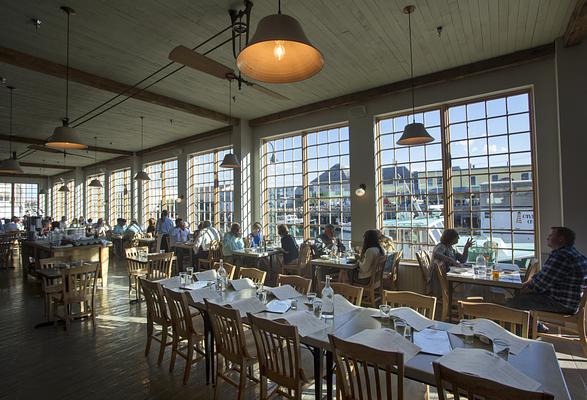
Restaurants in Portland
All restaurants in Portland →
Bars in Portland
All bars in Portland →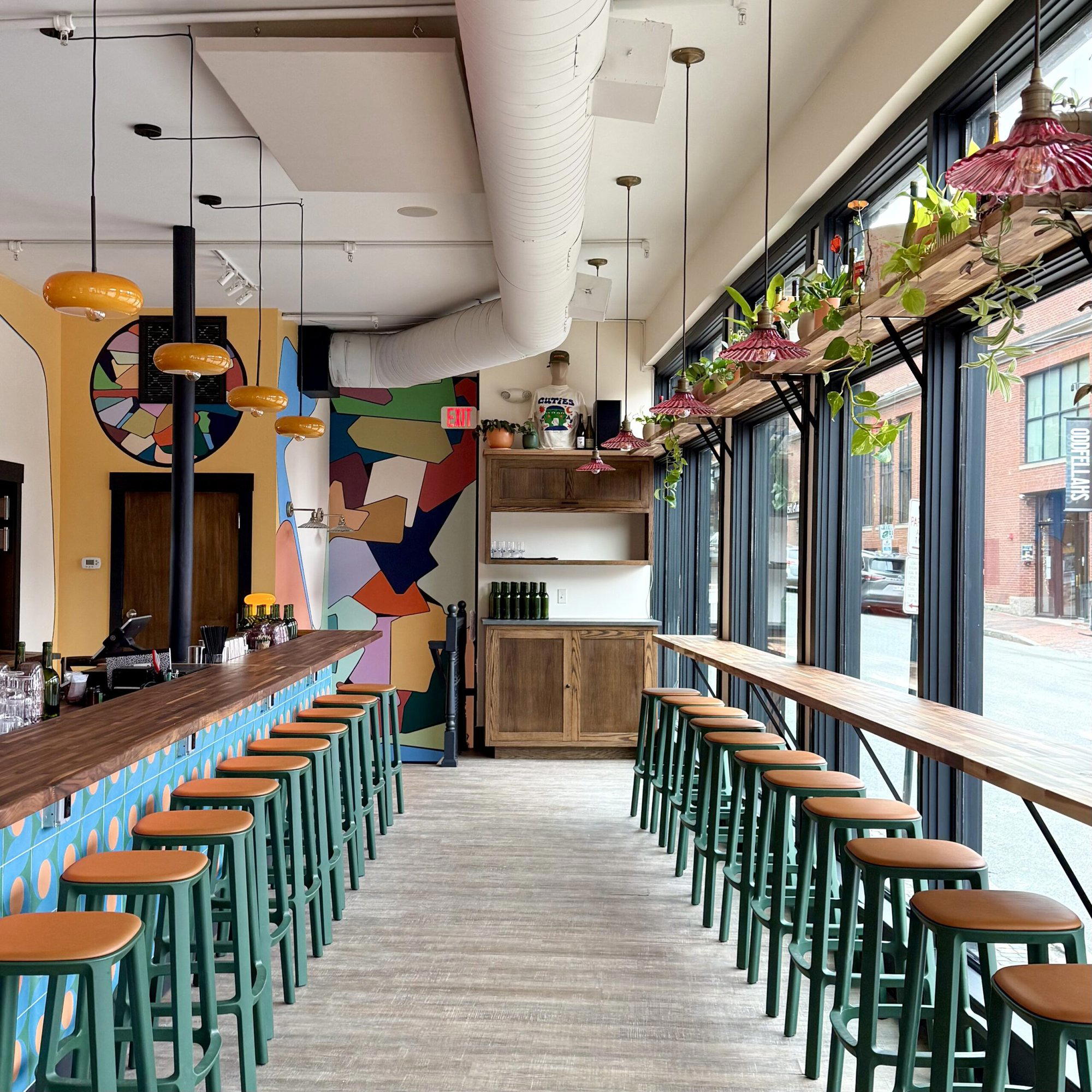





Details
- Lively
- Trendy
- Modern
- Casual Hangout
- Group Dining
- Solo
- Open Kitchen
- Zero Proof
- Local Sourcing
- A La Carte
- Counter Dining
- Smoothies
- Vegetarian Friendly
- Gluten Free Options
Current opening hours
- Monday
- Closed
- Tuesday
- 11 AM–8 PM
- Wednesday
- 11 AM–8 PM
- Thursday
- 11 AM–8 PM
- Friday
- 11 AM–8 PM
- Saturday
- 11 AM–8 PM
- Sunday
- 11 AM–8 PM
Hours can change for holidays and private events. Hours as of .
Sparse, unfinished three-story space with black ceilings and multi-chambered ground-level dining room; industrial aesthetic with ongoing renovations; counter-service downstairs with upstairs dining area recently added.