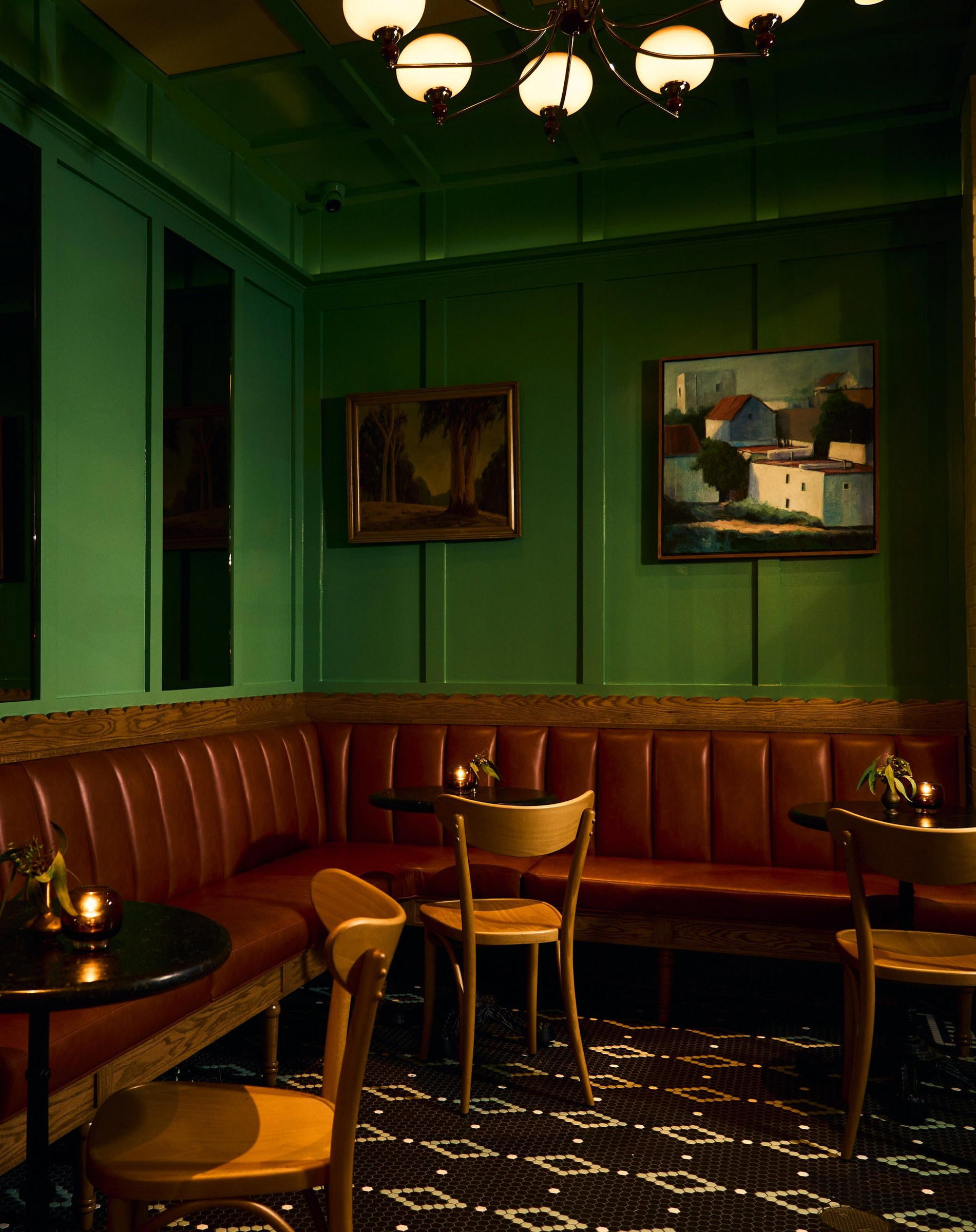
Osteria Mamma

Wine Spectator Award of Excellence
Our verdict
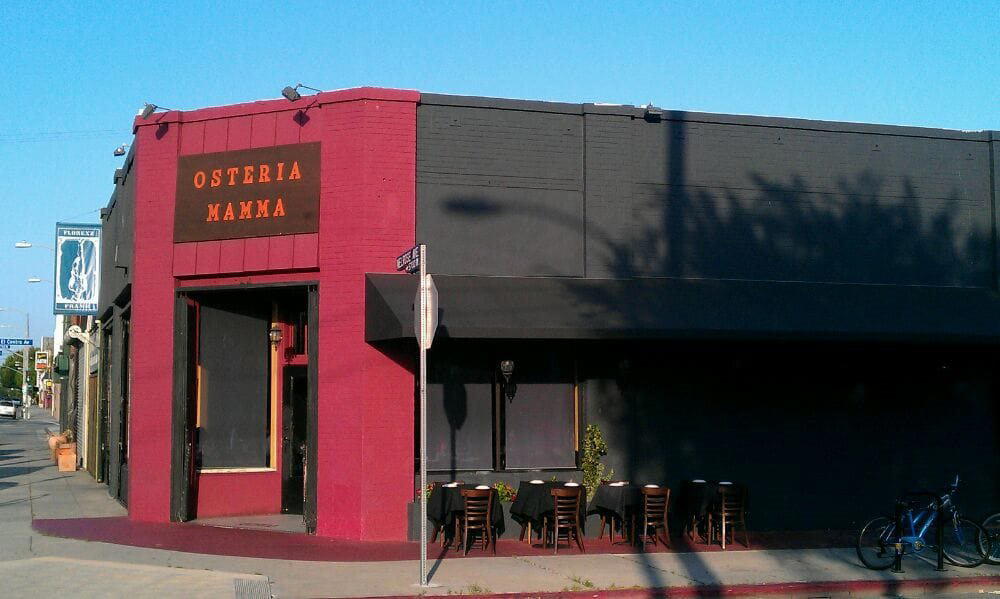
On Melrose Avenue in Los Angeles, Osteria Mamma occupies the space where Italian regional tradition meets California's formidable produce infrastructure. The kitchen draws on imported technique and local ingredient depth to deliver a neighborhood Italian experience that reads more seriously than the address might suggest. Booking ahead is advised, particularly on weekends.

Pearl is the En Primeur Club membership app — saves, bookings, and concierge access live there. Same editors, same standards.
- Address
- 5732 Melrose Ave, Los Angeles, CA 90004
- Phone
- (323) 284-7060
- Hours
- Mon–Sat 11:30 AM–10 PMSun 5–10 PM
- Website
- osteriamamma.com
- Directions
- Get directions
- Booking
- Book on OpenTable
The menu
What to order
- Handmade pastas
- Branzino
- Lasagna
- Tonnarelli allo scoglio
- Bigolotto nero
Melrose Avenue and the Italian Trattoria Question
Los Angeles has never quite settled on what Italian dining should look like. The city operates simultaneously at several registers: red-sauce comfort, regional Italian executed with serious technique, and the high-end tasting-menu format pioneered locally by Osteria Mozza, which set a benchmark for what Cal-Italian could mean when backed by genuine culinary knowledge. Osteria Mamma, at 5732 Melrose Ave, sits in a different part of that conversation — the trattoria tier, where the room is warmer, the format less ceremonial, and the nightly relationship between kitchen and guest is built on repetition and familiarity rather than occasion dining.
Melrose Avenue itself is a telling address. The stretch running through the 90004 zip code sits between Hollywood and Hancock Park, a corridor that draws a mix of industry professionals, long-term neighborhood residents, and the kind of regular who books the same table on the same night each week. In Italian dining terms, that audience rewards consistency and punishes gimmickry. The osteria format — historically a step below ristorante, heavier on hospitality than on ceremony, maps onto this demographic more precisely than a tasting-menu counter would.
Where California Produce Meets the Italian Kitchen
The broader argument for Italian cooking in Los Angeles is harder to dismiss than it might appear elsewhere. Northern and Central Italian culinary traditions are built on a logic of seasonal produce, regional specificity, and technique that amplifies rather than obscures raw material quality. California, and Los Angeles County specifically, sits inside one of the most productive agricultural corridors in the country. The convergence of that produce infrastructure with Italian regional methods, the slow braises, the hand-rolled pasta, the restraint with sauce, produces a category of cooking that other American cities can approximate but rarely match on ingredient terms alone.
This is the editorial point worth making about a venue like Osteria Mamma: the restaurant's position on Melrose says less about the individual kitchen than it does about what Los Angeles makes structurally possible for Italian cooking. The same technique applied to February tomatoes in Chicago and February tomatoes grown in the San Fernando Valley are not the same dish. That gap matters, and the better neighborhood Italian spots in Los Angeles exploit it deliberately. Whether Osteria Mamma does so at the level of the city's more decorated Italian addresses depends on what the kitchen does with that structural advantage, and that is precisely the question a first visit is designed to answer.
The Trattoria Format in a City of Tasting Menus
Los Angeles's premium dining tier has moved heavily toward the extended tasting-menu format over the past decade. Kato runs a prix-fixe built around New Taiwanese technique. Hayato operates a kaiseki counter by reservation only. Somni works in the molecular-progressive register. Even Providence, which anchors the city's seafood fine dining, operates at a level of formality that requires a different kind of commitment from the diner. These are restaurants that ask something of you before you arrive, time, planning, a specific kind of appetite.
The trattoria format asks something different. It asks that you show up hungry and willing to be fed, with the kitchen making most of the consequential decisions. In Italian cities, that relationship between guest and host is unremarkable. In Los Angeles, where dining culture skews heavily toward the deliberate and the pre-researched, a well-run osteria format actually represents a distinct point of difference. The absence of ceremony is the point. The question Osteria Mamma has to answer is whether its execution is disciplined enough to make that informality feel earned rather than simply relaxed.
For comparative context: this is a gap that Osteria Mozza occupies at a higher price and formality tier, and that various neighborhood trattorias occupy at the lower end with inconsistent results. The mid-tier Italian neighborhood restaurant in an American city is notoriously difficult to get right, too casual and it reads as unremarkable, too ambitious and it loses the warmth that makes the format work. Restaurants that have threaded that needle elsewhere in the United States include addresses as different as Bacchanalia in Atlanta and Blue Hill at Stone Barns in Tarrytown, both of which handle the local-ingredient-meets-classical-technique problem with documented rigor. The standard is high.
Los Angeles in Its Broader Dining Context
Any serious engagement with Italian dining in Los Angeles benefits from understanding where the city sits relative to the national fine dining conversation. The West Coast has produced multiple reference-point restaurants over the past two decades: The French Laundry in Napa, Single Thread Farm in Healdsburg, Lazy Bear in San Francisco, and Addison in San Diego all draw from the same agricultural abundance that makes California a compelling place for technique-led cooking. Los Angeles adds to that foundation a dining culture that is less reverent than New York, where Le Bernardin and Atomix set expectations around formality, and more willing to reward a well-executed neighborhood format over a celebrated address.
That tolerance for informality is not indifference to quality. Los Angeles diners are among the more produce-literate in the country, and a kitchen that cannot articulate seasonal ingredients through its menu will be noticed. Italian cooking at the osteria tier is, in this sense, a useful test: the format offers nowhere to hide behind ceremony or spectacle, so the cooking has to carry the evening. For a fuller picture of where Osteria Mamma sits within the city's wider offer, the EP Club Los Angeles restaurants guide maps the full range of the city's dining tiers.
Planning Your Visit
Address: 5732 Melrose Ave, Los Angeles, CA 90004. Reservations: Booking ahead is advisable, particularly Thursday through Saturday evenings when the neighborhood draws its highest foot traffic; walk-in availability is more likely at lunch or early in the week. Dress: The trattoria format is casual by design, smart casual is appropriate and over-dressing will read as mismatched to the room. Getting there: The Melrose Avenue address is accessible by car with street parking on surrounding blocks; rideshare is the most practical option for evening visits given the neighborhood's limited dedicated parking. Context: Pair a visit here with exploration of the surrounding Hancock Park and Larchmont Village area, which supports a cluster of independent food and drink venues that reflect the same neighborhood-oriented dining logic.
Frequently asked questions
Where is Osteria Mamma in Los Angeles?
Osteria Mamma is located at 5732 Melrose Ave, Los Angeles, CA 90004, Los Angeles.
How does Osteria Mamma compare to other Italian restaurants in the Hollywood and Melrose area?
Osteria Mamma sits at the trattoria end of the Los Angeles Italian dining spectrum, distinct from the prix-fixe-driven fine dining rooms that have proliferated across the city over the past decade. On Melrose Avenue specifically, this format occupies a middle register between casual red-sauce parlours and the extended tasting menus now common in adjacent neighbourhoods like West Hollywood and Koreatown.
What should I order at Osteria Mamma?
Asking the staff for that evening's kitchen priorities is the most reliable approach at venues in this format.
Can I walk in to Osteria Mamma?
Walk-ins are possible outside peak hours, but Thursday through Saturday evenings at 5732 Melrose Ave see consistent demand that makes advance reservations the safer choice. Arriving early on weeknights gives the best chance of securing a table without a booking.
What has Osteria Mamma built its reputation on?
Osteria Mamma operates within the Italian trattoria format on Melrose Avenue, a stretch of Los Angeles that draws a neighbourhood-aware dining crowd rather than the destination-tasting-menu set. Its reputation rests on consistent, approachable Italian cooking in a city that cycles quickly through trends but sustains genuine trattoria formats across multiple decades.
Can Osteria Mamma accommodate dietary restrictions?
Italian trattoria kitchens in Los Angeles routinely work around common dietary needs, particularly given the city's strong vegetable-forward supply chain from Central and Northern California farms. check the venue's official channels at 5732 Melrose Ave, Los Angeles, CA 90004 before your visit to confirm specific accommodations.
Pricing, Compared
Comparable venues nearby, for context on price, style, and recognition.
| Venue | Cuisine | Price | Awards | Notes |
|---|---|---|---|---|
| Osteria MammaThis venue — the venue you are viewing | Authentic Veneto Italian Trattoria | $30–50 | Wine Spectator Award of Excellence | Not listed |
| Palermo Pizza Club | Palermo-style Pizza | $20–30 | Not listed | Brentwood, Palermo-style Pizza |
| Pizza Buona | Chicago-Style Italian Tavern Pizza | $30–50 | Not listed | Echo Park, Authentic Italian Pizza |
| Amante Restaurant | Traditional Italian with House-Made Pizza | $30–50 | Not listed | Gallery Row, Traditional Italian with House-Made Pizza |
| Antonio's Pizzeria and Italian Restaurant | Classic Italian Pizzeria | $20–30 | Not listed | Sherman Oaks, Classic Italian Pizzeria |
| Oste | Roman Pinsa Italian | Not listed | Not listed | Beverly Grove, Roman Pinsa Italian |
Recognition history
Dated appearances from independent guides and award organizations, with the underlying list record or original source where available.
Wine Spectator Award of Excellence
Wine Spectator