
Michelin Plate
Our verdict
Osteria La Fenice brings a recognisably Italian register to Cuxhaven's predominantly seafood-and-schnitzel dining scene, holding consecutive Michelin Plate recognition in 2024 and 2025.

Pearl is the En Primeur Club membership app — saves, bookings, and concierge access live there. Same editors, same standards.
- Address
- Nordersteinstraße 6, 27472 Cuxhaven, Germany
- Phone
- +49 4721 6984151
- Hours
- Mon ClosedTue–Sat 12–3 PM, 5:30–10 PMSun Closed
- Website
- osterialafenice-cuxhaven.de
- Directions
- Get directions
- Booking
- Book on TheFork
The menu
What to order
- Home-made pasta
- Sourdough bread
Italian Cooking on the North Sea: Why Cuxhaven Has Room for It
Port towns rarely do one cuisine well. They accumulate the habits of their trade: in Cuxhaven, that means North Sea fish, smoked eel, and the kind of hearty German kitchen that makes sense when the wind comes in off the Elbe estuary. Italian restaurants in this context are not novelties, but they face a specific test — can the cuisine hold its identity when it is hundreds of kilometres from its source and surrounded by competing local logic? On Nordersteinstraße, Osteria La Fenice answers that question in the affirmative, consistently enough that Michelin has awarded it a Plate in both 2024 and 2025, the guide's signal that a kitchen is cooking to a serious standard without yet reaching starred territory.
The Plate designation matters here precisely because it sits at the threshold. In Germany's fine-dining hierarchy, where the conversation more often centres on multi-course tasting menus at venues like Schwarzwaldstube in Baiersbronn, Aqua in Wolfsburg, or Vendôme in Bergisch Gladbach, the Plate marks a kitchen that Michelin's inspectors have decided merits attention without placing it in the starred tier. For a mid-price Italian osteria in a coastal town of roughly 48,000 people, that recognition is meaningful.
The Osteria Format and What It Means in Practice
The osteria as a format has specific Italian DNA. Historically the humbler end of the Italian eating-out spectrum — below the ristorante in formality, closer to the trattoria in spirit, the osteria model has been substantially revised in the contemporary period. The format now spans a wide range: from neighbourhood wine-and-small-plates operations in Milan's Navigli district to more ambitious kitchens in mid-sized European cities that use the osteria name to signal an absence of ceremony rather than an absence of skill. La Fenice sits in this revised tradition: the name implies approachability and regionality, and the €€ price range confirms it is not positioning itself against the tasting-menu tier.
Where Italian cooking in Germany often gravitates toward the lowest common denominator, pizza and pasta calibrated for broad acceptance, a Michelin Plate suggests La Fenice is doing something more disciplined. The broader Italian kitchen, of course, contains multitudes: the butter-and-risotto traditions of Lombardy, the ragù culture of Bologna, the seafood-forward plates of coastal Campania, the austerity of Venetian cicchetti. What distinguishes serious Italian restaurants outside Italy is usually their willingness to commit to a specific regional logic rather than assembling a generic pan-Italian menu.
For a parallel of what regional Italian specificity looks like when taken to its highest expression outside Italy, it is instructive to look at 8½ Otto e Mezzo Bombana in Hong Kong or cenci in Kyoto, both of which demonstrate that Italian cuisine exported far from its origin can maintain discipline and earn serious critical recognition when the kitchen commits to a coherent culinary identity.
Cuxhaven's Dining Scene and Where La Fenice Fits
Understanding what La Fenice offers requires some understanding of what Cuxhaven is as a dining city. It is primarily a coastal resort and working port, drawing visitors who come for the mudflats of the Wadden Sea, the beach at Duhnen, and the ferry connections to the North Frisian islands. The dining culture skews toward fish restaurants, Krabbencocktail and fresh-caught plaice are local defaults, and the better end of the market is anchored in seafood rather than international cuisines. The local fine-dining benchmark is Sterneck, which operates in the creative tier and sits at a different price point and ambition level.
La Fenice at the €€ bracket occupies a position that makes practical sense for the town: it is affordable enough to be a regular dinner option for residents and a first-night choice for visitors who want something other than the fish-house default, but it carries enough critical recognition to function as a destination in its own right. Restaurants in this ratings band, at this volume, have usually earned the score through repetition rather than a cluster of exceptional individual experiences.
For visitors building a broader picture of dining in northern Germany, Restaurant Haerlin in Hamburg represents the metropolitan upper tier roughly 100 kilometres up the Elbe, while JAN in Munich provides a southern-German reference point for what Italian-inflected fine dining looks like at higher ambition levels. La Fenice sits well below those benchmarks in price and format but within the same Michelin-recognised ecosystem.
Planning Your Visit
Nordersteinstraße 6 places La Fenice in Cuxhaven's central district, walkable from the main harbour area and within easy reach of the town's accommodation cluster. The €€ price range puts it in a bracket where a full dinner for two with wine typically lands comfortably below €80, making it accessible without the forward-planning commitment that higher-tier bookings require. That said, consecutive Michelin Plate recognition and a strong local reputation mean that securing a table on peak summer evenings, when Cuxhaven's visitor numbers are at their highest, benefits from booking ahead.
Visitors spending more time in the area can find broader context across Cuxhaven's hospitality offerings in our full Cuxhaven restaurants guide, and those extending their stay can cross-reference our full Cuxhaven hotels guide. For evening drinks before or after dinner, our full Cuxhaven bars guide maps the town's bar scene. Travellers with a broader interest in the region's wine and experience offerings can also consult our Cuxhaven wineries guide and our Cuxhaven experiences guide.
Germany's Italian restaurant tier is broad and uneven, ranging from neighbourhood pizza operations to the few kitchens that earn sustained critical attention. For additional starred and Plate-level reference points across the country, ES:SENZ in Grassau, Schanz in Piesport, Waldhotel Sonnora in Dreis, Victor's Fine Dining by Christian Bau in Perl, and CODA Dessert Dining in Berlin map the range of approaches that have earned Michelin recognition across different German regions and formats.
Frequently asked questions
What distinctions does Osteria La Fenice have?
Osteria La Fenice has received recognition including: Michelin Plate (2025); Michelin Plate (2024).
What should I order at Osteria La Fenice?
The kitchen follows the osteria format, which historically centres on straightforward Italian regional cooking rather than elaborate tasting menus. Given Cuxhaven's position as a working North Sea port, expect the kitchen to have access to strong local seafood alongside Italian staples. La Fenice has held the Michelin Plate in both 2024 and 2025, which signals consistent cooking quality rather than a single standout dish.
What part of town is Osteria La Fenice in?
Osteria La Fenice is located at Nordersteinstraße 6, 27472 Cuxhaven, Germany, Cuxhaven.
Do I need a reservation for Osteria La Fenice?
Cuxhaven operates on a seasonal curve: the town draws significant visitor numbers as a coastal resort, which means Italian restaurants in the central district fill quickly during summer weekends. La Fenice's two consecutive Michelin Plate recognitions (2024 and 2025) give it a profile that outpaces typical walk-in availability. Booking ahead is advisable, particularly for Friday and Saturday evenings.
How It Stacks Up
| Venue | Cuisine | Price | Awards |
|---|---|---|---|
| Osteria La FeniceThis venue — the venue you are viewing | Authentic Italian Osteria | $50–100 | Michelin Plate |
| Schwarzwaldstube | French, Classic French | Not listed | Michelin 3 Star |
| Aqua | Contemporary German, Italian/Japanese, Creative | Not listed | Michelin 3 Star |
| CODA Dessert Dining | Creative | Not listed | Michelin 2 Star |
| Tantris | Modern French, French Contemporary | Not listed | Michelin 2 Star |
| Vendôme | Modern European, Creative | Not listed | Michelin 2 Star |
Recognition history
Dated appearances from independent guides and award organizations, with the underlying list record or original source where available.
Michelin Plate
Michelin · 2026 Michelin Plate
Full recognition history (3 entries)
Michelin Plate
Michelin
Michelin Plate
Michelin
Continue exploring
More in Cuxhaven
Restaurants in Cuxhaven
Browse all →
Osteria La Fenice
The wine
- Wine program
- Curated wine list
- Extensive wine list
Details
- Cozy
- Elegant
- Intimate
- Rustic
- Date Night
- Special Occasion
- Open Kitchen
- Extensive Wine List
- Street Scene
- A La Carte
- Vegetarian Friendly
Current opening hours
- Monday
- Closed
- Tuesday
- 12–3 PM, 5:30–10 PM
- Wednesday
- 12–3 PM, 5:30–10 PM
- Thursday
- 12–3 PM, 5:30–10 PM
- Friday
- 12–3 PM, 5:30–10 PM
- Saturday
- 12–3 PM, 5:30–10 PM
- Sunday
- Closed
Hours can change for holidays and private events. Last verified .
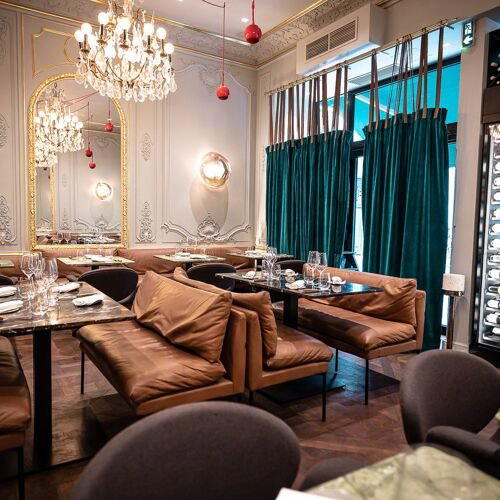
Cozy and welcoming with decorative wine racks, marble tables, warm lighting, and a balance of tradition and modern Italian charm.