

1 Michelin Star · Wine Spectator Best of Award of Excellence
Our verdict
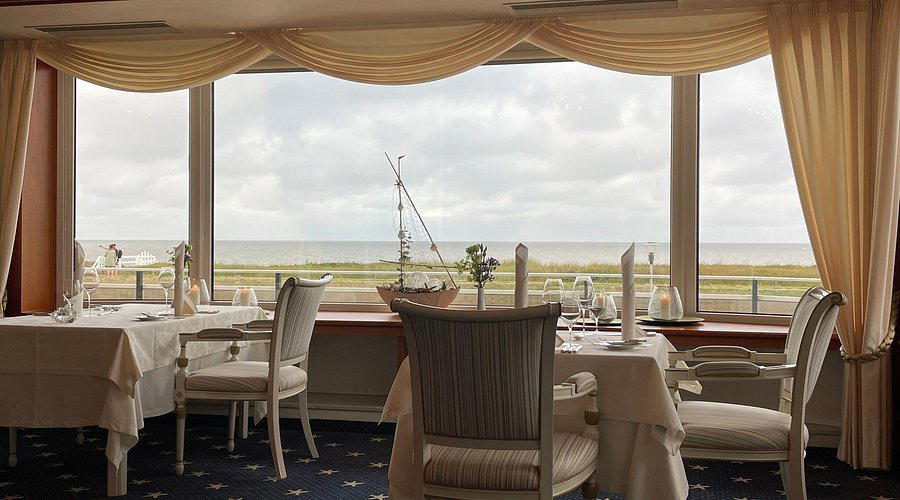
Sterneck holds a Michelin star (2025) inside the Badhotel Sternhagen, where five tables overlook the North Sea, the Elbe shipping lane, and the UNESCO-listed Wadden Sea. Chef Marc Rennhack builds modern menus on classical technique, offering three-to-seven course set menus with a vegetarian option. A wine cellar three metres below sea level supports the room.

Pearl is the En Primeur Club membership app — saves, bookings, and concierge access live there. Same editors, same standards.
- Address
- Cuxhavener Str. 86, 27476 Cuxhaven, Germany
- Phone
- +49 4721 4340
- Hours
- Mon–Tue ClosedWed–Fri 6 PM–12 AMSat 1–5 PM, 6 PM–12 AMSun Closed
- Website
- speisekartenweb.de
- Directions
- Get directions
The menu
What to order
- Nordsee Seeteufel with Perigord truffle
- Arenscher Weideochsen tartare
Where the Wadden Sea Meets the Plate
Stand at the window of Sterneck and the geography does the framing for you. The North Sea stretches west, container ships move along the Elbe shipping route to the north, and the tidal flats of the UNESCO-listed Wadden Sea lie just beyond the shoreline. This is not incidental scenery. In northern German coastal cooking, proximity to the Wadden Sea has long shaped what arrives on the plate: the ecosystem produces a specific profile of seafood, salt marsh herbs, and estuarine ingredients that inland kitchens cannot replicate with the same immediacy. Sterneck, the fine dining room inside the Badhotel Sternhagen at Cuxhavener Str. 86, operates at the intersection of that geography and a classically grounded modern kitchen, a combination that earned it a Michelin star in 2025.
Ingredient Logic on the North Sea Coast
Germany's fine dining conversation tends to concentrate further south. The kitchens generating sustained critical attention sit in cities and in towns with established gastronomic infrastructure: Restaurant Haerlin in Hamburg anchors the north's most prominent address, while JAN in Munich, Schwarzwaldstube in Baiersbronn, and Aqua in Wolfsburg define the €€€€ tier in their respective regions. Cuxhaven sits outside that circuit entirely, which makes the sourcing logic at Sterneck worth examining on its own terms.
Chef Marc Rennhack's approach centres on reducing the number of components per dish rather than accumulating them. In a kitchen where the surrounding coastline provides direct access to North Sea produce, that restraint carries a specific editorial argument: the ingredient itself is the point, not the architecture built around it. The Michelin guide's own assessment notes that Rennhack works with high-quality ingredients and has a demonstrable aptitude for extracting coherent flavour combinations from a small number of elements. His sauces receive particular mention, which in the context of classical technique signals proper stock work, reduction discipline, and the kind of patience that modern multi-component plating sometimes displaces.
This places Sterneck in an interesting peer position. Creative kitchens at the €€€€ tier, among them CODA Dessert Dining in Berlin, Vendôme in Bergisch Gladbach, and ES:SENZ in Grassau, each build their identity around a specific culinary argument. Sterneck's argument is geographic: cook where the ingredients are, let the setting provide the context, and apply classical rigour to make the result legible. Internationally, similar logic appears at addresses like Alléno Paris au Pavillon Ledoyen and Enrico Bartolini in Milan, where the surrounding food culture informs the plate without the kitchen becoming a regional showcase.
Five Tables, Seven Courses, One Wine Cellar
The dining room at Sterneck is compact by design: five elegantly laid tables, service described by the Michelin guide as cordial and attentive, and a format that scales from three courses to a full seven-course set menu. A vegetarian version of the tasting menu runs in parallel, which at a coastal restaurant is a considered structural choice rather than a concession. It signals that the kitchen's skill base extends beyond seafood sourcing to the same standard of composition across plant-based ingredients.
The wine programme is housed in a walk-in cellar three metres below sea level, a physical detail that doubles as a storage argument: constant low temperatures and stable humidity, the basic requirements for a meaningful fine wine collection held in proper condition. The selection is described as large, and at a restaurant in the €€€€ price tier with Michelin recognition, the expectation is that the cellar functions as a genuine pairing resource rather than a supplementary list. The below-ground position is also one of those small, specific facts that separates a wine programme with genuine commitment from one that exists on paper.
The Coastal Fine Dining Argument
A broader pattern runs through fine dining rooms attached to historic seaside hotels in northern Europe. The setting creates its own expectations, and those expectations tend to pull kitchens toward one of two positions: lean into the scenery as theatre while keeping the cooking safe, or let the geography shape the sourcing and allow the cooking to carry the weight. Sterneck's Michelin recognition in 2025 suggests it operates in the second category. The Wadden Sea's designation as a UNESCO World Heritage Site is relevant not just as a view but as an ecological fact: the intertidal zone supports an unusually dense food web, and the marine produce it yields has a distinctly northern character that differs from both the North Sea fishing ports further west and the Baltic coast to the east.
For readers accustomed to fine dining in Hamburg, Berlin, or Munich, the adjustment at Sterneck is less about quality and more about register. This is not a restaurant building toward a second star through volume and visibility. It is a five-table room in a hotel on the German North Sea coast, operating with classical precision on locally grounded ingredients, and it has earned the recognition its approach merits. Restaurants with similar philosophical footing at the €€€€ tier, such as Schanz in Piesport or Waldhotel Sonnora in Dreis, demonstrate that the hotel-attached fine dining model in Germany has its own serious tier, distinct from urban standalone restaurants.
Cuxhaven's dining scene beyond Sterneck is developing, and visitors staying in the area will find that the Osteria La Fenice offers a different register in the same city. For a full picture of what the town offers, the EP Club Cuxhaven restaurants guide covers the broader range, with additional context in the Cuxhaven hotels guide, bars guide, wineries guide, and experiences guide.
Planning a Visit
Sterneck is located at Cuxhavener Str. 86 within the Badhotel Sternhagen. The restaurant's five-table format means that advance booking is essential; walk-in availability is unlikely at this scale. The €€€€ price tier places it at the higher end of German fine dining, comparable in cost to starred rooms in Hamburg and Munich, and the set menu format running from three to seven courses means diners can calibrate the commitment of the evening. The vegetarian menu runs alongside the main tasting progression. The wine cellar, three metres below sea level, supports a substantial selection, and pairing options at this price point are standard to expect. For guests combining the meal with a stay in Cuxhaven, the hotel location simplifies logistics considerably, and the views from the dining room are at their most pronounced in the longer light of late spring and summer evenings.
Frequently asked questions
Is Sterneck expensive?
Pricing at Sterneck is listed as €€€€.
What part of town is Sterneck in?
Sterneck is located at Cuxhavener Str. 86, 27476 Cuxhaven, Germany, Cuxhaven.
Price Lens
| Venue | Cuisine | Price | Awards | Notes |
|---|---|---|---|---|
| SterneckThis venue — the venue you are viewing | Modern German Fine Dining with Spanish and French Influences | $200–300 | 1 Michelin Star · Wine Spectator Best of Award of Excellence | Not listed |
| Schwarzwaldstube | French, Classic French | Not listed | Michelin 3 Star | Not listed |
| Aqua | Not listed | Not listed | Michelin 3 Star | Contemporary German, Italian/Japanese, Creative |
| CODA Dessert Dining | Creative | Not listed | Michelin 2 Star | Not listed |
| Tantris | Modern French, French Contemporary | Not listed | Michelin 2 Star | Not listed |
| Vendôme | Modern European, Creative | Not listed | Michelin 2 Star | Not listed |
Recognition history
Dated appearances from independent guides and award organizations, with the underlying list record or original source where available.
Michelin 1 Star
Michelin
Wine Spectator Best of Award of Excellence
Wine Spectator
Full recognition history (4 entries)
Michelin 1 Star
Michelin
Michelin 1 Star
Michelin
Continue exploring
More in Cuxhaven
Restaurants in Cuxhaven
Browse all →
Sterneck
The wine
- Wine program
- Exceptional wine program
- Extensive wine list
- Sommelier-led
Details
- Elegant
- Sophisticated
- Scenic
- Romantic
- Intimate
- Date Night
- Special Occasion
- Celebration
- Business Dinner
- Wine Cellar
- Panoramic View
- Hotel Restaurant
- Waterfront
- Extensive Wine List
- Sommelier Led
- Organic
- Local Sourcing
- Waterfront
- Set Menu
- Tasting Menu
- Wine
- Vegetarian Friendly
- Organic Focus
Current opening hours
- Monday
- Closed
- Tuesday
- Closed
- Wednesday
- 6 PM–12 AM
- Thursday
- 6 PM–12 AM
- Friday
- 6 PM–12 AM
- Saturday
- 1–5 PM, 6 PM–12 AM
- Sunday
- Closed
Hours can change for holidays and private events. Last verified .
Elegant and luxurious with classy décor, intimate lighting, and far-reaching views of the North Sea, Elbe shipping route, and UNESCO Wadden Sea.