Osaki's

Michelin Plate
Our verdict
A counter-first sushi-ya operating at the opposite end of the Vail dining spectrum from its resort-scale neighbours, Osaki's holds a 2024 Michelin Plate for fish-focused precision in a whiteboard-menu format. Rare regional Japanese ingredients, hagatsuo, akamutsu, ankimo, appear without embellishment. At $$$, it occupies a clear niche: purist Japanese technique in a mountain town better known for après-ski excess.

Pearl is the En Primeur Club membership app, where members save venues, book tables and use the concierge.
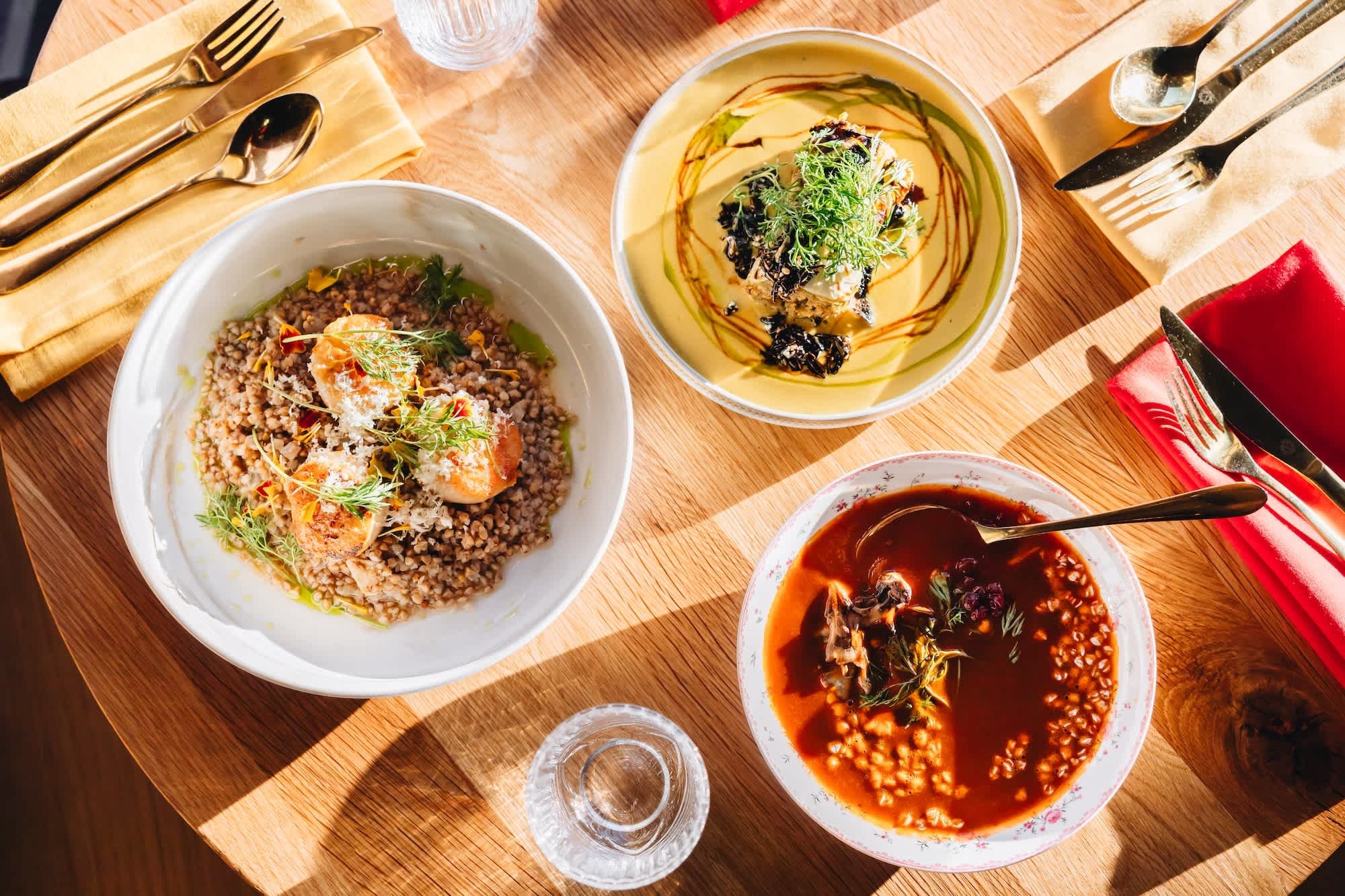
A Sushi Counter in the Colorado Rockies
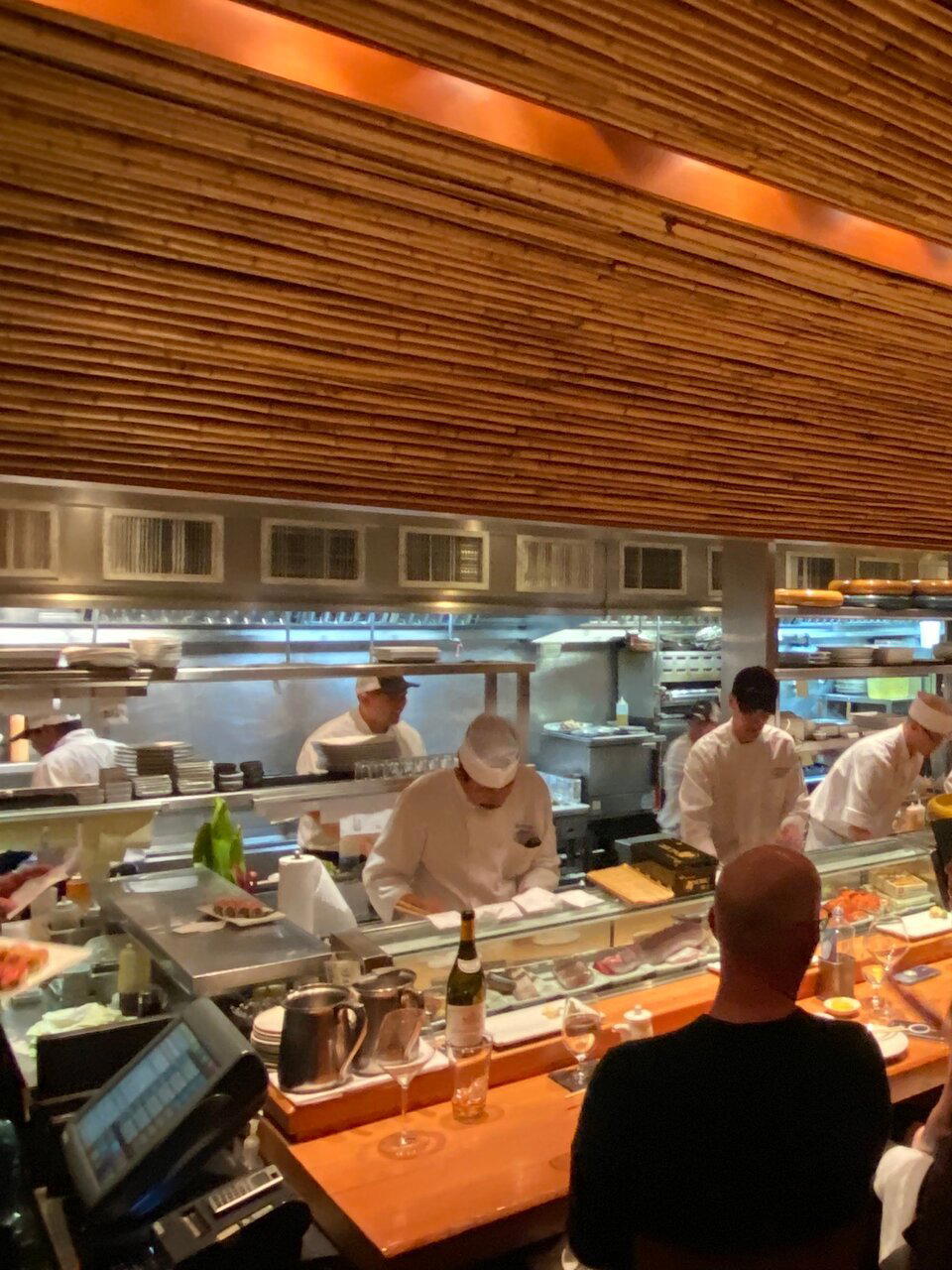
The approach to most Vail dining involves wide-windowed lodge rooms, vaulted ceilings, and a studied alpine grandeur. Osaki's, at 100 East Meadow Drive, offers none of that. A compact space, a handful of counter seats, a few tables, and a whiteboard listing the day's fish: this is the format that defines a particular tier of sushi-ya that operates with purpose rather than theatre. In Japan, this format signals seriousness. In a Colorado ski resort, it reads as an act of editorial confidence.
Vail's dining scene has historically organised itself around altitude-adjusted comfort: fondue, game, rich alpine preparations designed for cold-weather caloric needs. The Japanese presence here is smaller but layered. Matsuhisa Vail occupies the high-visibility, celebrity-chef end of the spectrum. Osaki's sits at the opposite pole, operating closer to the working-counter model you would find in Osaka's Namba district or a neighbourhood in Tokyo's Kita ward than anything resort-facing. The contrast matters when understanding where Osaki's actually fits.
The Regional Lens: What the Fish Selection Signals
Japanese fish culture divides, broadly, along a Kansai-Kanto axis. Kanto (Tokyo) tradition favours leaner, more assertive cuts, maguro, hirame, kohada, prepared with vinegared rice warmed closer to body temperature. Kansai (Osaka, Kyoto) tradition leans toward fattier fish, sweeter rice, and a wider range of preserved or less-common specimens. The whiteboard at Osaki's, with its listing of hagatsuo, akamutsu, and ankimo alongside snow crab, suggests familiarity with the Kansai palette without being doctrinaire about it. These are not the anchor proteins of a New York omakase menu.
Hagatsuo, a close relative of skipjack tuna, is found primarily on the menus of regional izakayas and specialist fish shops in specific coastal Japanese prefectures. Its appearance in Vail, on a whiteboard, without explanation or ceremony, is the kind of detail that separates a procurement-serious counter from a resort-Japanese concept that cycles through the same six proteins year-round. Akamutsu (rosy seabass or blackthroat seaperch) similarly occupies a specialist niche: its fat content and skin quality make it a favourite among Kyoto kaiseki chefs for salt-grilling, and its appearance as sashimi or nigiri signals that the kitchen is sourcing through channels that prioritise regional Japanese variety over purely domestic American availability.
Ankimo, monkfish liver, is the detail most cited by Japanese food writers when characterising a counter's ambition. Its comparison to foie gras is accurate in terms of texture and richness, but the preparation demands careful steaming, seasoning, and slicing. At Osaki's, its presence on the menu without "superfluous sauces or flourishes" (as its Michelin recognition notes) positions it squarely within a minimalist tradition that lets the protein's inherent quality do the argumentative work. Counters at this level in Japan, from modest neighbourhood spots to Michelin-recognised rooms, share this philosophy: preparation serves ingredient, not the other way around.
The Michelin Plate in Context
The 2024 Michelin Plate designation is a baseline recognition, not a starred distinction, but its implication in a market like Vail carries more weight than in a dense urban environment. Michelin has been slower to cover mountain resort towns than coastal or metropolitan markets, meaning the bar for inclusion is set by the inspector's overall impression of kitchen discipline relative to what exists nearby. In cities with dense Japanese restaurant ecosystems, Myojaku in Tokyo or Azabu Kadowaki operate in environments where Michelin has hundreds of comparable reference points, a Plate signals different things than it does in the Colorado Rockies, where the competitive set is thinner and the inspector's context is necessarily broader.
The counter format, small seat count, whiteboard menu, daily selection, means no two visits are identical, which the review aggregate suggests guests understand and value rather than find frustrating. This is the posture of a sushi-ya rather than a restaurant: the menu is what the fish allows today, not what a printed card promised last season.
Where Osaki's Fits in Vail's Wider Scene
Vail's $$$-tier restaurants cover significant stylistic ground. Alpenrose Vail handles the American Alpine register with its own culinary logic. Sweet Basil, at $$$$, occupies the contemporary American fine-dining position with a longer track record and higher price bracket. Osaki's, at $$$, sits in neither of those categories. That it operates at this standard in a landlocked resort town is the essential editorial point.
The broader American fine-dining context is worth noting here. The last decade has produced a split between high-concept tasting-menu restaurants, institutions like Alinea in Chicago, The French Laundry in Napa, or Le Bernardin in New York, and a quieter tradition of produce- or protein-specific counters that resist the tasting-menu format entirely. Osaki's belongs to the latter. There is no arc to the meal, no narrative progression through courses: you sit, you read the board, you order what the fish allows. Lazy Bear in San Francisco, Providence in Los Angeles, and Blue Hill at Stone Barns each represent the opposite instinct: an authorial, structured dining experience. Osaki's occupies a different register entirely, one that is arguably harder to sustain because it has nowhere to hide behind structure or theatre.
Planning Your Visit
Osaki's is located at 100 East Meadow Drive, Suite 14, in central Vail, accessible on foot from the Village core. The $$$-tier pricing places it in Vail's mid-range bracket, meaningful in a resort town where mid-range still requires planning. Given the small seat count and the whiteboard format, the menu changes based on availability, so early-week visits may offer broader selection than weekend service at peak ski season. For the wider Vail picture, consult our full Vail restaurants guide, and for accommodation context, our Vail hotels guide covers the range from ski-in properties to smaller lodge options. If you are building a full Vail itinerary, the Vail bars guide, wineries guide, and experiences guide round out the picture. For reference points on Japanese precision at the upper end of the American market, Single Thread Farm in Healdsburg and Emeril's in New Orleans sit at different points on the care-for-ingredient spectrum and offer useful contrast.
Frequently asked questions
How much does it cost to eat at Osaki's?
Pricing at Osaki's is listed as $$$.
What's the address for Osaki's?
Osaki's is located at 100 E Meadow Dr #14, Vail, CO 81657, Vail.
Cuisine and Recognition
| Venue | Cuisine | Price | Awards | Notes |
|---|---|---|---|---|
| Osaki'sThis venue (the venue you are viewing) | Traditional Japanese Sushi | $150–200 | Michelin Plate | Not listed |
| Alpenrose Vail | Traditional German, Austrian & Swiss | $30–50 | Not listed | American Alpine |
| Sweet Basil | Authentic Thai Restaurant | $30–50 | Tabelog 100 #96 | Fusion |
| Matsuhisa Vail | Japanese-Peruvian Fusion | $150–200 | OpenTable Top 100 Restaurants | Not listed |
Recognition history
Dated appearances from independent guides and award organizations, with the underlying list record or original source where available.
Michelin Plate
Michelin
Full recognition history (3 entries)
Michelin Plate
Michelin
Michelin Plate
Michelin
Continue exploring
More in Vail
Restaurants in Vail
All restaurants in Vail →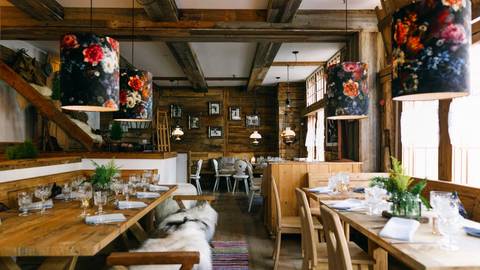
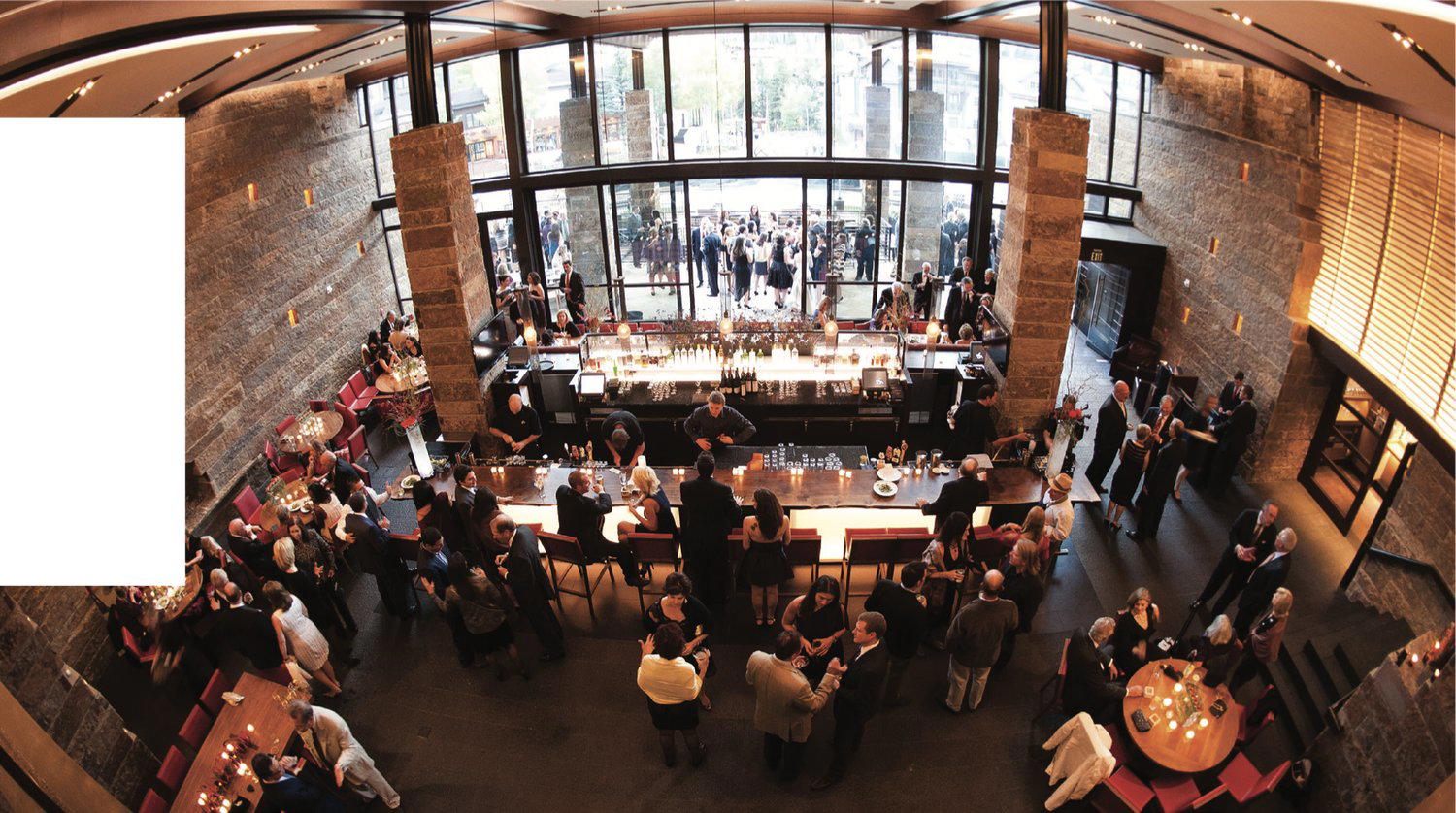
Bars in Vail
All bars in Vail →
Details
- Intimate
- Classic
- Cozy
- Date Night
- Special Occasion
- Chefs Counter
- Open Kitchen
- Sake Program
- Omakase
- A La Carte
- Counter Dining
Current opening hours
- Monday
- Closed
- Tuesday
- 5:30–9 PM
- Wednesday
- 5:30–9 PM
- Thursday
- 5:30–9 PM
- Friday
- 5:30–9 PM
- Saturday
- 5:30–9 PM
- Sunday
- 5:30–9 PM
Hours can change for holidays and private events. Hours as of .
No-frills, purist atmosphere with focus on fresh fish, counter seating, and simple tables in a quaint, tiny space.