Michelin Plate
Our verdict
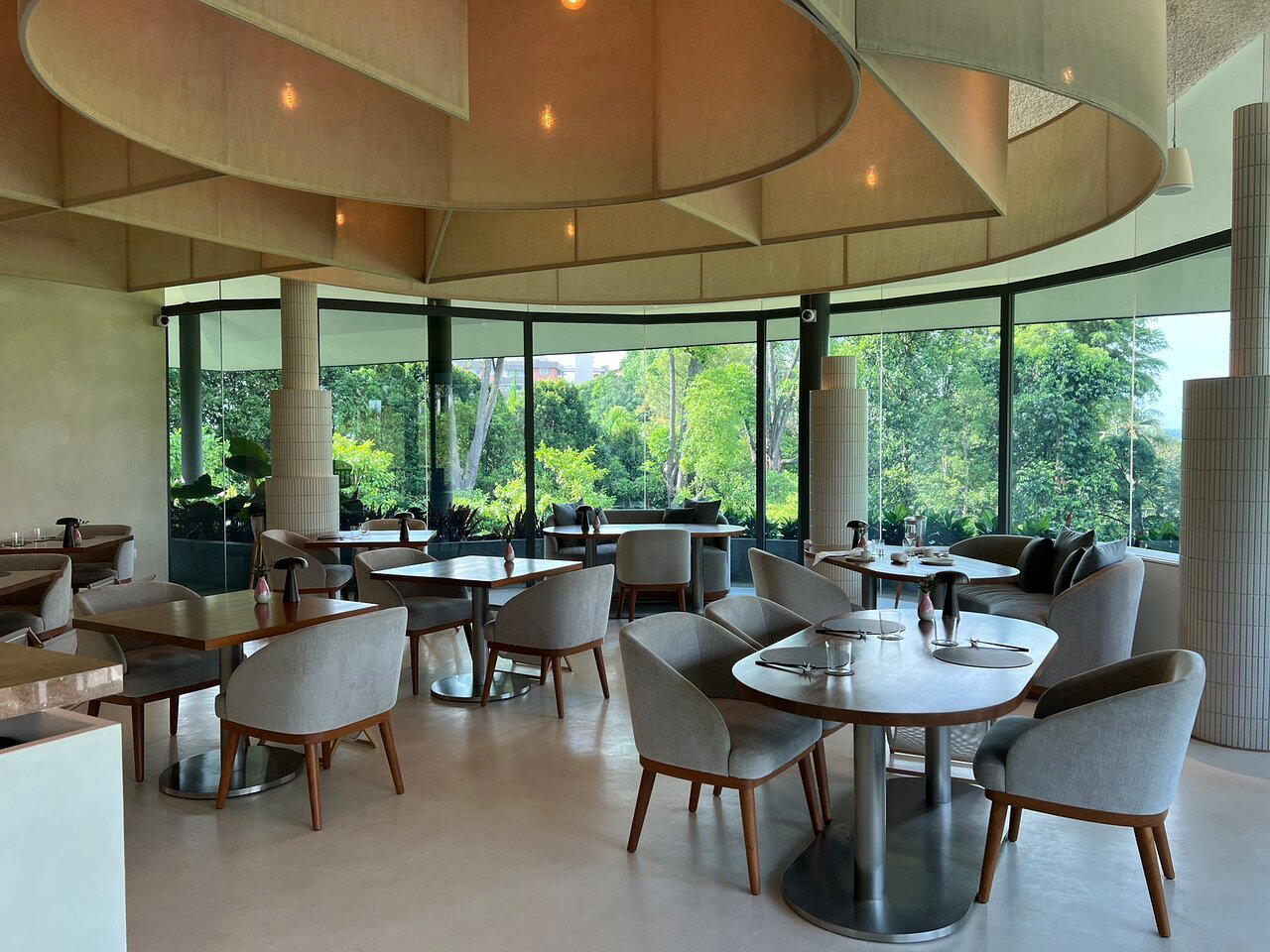
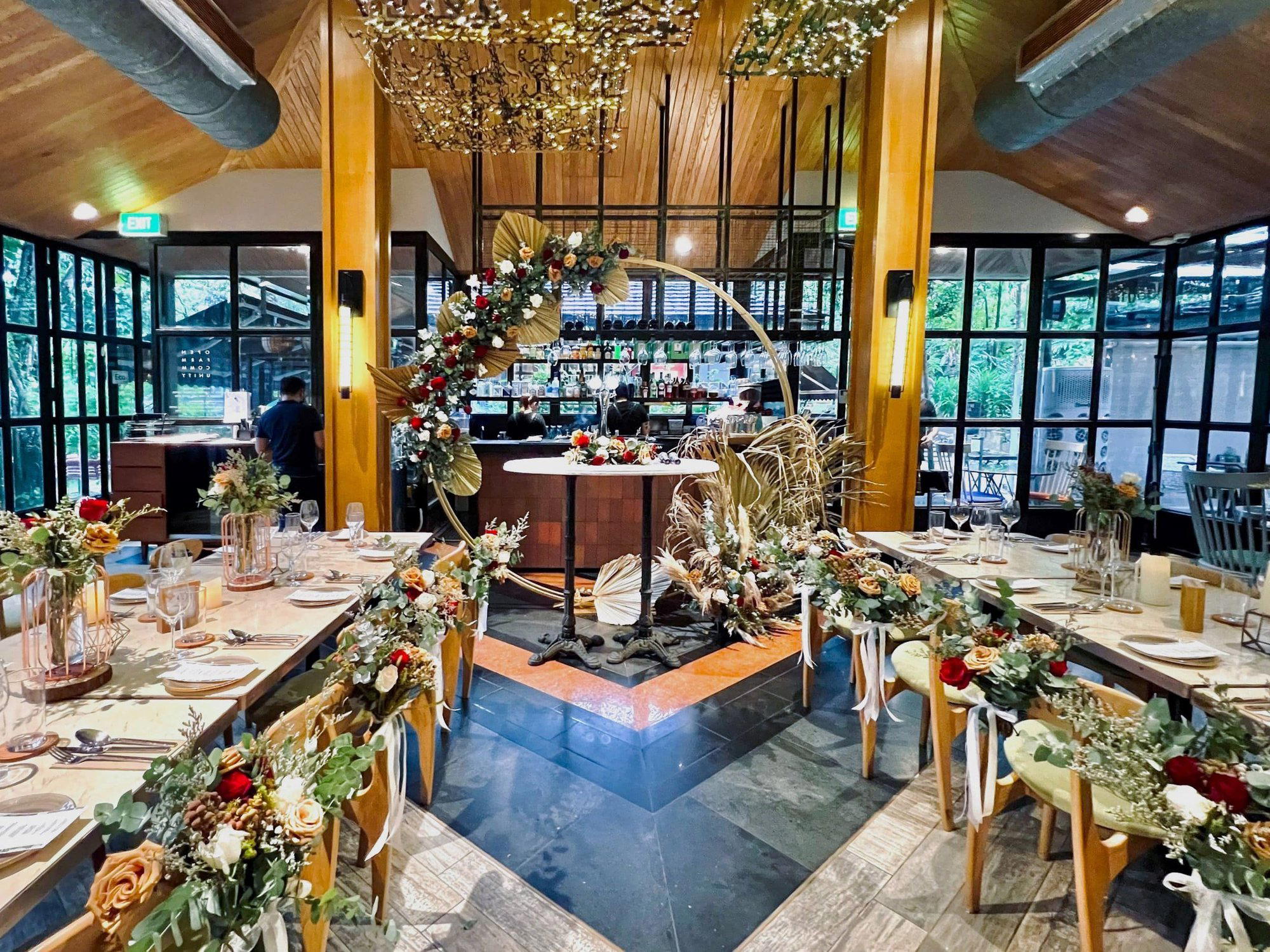
Set in a glasshouse adjacent to Singapore's Botanic Garden on Minden Road, Open Farm Community pairs an urban farm with a plant-forward dining concept that draws a consistent crowd of residents and return visitors. The menu skews mostly plant-based, with vegan, vegetarian, and gluten-free options throughout, while sourcing from local artisan producers and across the causeway in Malaysia. Technique ranges widely, pulling from global influences rather than anchoring to a single culinary tradition.
The menu
What to order
- Hay-Smoked Chicken
- Thai Flower Crab Pasta
- Pure Black Ribeye
- Scampi Aglio Olio
- Seasonal Fish & Chips
The approach along Minden Road signals something different before you reach the door. The Botanic Garden presses up against the property on one side, and the glasshouse structure that houses Open Farm Community reads more like a working horticultural facility than a conventional restaurant. Raised beds and cultivation plots frame the entrance; what grows there is not decorative. For regulars, and there are many, drawn back week after week, this physical setting is part of the contract. The meal begins outside, in a way that few Singapore dining addresses can honestly claim.
Where the Restaurant Sits in Singapore's Dining Spectrum
Singapore's fine and upper-casual dining scene is heavily weighted toward classical European frameworks and tasting-menu formats. Properties like Odette and Les Amis anchor the French-heritage end of the market, while Zén and Jaan by Kirk Westaway represent the European contemporary tier at the city's highest price points. Open Farm Community operates in an entirely different register. It is not competing for the tasting-menu dollar, nor does it position against the innovation-led format of a place like Meta.
The Minden Road address, adjacent to the UNESCO-listed Singapore Botanic Garden, is not accidental. It places the restaurant at one remove from the CBD restaurant cluster, and that distance matters. The clientele skews residential and returning rather than occasion-driven and tourist-heavy. This is, in a meaningful sense, a neighbourhood restaurant operating at a quality level that most neighbourhoods do not support.
The Farm-to-Table Model at This Address
Urban farming in Singapore is a constrained proposition. Land is scarce, yields are limited by tropical heat, and the economics of growing at scale within city limits rarely pencil out for restaurants. Open Farm Community works around this by sourcing from local artisan farms where possible and extending the supply chain across the causeway to Malaysia when necessary. The menu's plant-forward design, mostly plant-based, with full vegan, vegetarian, and gluten-free streams running through it, is both an ethical position and a practical one. A menu built around vegetables and produce tolerates supply variability better than one anchored to premium protein.
The technique applied to this produce is deliberately eclectic. Rather than anchoring to a single regional cuisine, the kitchen draws from global cooking traditions, which places it in a growing category of restaurants that treat ingredient provenance as the fixed point and flavour reference as something more fluid. This is not unusual at a global level, you see a similar approach at restaurants like Aponiente in El Puerto de Santa María, where a strong philosophical commitment to a specific ingredient category shapes everything else, but within Singapore's dining context it remains a comparatively rare format.
What Regulars Actually Come Back For
At restaurants with a loyal local clientele, the things that keep people returning are rarely the things that appear in formal descriptions. The setting at Open Farm Community functions as a consistent draw: the glasshouse structure and garden surroundings shift with the light and season in a way that indoor-only dining rooms cannot replicate. For a city-state where most dining happens in climate-controlled interiors, a space with genuine horticultural presence is unusual enough to register on each visit.
The plant-forward menu orientation also creates a different rhythm of return. Regulars at protein-heavy tasting-menu restaurants often pace their visits around occasion and price. A menu that offers flexibility across vegan, vegetarian, and omnivore preferences, at a price point that is accessible relative to the city's upper tier, supports more frequent return. The menu's global technique reach means that repetition is less of a risk, there is structural variety built in.
There is also a community dimension to the concept that goes beyond plate and glass. The urban farm element is functional, not theatrical, and for guests who engage with it, it creates a relationship with the space that is different from what you experience at, say, a hotel dining room or a standalone fine-dining address. Restaurants globally are exploring this territory, the integration of food production and food service, but few have embedded it as physically as Open Farm Community has, in a space where the growing infrastructure is visible from the dining room.
Planning a Visit
The restaurant sits at 130E Minden Road, a short distance from Botanic Gardens MRT on the Circle Line, which makes it accessible without a car. Given the consistent local following and the setting's popularity for both weekday lunches and weekend meals, booking ahead is advisable rather than optional, particularly for weekend sittings. The glasshouse format means the space feels different depending on time of day, a midday visit under full light reads quite differently from an evening sitting as the garden goes dark around the structure. Both have advocates among regulars, and the choice is worth considering when reserving.
For guests building a broader Singapore itinerary around serious dining, the full context is available in our full Singapore restaurants guide, alongside our full Singapore hotels guide, our full Singapore bars guide, our full Singapore wineries guide, and our full Singapore experiences guide. For reference on how farm-integrated dining concepts operate at other addresses globally, Emeril's in New Orleans, Le Bernardin in New York City, Alinea in Chicago, Alléno Paris au Pavillon Ledoyen, Alain Ducasse at Louis XV in Monte Carlo, and 8½ Otto e Mezzo Bombana in Hong Kong each represent points of comparison for how fine and upper-casual restaurants relate produce sourcing to kitchen identity.
Frequently asked questions
Where exactly is Open Farm Community?
Open Farm Community is located at 130E Minden Road, Singapore.
What's Open Farm Community known for in terms of accolades?
Open Farm Community has received recognition including: Adjacent to the Botanic Garden, this verdantly set glasshouse combines an urban farm and dining concept. The founder-chef advocates an eco-friendly philosophy and therefore designed a mostly plant-based menu. Produce may be sourced from loc….
What should I order at Open Farm Community?
The menu is structured around plant-based cooking with vegan, vegetarian, and gluten-free options, drawing produce from local artisan farms and Malaysia. The kitchen applies eclectic global technique across that produce, so the strongest choices tend to reflect what is seasonally available from those supply relationships rather than fixed signature dishes. Ask your server what has come in from the farm that week, that line of inquiry tends to yield the most considered recommendations at this address.
What's the best way to book Open Farm Community?
The restaurant is located at 130E Minden Road, a short walk from Botanic Gardens MRT on the Circle Line. Reservations are advisable given the glasshouse setting attracts both local regulars and visitors to the adjacent Botanic Garden. Check the restaurant's own channels directly for current booking options, as third-party availability does not always reflect real-time capacity.
The Short List
| Venue | Cuisine | Price | Awards | Notes |
|---|---|---|---|---|
| Open Farm CommunityThis venue (the venue you are viewing) | Farm-to-Table Fusion | Not listed | Michelin Plate | Not listed |
| Zén | Yakitori & Japanese Izakaya | $50–100 | Tabelog 100 #92 | European Contemporary |
| Jaan by Kirk Westaway | Modern British Fine Dining | $200–300 | 2 Michelin Stars · Michelin Guide 2 Stars | British Contemporary |
| Iggy's | Modern European with Japanese Influence | $150–200 | 1 Michelin Star · Michelin Guide 1 Star | Modern European, European Contemporary |
| Labyrinth | Original Spice Creative Curry & Asian Fusion | $30–50 | Tabelog 100 #70 | Innovative |
| Seroja | Modern Malay Archipelago Fine Dining | $150–200 | 1 Michelin Star · Michelin Guide Green Star | Singaporean, Malaysian |
Recognition history
Dated appearances from independent guides and award organizations, with the underlying list record or original source where available.
Michelin Plate
Michelin · 2026 Michelin Plate