Oluf Bagers Gaard occupies a historic address on Nørregade in central Odense, placing it within a city that has quietly developed a serious dining culture alongside its better-known Hans Christian Andersen heritage. For visitors tracing Odense's restaurant scene, this address represents one of the older-established names in a neighbourhood that rewards careful exploration on foot.
Pearl is the En Primeur Club membership app — saves, bookings, and concierge access live there. Same editors, same standards.
- Address
- Nørregade 29, 5000 Odense, Denmark
- Phone
- +4564441100
- Website
- olufbagersgaard.dk
- Directions
- Get directions
 Saves & bookings on Pearl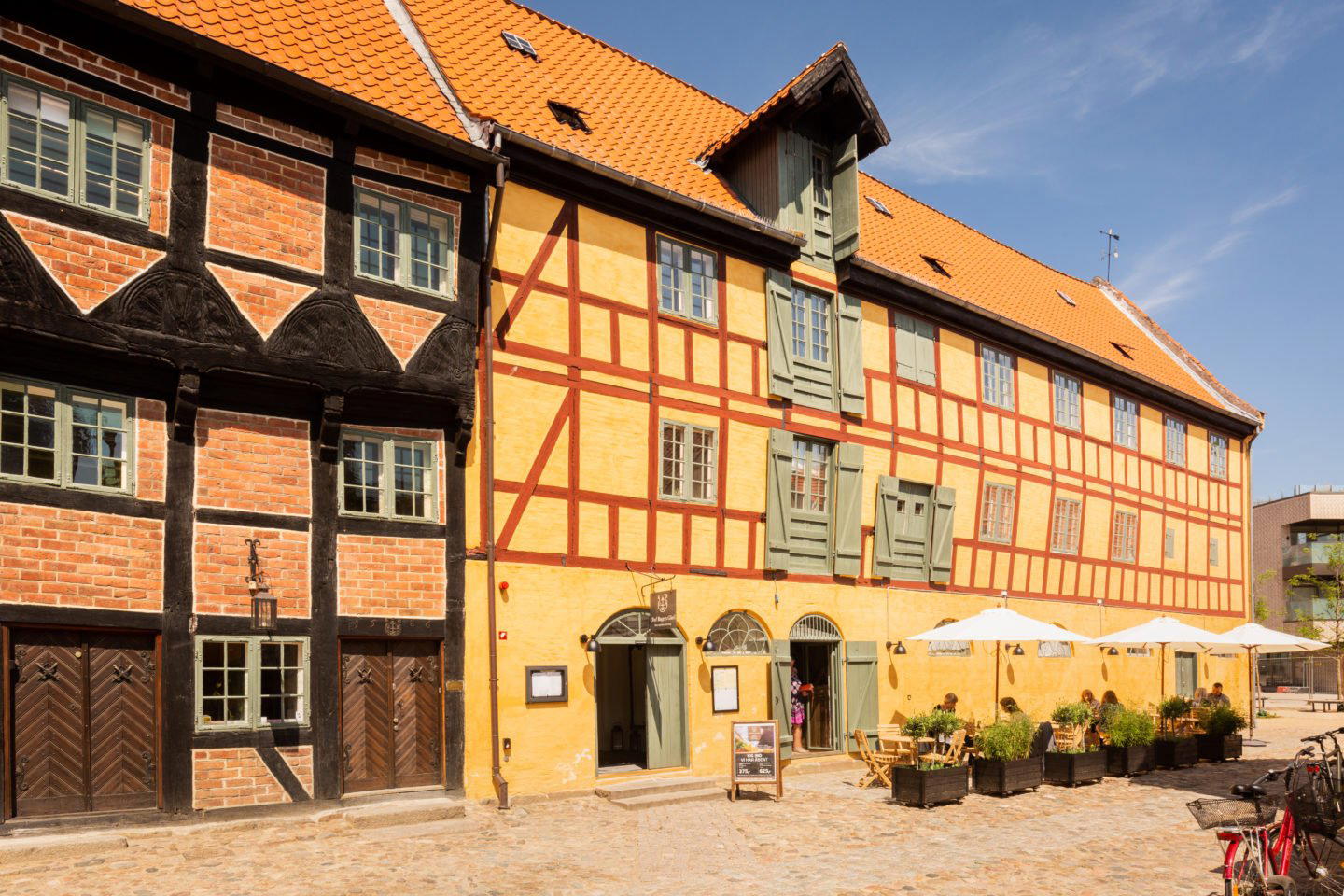
Nørregade and the Architecture of a Danish Meal
Nørregade 29, the address of Oluf Bagers Gaard, sits in the kind of layered urban fabric that Odense has preserved more carefully than many Danish cities its size. The street runs through the medieval core, and properties here carry the accumulated weight of centuries of commerce and civic life. Approaching the address on foot from the pedestrian centre, you pass half-timbered frontages and low doorways before arriving at an entrance that signals, through its proportions alone, that what follows will be conducted at a slower pace than the city outside.
That slower pace is the operating principle of the Danish dining ritual at this tier of establishment. Denmark has, across the past two decades, codified a meal structure that prioritises sequence and deliberate pacing over volume or spectacle. The progression from lighter, often pickled or cured preparations through to richer main courses and composed desserts is not a formula but a hospitality philosophy, one that expects the diner to surrender their schedule for the duration. In Odense, this tradition sits alongside a growing local ambition that has placed the city on the radar of visitors who previously stopped only at Aarhus or Copenhagen when travelling Jutland and Funen.
Odense's Dining Position Within Denmark
To understand where Oluf Bagers Gaard sits, it helps to understand where Odense sits. The city occupies an interesting middle position in Danish fine dining geography. The apex of that geography remains Copenhagen, where Geranium in Copenhagen and Jordnær in Gentofte set the standard against which all Danish tasting menus are measured. Aarhus has its own credible tier, anchored by Frederikshøj in Aarhus. Beyond those two cities, a dispersed set of destination restaurants has emerged in smaller towns and rural settings: Henne Kirkeby Kro in Henne, Dragsholm Slot Gourmet in Hørve, Frederiksminde in Præstø, and LYST in Vejle among them. Alimentum in Aalborg, Domæne in Herning, and MOTA in Nykøbing Sjælland extend that national pattern further. Odense, as Denmark's third city, has developed its own dining identity that draws on this national moment without simply replicating Copenhagen's playbook.
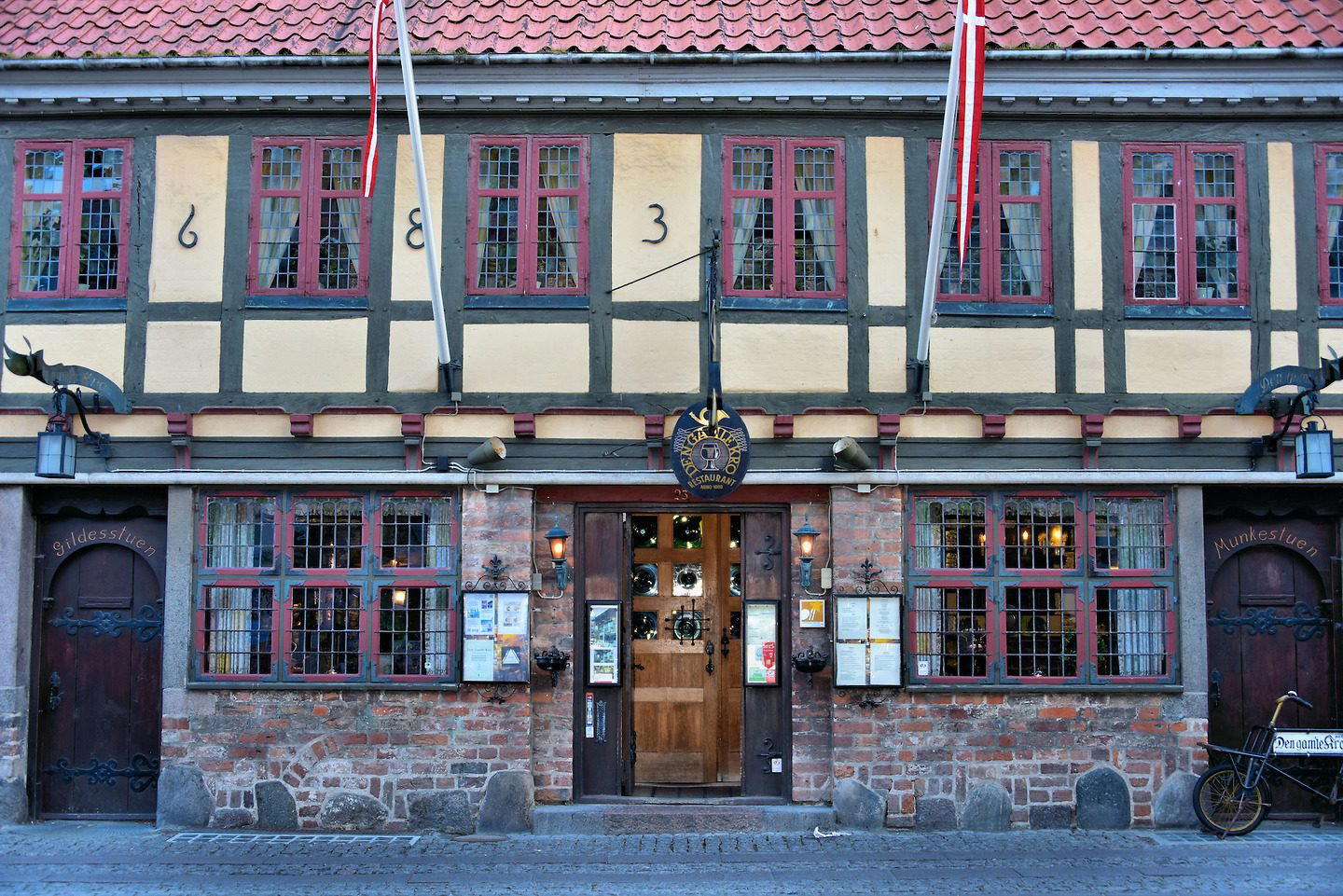
Within Odense specifically, the restaurant scene has segmented into a handful of identifiable tiers. Modern Nordic tasting menus occupy the upper bracket, represented by addresses like ARO (Modern Cuisine). More approachable neighbourhood formats cluster in the mid-range, with options like GOMA and HOS drawing a local clientele. Historic addresses that bridge tradition and contemporary expectation, such as Den Gamle Kro A/S, occupy their own category. European imports with strong product identities, like I Pupi Siciliani, add further range. Oluf Bagers Gaard's Nørregade address places it in the historic-centre tier of this map, among addresses where the setting does significant editorial work before any food arrives.
The Ritual of the Danish Table
The customs that govern a formal Danish meal have roots in both Scandinavian hospitality traditions and the broader European table service culture that Danish restaurants absorbed through the twentieth century. Pacing matters more than speed. The expectation is not efficiency but attention, and the leading Danish dining rooms operate on the understanding that a meal is a social structure, not merely a delivery mechanism for food. This is, in part, why the Danish smørrebrød tradition persists with such tenacity even in cities with strong international restaurant offerings: the ritual of building, assembling, and consuming an open-faced sandwich is itself a form of ceremony that rewards slowness.
At a historic address like Nørregade 29, this ritual orientation is reinforced by the physical context. Older Danish dining rooms tend toward lower ceilings, heavier materials, and a spatial intimacy that modern purpose-built restaurants rarely replicate. The effect is to reduce ambient noise and encourage a conversational register that suits the measured pace of a multi-course progression. Visitors arriving from cities where dining culture trends toward volume and turnover, including those accustomed to the controlled theatrics of destinations like Le Bernardin in New York City or the precision tasting formats of Atomix in New York City, often find this register a deliberate recalibration.
Planning a Visit to Nørregade
Odense is accessible by direct rail from Copenhagen in approximately one hour and twenty minutes, making it a viable day trip from the capital, though the city rewards an overnight stay that allows dinner to be taken without the constraint of a return train. Nørregade runs through the walkable historic centre, within reasonable distance of the main station on foot or by a short taxi or cycle. As with most established dining addresses in Danish provincial cities, advance contact is advisable for weekend evenings, when local demand competes with visitor traffic, particularly in the summer months when Odense draws visitors to its Hans Christian Andersen sites.
What It’s Closest To
Comparable venues nearby, for context on price, style, and recognition.
| Venue | Cuisine | Price | Awards | Notes |
|---|---|---|---|---|
| Oluf Bagers GaardThis venue — the venue you are viewing | Modern Danish-Nordic with French influences | $$$ | Not listed | Not listed |
| GOMA | Nordic-Japanese Omakase Fusion | $$$ | Not listed | Odense C |
| Vår | Contemporary Nordic Fine Dining | $$$ | Not listed | Odense C |
| I Pupi Siciliani | Authentic Sicilian | $$ | Not listed | Odense C |
| HOS | Modern Danish with French influences | $$$ | Not listed | center |
| Pasfall | Contemporary Nordic with French Technique | $$$ | Michelin Plate | Odense C |
Continue exploring
More in Odense
Restaurants in Odense
Browse all →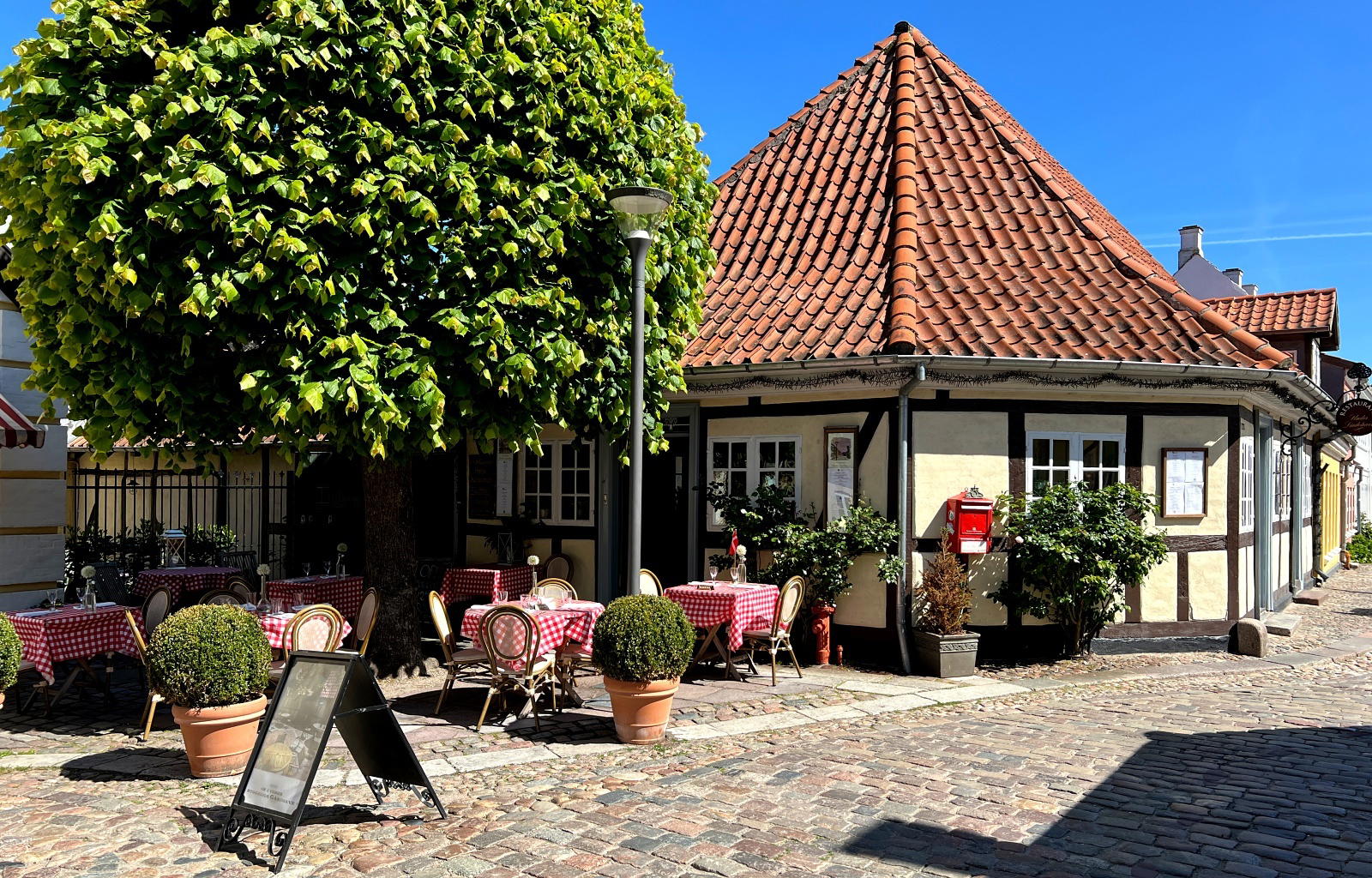
Bars in Odense
Browse all →
Hotels in Odense
Browse all →

At a Glance
- Rustic
- Cozy
- Historic
- Intimate
- Family
- Group Dining
- Special Occasion
- Historic Building
- Courtyard
- Extensive Wine List
Current opening hours
- Monday
- 12–3 PM, 5:30–10 PM
- Tuesday
- 12–3 PM, 5:30–10 PM
- Wednesday
- 12–3 PM, 5:30–10 PM
- Thursday
- 12–3 PM, 5:30–10 PM
- Friday
- 12–3 PM, 5:30–11 PM
- Saturday
- 12–3 PM, 5:30–11 PM
- Sunday
- Closed
Hours can change for holidays and private events. Last verified .
Relaxed and informal atmosphere in a charmingly rustic former horse stable with preserved stalls, stone floors, and woodwork, candlelit courtyard setting.