EL Ideas



1 Michelin Star · James Beard Award Semi Finalist
Our verdict
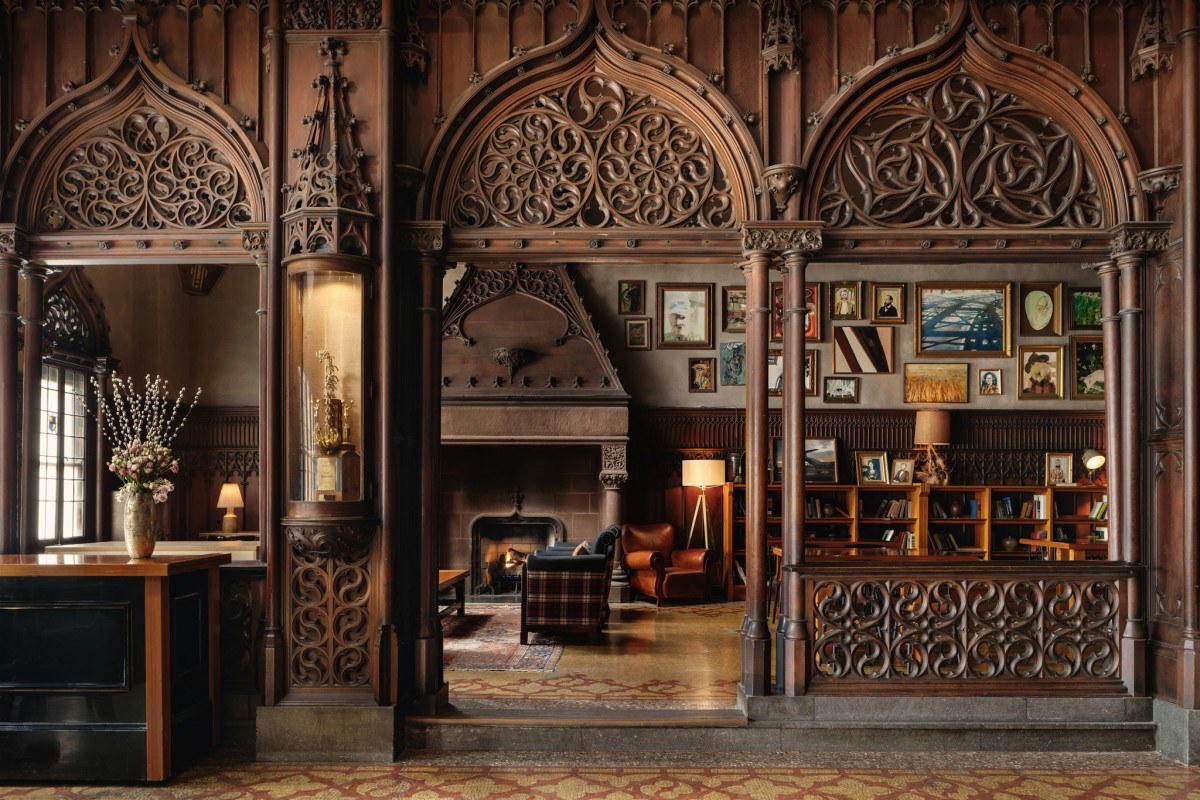
EL Ideas operates from a converted warehouse on Chicago's Lower West Side, where Chef Phillip Foss runs a single-seating, BYOB dinner that functions more like an open-kitchen experiment than a conventional restaurant. A Michelin star since 2024 and consistent placement on Opinionated About Dining's North America list signal serious cooking beneath the deliberately casual format. Guests are encouraged to wander, watch, and engage directly with the kitchen.

Pearl is the En Primeur Club membership app, where members save venues, book tables and use the concierge.
The menu
What to order
- French fries with potato leek soup
- Hokkaido scallop
A Warehouse, a Kitchen, and No Dividing Wall
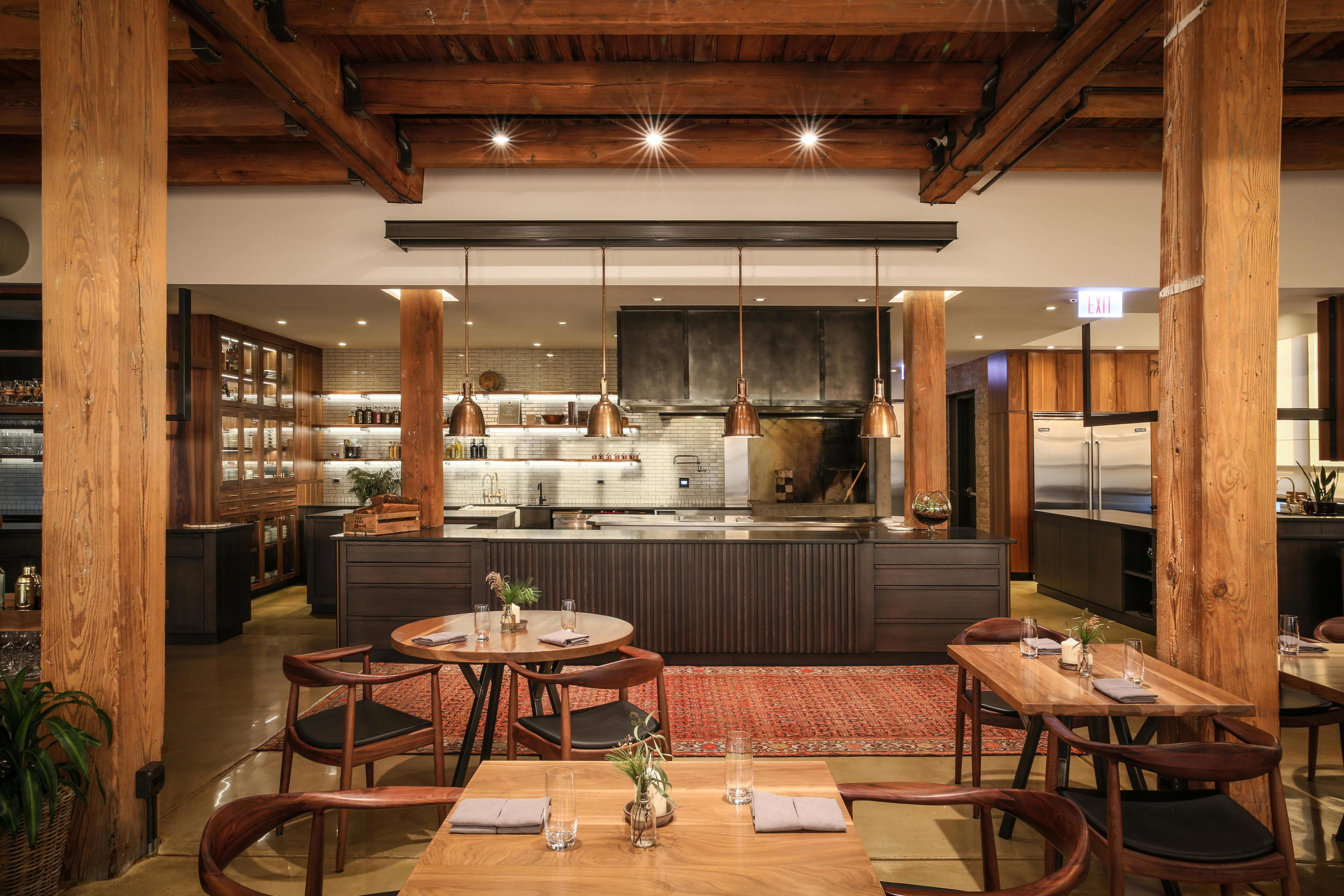
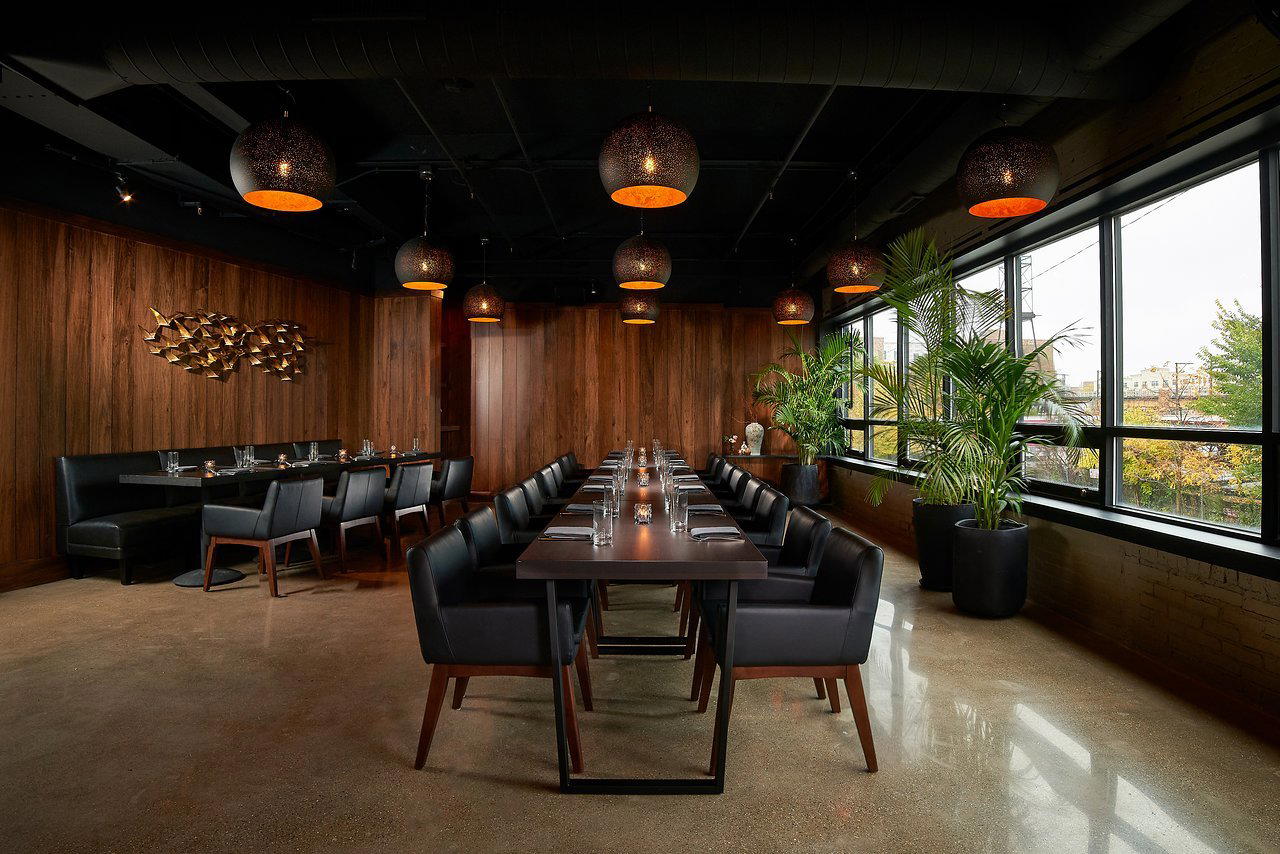
Chicago's serious dining scene has long operated on a spectrum between the theatrical control of places like Alinea (Progressive American, Creative) and the neighbourhood warmth of rooms like Boka or Elske. EL Ideas on West 14th Street in the Lower West Side occupies a different register entirely. The space is a converted warehouse. Chef Phillip Foss lives upstairs. The kitchen has no fourth wall, no pass separating cooks from guests, and no pretence that what you are watching is anything other than dinner being made in real time.
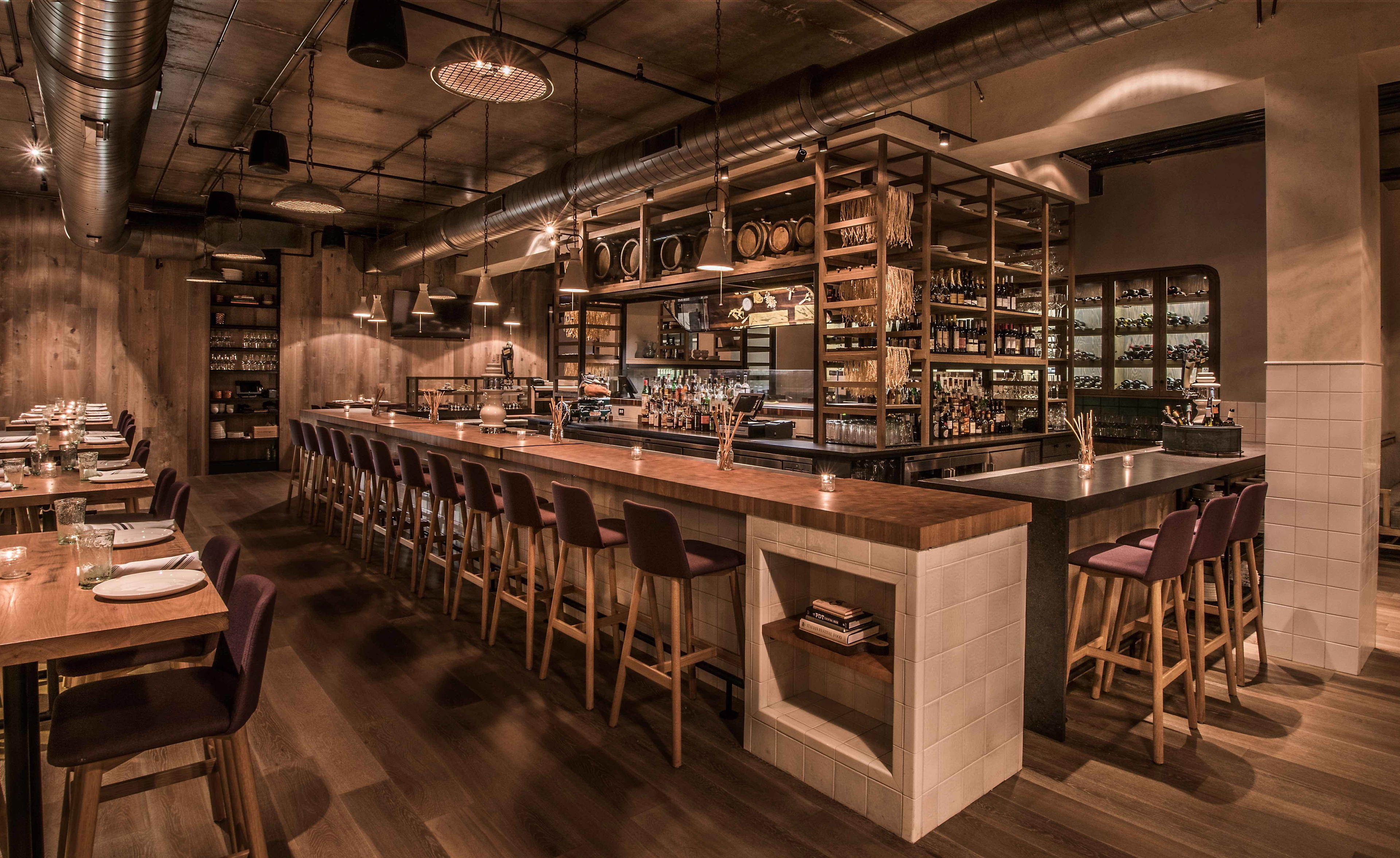
Walking into EL Ideas, the absence of conventional restaurant architecture is immediate. There is no host stand framing the entrance as a threshold between street and service, no ambient music calibrated by a consultant. What you encounter is the texture of a working kitchen: the smell of stock and heat, the sounds of prep without theatrical suppression. In a city where Michelin-starred rooms tend toward deliberate spatial design, this warehouse format feels like a counterargument. It is not rough for the sake of rough. It is simply unmediated.
The Format as Editorial Statement
Across American cities, a small cohort of fine-dining operators has moved away from the multi-course tasting menu delivered in a formal room toward formats that blur the line between private dinner and professional kitchen. Lazy Bear in San Francisco operates on a similar communal logic. Sons & Daughters in San Francisco and The Wolf's Tailor in Denver push contemporary technique into intimate rooms with minimal table counts. EL Ideas belongs to this cohort but takes the format further than most.
The seating is singular: one turn, one room, everyone served simultaneously. Guests are invited to move through the space, examine the pantry, position themselves beside the line as dishes are plated. This is not a choreographed peek-behind-the-curtain moment of the kind that higher-volume tasting rooms sometimes offer. It is structural access, built into how the evening works from the first course to the last. The format also puts BYOB at its centre, a policy that changes the economic and social dynamic significantly. At comparable price-point restaurants such as Single Thread Farm in Healdsburg or The French Laundry in Napa, wine lists form a substantial part of both the revenue model and the evening's architecture. Here, guests arrive with their own bottles, which shifts the table toward something closer to a private gathering with professional cooking.
What the Awards Signal
That three-year consistency at roughly the same position reflects a room that has found its register and held it. Michelin awarded a star in 2024, a credential that places EL Ideas in the same tier as Chicago one-star rooms including Boka and Kasama, while the cooking style and physical format are sharply different from either.
The OAD placement also positions EL Ideas within a broader North American peer group. Le Bernardin in New York City and Providence in Los Angeles occupy the same ranking tier by aggregate score, though their formats, price structures, and dining philosophies are entirely distinct. What the proximity in ranking suggests is that OAD's respondent base, which skews toward repeat fine-dining travellers, finds value in the EL Ideas model at a level comparable to more formally constructed rooms. That is a meaningful signal about how the format reads to a serious audience.
The Food: Irreverence With Precision
The cuisine at EL Ideas operates in the register of New American creative cooking, where technique serves wit rather than solemnity. The Opinionated About Dining notes describe a shrimp cocktail croquette served with shrimp snow, eaten directly from the plate. That single dish encapsulates the ethos: a format (the croquette) that implies classical training, a texture (the snow) that requires temperature control and technical fluency, and a service instruction (lick it from the plate) that collapses the decorum usually expected at this price point.
Menu shifts regularly, with riffs on oysters Rockefeller and bánh mì reported among the reference points. This kind of deliberate citation of populist or working-class food forms, reprocessed through fine-dining technique, appears throughout American contemporary cooking but tends to work leading when the underlying dish knowledge is genuine rather than gestural. The single permanent item is a construction of French fries with potato leek soup and nitro-poached vanilla ice cream, a dish that uses temperature contrast and familiar flavour references to land somewhere between comfort food and technical exercise.
Chicago's contemporary tier includes kitchens where the intellectual architecture of the menu is the primary communication, rooms like Smyth or Alinea where progression through courses is part of a deliberate argument. EL Ideas uses a different logic: each dish tends to make its point quickly, with humour, and move on. The cumulative effect is closer to a conversation than a monologue.
The Sustainability Dimension
Fine-dining sustainability conversations often centre on sourcing certifications, farm partnerships, and seafood watch lists. EL Ideas presents a different kind of environmental argument, one rooted in format rather than supply chain. The warehouse space eliminates the resource overhead of purpose-built restaurant design. The single-seating structure means food is cooked and served with a defined guest count: no mise en place held across multiple turns, no food prepped speculatively for tables that may order differently than anticipated. The BYOB model removes the wine cellar and its associated storage demands from the operation entirely.
None of this is framed by EL Ideas as a sustainability programme, which makes it more rather than less interesting as a case study. The format decisions that reduce waste and operational complexity appear to emerge from the logic of running a small, owner-operated kitchen rather than from an external environmental brief. Compared to high-volume kitchens at restaurants like Girl & The Goat, where daily cover counts create proportionally larger prep and waste streams, EL Ideas operates at a scale where the chef can account for nearly everything that enters and leaves the kitchen. At rooms like S.K.Y., where service extends across multiple seatings, that kind of precision control is structurally harder to achieve. Small-format, single-seating kitchens have an inherent efficiency advantage, and EL Ideas is an example of what that looks like in practice at the Michelin tier.
The same logic applies to the BYOB arrangement. When guests manage their own wine, the restaurant avoids holding a large inventory of bottles that may not move, reducing both capital tied up in stock and the possibility of product going past its window. It is a simplification that benefits multiple parties simultaneously.
Planning an Evening at EL Ideas
EL Ideas operates Thursday through Sunday, with Thursday and Sunday service running from 6 PM to 8 PM and Friday and Saturday extending to 11 PM. Monday through Wednesday the kitchen is dark. The address is 2419 W 14th St in Chicago's Lower West Side, a neighbourhood that does not sit on a conventional dining circuit, which means arriving with intention rather than stumbling from one room to the next. The single-seating format means the evening has a defined arc: you arrive, you stay for the duration, you leave when the meal is finished. Guests are encouraged to bring wine, which effectively functions as the beverage programme for the night.
For broader Chicago planning, EP Club's full Chicago restaurants guide covers the city's dining range in depth. The Chicago hotels guide, bars guide, wineries guide, and experiences guide extend the picture. Emeril's in New Orleans offers a point of comparison for chef-driven rooms where personality and format are tightly linked, though the dining register and scale differ considerably.
FAQ: What's the must-try dish at EL Ideas?
Based on the OAD documentation, the one dish that does not rotate is a construction built around French fries, potato leek soup, and nitro-poached vanilla ice cream. It is the single permanent fixture on a menu that otherwise changes. The shrimp cocktail croquette with shrimp snow, served in a format requiring guests to eat directly from the plate, is cited as an opening course that establishes the kitchen's tone quickly. Chef Phillip Foss earned a Michelin star in 2024 and has appeared on the OAD North America list for at least three consecutive years, credentials that frame what the kitchen is capable of delivering consistently. The evolving menu means specific dishes beyond these anchors should be treated as subjects to verify at time of booking rather than assumptions about what will be served.
Frequently asked questions
What's the cuisine at EL Ideas?
What days is EL Ideas closed?
Hours at EL Ideas: Monday closed Tuesday closed Wednesday closed Thursday 6 PM-8 PM Friday 6 PM-11 PM Saturday 6 PM-11 PM Sunday 6 PM-8 PM.
What's EL Ideas known for in terms of accolades?
EL Ideas has received recognition including: Opinionated About Dining Top Restaurants in North America Ranked #144 (2025); Channeling all the ease of an underground dinner party, Chef Phillip Foss invites guests into his literal home (he lives upstairs). There is but one seating, ever….
What's the must-try dish at EL Ideas?
The one dish that never leaves the menu is built around French fries, potato leek soup, and nitro-poached vanilla ice cream, a construction that sits at the centre of what Opinionated About Dining reviewers consistently document about EL Ideas. Everything else rotates, with past courses ranging from shrimp cocktail croquettes with shrimp snow (served licked off the plate) to riffs on oysters Rockefeller and banh mi. The fixed fries dish is the clearest expression of Chef Phillip Foss's approach: precision technique applied to a comfort-food reference point, delivered without ceremony.
What does dinner at EL Ideas typically cost?
Pricing at EL Ideas is listed as $$$$.
Where is EL Ideas located?
EL Ideas is located at 2419 W 14th St, Chicago, IL 60608, Chicago.
Who is the chef at EL Ideas?
The chef associated with EL Ideas is Phillip Foss.
In Context: Similar Options
A short peer table to compare basics side-by-side.
| Venue | Cuisine | Price | Awards | Notes |
|---|---|---|---|---|
| EL IdeasThis venue (the venue you are viewing) | Avant-Garde Tasting Menu | $200–300 | 1 Michelin Star · James Beard Award Semi Finalist | Not listed |
| Alinea | Avant-Garde Molecular Gastronomy | $300–500 | 2 Michelin Stars · World's 50 Best #37 | Progressive American, Creative |
| Smyth | Modern American Tasting Menu | $200–300 | 3 Michelin Stars · World's 50 Best #1 | Progressive American, Contemporary |
| Kasama | Modern Filipino | $30–50 | 2 Michelin Stars · World's 50 Best #31 | Filipino |
| Next Restaurant | Avant-Garde Themed Tasting Menus | Not listed | 1 Michelin Star · We're Smart World 2 Radishes | American Cuisine |
| Boka | Modern American Seasonal Fine Dining | $150–200 | 1 Michelin Star · La Liste Top Restaurants | New American, Contemporary |
Recognition history
Dated appearances from independent guides and award organizations, with the underlying list record or original source where available.
Michelin 1 Star
Michelin
James Beard Award Semi Finalist
James Beard Award
Opinionated About Dining Top Restaurants in North America Highly Recommended
Opinionated About Dining
Full recognition history (7 entries)
Opinionated About Dining Top Restaurants in North America Ranked #144
Opinionated About Dining
Michelin 1 Star
Michelin
Opinionated About Dining Top Restaurants in North America Ranked #144
Opinionated About Dining
Opinionated About Dining Top Restaurants in North America Ranked #145
Opinionated About Dining