Hide-Chan

A Lower East Side ramen counter with a consistent upward trajectory on Opinionated About Dining's Cheap Eats rankings, Hide-Chan has moved from a recommended listing in 2023 to #245 in North America by 2025. Under Hideto Kawahara, the kitchen produces ramen that reads as a reference point for the neighbourhood and a legitimate entry in New York's increasingly serious bowl culture.
 Discover on Pearl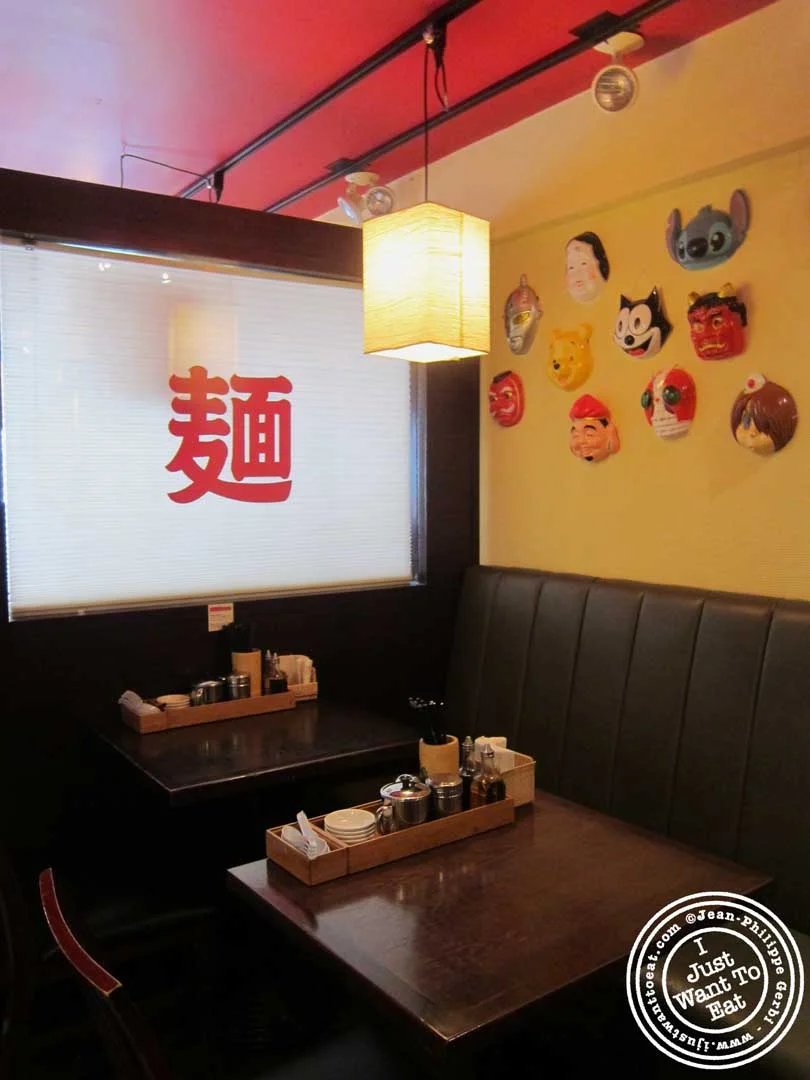
Clinton Street and the Bowl in Front of You
The Lower East Side has always processed immigrant food traditions at street level, and ramen arrived here not as a trend but as a practical proposition: a bowl that costs less than most cocktails two blocks north, built on technique that takes years to learn. At 25 Clinton Street, Hide-Chan occupies that position without apology. The room is spare, the focus is on what lands on the table, and the neighbourhood context around it has grown more serious about Japanese food with each passing year.
That seriousness has tracked nationally. New York's ramen scene moved through a predictable arc over the past decade and a half: novelty, saturation, and then a quieter consolidation phase in which the counters that understood broth as a discipline rather than a backdrop pulled ahead. The city now has a layered peer set, from the refined tonkotsu approach at Tonchin New York to the tsukemen focus at Okiboru House of Tsukemen and the established presence of Momosan Ramen & Sake. Hide-Chan sits within that set as a neighbourhood-anchored operation that has been building its case through consistency rather than spectacle.
The shortlist, unlocked.
Hard-to-book tables, cellar releases, and concierge-planned trips.
Get Exclusive Access →The Trajectory: From Recommended to Ranked
The clearest measure of Hide-Chan's evolution is its Opinionated About Dining record. OAD's Cheap Eats list in North America is one of the more demanding benchmarks in affordable dining criticism, compiled from a pool of experienced eaters rather than crowd-sourced volume. In 2023, Hide-Chan appeared in the Recommended tier, a starting position that signals recognition without a specific rank. By 2024, it had moved to #359 on the North America list. By 2025, that number had climbed to #245. The directional signal across three consecutive years is not ambiguous: the kitchen has either improved its output, improved its consistency, or both.
That kind of upward movement on a critics' list is worth reading carefully. OAD doesn't reward novelty for its own sake, and a bowl that earns a higher ranking in year three than year two tends to reflect operational discipline over time. Hide-Chan's trajectory places it in a different conversation from restaurants that open to fanfare and then plateau. Compare it to Nakamura Ramen, another serious entry in New York's mid-tier Japanese dining discussion, and the shared quality signal becomes apparent: these are kitchens that treat ramen as a craft with standards, not a category with margins.
What the Bowl Tells You About the Kitchen
Ramen criticism rewards specificity over enthusiasm. The difference between a bowl that lands on a ranked list and one that doesn't usually comes down to broth clarity, noodle calibration, and the discipline to serve the same bowl on a Tuesday afternoon in February that you served on a Saturday night in October. Those are unglamorous virtues, but they are the ones that accumulate into a reputation.
Hide-Chan operates under Hideto Kawahara, whose name is attached to the kitchen's direction without the biographical mythology that often surrounds chef-led ramen counters in New York. That restraint is appropriate for a room whose value proposition is in the bowl rather than the narrative. The parallel holds across ramen culture more broadly: the most durable Japanese ramen houses, from the broth-obsessed shops in Fukuoka to operations like Afuri in Tokyo or its transplanted American outpost Afuri Ramen in Portland, earn their reputations through repetition and technical fidelity rather than through press cycles.
The Google review average of 4.7 across 6,970 ratings adds a volume dimension to the OAD signal. A 4.7 at that review count is harder to maintain than a 4.9 at 200 reviews. It represents a broad, sustained consensus, the kind that builds when a kitchen delivers reliably across a wide range of guests over a long period of time. That combination of critical recognition and popular endorsement is relatively rare in the cheap-eats category, where the two measures often diverge.
The Lower East Side as Context
Clinton Street sits in a part of the Lower East Side that has absorbed waves of food culture without losing its density. The neighbourhood's eating options range from Jewish deli remnants to contemporary Japanese, Vietnamese, and Chinese kitchens within a few blocks. For ramen specifically, the LES offers a different dynamic than Midtown or the West Village: less tourist capture, more regular-customer culture, and a guest base that tends to return rather than check off.
That return dynamic matters for a bowl restaurant. Ramen regulars develop preferences that are more granular than most dining habits. They know which broth level they want, which noodle thickness, which add-on combination. A kitchen that builds a regular clientele in a neighbourhood like the Lower East Side is building something more durable than a destination restaurant that depends on first-time visitors. It is also, by extension, building the kind of consistency data that feeds into rankings like OAD over successive years.
New York's serious dining conversation tends to anchor around rooms like Alinea in Chicago, The French Laundry in Napa, or Lazy Bear in San Francisco when it turns to national fine-dining reference points. But the more instructive comparison for Hide-Chan is the affordable end of that same critical infrastructure: the OAD Cheap Eats list, which has also refined destinations like TabeTomo in New York's Japanese mid-tier. At that level, the competition is real and the margin for mediocrity is narrow.
Planning Your Visit
Hide-Chan operates split service, lunch and dinner, seven days a week. Hours: Monday through Saturday 11:45 am to 3 pm and 5 to 11 pm; Sunday 11:45 am to 3 pm and 5 to 10 pm. Address: 25 Clinton St, New York, NY 10002. Reservations: Booking method not listed; walk-in approach likely applies, consistent with neighbourhood ramen counter norms. Budget: Price range not published; OAD Cheap Eats placement suggests a bowl price in the range typical of serious New York ramen counters. Arrive at the start of a service window if you want to avoid a wait during peak periods. The split-service format means the kitchen closes between lunch and dinner, so timing matters.
For wider New York planning, see our full New York City restaurants guide, our full New York City hotels guide, our full New York City bars guide, our full New York City wineries guide, and our full New York City experiences guide. For other reference points across American dining, Emeril's in New Orleans, Providence in Los Angeles, and Single Thread Farm in Healdsburg represent the broader EP Club coverage of serious American kitchens at different price points.
What Regulars Order at Hide-Chan
Hide-Chan's menu details are not published in our database, which means specific dish recommendations would be speculation rather than reporting. What the OAD record and the 4.7 Google average across nearly 7,000 reviews do confirm is that the kitchen has a core offering compelling enough to bring people back. In ramen culture generally, regulars gravitate toward the house tonkotsu or shoyu variant that first earned them, then adjust with add-ons, noodle firmness, and broth intensity as familiarity grows. The most reliable approach at any ranked ramen counter is to order the bowl the kitchen is known for, without modification, on a first visit. That is as true here as anywhere on the OAD Cheap Eats list.
25 Clinton St, New York, NY 10002
+1 646-678-3859
How It Stacks Up
A small peer set for context; details vary by what’s recorded in our database.
| Venue | Cuisine | Price | Awards | Notes |
|---|---|---|---|---|
| Hide-Chan | Ramen | Opinionated About Dining Cheap Eats in North America Ranked #245 (2025); Opinion… | This venue | |
| Le Bernardin | French, Seafood | $$$$ | Michelin 3 Star | French, Seafood, $$$$ |
| Atomix | Modern Korean, Korean | $$$$ | Michelin 2 Star | Modern Korean, Korean, $$$$ |
| Masa | Sushi, Japanese | $$$$ | Michelin 3 Star | Sushi, Japanese, $$$$ |
| Per Se | French, Contemporary | $$$$ | Michelin 3 Star | French, Contemporary, $$$$ |
| Eleven Madison Park | French, Vegan | $$$$ | Michelin 3 Star | French, Vegan, $$$$ |
Need a table?
Our members enjoy priority alerts and concierge-led booking support for the world's most difficult tables.
Get Exclusive AccessThe shortlist, unlocked.
Hard-to-book tables, cellar releases, and concierge-planned trips.
Get Exclusive Access →