Ohshima

Our verdict
A neighbourhood sushi counter in Orange, California, Ohshima has earned consecutive Opinionated About Dining rankings in North America since 2023, reaching #321 in 2024 and #342 in 2025. Chef Shige Kimura runs lunch and dinner service Tuesday through Sunday, bringing a level of technical precision that is rare outside major metropolitan markets. For Southern California sushi, it represents a serious alternative to the coastal dining corridor.

Pearl is the En Primeur Club membership app, where members save venues, book tables and use the concierge.
A Strip-Mall Counter That Belongs in a Different Conversation
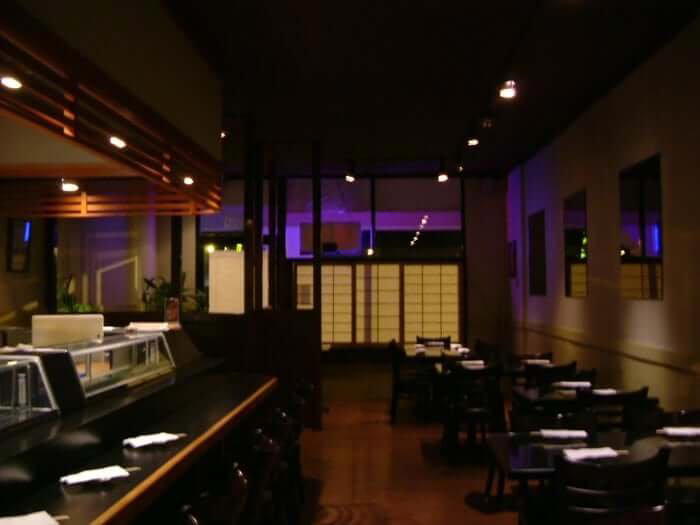
North Tustin Street in Orange, California does not announce itself as a sushi destination. The commercial stretch is the kind of place you pass without slowing down, auto shops, strip plazas, unremarkable signage. In American sushi, the leading technical work rarely happens where real estate prices demand a certain kind of theatre. Ohshima sits in that tradition: a counter where the room offers no distraction from what arrives in front of you.
More tellingly, Opinionated About Dining, which tracks serious restaurants across North America through a network of experienced diners, has recognised Ohshima three consecutive years: Highly Recommended in 2023, ranked #321 in 2024, and #342 in 2025. Those placements put Ohshima in a national conversation alongside restaurants operating in New York, San Francisco, and Chicago at significantly higher price points and with far greater media infrastructure. For context, OAD rankings at that tier sit in the same evaluative universe as counters tracked alongside destinations like Le Bernardin in New York City or Lazy Bear in San Francisco.
Where Kansai Meets the California Counter
To read Ohshima correctly, the regional lens matters. Japanese sushi has two dominant traditions that produce very different experiences at the counter. The Kanto style, rooted in Edo-era Tokyo, leans toward assertive seasoning: rice vinegared sharply, fish cured or marinated to deliver immediate impact, neta often aged and conditioned before service. Kansai tradition, associated with Osaka and Kyoto, favours subtler vinegar balances, lighter hand pressure, and a preference for allowing the natural character of fish to carry the piece. The two schools are not opposites but they are distinct, and a well-travelled diner will notice the difference in the rice as much as in the fish selection.
Chef Shige Kimura operates within this tradition. The technical lineage visible in a counter like Ohshima belongs to the Kansai sensibility in its attention to rice temperature, seasoning restraint, and the sequence of a meal that builds gradually rather than leading with the most aggressive flavours. In Southern California, that approach has a particular resonance: the region's Japanese-American dining history skews toward Kanto-influenced forms, and a counter working in the quieter Kansai register stands apart from the dominant local idiom. This is not a loud counter. The work is precise and the communication is in the fish.
Among Japanese counters in the wider Los Angeles basin, Ohshima occupies a specific tier. It is operating above the accessible neighbourhood sushi market and well outside the $300-plus omakase category occupied by rooms in Beverly Hills or downtown LA. That middle register is, in some ways, the most demanding position in American sushi: the kitchen must justify serious attention without the pricing signals that tell a diner to arrive with certain expectations already calibrated. Ohshima has earned that attention through the OAD record rather than through marketing spend. Compared to Uchi in Austin or Nobu in London, which have built recognisable brands around Japanese-influenced formats, Ohshima's recognition comes entirely from the counter itself.
The Orange Context
Orange sits in northern Orange County, away from the coastal dining concentration that draws most food press attention to the region. The local dining scene is anchored by a mix of independent operators and national chains rather than by destination restaurants. Within that context, Ohshima is working against the grain of its surroundings in the same way that serious independent kitchens in secondary cities often do: building reputation through consistency rather than location advantage. For diners already in Orange County, the restaurant offers a level of technical seriousness that would otherwise require a drive into Los Angeles.
The broader Orange dining picture spans formats from the Cal-Mex kitchens along Chapman Avenue to European-influenced rooms further afield. Gabbi's Mexican Kitchen represents the kind of chef-driven independent work that has given Orange a dining identity beyond its geography, and Ohshima sits in a parallel category: a single-operator kitchen that has accumulated recognition entirely through its food. For visitors working through the region, our full Orange restaurants guide covers the full range of options across price points and cuisines.
Planning a Visit
Ohshima is open for both lunch and dinner Tuesday through Friday, with lunch running from 11:30 am to 1:30 pm and dinner from 5:30 pm, extending to 10:00 pm on Fridays. Saturday and Sunday service is dinner only, beginning at 4:30 pm. The restaurant is closed Mondays. For a visit that extends beyond dinner, our full Orange hotels guide, bars guide, wineries guide, and experiences guide map the surrounding options. Internationally recognised rooms like Alinea in Chicago, The French Laundry in Napa, Single Thread Farm in Healdsburg, Providence in Los Angeles, Blue Hill at Stone Barns in Tarrytown, and The Inn at Little Washington draw the kind of diner who would recognise what Ohshima is doing in a very different register. Emeril's in New Orleans and the other destinations in EP Club's national coverage provide the wider peer frame for thinking about where a counter like this one sits in American dining. And in the Provençal tradition, Le Mas des Aigras - Table du Verger in Orange, France offers a useful reminder that the name Orange carries very different associations on the other side of the Atlantic.
Frequently asked questions
When can I go to Ohshima?
Hours at Ohshima: Hours: Monday Closed Tuesday 11:30 am–1:30 pm, 5:30–9:30 pm Wednesday 11:30 am–1:30 pm, 5:30–9:30 pm Thursday 11:30 am–1:30 pm, 5:30–9:30 pm Friday 11:30 am–1:30 pm, 5:30–10 pm Saturday 4:30–9 pm Sunday 4:30–9 pm.
What kind of recognition has Ohshima received?
Ohshima has received recognition including: Opinionated About Dining Top Restaurants in North America Ranked #342 (2025); Opinionated About Dining Top Restaurants in North America Ranked #321 (2024); Opinionated About Dining Top Restaurants in North America Highly Recommended (2023).
What dish is Ohshima famous for?
Ohshima's reputation is built on its omakase-style counter rather than a single signature dish. Chef Shige Kimura's approach has drawn three consecutive years of Opinionated About Dining recognition, placing the restaurant at #342 nationally in 2025. The format itself is the draw: a focused, counter-driven experience on N Tustin Street in Orange, CA.
Where is Ohshima in Orange?
Ohshima is located at 1956 N Tustin St, Orange, CA 92865, Orange.
Who is the chef or culinary lead at Ohshima?
The chef associated with Ohshima is Shige Kimura.
What has Ohshima built its reputation on?
Three consecutive Opinionated About Dining distinctions anchor Ohshima's standing: Highly Recommended in 2023, a national ranking of #321 in 2024, and #342 among all North American restaurants in 2025. That arc of recognition positions Ohshima as the most critically validated sushi counter in northern Orange County, operating under chef Shige Kimura at a strip-mall address that undercuts any expectation based on setting.
Where It Fits
| Venue | Cuisine | Price | Awards | Notes |
|---|---|---|---|---|
| OhshimaThis venue (the venue you are viewing) | Traditional Japanese Omakase | $50–100 | Not listed | Not listed |
| Le Bernardin | French Seafood Fine Dining | $300–500 | 3 Michelin Stars · World's 50 Best #13 | French, Seafood |
| Atomix | Modern Korean Tasting Menu | $300–500 | 2 Michelin Stars · World's 50 Best #7 | Modern Korean, Korean |
| Lazy Bear | Modern American Tasting Menu | Not listed | 2 Michelin Stars · World's 50 Best #25 | Progressive American, Contemporary |
| Alinea | Avant-Garde Molecular Gastronomy | $300–500 | 2 Michelin Stars · World's 50 Best #37 | Progressive American, Creative |
| Masa | Seasonal Hokkaido Tempura Omakase | $150–200 | Tabelog 100 #34 | Sushi, Japanese |
Recognition history
Dated appearances from independent guides and award organizations, with the underlying list record or original source where available.
Opinionated About Dining Top Restaurants in North America Recommended
Opinionated About Dining
Full recognition history (4 entries)
Opinionated About Dining Top Restaurants in North America Ranked #342
Opinionated About Dining
Opinionated About Dining Top Restaurants in North America Ranked #321
Opinionated About Dining
Opinionated About Dining Top Restaurants in North America Highly Recommended
Opinionated About Dining
Continue exploring
More in Orange
Restaurants in Orange
All restaurants in Orange →
Bars in Orange
All bars in Orange →
Hotels in Orange
All hotels in Orange →
Wineries in Orange
Browse all →
Details
- Intimate
- Minimalist
- Date Night
- Solo
- Open Kitchen
- Sake Program
- Omakase
- A La Carte
- Counter Dining
- Sake
Current opening hours
- Monday
- Closed
- Tuesday
- 11:30 AM–1:30 PM, 5:30–9:30 PM
- Wednesday
- 11:30 AM–1:30 PM, 5:30–9:30 PM
- Thursday
- 11:30 AM–1:30 PM, 5:30–9:30 PM
- Friday
- 11:30 AM–1:30 PM, 5:30–10 PM
- Saturday
- 4:30–9 PM
- Sunday
- 4:30–9 PM
Hours can change for holidays and private events. Hours as of .
Minimalist, no-frills atmosphere in a tiny strip mall space with focus on the sushi bar experience.