
Tabelog 100 #67
Our verdict
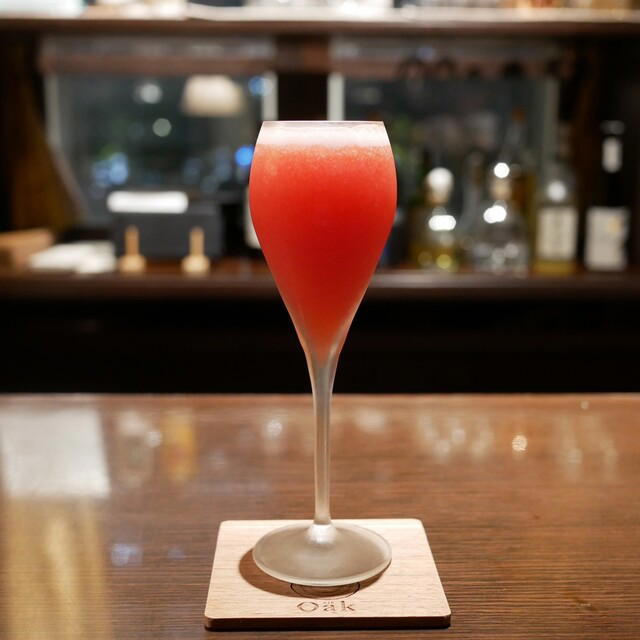
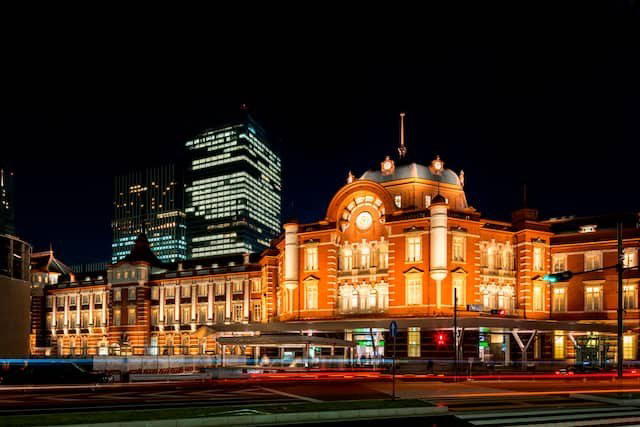
Oak places Tokyo Station drinking in its grown-up register: compact, hotel-bound, cocktail-led, and recognized in Tabelog’s Bar 100 selection for 2022. Its appeal is strongest after dark, when Marunouchi shifts from office transit to controlled evening ritual rather than daytime grazing.

Pearl is the En Primeur Club membership app, where members save venues, book tables and use the concierge.
The menu
What to order
- Signature cocktail “Tokyo Station”〈Oak style〉
- Japanese whisky tasting sets
- Wajima fugu fish & chips with orange tartar sauce
Tokyo changes character as the day drains out. The city stays functional, but its quieter bar side turns more measured: polished interiors, lowered voices, and rooms built for the pause between work, trains, and dinner. Oak belongs to that evening Tokyo, not the snack-counter Tokyo of station retail or the café Tokyo of midday meetings.
That divide matters. Around the city, daytime value sits with quick, specific formats: confectionery at TORAYA TOKYO, sweet-potato retail at Naruto Kintoki Honpo Kurio Shoten Guransuta ten, curry bread at Zopf Curry Pan Senmon Ten Guransuta ten, or a fuller station meal at TOYOKEN Toukyou sute-shon. Those places serve the city’s daylight rhythm: fast decisions, practical spending. Oak is another pattern: a Tokyo bar where the room’s restraint is category, not decoration.
Tokyo after dark, when the city stops being only logistical
Tokyo’s transport-heavy districts can be misread as purely logistical. The city proves otherwise. Its drinking culture can be less theatrical than its late-night entertainment areas and less fashion-forward than some design-led cocktail rooms, but it has authority: business dinners, after-work regularity, and bars that prize composure over spectacle. Oak’s selection for Tabelog Bar 100 in 2022 is useful evidence, placing it in a competitive Tokyo category where consistency, drink focus, and room discipline matter more than novelty.
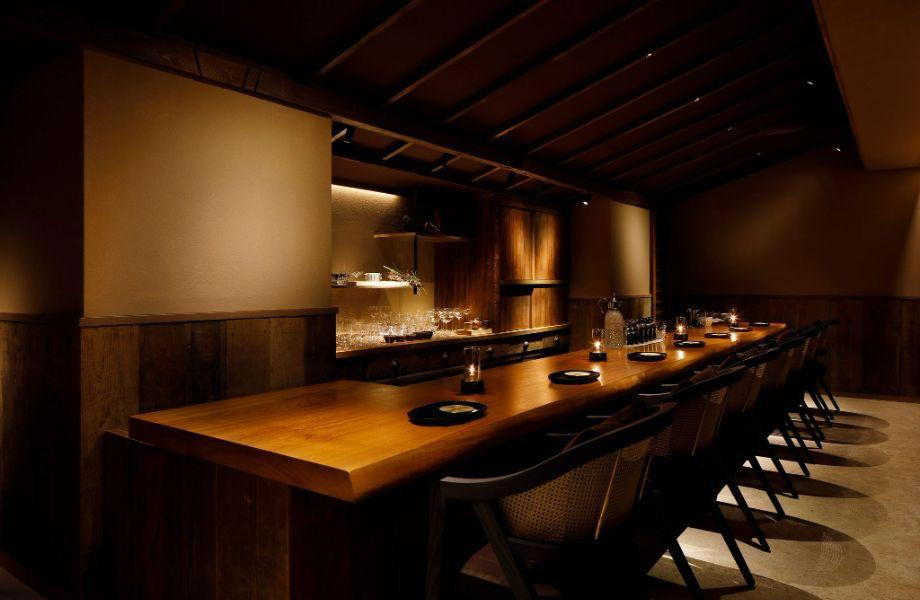
The format explains why evening carries the weight here. Oak is not competing with Tokyo’s lunch economy; it is competing with post-office, pre-train, and end-of-day rituals. Its confirmed category is bar, putting the emphasis on a drinks-led visit rather than a meal-led one. That is not a downgrade. In Tokyo, the composed bar remains serious: controlled mood, careful pacing, and service built around the rhythm of the room rather than performance.
Scale sharpens the point. Tokyo has many intimate bars; here, the appeal is not backstreet secrecy so much as a polished city pause. The room suits solo drinkers and pairs who want conversation to survive the first round. It is not the natural choice for a group turning a brief stop into a party, nor for anyone looking for the speed and turnover of a daytime counter.
Lunch belongs elsewhere; this room makes sense as an evening decision
The strongest way to read Oak is through what it is not. It is not part of Tokyo’s daytime food circuit, where pleasure often means precision at speed: a defined sweet, curry pan, boxed purchase, or counter lunch. Cantonese en and TOYOKEN Toukyou sute-shon sit closer to the meal-driven side of the city’s station ecosystem, while specialist retail formats show how granular Tokyo transit dining can be. Oak enters after that economy fades, when the decision is less about feeding a schedule and more about editing the evening.
That makes it useful for a specific Tokyo itinerary. A visitor can treat the area as more than arrival infrastructure; a local can use it as a civilized hinge between office hours and later dinner. The bar format reinforces that public-room logic. This is a shared room, but not necessarily a loud one, and its appeal depends on accepting the setting as a drinks-led stop rather than asking it to behave like a full restaurant.
The value question belongs against the setting. Tokyo has cheaper daytime options, but they answer another need. A bar with Tabelog Bar 100 recognition and a listed dinner budget of JPY 4,000 - JPY 4,999 is judged by execution, comfort, and the ability to hold its mood across the evening. On that axis, Oak sits in a practical middle space: more formal than a station counter, less destination-driven than Tokyo’s hardest-reservation addresses, and coherent for travelers already moving through the city.
How to place it in a Tokyo drinking itinerary
Tokyo rewards category discipline. Sushi counters, yakitori rooms, kissaten, hotel-style bars, whisky bars, and standing sake shops each carry rules; the mistake is expecting one format to behave like another. Oak is a controlled bar stop, not a freewheeling night out. Its appeal is strongest when the plan values proximity, calm, and a drinks-led register.
For a broader city food map, the contrast is instructive. The grilled and charcoal end of Tokyo dining, casual visual culture, curry specialists, and compact neighborhood dining rooms all show different ways the city defines occasion. Against that spread, Oak does not represent Tokyo dining as a whole; it represents the composed Tokyo bar as a precise urban tool.
The same logic applies beyond Tokyo. A traveler comparing Japanese dining formats can see how sharply venues define occasion: some are built around a single snack, others around a full meal, others around a short evening stop. Even outside Japan, the overlap between drinking, snacks, and everyday precision underlines the same lesson: format sets expectations before the first order.
Use Oak when the night calls for a composed drink in Tokyo, not when lunch value or late-night chaos is the goal. For wider planning, keep it alongside our full Tokyo restaurants guide, our full Tokyo bars guide, our full Tokyo hotels guide, our full Tokyo wineries guide, and our full Tokyo experiences guide. The smart move is not forcing it into every Tokyo evening; it is using it when Tokyo’s calm, compact, bar-led register is exactly the point.
Quick Comparison
Comparable venues to place this listing in its category.
| Venue | Cuisine | Price | Awards | Notes |
|---|---|---|---|---|
| OakThis venue (the venue you are viewing) | Classic Japanese whisky & cocktail bar | $50–100 | Tabelog 100 #67 | Not listed |
| LITTLE SMITH | Cocktail Bar | Not listed | Tabelog 100 #73 | Chūō |
| Bona Festa | Russian | $30–50 | Not listed | Taitō |
| Four Seasons | Classic Ginza cocktail bar | $30–50 | Tabelog 100 #11 | Chūō |
| mixology heritage | Classic Cocktail Bar | $50–100 | Not listed | Chiyoda |
| Patisserie Satsuki | Hotel patisserie & bakery | $30–50 | Tabelog 100 #65 | Chiyoda |
Recognition history
Dated appearances from independent guides and award organizations, with the underlying list record or original source where available.
Tabelog 100 #67 · No. 67
Tabelog · Tabelog 100 - Bar - 2022



Continue exploring
More in Tokyo
Restaurants in Tokyo
All restaurants in Tokyo →


Bars in Tokyo
All bars in Tokyo →




Details
- Classic
- Elegant
- Intimate
- Sophisticated
- Well Known
- Date Night
- Business Dinner
- After Work
- Late Night
- Solo
- Special Occasion
- Historic Building
- Design Destination
- Hotel Restaurant
- Craft Cocktails
- Extensive Wine List
- Sustainable Seafood
- A La Carte
- Small Plates
- Counter Dining
- Whisky
- Cocktails
- Wine
Current opening hours
- Monday
- Closed
- Tuesday
- 5–9:30 PM
- Wednesday
- 5–9:30 PM
- Thursday
- 5–9:30 PM
- Friday
- 5–9:30 PM
- Saturday
- 5–9:30 PM
- Sunday
- Closed
Hours can change for holidays and private events. Hours as of .
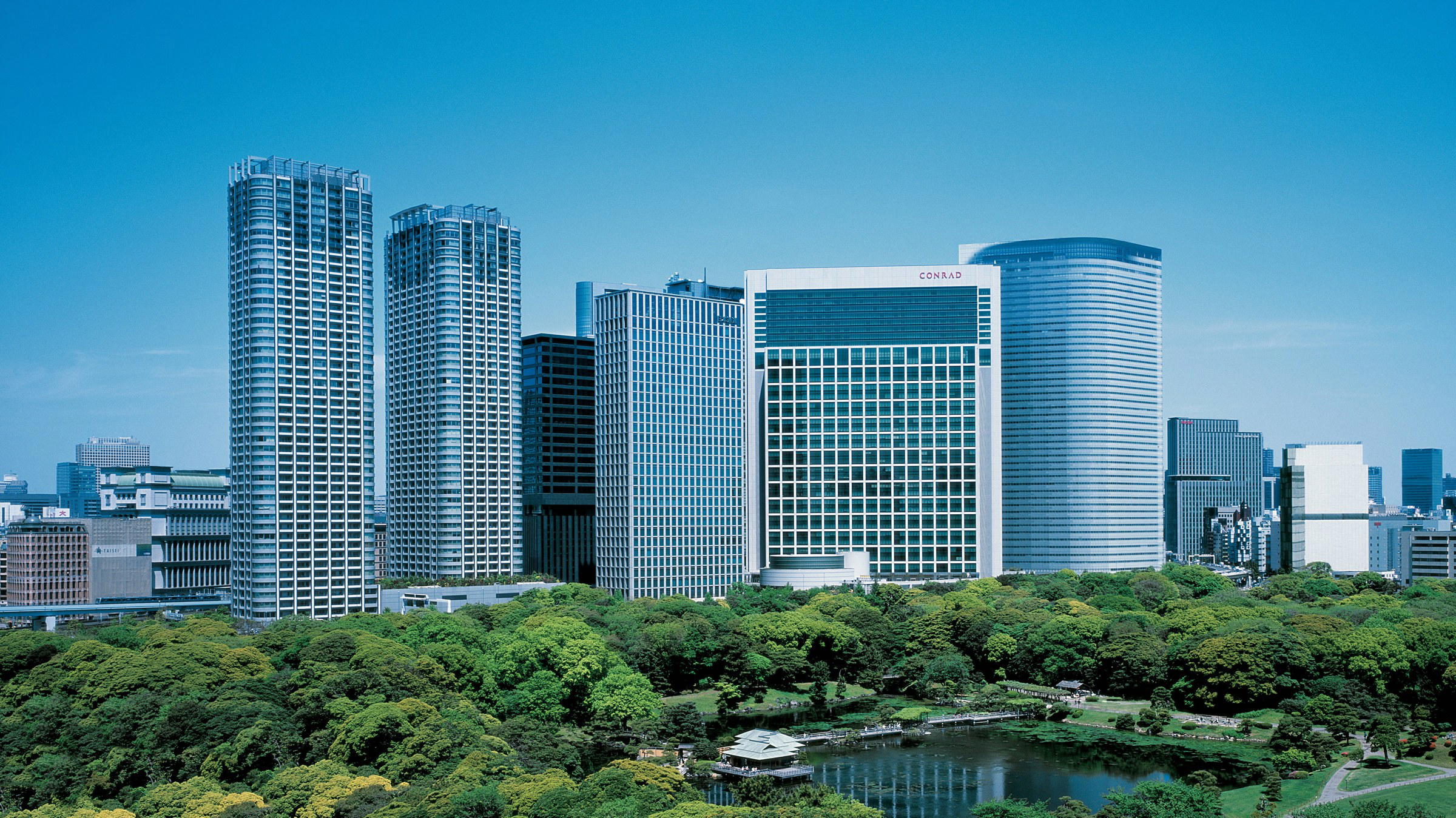
Classic hotel-bar atmosphere with a calm, refined mood; low-key lighting, polished wood and a sense of historic grandeur that encourages slow, unhurried evening drinks.