← Guides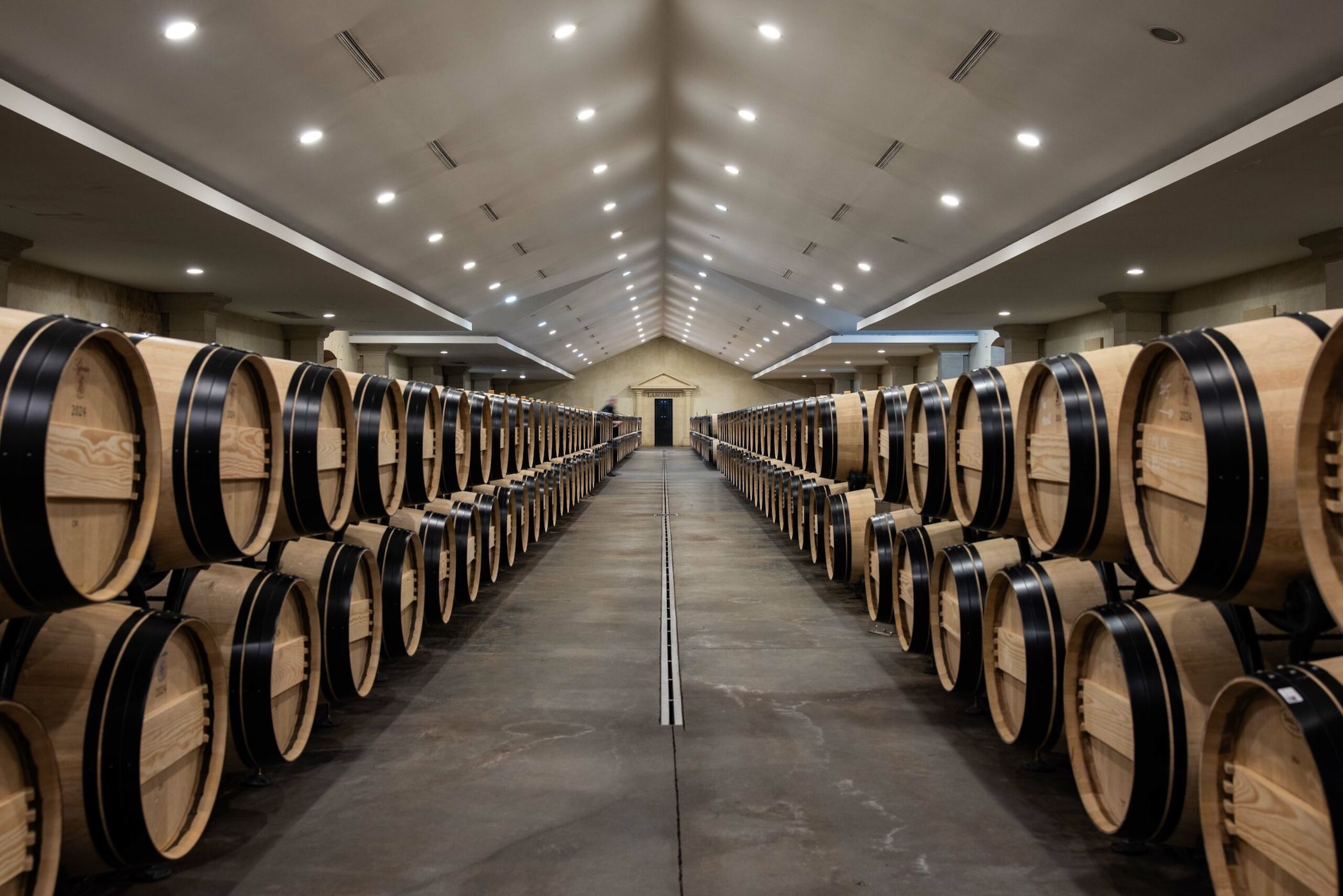
At Lascombes, Gruaud Larose and d’Armailhac, new oak percentages mislead; barrel grain, toast and élevage now tell the Médoc story.
At Lascombes, Gruaud Larose and d’Armailhac, new oak percentages mislead; barrel grain, toast and élevage now tell the Médoc story.
Château Lascombes, the Margaux second growth acquired by the Lawrence family in 2022, has taken its new oak down to 60% for the 2025 vintage, yet the sharper lesson from Margaux is that Médoc oak barrel selection now matters more than the percentage printed on a technical sheet (Decanter1).
Axel Heinz, Ornellaia ’s director for 17 years before joining Lascombes, has moved the estate toward mostly fine-grained wood, medium toasts and a revised set of coopers and oak origins (Decanter1).
A wine raised in 60%, 80% or 95% new oak can show less oak if the barrel grain, toast and élevage serve the fruit rather than sweetening it.
Panos Kakaviatos, writing in Decanter after visits to Château Lascombes in Margaux, Château Gruaud Larose in St-Julien and Château d’Armailhac in Pauillac, frames the Médoc shift as quieter than the stylistic turn associated with St-Émilion. The Médoc’s oak evolution is less about reducing new barrels than about choosing different barrels, managing toast levels and extending élevage so the wood becomes structural rather than conspicuous.
New-oak percentages have become a shortcut for Bordeaux style. Gruaud Larose moved from around 40% new oak in 2014 to approximately 95% in 2020, while Kakaviatos found the 2020’s oak barely perceptible. Château d’Armailhac increased new oak from around 30% from 2015 onwards to approximately 50% today, while extending élevage from 12 to 18 months. The visible oak decreased (Decanter1).
Kakaviatos tasted Médoc examples where less new oak did not mean less oakiness. Lascombes offers the easiest entry point because the estate’s direction changed after the Lawrence family acquired the château in 2022 and entrusted Axel Heinz with reshaping it. The estate had used historically high proportions of new oak, reaching 100% in vintages such as 2005, and the reduction to 60% for 2025 would look like the headline (Decanter1).
Heinz has changed the way the barrels are specified. Lascombes now favours mostly fine-grained wood and medium toasts, with a revised selection of coopers and oak origins. He told Kakaviatos, “We want to avoid heavily toasted barrels that cover the fruit and ‘coat’ the wine with sweetness.” Fine grain generally slows the way oak gives itself to the wine, while medium toast avoids the heavier register that can push Cabernet toward chocolate, coffee and caramelised sweetness.
Jean-Claude Berrouet, known for many years at Petrus, supplies the deeper technical warning. He has long observed that higher alcohol in wine increases its capacity to extract tannin from new oak during élevage. In ripe styles, especially where extraction and alcohol already give the wine a broad frame, new oak can become louder because the wine pulls more from the barrel. St-Émilion became the obvious reference point for Bordeaux’s retreat from noticeable oak extraction, particularly after the period between 2005 and 2016.
Denis Dubourdieu’s formulation remains the cleanest test for the glass. The late Bordeaux oenologist often said, “When tasting a wine aged in oak barrels, one should identify it as being aged in oak, but without noticing the oak itself.” The barrel can shape texture, oxygen exposure and tannin without becoming a flavour signature. In tasting, the finish, mid-palate and tannin polish matter as much as the nose.
Médoc oak barrel selection is a buying question rather than a cellar-door curiosity. In en primeur tastings or recent bottled vintages, the estate’s match of barrel grain and toast to the wine’s structure matters. Extraction changes before the wine reaches barrel matter. Élevage duration can change at the same time as the percentage of new oak. A technical sheet with a single new-oak number gives one datum but does not show whether the barrel was chosen to frame Cabernet or to add sweetness to a wine that already had enough ripeness.
Lascombes makes the argument because its change in oak sits inside a broader change in vineyard and cellar decisions. Heinz told Kakaviatos over lunch at the château in July that he asked whether Lascombes is indeed a second growth when he arrived. The answer, in his telling, begins with the vineyard rather than the barrel room. The modern estate extends beyond the historic terroirs that secured its place in the 1855 Classification, including Les Régies, Les Doumens, Curton and Terrefort around some of Margaux’s higher gravel elevations.
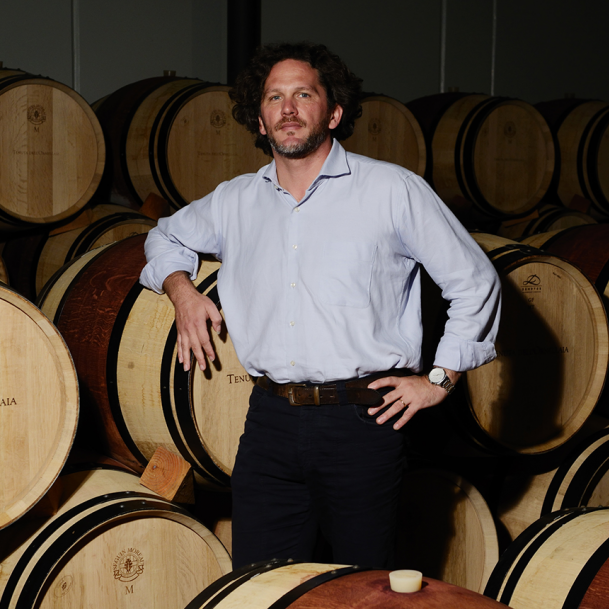
Kakaviatos reports that the contemporary vineyard is unusually diverse, with clay and sandy gravels as well as gravel over calcareous marl and clay-limestone soils. Heinz has focused on identifying the parcels that provide what he calls the “spinal column” of the grand vin. He estimates that roughly 50 hectares currently correspond to the style and quality he seeks, less than half the estate’s 120 hectares under vine. It can amplify structure, soften edges or obscure detail; it cannot make the wrong parcel taste like the right one.
The cellar changes at Lascombes follow the same discipline. Extraction has become gentler and shorter, pre-fermentation maceration has been abandoned, fermentation temperatures have been lowered, and vatting generally stays within three weeks. Picking decisions and winemaking now favour freshness and balance. Those changes reduce the need for barrels that add sweetness or density. Heinz’s phrase about avoiding heavily toasted barrels that “coat” the wine with sweetness links the flavour of the barrel to the style of vinification.
Kakaviatos’s tasting comparison gives the useful evidence. The 2009 Lascombes, aged in 90% new oak, remained enjoyable yet still marked by the oak-driven style he had long associated with the estate. He preferred the younger 2023. The 2023 Lascombes read with less oak imprint than the 2009, even though the 2009 was aged in 90% new oak, because the estate has changed extraction, parcel selection and barrel specification together.
In 2025, the figure was 60% new oak, which therefore sits inside a larger pattern. It follows a reduction from historically higher use, including vintages such as 2005 that reached 100%, but the percentage alone underplays the work.
Fine-grained wood, medium toast, different coopers and different origins change how the wine receives oxygen and phenolic material during élevage. The estate is still learning which barrels best integrate with the changing profile of the wine, as Kakaviatos reports, and that admission has more credibility than a fixed formula.
The retooled Margaux grand vin cannot simply inherit the barrel program of the previous style.
Château Gruaud Larose provides the sharpest contradiction to percentage-based judgment. In Kakaviatos’s vertical, the 2014 was raised in around 40% new oak and showed as fresh, juicy and floral, though a bit light on its feet. In 2015, the proportion rose to 80%, and he found the oak influence obvious nearly a decade later, with depth and length muddled by conspicuously toasty oak. The 2016, also aged in 80% new oak, carried a similar imprint, though the vintage brought greater freshness and balance.
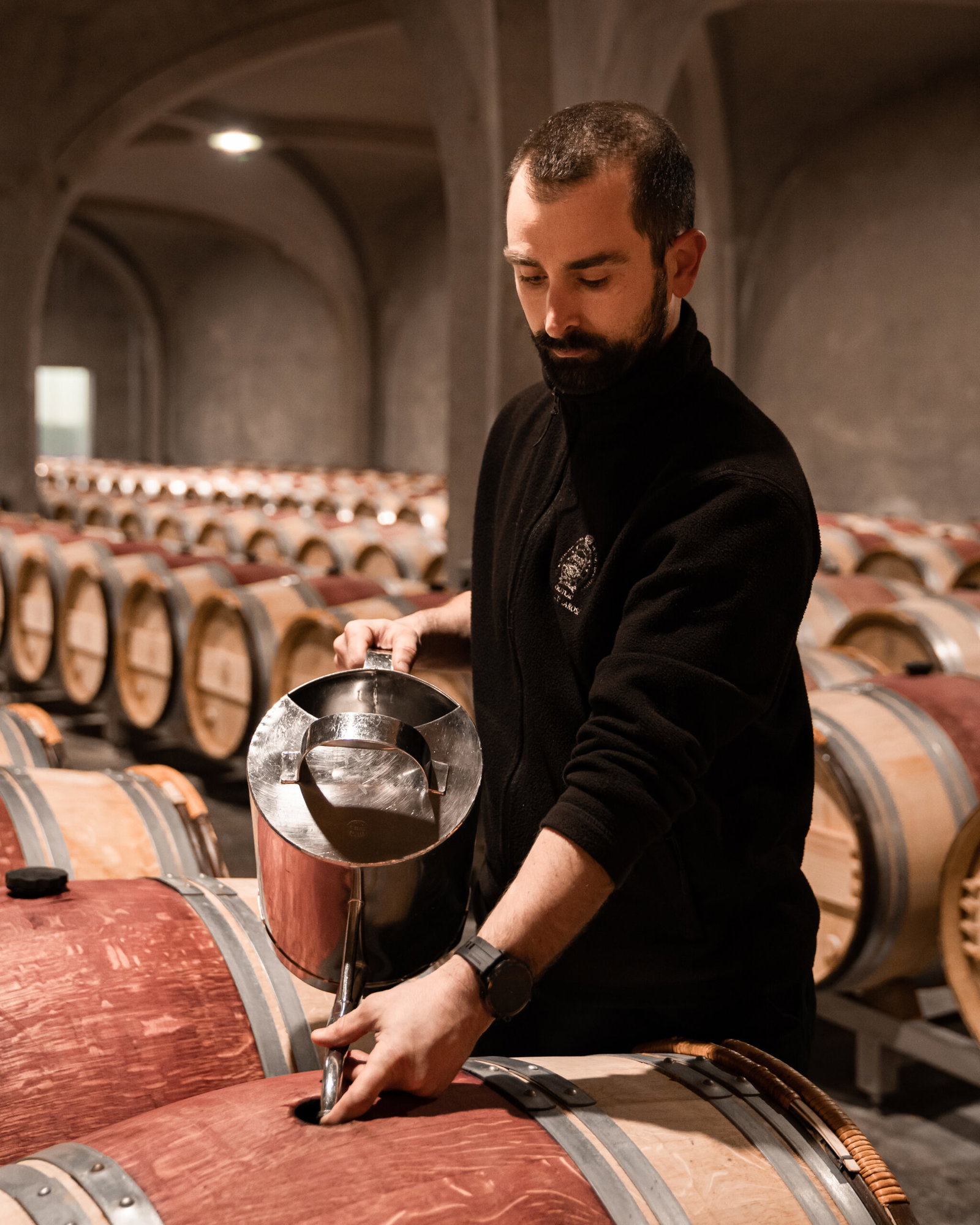
Kakaviatos found the 2020 oak barely perceptible, with graphite, depth and a creamy mid-palate. The later evidence complicates that judgment. Virginie Sallette arrived as technical director in 2017, and the percentage of new oak did not fall. It stayed at 80% and then rose. By 2020, Gruaud Larose used approximately 95% new oak, more than either 2015 or 2016. Kakaviatos found the oak barely perceptible in the 2020, with graphite, depth and a creamy mid-palate, the barrel absorbed into the wine rather than sitting above it.
That single comparison should change how collectors read Left Bank technical data. Around 40% new oak in 2014 did not guarantee greater density. Eighty percent in 2015 and 2016 did not guarantee integration. Approximately 95% in 2020 did not guarantee overt oak flavour. The decisive variables were the type of oak and its use, including the selection and combination of coopers under Sallette. The barrel program changed while the new-oak percentage rose.
Sallette’s daily cellar work explains part of the difference. Kakaviatos reports that she tastes the fermenting wines twice daily and adjusts extraction accordingly, deciding whether a vat needs an air pulse, a rack-and-return or no intervention. With Cabernet Sauvignon, she argues that the objective should be to let it express itself rather than master it. She told Kakaviatos, “The search for purity is super important in my work.” The 2020 had graphite, depth and a creamy mid-palate without obvious oak.
Gruaud Larose also supplies the answer to the strongest counterargument. Percentages indicate how much wine spends time in first-use barrels, and a jump from 40% to 80% or 95% changes the élevage environment. The flaw is treating the percentage as a flavour prediction. Two barrels counted equally as new can differ in grain, toast, cooperage, origin and compatibility with a particular vat. One can frame Cabernet Sauvignon; another can push the same Cabernet toward toast.
Château d’Armailhac, in Pauillac, makes the time argument. New barrels increased from around 30% from 2015 onwards to approximately 50% today, yet director Lucie Lauilhé ties the change to a longer élevage. The estate extended aging from 12 to 18 months. Lauilhé says the extra six months help make the oak less conspicuous because slow oxygen exchange through the barrel allows its contribution to meld into the wine.
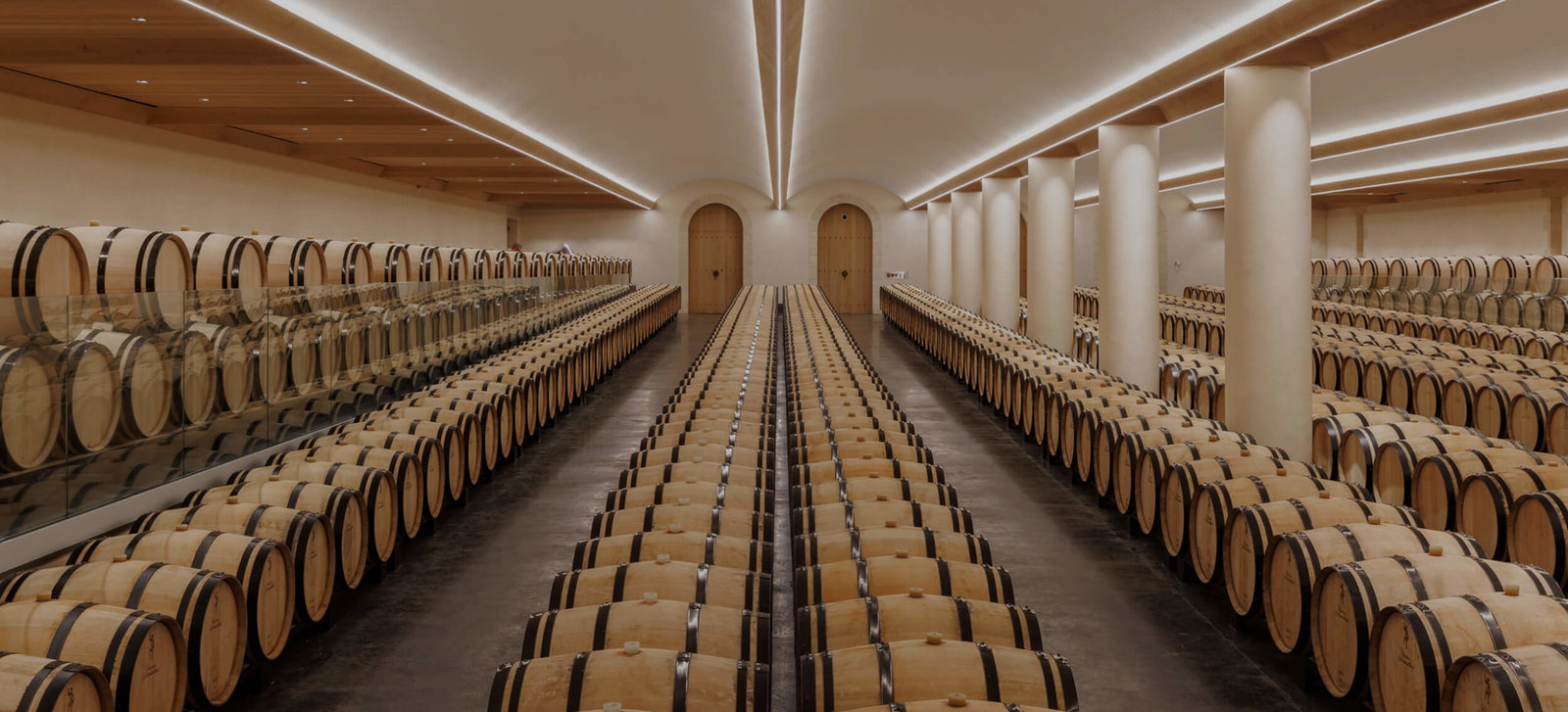
Her explanation challenges another collector habit: assuming longer time in barrel must mean more oak flavour. At 12 months, Lauilhé says, “the wood is still present”; by 18 months, the wine has had more time for the barrel’s influence to integrate. The mechanism is not cosmetic. Oxygen exchange through the barrel affects texture and tannin resolution, and d’Armailhac changed the aging duration at the same time it changed the proportion of new wood. The number moved from around 30% to approximately 50%, but the wine also spent six additional months in the environment that could make oak less separate.
The barrel choices changed as well. When d’Armailhac used around 30% new oak, the estate could employ heavier toasts to compensate for the larger proportion of used barrels. As new oak increased, toast levels were reduced and new coopers introduced. Lauilhé favours barrels that emphasise fruit and freshness rather than mocha or chocolate. Today she sees around 50%, occasionally approaching 55%, as the right equilibrium.
A lower percentage of new oak can still feel more marked if the toast is heavier, while a higher percentage can feel quieter if the toast is reduced and the élevage lasts long enough for integration. The wine’s oak signature does not come from a single lever. It comes from percentage, toast, cooper selection, time and the raw material of the vintage moving together.
Lauilhé’s observation about cooler, less concentrated years adds another layer. She explains that new oak can prove more useful in those years because it can envelop less polished tannins and improve texture and balance. That reverses the assumption that new oak belongs mainly with powerful vintages. In a warm, concentrated year, a wine may already have enough density to extract and display too much from the barrel, echoing Berrouet’s point about alcohol and oak tannin. In a cooler year, carefully chosen new oak can support the tannic frame without adding overt sweetness.
The point also helps explain why three Médoc estates can move in different directions and still belong to the same evolution. Lascombes reduced new oak and refined barrel selection. Gruaud Larose increased new oak sharply while changing coopers and barrel types. d’Armailhac increased new oak moderately while extending élevage by six months and lowering toast impact. The common thread is the rejection of oak percentage as a stand-alone measure of style.
The new-oak percentage is only the starting point. At Lascombes, 60% new oak for 2025 means something different because Heinz also favours mostly fine-grained wood and medium toasts, and because extraction has become gentler and shorter.
At Gruaud Larose in 2020, Sallette changed the selection and combination of coopers and managed extraction vat by vat. At d’Armailhac, approximately 50% new oak means something different because élevage moved from 12 to 18 months and toast levels were reduced.
The oak can supply flavour or carry structure. Heinz’s warning about barrels that cover fruit and “coat” wine with sweetness is one test. Lauilhé’s preference for barrels that emphasise fruit and freshness rather than mocha or chocolate is another test. Kakaviatos’s tasting notes at Gruaud Larose offer a third: graphite and creamy mid-palate in the 2020 are not the same as conspicuously toasty oak in the 2015.
The estate’s extraction before the wine entered barrel is a third question. Oak cannot be separated from the vat. Lascombes abandoned pre-fermentation maceration, lowered fermentation temperatures and generally limits vatting to no more than three weeks. Gruaud Larose now has Sallette tasting fermenting wines twice daily and choosing air pulse, rack-and-return or no intervention according to the vat. If extraction becomes gentler or more precise, the barrel program has to change with it.
The vintage changes the role of new oak. Lauilhé’s point about cooler, less concentrated years matters for buying. New oak may help envelop less polished tannins in such years, while ripe wines can extract more tannin from new barrels during élevage, as Berrouet has observed. A high new-oak percentage in a cooler year should not automatically alarm you, and a lower percentage in a ripe year should not automatically reassure you. The wine’s alcohol, concentration and tannin condition all change how the barrel behaves.
Dubourdieu’s ideal is oak present but unnoticed. It asks whether the barrel supports the wine’s length, texture and shape without leaving a separate flavour trail. In mature or near-mature bottles, this becomes easy to test. In young wines, especially en primeur samples, it requires attention to whether sweetness, toast or mocha stands apart from the fruit and tannin.
For the Left Bank, Lascombes, Gruaud Larose and d’Armailhac each show a different route to quieter oak influence than the headline new-oak percentage suggests. Collectors should keep reading the percentages, then ask about grain, toast, cooper selection, extraction and élevage before drawing a conclusion. The next vintages from these three estates will show whether the new discipline holds, especially in cooler years when new oak may give Cabernet and Merlot the textural help they need without leaving the taste of the barrel in front of the wine.
Get the App
Take the shortlist into the En Primeur Club app for concierge access, saved places, and the next step after discovery.
Get Exclusive AccessMore from the editors