← Guides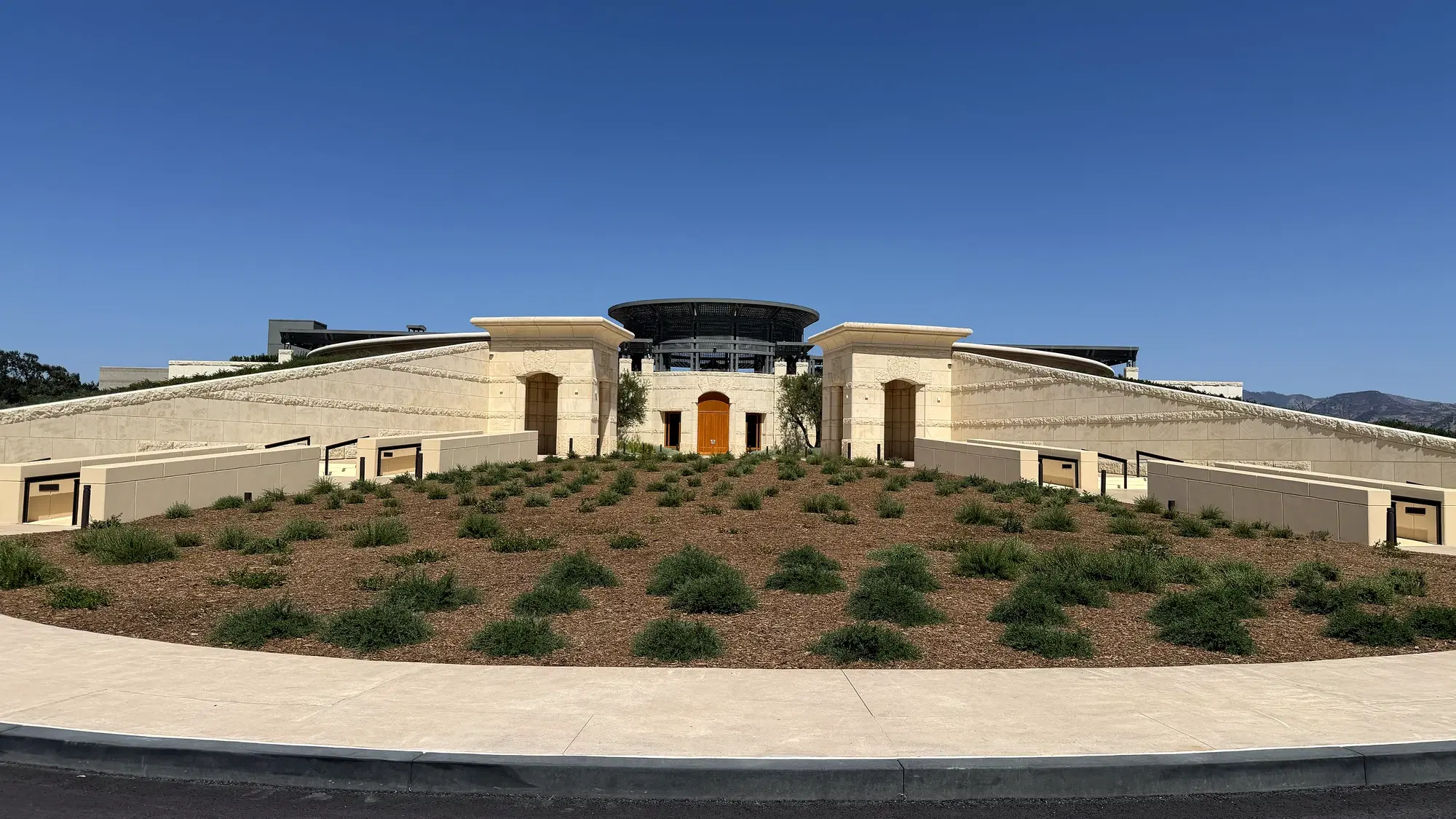
On a private Oakville visit, we followed Opus One from the Salon to the Grand Chai, then tasted 2012, 2019 and 2022 with Meghan Zobeck and Sean Koenig's precise pairings.
On a private Oakville visit, we followed Opus One from the Salon to the Grand Chai, then tasted 2012, 2019 and 2022 with Meghan Zobeck and Sean Koenig's precise pairings.
Opus One rises out of Oakville like a temple built into the vineyard. Its pale stone wings seem to emerge from a low earthen berm; a circular crown floats over the entrance; and almost every movement inside leads back to the vines. The approach has a sense of ceremony, but the building never becomes a monument you merely admire from a distance. On our private visit, we moved from the art-filled Salon to the working laboratory, stainless-steel cellar, curved Grand Chai, intimate tasting rooms and rooftop terrace. Then we sat down with Director of Winemaking Meghan Zobeck to taste three generations of Opus One, 2012, 2019 and 2022, alongside Overture 2022 and a trio of pairings from Executive Chef Sean Koenig.
That access changed the experience. Opus One is one of Napa Valley's most recognizable labels, yet it felt most interesting when Meghan turned our attention away from fame and toward the decisions inside each glass: what a growing season asked of the vineyard team, how the five Bordeaux varieties changed across the flight, and what remains constant when a wine has been made for nearly half a century.
Visit Opus One if you want a Napa appointment where architecture, hospitality, food and wine form one continuous composition. Book a format with a tour if the cellar matters to you; seeing the Grand Chai is essential to understanding why this estate feels unlike any other stop in Oakville.
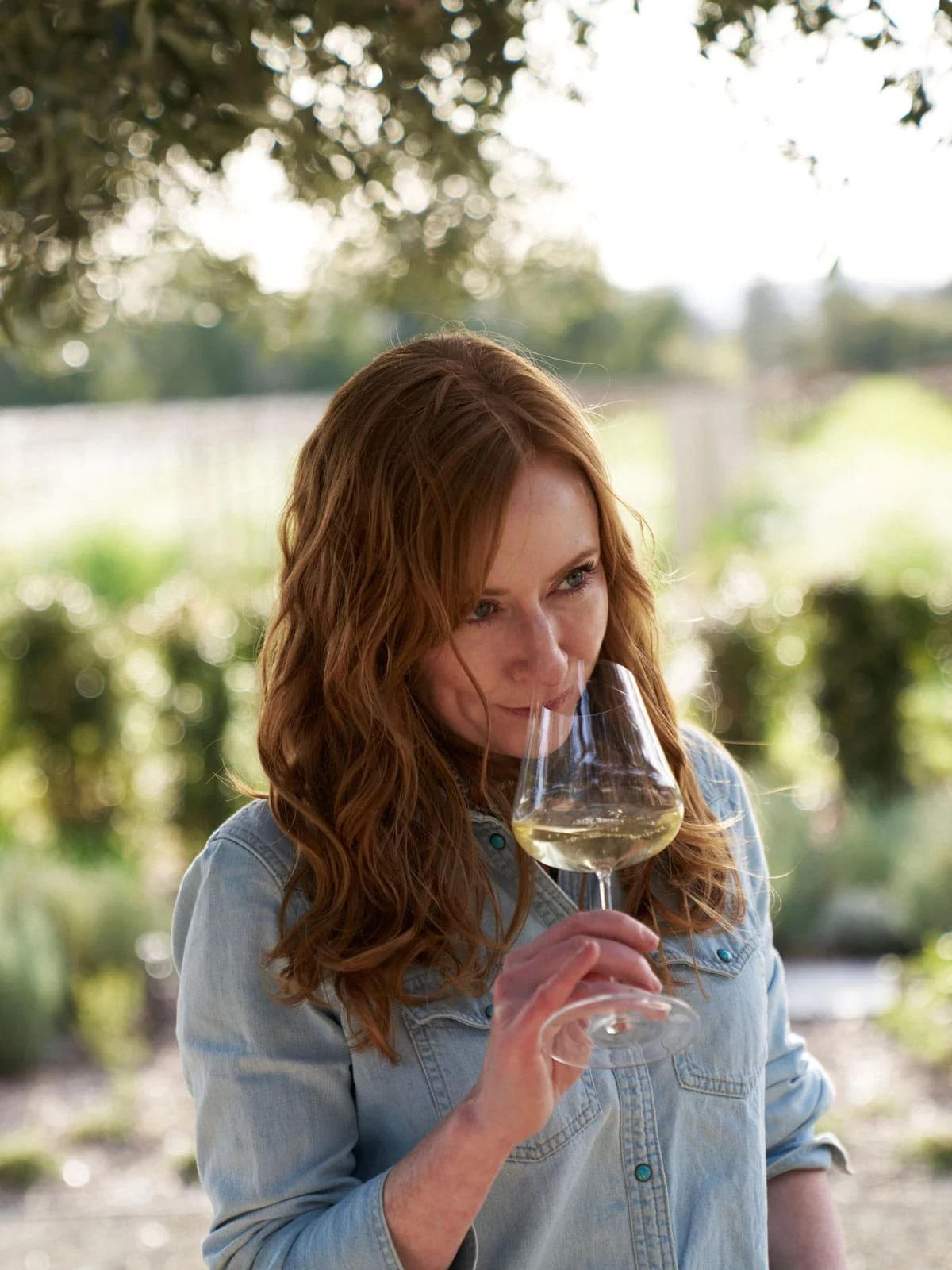
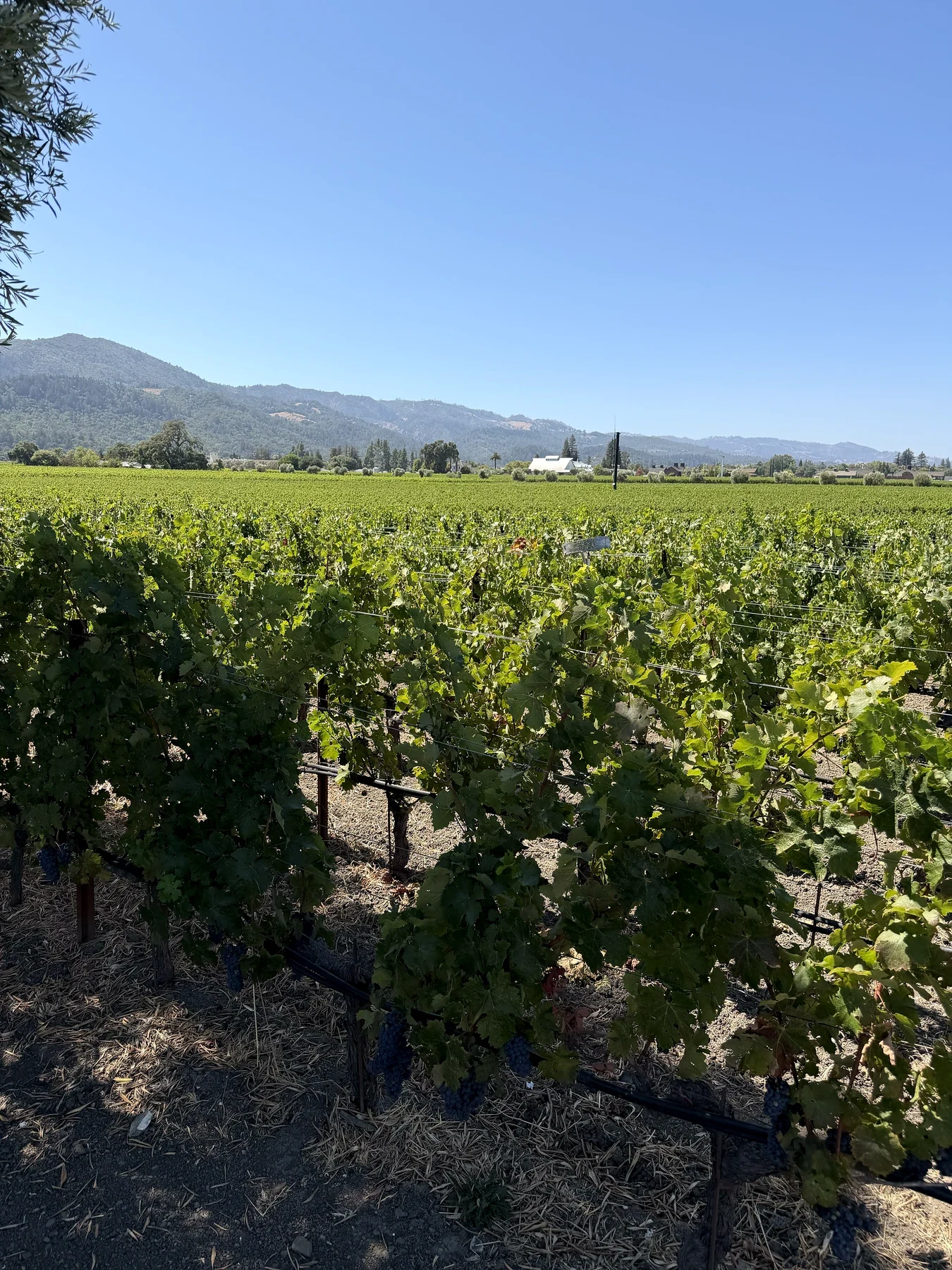
Yes. Opus One is particularly rewarding for three kinds of visitors: collectors who want to compare vintages, architecture-minded travelers, and wine lovers who want a polished introduction to how a Cabernet-led Oakville blend develops over time.
Our private appointment with Meghan was not one of the winery's standard public experiences, so it would be misleading to imply that every reservation includes time with the Director of Winemaking or the same four-wine flight. The public programs are nevertheless designed around the same strengths we experienced: a deliberate progression through the estate, knowledgeable guidance, multiple vintages and, in the longer formats, Sean Koenig's culinary work.
The estate is formal in its precision rather than stiff in its hospitality. The glasses are arranged with exacting care, the barrel room is immaculate and each room carries the founders' aesthetic language, but the purpose is to help guests pay closer attention.
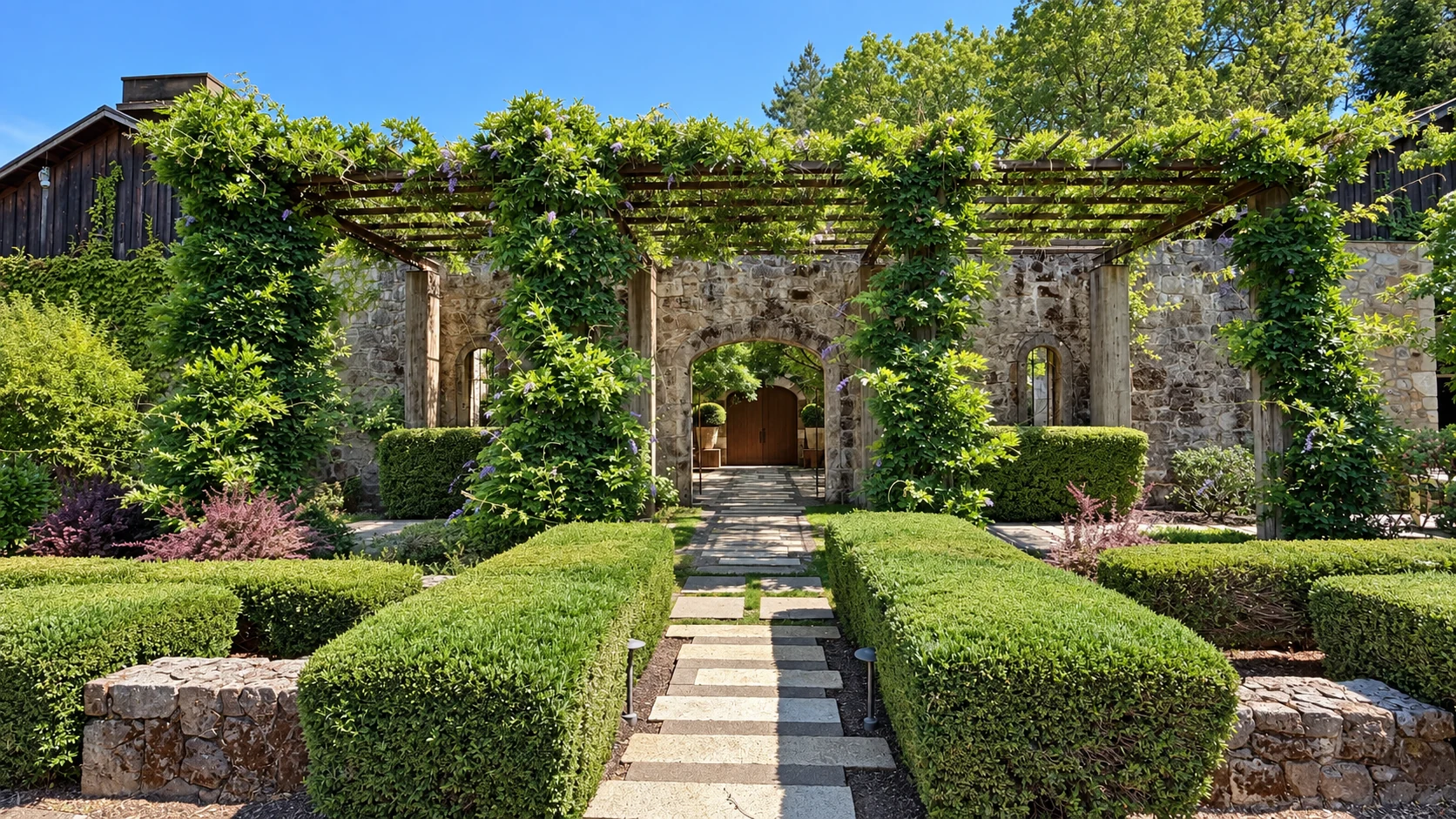
The building establishes the tone before the first glass is poured. Architect Scott Johnson designed the original winery as a physical meeting of California and Bordeaux: a low, contemporary structure against the broad Napa sky, then a limestone courtyard with a more European sense of enclosure. Opus One says the winery was completed in 1991 and opened its gates to the public in 1995. Johnson returned decades later for the hospitality expansion unveiled in 2020. Opus One's architectural history describes the original building as embedded in a crescent-shaped berm and the later project as adding nearly 55,000 square feet of tasting, office and winemaking space.
That relationship between mass and openness is what we kept photographing. From the drive, the winery looks almost buried in the earth. Inside, curves repeat in the ceiling, stairs, tables and barrel rows. Stone, wood, glass and bronze keep replacing one another, while skylights and vineyard windows prevent the interior from ever feeling sealed off.
The grounds looked especially fresh during our August 11, 2026 visit. In May 2026, Opus One announced that the main driveway and reworked façade had reopened after a landscape project with Reed Hilderbrand. The new north and south berms contain more than an acre of native, drought-tolerant planting, balancing the geometry of a French garden with a looser California landscape. This is why the low herbs and silver-green plants in our arrival photographs look newly established rather than like the mature lawn or clipped planting some returning guests may remember.
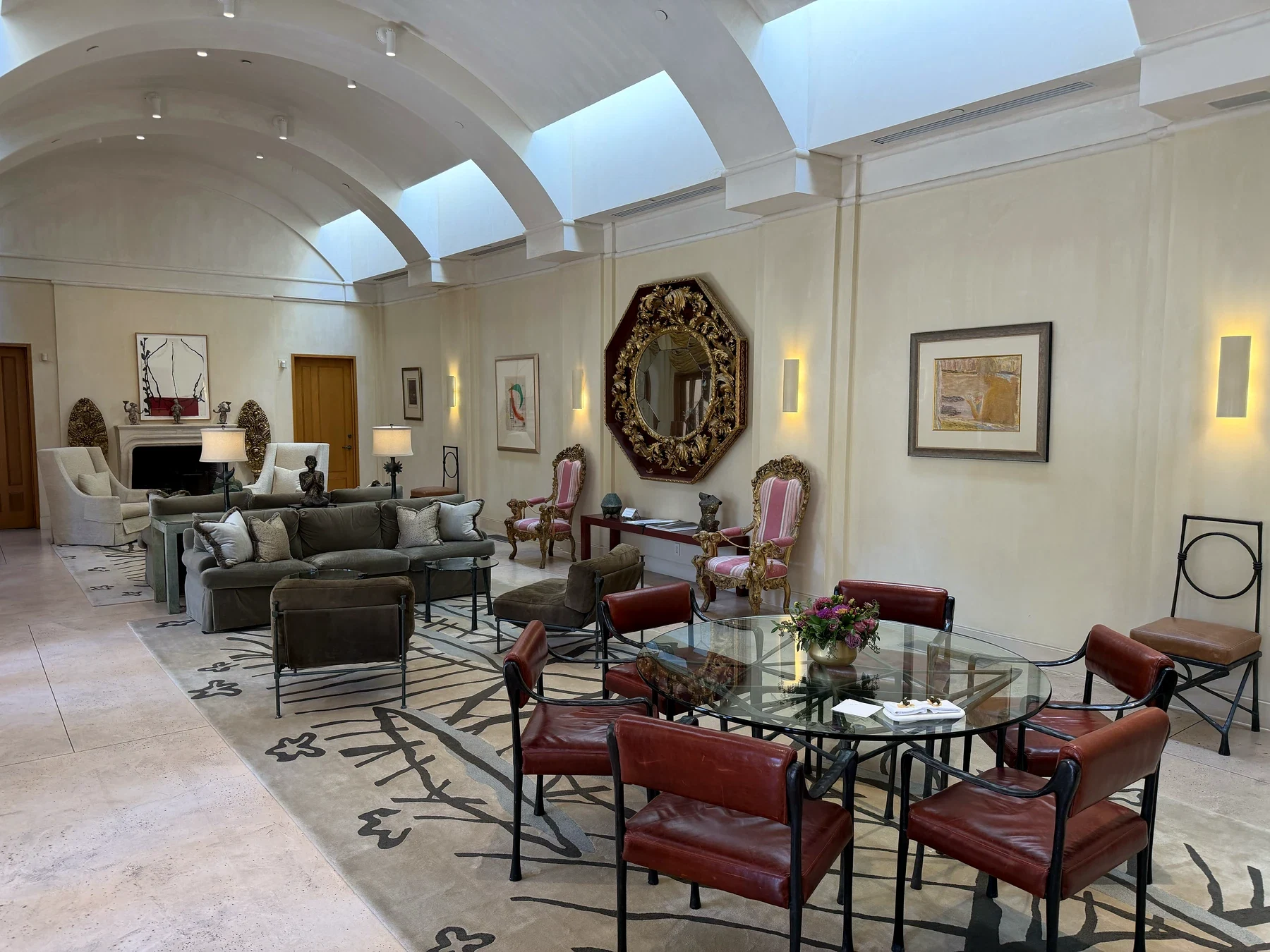
The Salon is the estate's first interior act. It is layered with art, antiques and furniture that feels collected rather than specified from a catalog: an ornate mirror, red leather chairs, carved seats, bronzes and contemporary works beneath a run of skylights. The mix could have become theatrical. Instead, it makes the human partnership behind the wine legible.
Robert Mondavi's wife, Margrit, and Baron Philippe de Rothschild's daughter, Baroness Philippine, shaped this hospitality language. Opus One credits Margrit with helping pioneer the pairing of wine, food and art in a winery setting. The Salon carries that idea forward: you are welcomed into a cultural exchange before anyone explains fermentation or opens a library bottle.
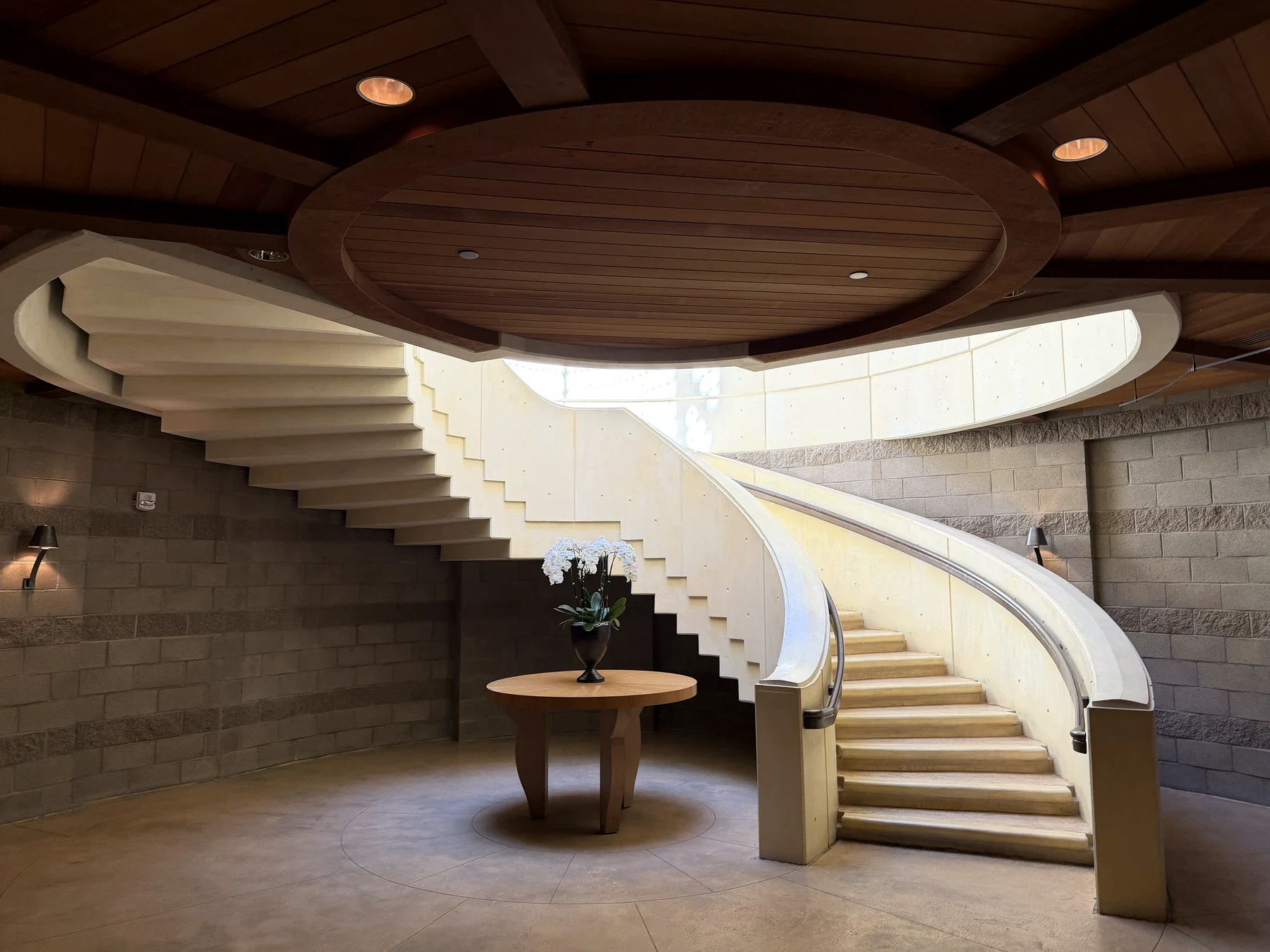
The building's most dramatic interior gesture comes farther along the route. A white stair curves upward from a cool, concrete-walled room beneath a circular wood ceiling. It is sculptural, but it also organizes the visit, linking the cellar level to the light above. We kept returning to it because it expresses the whole estate in one frame: French limestone and cellar gravity below, California sun entering from above.
Meghan joined Opus One in 2025 as its first Director of Winemaking. Her route to Oakville is unusual enough to sound invented: she studied integrative physiology, negotiated player contracts for the Denver Broncos, began making wine in a Denver basement and then worked harvests in Chile, Piedmont, Bordeaux and Barossa. Napa chapters followed at Stag's Leap Wine Cellars, Screaming Eagle, Atelier Melka and Trois Noix. At Burgess, she pushed regenerative farming and a fresher expression of Howell Mountain before moving to Opus One.
That résumé mattered less at the table as a list of prestigious names than as an explanation for the questions Meghan brought to the wines. She has seen Cabernet and its relatives handled across different climates, cultures and scales. Tasting with her made Opus One feel like an active winemaking proposition rather than a finished icon.
It is also important to describe the current roles accurately. Michael Silacci remains Opus One's Winemaker through the 2026 harvest. He joined the estate in 2001, became sole winemaker in 2003 and announced in July 2026 that he would retire after harvest, remaining involved during the transition. Opus One says its formal search for his successor will begin in early 2027. Meghan leads major parts of the winemaking operation as Director of Winemaking, but the estate has not publicly named her as Silacci's successor.
Our August visit therefore happened at an unusually revealing point in the winery's history: a long-serving winemaker completing his final harvest cycle, a new Director of Winemaking bringing experience from several winemaking traditions, and an estate trying to protect continuity without treating continuity as stasis.
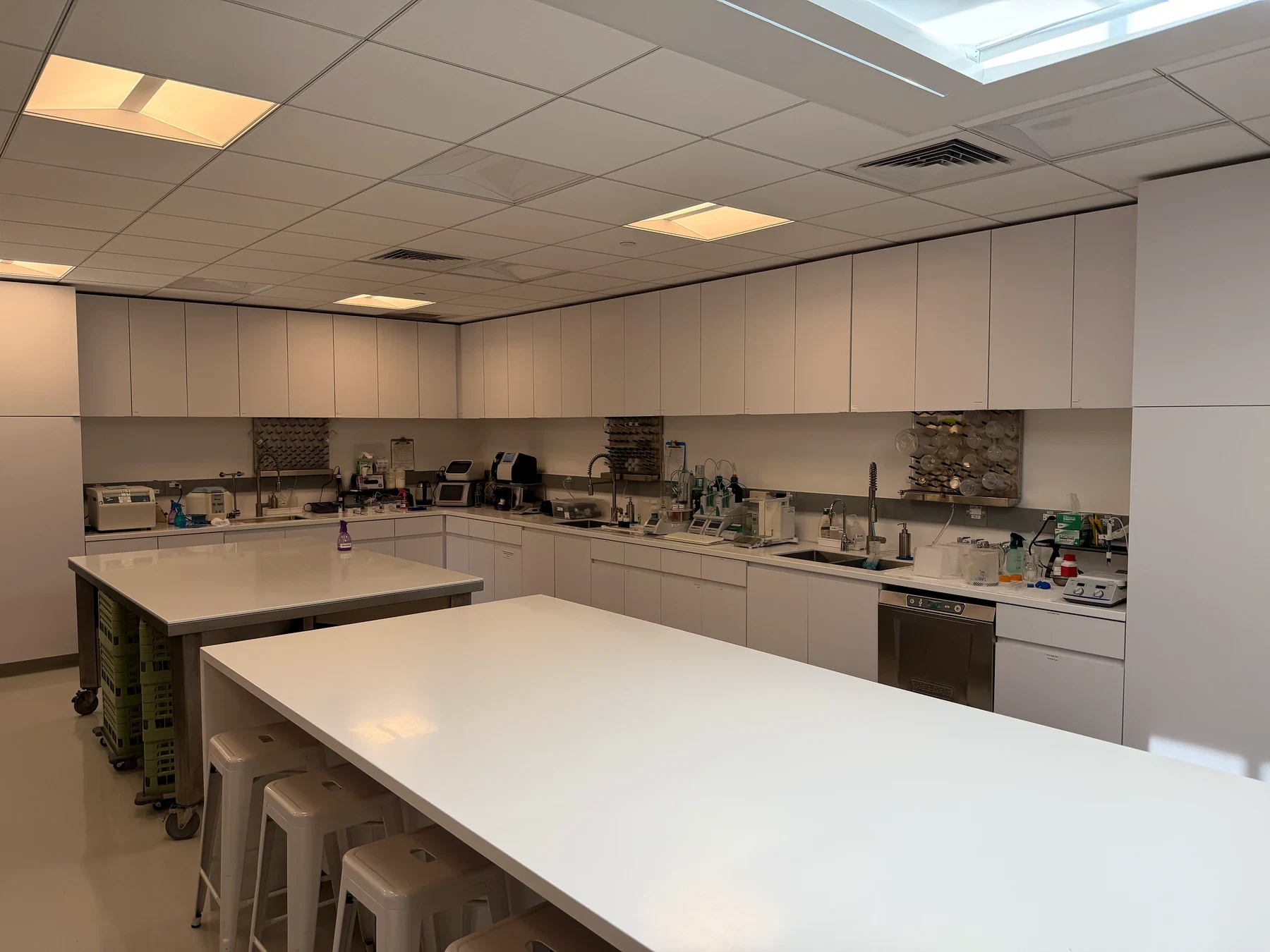
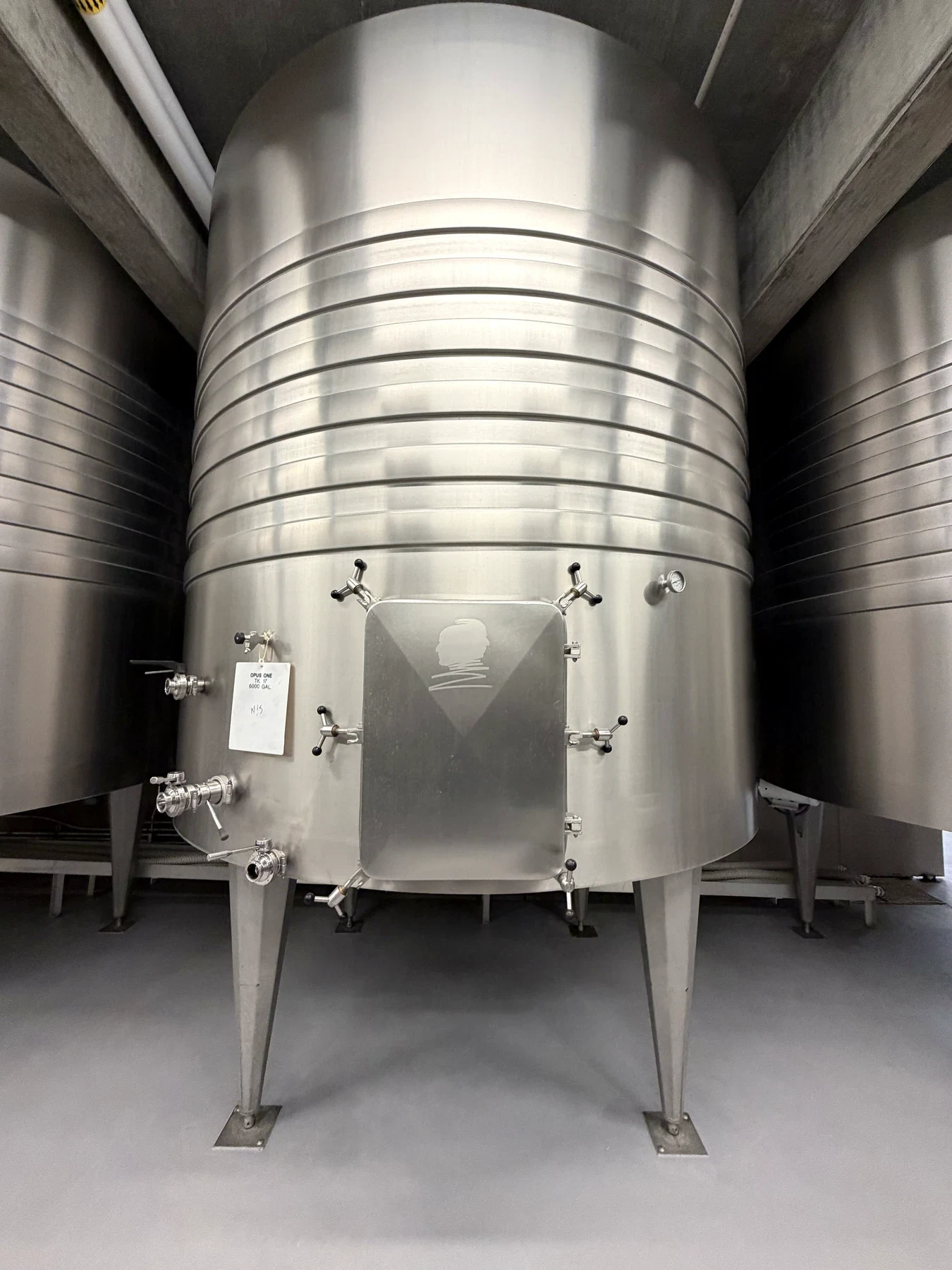
The laboratory, with its benches, instruments and sample equipment, and the stainless-steel fermentation cellar made the practical work visible. These spaces grounded the estate's architectural polish in thousands of measurements, trials, tastings and small decisions.
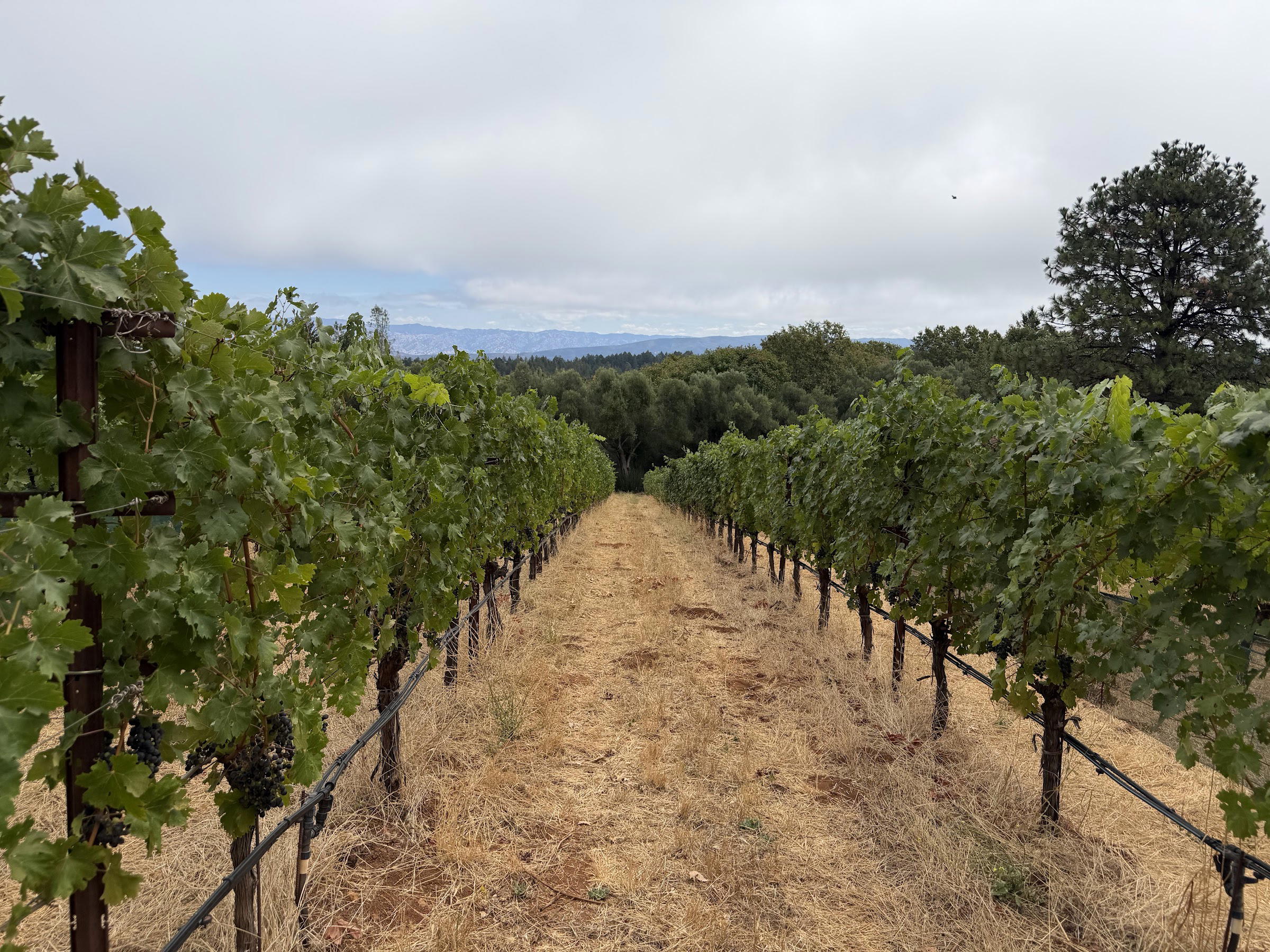
The estate farms four parcels in western Oakville: two parcels totaling 100 acres within To Kalon Vineyard, plus the 70 combined acres of the Ballestra and River parcels surrounding the winery. Across the estate, Cabernet Sauvignon dominates, supported by Cabernet Franc, Merlot, Petit Verdot and Malbec. The blend changes each year rather than following a fixed recipe.
Since 2012, the laboratory has also been part of an estate-specific native-yeast program initiated by Silacci. The team isolated a yeast strain from each of the four vineyards and ferments fruit with the corresponding vineyard's yeast. That detail captures Opus One's method well: the research is technically sophisticated, but its purpose is to make the finished wine more closely connected to where it grew.
The cellar follows the same blend of tradition and controlled experimentation. Fruit is hand-harvested, sorted and handled parcel by parcel before the final blend comes together. Opus One states that the wine spends approximately 18 months in new French oak, then another 15 months in bottle before the annual October 1 release.
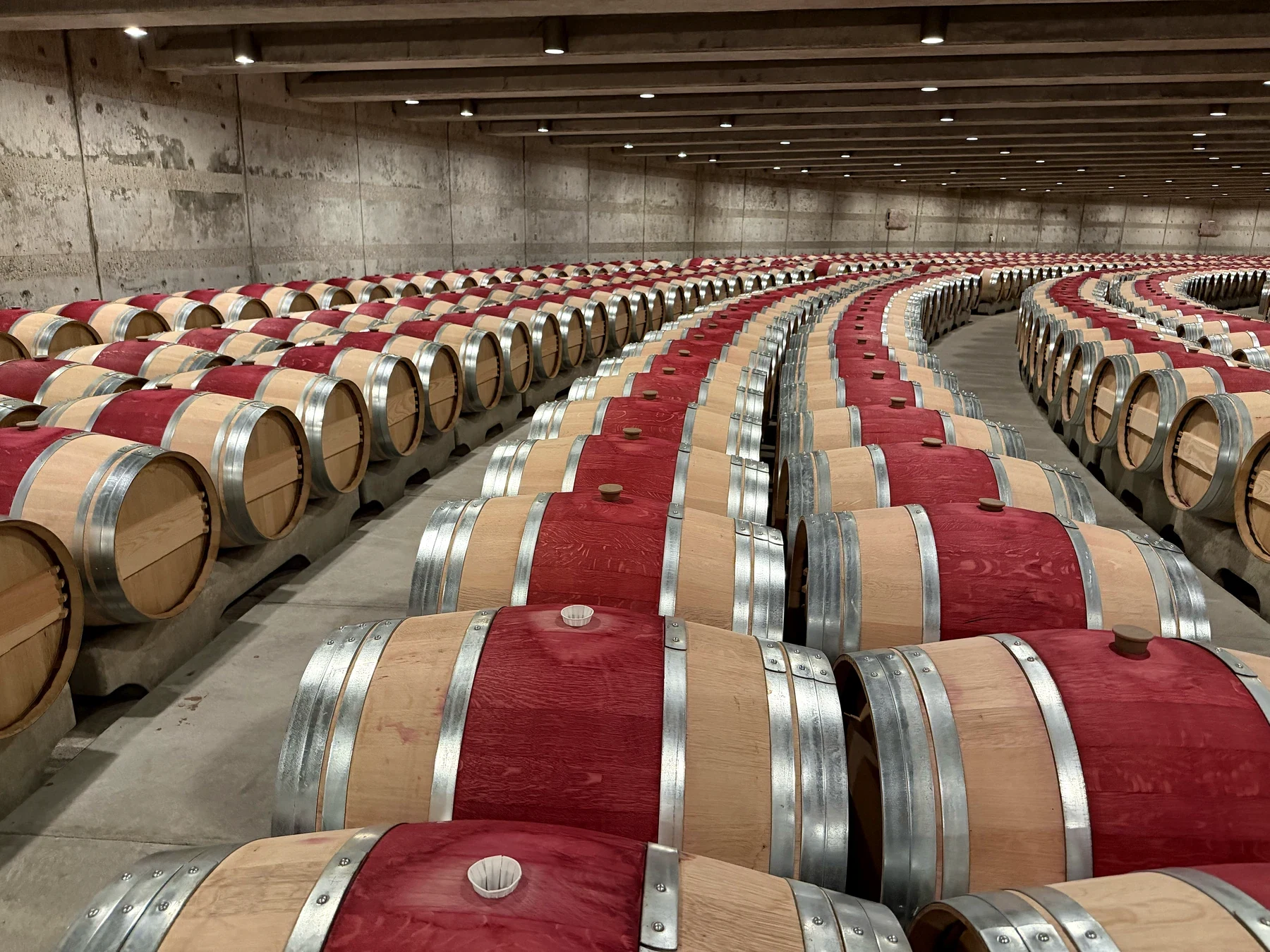
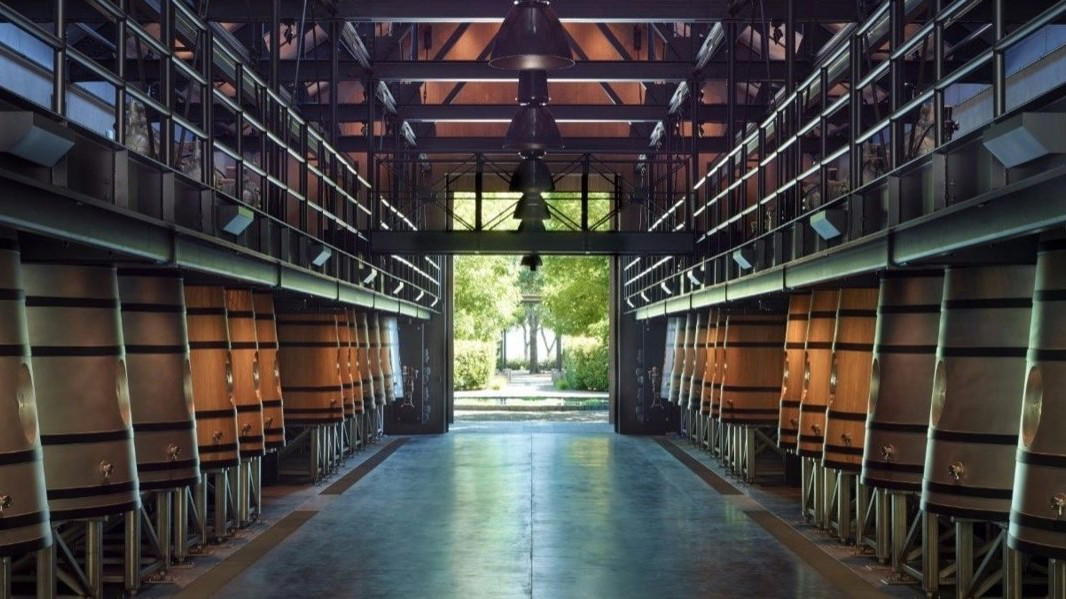
The Grand Chai is the image that stays with you. Hundreds of new French oak barrels bend through a semi-elliptical room, each stained with a deep red band across its center. The rows appear to continue beyond the back wall because their curves pull the eye around the room. At 55°F and 80 percent humidity, the air is cool and still.
The red stripe has a practical history, it protects the barrels from visible wine staining, but it also pays tribute to Château Mouton Rothschild. Opus One makes the color with wine recovered during bottling, turning a practical cellar detail into one of the estate's most memorable visual signatures.
The room earns its impact through repetition: barrel after barrel, vintage after vintage, the same pursuit carried forward through small changes. Standing above the Grand Chai in the glass-walled tasting space, we could see hospitality and production in the same frame.
The name “Opus One” is musical by design: a first work, created through collaboration. Baron Philippe de Rothschild, proprietor of Château Mouton Rothschild in Pauillac, and Robert Mondavi formed the project in 1979 to make one Cabernet-led wine in Napa Valley that joined Bordeaux tradition to California fruit and ambition.
The first vintage, 1979, was made at Robert Mondavi Winery under Tim Mondavi and Mouton's Lucien Sionneau. It was 80 percent Cabernet Sauvignon, 16 percent Cabernet Franc and 4 percent Merlot, with 10 days of skin contact and 24 months in new French oak. The 1980 followed with only Cabernet Sauvignon and Cabernet Franc. Those early blends matter because they show that Opus One was never simply a Napa Cabernet Sauvignon with a Bordeaux name attached; it began as a joint winemaking project, with people and practices moving in both directions.
The winery's label makes that partnership visible through the profiles of its founders. The estate itself does the same in stone and landscape. Since 2004, Opus One has also distributed internationally through selected Bordeaux négociants, extending the French connection into the way the wine reaches collectors.
For a separate view of how one later vintage performs in the market, our analysis of Opus One 2013 and its secondary-market value places the estate's critical reputation beside current pricing. The visit added something market data cannot: a sense of how deliberately the winery builds continuity across generations.
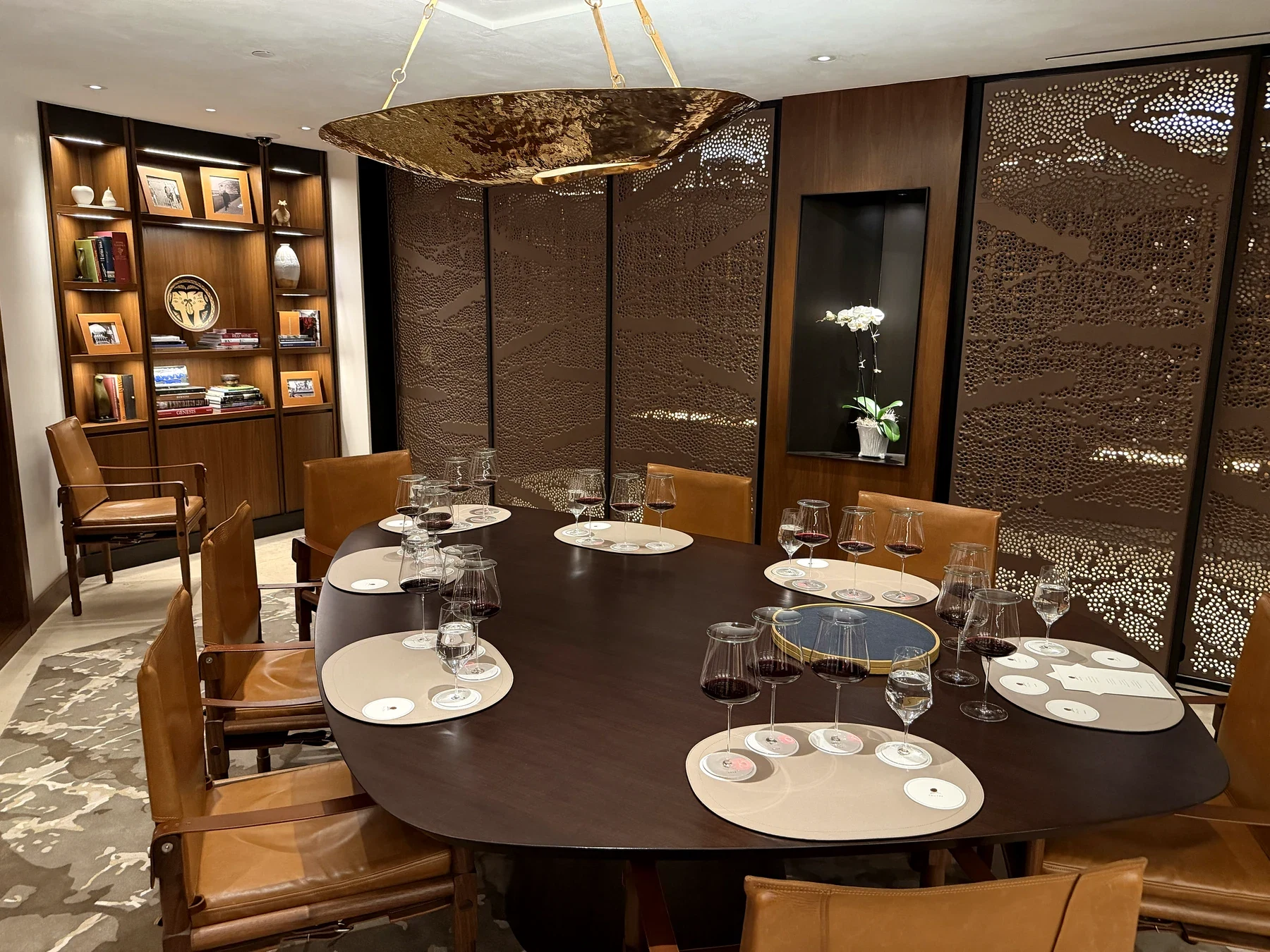
Our printed menu dated the tasting to August 11, 2026 and listed the wines in a particularly smart order: two library perspectives, the current 2022 Opus One, then the 2022 vintage of Overture. Four large stems, each set over a labeled coaster, let us move backward and forward rather than treating the flight as a sequence that had to be finished one glass at a time.
| Wine | Blend | Cellar detail | Why it mattered in the flight |
|---|---|---|---|
| Opus One 2012 | 79% Cabernet Sauvignon, 7% Cabernet Franc, 6% Petit Verdot, 6% Merlot, 2% Malbec | 18 days on skins; 17.5 months in new French oak | A mature view of the house style, showing how structure and fruit converge with bottle age |
| Opus One 2019 | 78% Cabernet Sauvignon, 8% Merlot, 6% Petit Verdot, 6% Cabernet Franc, 2% Malbec | 22 days on skins; 19 months in new French oak | The middle register: more developed than 2022, still carrying the energy and shape of a strong growing season |
| Opus One 2022 | 80% Cabernet Sauvignon, 8% Petit Verdot, 6.5% Cabernet Franc, 5% Merlot, 0.5% Malbec | 20 days on skins; 18 months in new French oak | The current release and the immediate look at today's Opus One |
| Overture 2022 | 94% Cabernet Sauvignon, 3% Cabernet Franc, 1.5% Merlot, 1% Malbec, 0.5% Petit Verdot | 20 days on skins; 18 months in new French oak | A block-selection counterpoint that is softer and earlier-drinking without being casual |
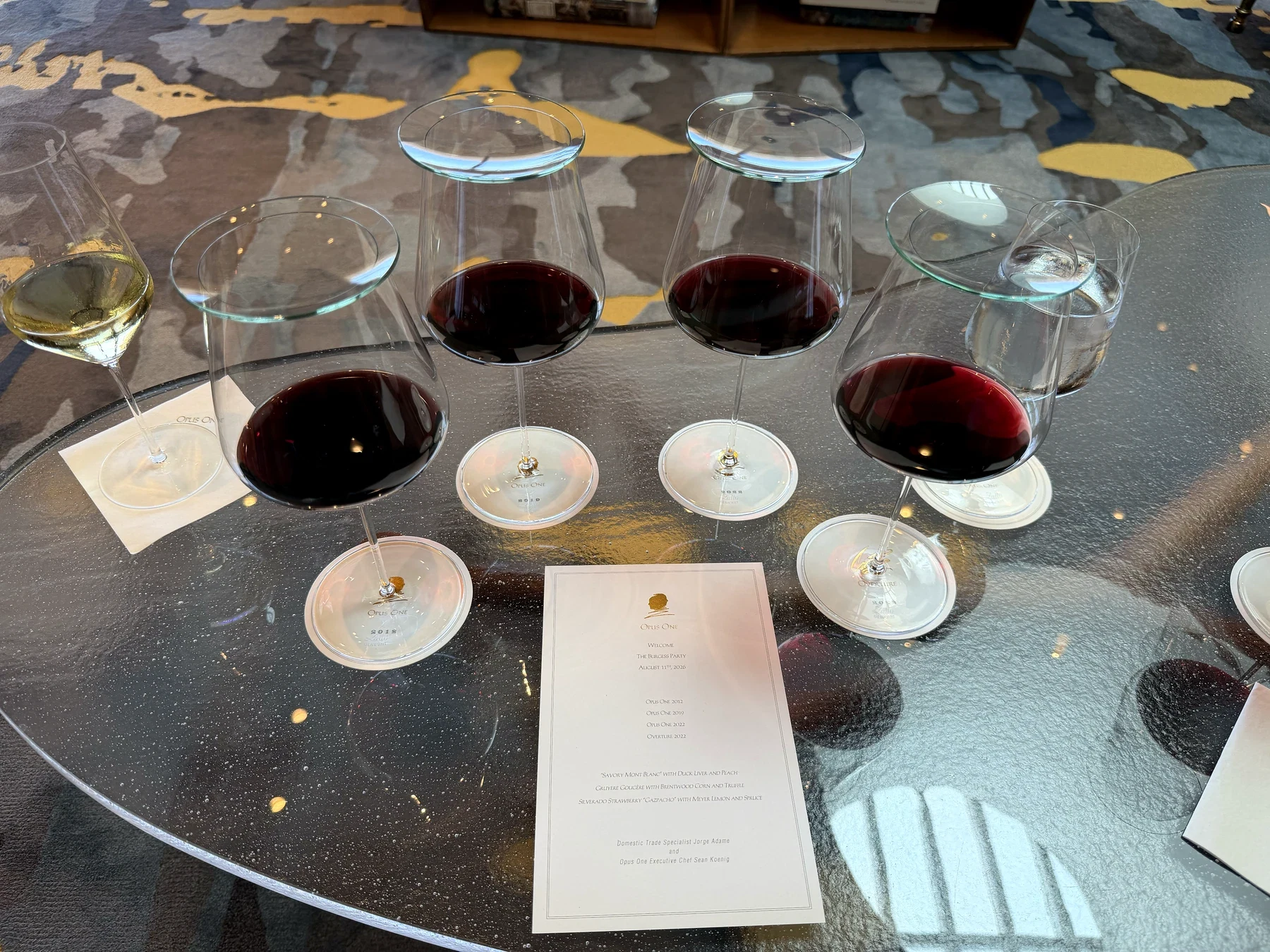
The 2012 vintage began with a warm, dry winter before March rains arrived around budbreak. Moderate temperatures and abundant sunshine followed, and harvest ran from September 21 to October 20. Opus One describes the wine through dark fruit, forest floor, graphite, cassis, blackberry and black cherry.
At our table, its role was broader than supplying the oldest date on the card. It showed what Opus One means by longevity. The wine had moved from primary fruit toward a more integrated, continuous shape, yet it did not feel diminished beside the younger glasses. The estate's current retrospective note describes the layers of fruit and texture as having converged into a refined softness. That was the useful reference point for everything that followed.
The 2019 growing season started slowly after spring rain nearly doubled the annual average. Budbreak arrived 15 days later than usual, then late-summer warmth accelerated maturity. Harvest began September 10 and continued for four weeks at a comparatively calm pace.
Official notes emphasize black plum, blueberry, black currant, dried rose, mineral tones, savory herbs, espresso and cocoa, with fine tannins and lively acidity. In the four-glass comparison, 2019 occupied the bridge between 2012's integration and 2022's youth. It carried enough development to reveal texture while preserving a clear dark-fruit core and firm frame.
The year delivered generous early-winter rain, a dry late winter, turbulent spring weather and an extreme heat event during harvest. The vineyard team picked ripe parcels in advance and used selective irrigation according to vine needs. Harvest ran from August 24 through September 26.
At 80 percent Cabernet Sauvignon, the wine also contains the highest Petit Verdot percentage in our Opus One trio. The estate's notes move from blueberry, cassis, dried rose and olive to cigar box, graphite, cocoa, orange peel, wet stone, vanilla and coffee. Beside 2012 and 2019, the wine's fine-grained tannins and fresher edges made its future easier to imagine. It is approachable enough to understand now, but the older glasses argued persuasively for patience.
Opus One first created Overture in 1993 as its second wine. Historically, Overture blended multiple years to create a supple, approachable expression of the estate. Beginning with 2021, Opus One moved to a vintage-dated release, making the growing season more explicit.
Overture 2022 is selected block by block from the same organically farmed estate vineyards and is overwhelmingly Cabernet Sauvignon. Opus One's notes point to bright cherry, forest berries, cut rose stems, violets, toasted almond and anise, followed by blackberry, blueberry, mocha and black tea. Pouring it after the grand vin was instructive. It did not read as a lesser version of Opus One; it clarified a different selection goal: softer tannins, more immediate fruit and a rounder early drinking window. The four wines held a clear family resemblance without collapsing into the same experience: integration in 2012, balance in 2019, youthful tension in 2022 and immediate openness in Overture. Meg kept bringing the discussion back to site, season and selection, making the differences feel intentional rather than hierarchical.
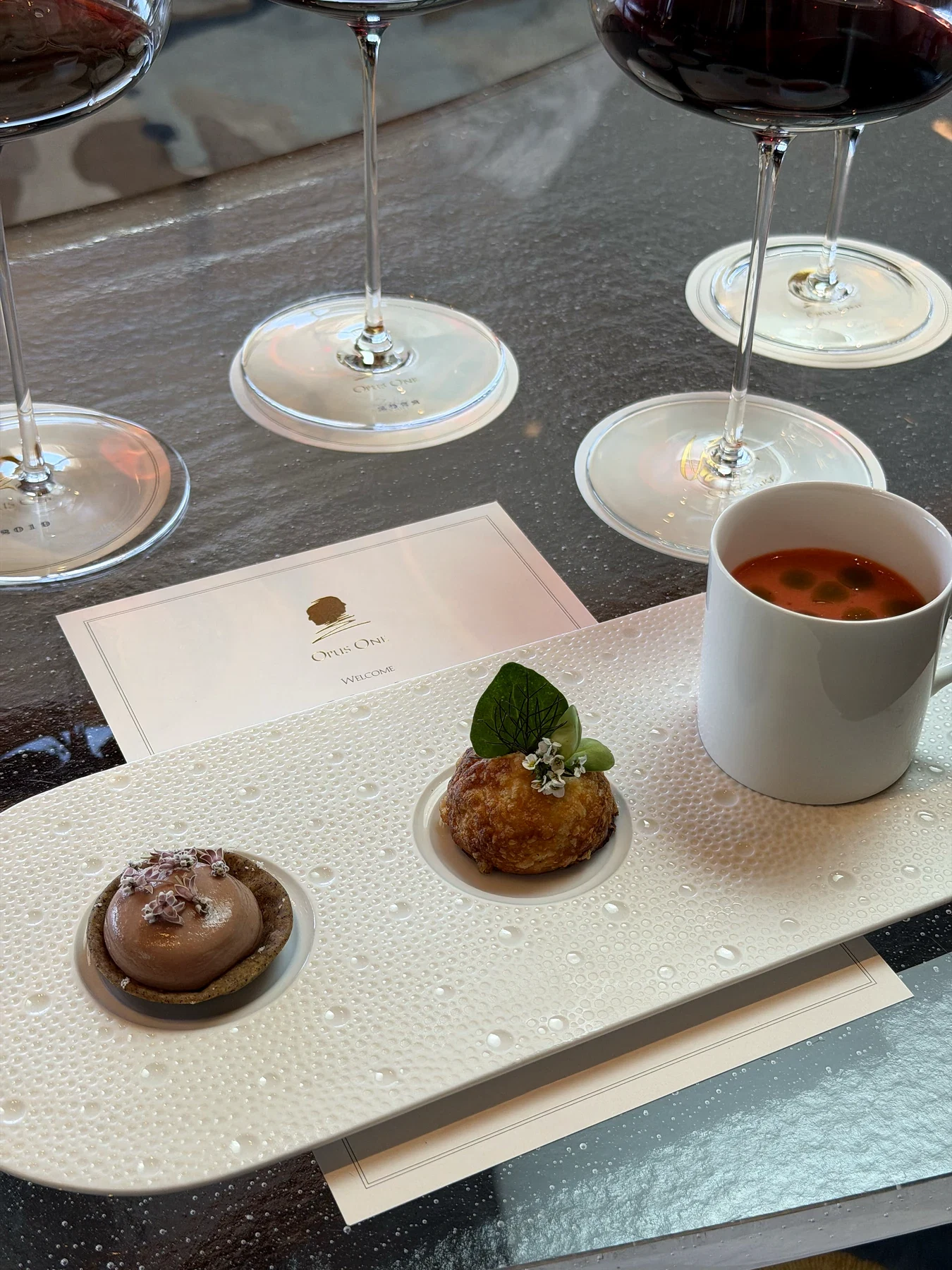
The food was concise and unusually specific. Our menu credited Executive Chef Sean Koenig and Domestic Trade Specialist Jorge Adame, and named three pairings:
The presentation looked playful, a trio of small forms on a long white plate, but each bite shifted the wines differently. The duck liver and peach brought richness, fruit and savoriness into the same mouthful. The warm gougère layered cheese, sweet corn and truffle around an airy center. The strawberry gazpacho reset the palate with acidity, fragrance and a distinctly local reference to Silverado.
Koenig's background includes The French Laundry and Atelier Crenn, but his current work is tied directly to the Opus One estate. The culinary team uses herbs, flowers, fruit and vegetables from a Culinary Rock Garden, orchard and raised beds. Oregano, French thyme, borage, calendula, rosemary and other plantings are used to shape seasonal canapés. That garden-to-glass philosophy keeps the pairings from feeling like decorative luxury; they are another way of interpreting the site.
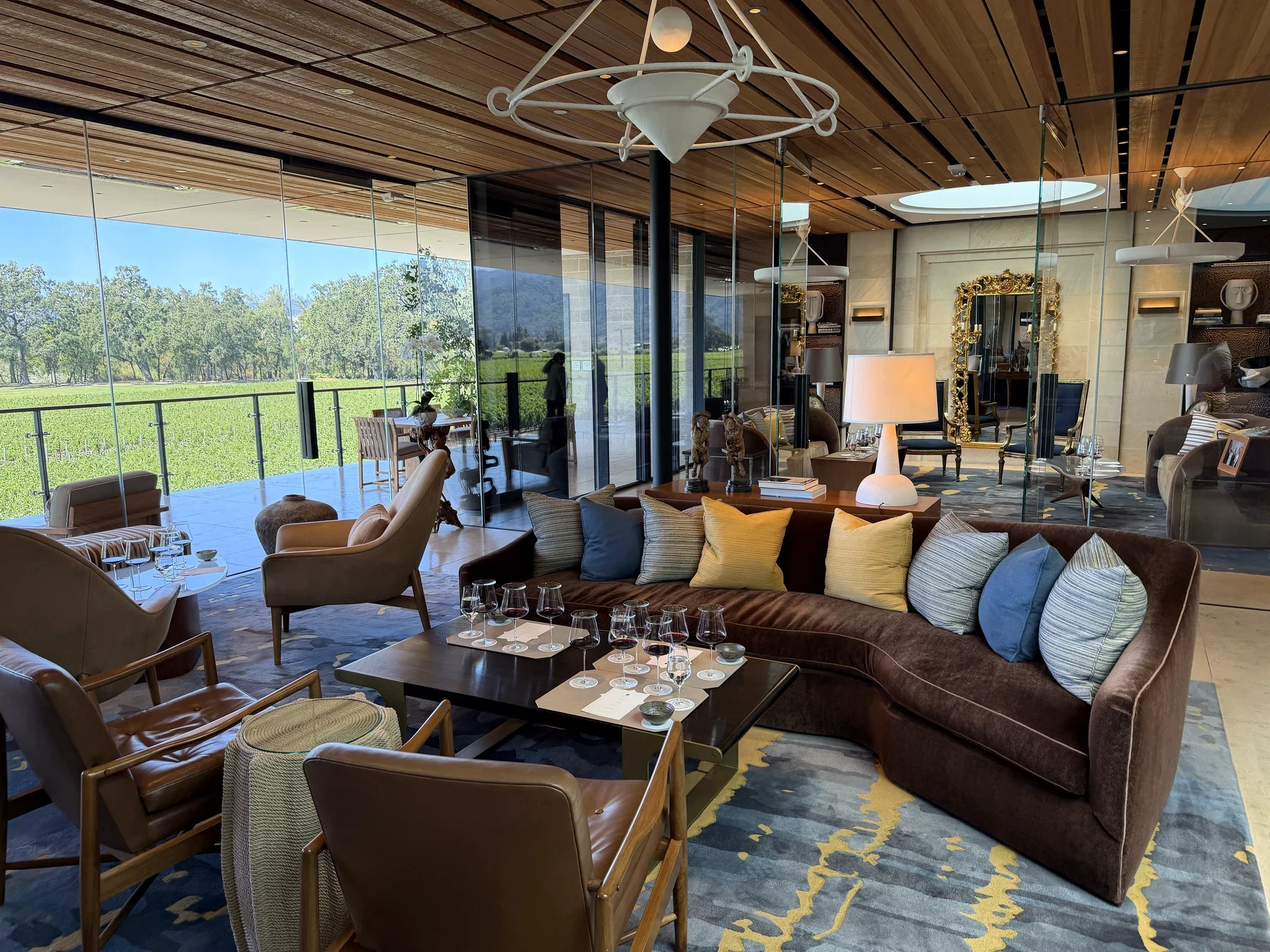
After the cellar's concrete and oak, the Partners' Room opens almost completely to green. Floor-to-ceiling glass frames the estate vineyard; contemporary furniture, art and warm wood make the room feel residential; and tasting tables sit close enough to the windows that the rows remain present in peripheral vision.
Opus One describes the room as the place where the founders' past and the estate's future meet. That might sound like marketing copy until you stand there. The architecture makes the idea literal. From one position you can see the wine in the glass, the vineyard that produced it and the rooms built to age it.
This is also where the precision of the day became intimate. Sitting with Meghan and moving between 2012, 2019, 2022 and Overture was far more revealing than tasting a single current release in isolation. She helped place each wine inside its season and inside the longer lineage of the estate. The conversation made the flight feel less like a vertical designed to impress and more like a study in what Opus One chooses to preserve.
As of August 2026, Opus One offers three reservation formats. Reservations open up to two months in advance on the first day of each month. Pricing and availability can change. Collectors seeking an Opus One-focused appointment should contact the estate or email concierge@enprimeurclub.com.
This 60-minute shared tasting pours two vintages of Opus One and Overture in the Courtyard Tasting Room, then concludes on the rooftop terrace. It does not include a winery tour. Choose it if your priority is tasting and architecture but time is limited.
This 90-minute appointment includes the current release, two library wines, a personal Estate Ambassador, a curated winery tour and a culinary complement. For most first-time visitors, this is the strongest balance. The tour gives the Grand Chai and cellar context that a tasting alone cannot.
This 2.5-hour private experience pairs selected vintages with a four-course seasonal menu from the Executive Chef and includes an in-depth estate tour. It is offered Monday through Friday for groups of four to eight, requires at least 14 days' advance booking and includes a 22 percent service charge. Choose it when food and wine pairing is the reason for the visit, not an add-on.
All guests must be at least 21. The first two experiences are bookable online for parties of up to four; larger groups should contact the winery. Opus One lists appointments from 10 a.m. to 3:30 p.m. daily, with holiday closures.
Absolutely. The clearest reason is not that Opus One is famous. It is that the estate has translated a complicated identity, a Bordeaux partnership, an Oakville vineyard, a single grand vin, almost five decades of vintages, into an experience that feels coherent from the driveway to the final glass.
The 2012 showed what time can resolve. The 2019 connected maturity to energy. The 2022 made the current release visible. Overture then reframed the same estate through a more immediate selection. Sean Koenig's pairings and the architecture gave those differences a physical setting.
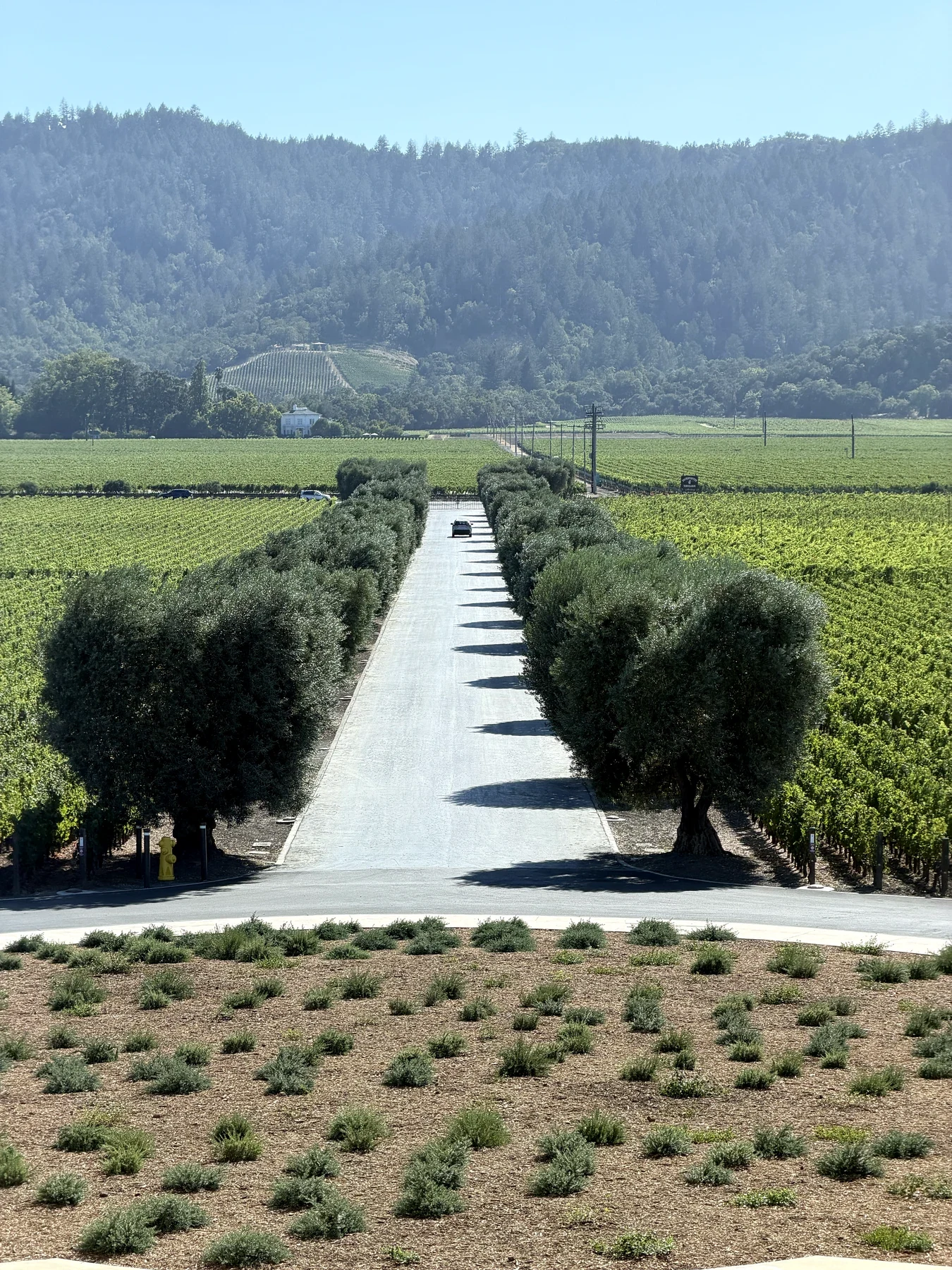
Do not rush the rooftop at the end. Looking down the olive-lined drive, with vineyard rows running toward the hills, completes the composition that began at the berm: land, building, wine and time held in one view.
Michael Silacci remains Opus One's Winemaker through the 2026 harvest and will retire afterward. Meghan Zobeck joined in 2025 as the estate's first Director of Winemaking. Opus One says a formal search for Silacci's successor will begin in 2027, so Zobeck should not be described as the named successor unless the winery announces that separately.
Our private August 11, 2026 flight included Opus One 2012, Opus One 2019, Opus One 2022 and Overture 2022. The printed menu also listed three pairings from Executive Chef Sean Koenig.
Opus One is the estate's grand vin. Overture is its second wine, selected from estate vineyard blocks for a softer, more immediately approachable expression. Overture was traditionally a multi-vintage blend; 2021 was the first vintage-dated release, followed by the 2022 we tasted.
As of August 2026, the Estate Tasting is $150, the Opus One Experience is $250 and Art of the Table is $793 per person including a 22 percent service charge. Confirm current prices and cancellation terms with the winery before booking.
No. The 60-minute Estate Tasting does not include a winery tour. The 90-minute Opus One Experience and 2.5-hour Art of the Table do. Choose one of those if seeing the cellar and Grand Chai is important to you.
The current release during our August 2026 visit was Opus One 2022, a blend of 80 percent Cabernet Sauvignon, 8 percent Petit Verdot, 6.5 percent Cabernet Franc, 5 percent Merlot and 0.5 percent Malbec.
Opus One is at 7900 St. Helena Highway in Oakville, in the heart of Napa Valley. Its four western Oakville vineyard parcels include two parcels within To Kalon Vineyard and the Ballestra and River parcels around the winery.
Get the App
Take the shortlist into the En Primeur Club app for concierge access, saved places, and the next step after discovery.
Get Exclusive AccessMore from the editors