On the agricultural flank of Maui's North Shore, Nuka sits along Haiku Road where the island's farming interior meets its coastal edge. The kitchen draws from the sourcing traditions that define Hawaii's farm-to-table movement, translating hyper-local ingredients into a format worth the detour from the resort corridor. For those already exploring Maui beyond the tourist belt, it belongs on the itinerary.
Pearl is the En Primeur Club membership app — saves, bookings, and concierge access live there. Same editors, same standards.
- Address
- 780 Haiku Rd, Haiku, HI 96708
- Phone
- +1 808 575 2939
- Website
- nukamaui.com
- Directions
- Get directions
 Saves & bookings on Pearl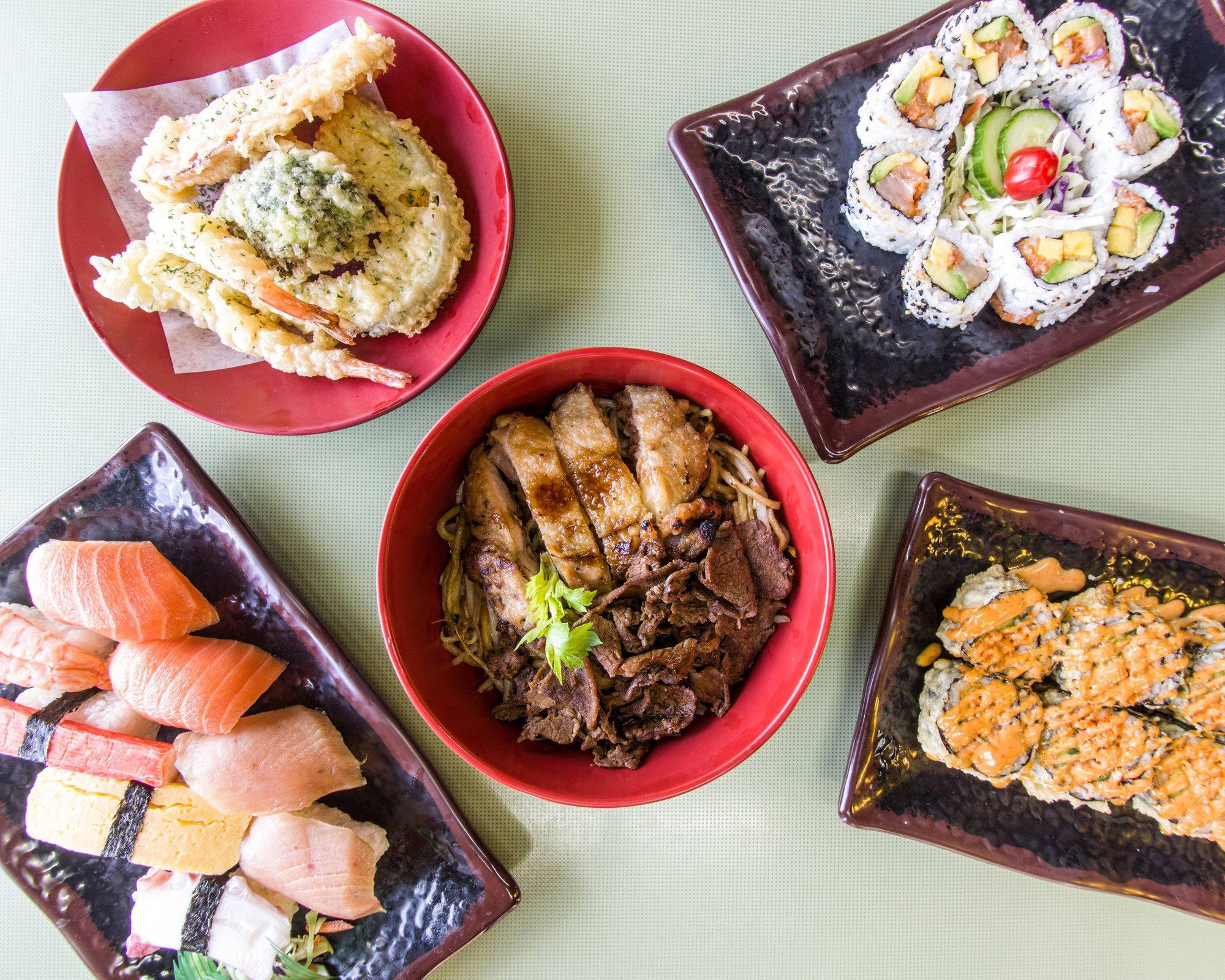
Where the Island's Interior Feeds the Plate
Haiku-Pauwela is not where most visitors to Maui think to eat. The North Shore's agricultural stretch, running inland from the surfing breaks at Ho'okipa, is pineapple-field country, a working corner of the island where the land still dictates the pace. Restaurants here don't perform tropical abundance for visitors; they operate within it. Nuka, at 780 Haiku Rd, sits inside that context, and the address alone says something about its orientation. You are not in Wailea or Ka'anapali. You are in the part of Maui where farms, food trucks, and community halls share the same roads, and where a kitchen's sourcing relationships are built over years of proximity rather than procurement calls.
That proximity to Maui's agricultural interior is the defining condition for what arrives on the plate here. Hawaii's farm-to-table movement has matured considerably over the past decade, moving from a marketing position into something structurally embedded in how the island's serious kitchens operate. Ingredients like Kula onions from upcountry farms, locally caught ahi and opah, Hamakua mushrooms from the Big Island, and taro grown across the archipelago have moved from novelty to expectation at restaurants committed to this approach. Nuka operates in that tradition, with its Haiku location placing it physically close to the farming communities whose output shapes this kind of menu.
The Character of the Space
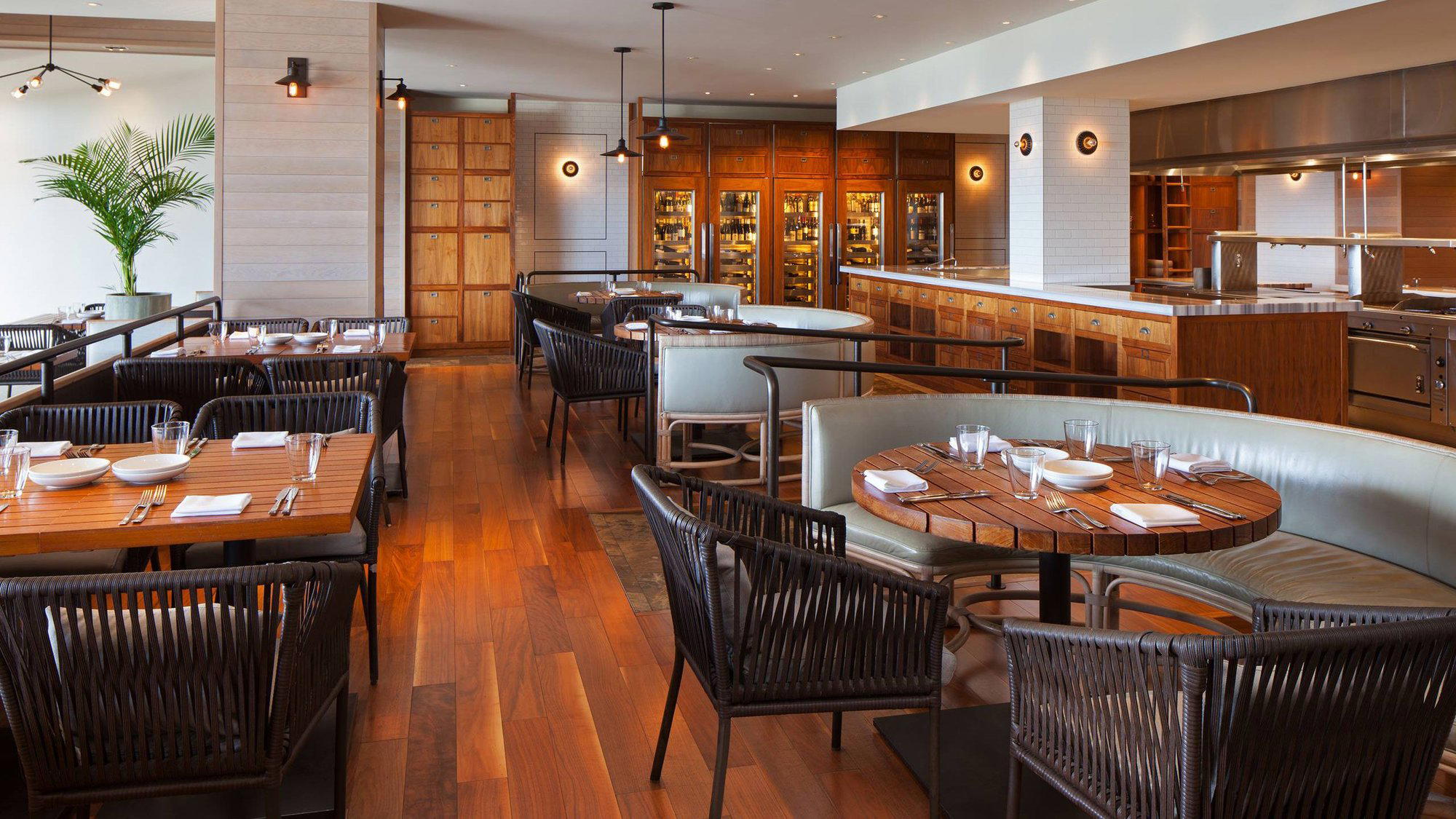
Approaching a restaurant in Haiku means leaving the resort infrastructure behind entirely. The North Shore's roads narrow, and the built environment shifts toward the functional and the overgrown in equal measure. Nuka's setting reflects the character of the neighbourhood: this is not a dining room engineered for Instagram arrival moments. The atmosphere draws from the same unhurried quality that defines the surrounding area, where the priority is what's in the glass and on the plate rather than the ambient drama of the room. For diners accustomed to the production values of Maui's luxury resort dining, the contrast is deliberate and refreshing. The restaurant occupies a format consistent with the North Shore's community-scale character, which is to say it operates at human scale rather than resort scale.
The broader pattern here is one that appears in farm-adjacent dining contexts across the United States. Restaurants positioned near their sourcing base, from Blue Hill at Stone Barns in Tarrytown to Single Thread Farm in Healdsburg, tend to build their identity around a different kind of authority than their urban counterparts. The credential is not the chef's Michelin pedigree or the wine list's depth; it is the legibility of the sourcing chain. When you can name the farm, the fisherman, or the cooperative behind each component, the menu becomes a form of geographical argument.
Ingredient Sourcing as the Central Logic
Hawaii's agricultural position is genuinely specific. The archipelago's isolation, combined with its volcanic soil diversity and year-round growing season, produces ingredients that do not travel well and are therefore rarely encountered outside the islands. Varieties of sweet potato, breadfruit preparations, locally grown vanilla, and the range of Pacific fish species available through Hawaii's small-boat fishing fleet represent a sourcing vocabulary that mainland kitchens cannot replicate regardless of budget. Restaurants in the Haiku-Pauwela area that draw from this supply have a structural advantage: they are close enough to the source that freshness is measured in hours rather than days.
This is the context in which Nuka's positioning makes most sense. The kitchen's relationship to its immediate geography is not incidental to the dining experience; it is the dining experience. That kind of sourcing discipline appears at a handful of American restaurants operating at different price points and scales: Smyth in Chicago runs its own farm operation to control the supply chain; Oyster Oyster in Washington, D.C. has built its identity around hyper-local, regenerative sourcing; The Wolf's Tailor in Denver uses local grain programs to anchor its menu philosophy. In each case, the sourcing framework is the editorial spine of the menu, and the dishes are expressions of that framework rather than the other way around.
For a restaurant in Haiku, the sourcing argument is geographically intuitive in a way it isn't for inland urban kitchens. The Pacific provides the protein; the upcountry farms provide the produce; the tropical microclimate produces fruit and root vegetables that have no equivalent in continental American cooking. What the kitchen does with that material is the variable; that the material is notable by default is the constant.
Fitting Nuka Into a Maui Itinerary
Visitors to Maui who confine their dining to the resort corridors in Wailea and Ka'anapali are eating a version of Hawaii that has been curated for convenience rather than specificity. The North Shore, and Haiku-Pauwela in particular, offers the opposite: a dining environment shaped by the community that actually lives and farms on this part of the island. That distinction matters if you are trying to understand Maui as a place rather than simply as a backdrop.
Getting to Haiku from the main resort areas means committing to the Hana Highway corridor or the northern route through Kahului, which adds time to any evening out. The drive is not incidental; it is part of the experience of eating on this side of the island. Plan for it accordingly, and consider pairing a meal at Nuka with the broader North Shore context, which includes some of the island's most serious produce markets and food culture outside the resort economy.
For comparison against the wider American fine-dining conversation, the farm-adjacent format Nuka operates within sits alongside properties like Addison in San Diego, Bacchanalia in Atlanta, Frasca Food and Wine in Boulder, and Lazy Bear in San Francisco as restaurants where the sourcing story is inseparable from the menu's identity. At a different register, the precision-sourcing model appears at Le Bernardin in New York City, The French Laundry in Napa, and Providence in Los Angeles, where ingredient provenance carries the same weight at a higher price tier. The principle scales; the geography changes.
Other points of reference for ingredient-led American cooking that rewards the trip: ITAMAE in Miami applies a similar Pacific Rim sourcing logic from a different latitude; Atomix in New York City treats Korean ingredient provenance with comparable seriousness; and internationally, Atelier Moessmer Norbert Niederkofler in Brunico represents the European benchmark for cuisine built entirely on regional supply. The Inn at Little Washington and Emeril's in New Orleans both demonstrate how sourcing regionality becomes a long-term identity rather than a seasonal feature when a kitchen commits to the local supply chain over decades.
In Context: Similar Options
Comparable venues nearby, for context on price, style, and recognition.
| Venue | Cuisine | Price | Notes |
|---|---|---|---|
| NukaThis venue — the venue you are viewing | Contemporary Japanese Izakaya & Sushi | $$ | Not listed |
| Asuka Japanese Nabe + Shabu Shabu | Japanese Shabu Shabu | $$ | Kaimuki |
| Wabisabi Soba & Sushi | Traditional Japanese Soba & Sushi | $$ | Paia |
| Koromo Katsu & Bistro | Japanese Katsu & Curry Bistro | $$ | Pearlridge Center |
| Jimbo Restaurant | Traditional Japanese Udon | $$ | McCully-Moiliili |
| Gyotaku - King St. | Japanese Sushi and Tempura | $$ | Moiliili |
Continue exploring
More in Haiku Pauwela
Restaurants in Haiku Pauwela
Browse all →
Bars in Haiku Pauwela
Browse all →
At a Glance
- Intimate
- Cozy
- Casual Hangout
- Date Night
- Open Kitchen
- Craft Cocktails
- Sake Program
- Local Sourcing
Current opening hours
- Monday
- 11:30 AM–10 PM
- Tuesday
- 11:30 AM–10 PM
- Wednesday
- 11:30 AM–10 PM
- Thursday
- 11:30 AM–10 PM
- Friday
- 11:30 AM–10 PM
- Saturday
- 4–10 PM
- Sunday
- 4–10 PM
Hours can change for holidays and private events. Last verified .