
Tabelog 100 #28
Our verdict
Noguchi Sengyo Ten puts Tokyo’s everyday seafood-bowl culture in a small Sumida dining-room format rather than the city’s luxury sushi bracket. Its Tabelog 100 Diner selection in 2026 and 2024 gives the address a clear trust signal, while the no-reservations format makes timing part of the meal.

Pearl is the En Primeur Club membership app, where members save venues, book tables and use the concierge.
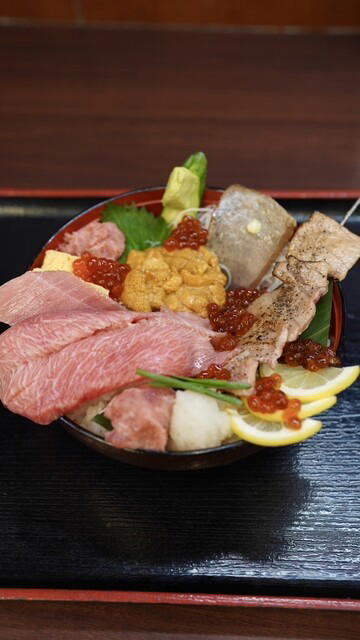
The menu
What to order
- Assorted sashimi set
- Seafood rice bowls
- Grilled seasonal fish
Approaching Noguchi Sengyo Ten, the tone shifts away from Tokyo’s polished counters and toward a plainer city rhythm: local lunch traffic and a dining room identity built for fish rather than ceremony. This is the side of the city where seafood is judged less by performance and more by price discipline, category focus, and how directly a kitchen can translate everyday abundance into rice bowls and set-meal comfort.
Tokyo’s seafood hierarchy can be misleading for visitors. The international conversation tends to orbit sushi counters, tasting menus, and hotel dining rooms, but the city’s daily fish culture is wider and less formal. Cafeteria-style seafood shops and kaisen-don specialists sit in that middle lane: more focused than a general casual meal, less scripted than omakase, and often more revealing about how local diners actually eat fish on a weekday.
Tokyo seafood without the ceremony
Noguchi Sengyo Ten belongs to that category: cafeteria, kaisen-don, and seafood, with a stated identity that keeps fish at the center of the experience. The format matters. A seafood bowl shop does not need the language of rarefied luxury to earn attention in Tokyo; it needs consistency, clear value, and a room that can handle regulars, friends, and solo diners without turning lunch into a production.
The recognition gives the restaurant weight beyond neighborhood affection. Its Tabelog Hyakumeiten recognition for 2026 places it inside a Japan-specific dining category that rewards everyday restaurants as much as destination dining. The Tabelog score is 3.60, a useful signal in a market where scores move conservatively and casual formats compete against a large field of specialist shops.
The experience reads as compact and practical rather than theatrical. That balance tells the story of the meal: seafood bowls and casual dining, a pace closer to an everyday Tokyo cafeteria than a tasting-menu restaurant, and an emphasis on accessibility rather than elaborate ritual. It is the kind of place to understand through category, price, and local usefulness, not through luxury cues.
Within a broader Tokyo comparison set, the address sits apart from French dining at ÉTAPE, contemporary cooking at KOKYU, soba at Azumabashi Yabusoba, and the lower-priced casual lane represented by Tomo Rakunou 63℃. The useful distinction is not glamour; it is category clarity. For seafood in Tokyo, the appeal is the directness of a fish-led shop working in a budget band that keeps it tied to daily dining rather than special-occasion planning.
The planning challenge is the format, not the price
The planning experience here should be approached with flexibility. This is not necessarily a concierge-style table to frame months ahead, and it is not a room where the main value is ceremony or status. The strategy is timing, patience, and accepting that a casual seafood shop may suit a looser day better than an over-engineered itinerary. For travelers building time around Tokyo dining, that detail matters more than any invented chef biography.
The price band also shifts expectations. Listed lunch and dinner budgets sit at JPY 1,000 to JPY 1,999. In Tokyo seafood terms, that keeps the restaurant in a practical bracket, especially compared with sushi counters where a single seat can define an entire evening’s budget. The trade-off is control: diners gain value and local texture, but should not expect the certainty or choreography of a pre-arranged progression.
Payment and access details are best checked close to the visit rather than assumed from the restaurant’s reputation. Smaller Tokyo dining rooms can operate with narrower systems and more changeable logistics than travelers expect, so carrying cash and leaving schedule room is sensible. The important planning point is that the restaurant’s appeal sits in its everyday format, not in luxury infrastructure.
Transport planning should follow the same logic. Treat Noguchi Sengyo Ten as a fish-led meal in Tokyo rather than a cross-city dinner pilgrimage requiring elaborate staging. It pairs better with a loose day of urban wandering than with a tightly sequenced evening schedule, and it rewards diners who approach it as part of Tokyo’s casual seafood culture.
Where it fits in a Tokyo itinerary
The strongest case for Noguchi Sengyo Ten is not that it replaces sushi. It answers a different question: where to eat seafood in Tokyo when the goal is a focused, casual room with a recognized local reputation and a price band that leaves room for the rest of the day. For visitors who have already booked a serious counter, this is a corrective, a reminder that Tokyo’s fish culture is not confined to omakase etiquette.
Vegetarians should treat the restaurant cautiously, because the categories and stated food focus are seafood-based. Families can read the casual pricing and cafeteria-style positioning as useful signals, though flexibility may be required at busy meal times. Groups looking for a highly structured or private-feeling restaurant should consider whether this everyday seafood format matches the occasion.
For broader Tokyo planning, compare this kind of fish-led casual meal with other city formats in Our full Tokyo restaurants guide. Research can also include other Tokyo dining rooms, casual counters, seafood specialists, cafes, and everyday restaurants across the city.
Travelers stitching the meal into a fuller city plan can cross-reference broader Tokyo hotel, bar, wine, and experience research. Wider Japan and overseas casual-dining comparisons are best handled generically: look at everyday seafood shops, casual rice-bowl counters, specialist cafes, and neighborhood restaurants to understand how Noguchi Sengyo Ten fits into a larger informal dining map.
Frequently asked questions
Is Noguchi Sengyo Ten expensive?
Pricing at Noguchi Sengyo Ten is listed as JPY 1,000 - JPY 1,999 JPY 1,000 - JPY 1,999.
What are the operating hours at Noguchi Sengyo Ten?
Specific operating hours are not provided here; check directly with Noguchi Sengyo Ten before visiting.
What's the address for Noguchi Sengyo Ten?
Tokyo.
What do critics highlight about Noguchi Sengyo Ten?
Critics can point to its fish-first focus, reflected in the Tabelog Hyakumeiten 2026 recognition and the restaurant’s stated categories of cafeteria, kaisen-don, and seafood. The format is practical rather than ceremonial, with a budget listed at JPY 1,000 - JPY 1,999 for both lunch and dinner in Tokyo.
Is Noguchi Sengyo Ten good for vegetarians?
Vegetarians should be cautious. The venue lists kaisen-don and seafood among its categories, so the menu direction is likely narrow for a vegetarian meal in Tokyo.
Is Noguchi Sengyo Ten child-friendly?
The casual price band may make Noguchi Sengyo Ten workable for some families. That said, the focus is seafood, and visitors should check current logistics before planning a family meal in Tokyo.
Comparable Options
Comparable venues at a similar level for quick context.
| Venue | Cuisine | Price | Awards | Notes |
|---|---|---|---|---|
| Noguchi Sengyo TenThis venue (the venue you are viewing) | Casual Japanese seafood eatery | $10–20 | Tabelog 100 #28 | Not listed |
| Unazen | Kanto-style Unagi (Eel) | $30–50 | Tabelog 100 #83 | Not listed |
| ÉTAPE | Modern French-Japanese Fusion | $100–150 | Michelin Plate | French |
| KOKYU | Modern Cantonese Fine Dining | $50–100 | Tabelog 100 #67 | Contemporary |
| Azumabashi Yabusoba | Traditional Soba Noodle Shop | $20–30 | Tabelog 100 #64 | JPY 2,000 - JPY 2,999 JPY 1,000 - JPY 1,999 View spending breakdown |
| Tomo Rakunou 63℃ | Soft-serve ice cream & gelato shop | $1–10 | Tabelog 100 #7 | JPY 999 - JPY 999 View spending breakdown |
Recognition history
Dated appearances from independent guides and award organizations, with the underlying list record or original source where available.
Tabelog 100 #28 · No. 28
Tabelog · Tabelog 100 - Diner - 2026
Continue exploring
More in Tokyo
Restaurants in Tokyo
All restaurants in Tokyo →



Bars in Tokyo
All bars in Tokyo →







Details
- Lively
- Solo
- Casual Hangout
- After Work
- Standalone
- Local Sourcing
- Sustainable Seafood
- A La Carte
- Counter Dining
- Beer
- Sake
- Pescatarian Friendly
Current opening hours
- Monday
- 11:30 AM–2 PM, 4–6:30 PM
- Tuesday
- 11:30 AM–2 PM, 4–6:30 PM
- Wednesday
- Closed
- Thursday
- 11:30 AM–2 PM, 4–6:30 PM
- Friday
- 11:30 AM–2 PM, 4–6:30 PM
- Saturday
- 11:30 AM–2 PM, 4–6:30 PM
- Sunday
- 11:30 AM–2 PM, 4–6:30 PM
Hours can change for holidays and private events. Hours as of .
Simple, no-frills cafeteria-style space with counter and table seating, focused on the freshness of the fish rather than decor; atmosphere is typically busy and energetic during meal times.