.png)
Nén Danang holds a Michelin Plate for 2024 and 2025, placing it among the few fine-dining addresses in central Vietnam working at the intersection of contemporary technique and deeply local Central Vietnamese tradition. Priced at ₫₫₫₫, it occupies the upper tier of Da Nang dining, with a Google rating of 4.5 across 329 reviews — a signal of sustained consistency rather than novelty buzz.
 Discover on Pearl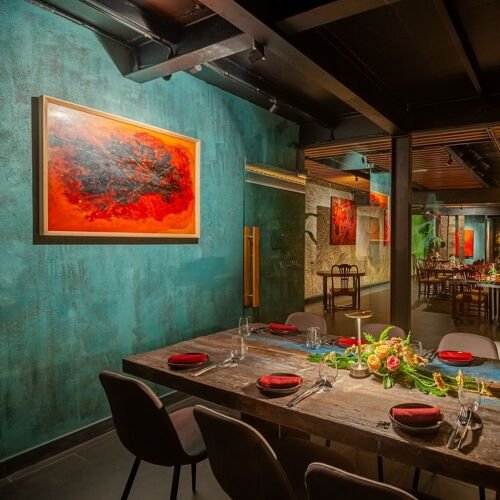
Da Nang's Fine-Dining Moment, Grounded in the Central Vietnamese Pantry
Central Vietnam has always had its own culinary logic. Where Saigon cooking accommodates sweetness and Ho Chi Minh City's street-food culture bends toward the crowd-pleasing, the food of Hue and Da Nang runs on fermentation, shrimp paste, and a kind of disciplined intensity that doesn't apologise for itself. The bánh mì stalls on Trần Phú, the bánh canh carts in Ngũ Hành Sơn, the sizzling bánh xèo houses — Da Nang's food culture has historically been built at pavement level, where the leading cooking happens fast, cheap, and with total conviction. Contemporary Vietnamese restaurants working in this city don't inherit a neutral backdrop. They inherit a tradition with strong opinions.
Nén Danang sits in the Khuê Mỹ district of Ngũ Hành Sơn, away from the tourist-dense stretch of the Han riverfront, and that distance is part of the point. This is not a restaurant packaging local food for visiting eyes. It holds a Michelin Plate for both 2024 and 2025 — consecutive recognition that places it in a small tier of restaurants in central Vietnam receiving international critical attention , and it operates at the ₫₫₫₫ price level, which in Da Nang's dining context signals a clear and deliberate step away from the casual register most of the city's food occupies. A Google score of 4.5 across 329 reviews supports the case for consistency: this is not a place running on a single strong week of press.
The shortlist, unlocked.
Hard-to-book tables, cellar releases, and concierge-planned trips.
Get Exclusive Access →The Street Tradition Behind the Counter
To understand what contemporary Vietnamese cooking is doing at its more ambitious end, it helps to understand what it is working with and against. The street-food culture of Da Nang is not a romantic backdrop , it is a genuinely demanding peer set. A bowl of bún bò Huế served from a cart at 7am by someone who has made the same broth for twenty years is not an easy standard to clear. The local bánh canh vendors , like Bánh Canh Yến , and the noodle specialists at addresses like Bà Diệu on Trần Tống Street or Bà Đông operate with a specificity of flavour that has no interest in refinement for its own sake. And the bánh xèo operations , the turmeric-yellow crêpe houses, most famously at Bánh Xèo 76 , serve food that arrives in minutes and leaves no question about where it came from.
What restaurants like Nén Danang do with this inheritance is not to imitate it but to examine it. The move that defines the Vietnamese Contemporary category at its most considered level , seen in Hanoi at Gia and Backstage, in Ho Chi Minh City at Anan Saigon and Bờm , is to take the regional specificity of Vietnamese cooking and slow it down enough to make its logic visible. The bánh mì is perhaps the clearest example of how Vietnamese street food already encodes sophisticated technique: the contrast between the airy French-influenced baguette and the fermented, layered fillings inside it is a study in textural and flavour composition that most fine-dining menus would struggle to match for complexity. Contemporary restaurants working in this tradition are not inventing a new grammar. They are articulating one that already exists.
Where Nén Sits in the Vietnam Fine-Dining Tier
Vietnam's Michelin-recognised fine-dining set is still relatively concentrated in Hanoi and Ho Chi Minh City. Da Nang's inclusion in the Michelin guide is recent, and the number of central Vietnamese addresses receiving plate-level recognition remains small. That places Nén Danang in a position that is less about competition with peers in the same postcode and more about dialogue with what is happening nationally. Addresses like Lamai Garden and Little Bear in their respective cities are working on adjacent problems , how to present Vietnamese ingredients and technique within a structured dining format without flattening the regional character that makes the food worth eating in the first place. Madame Lam in Ho Chi Minh City takes a different route, leaning into the French-Vietnamese intersection that Da Nang also has access to through addresses like La Maison 1888, the Indochine-heritage fine-dining room at the InterContinental Son Tra. Nén's positioning within the Vietnamese Contemporary register, rather than the French-influenced one, is itself an editorial choice about where the more interesting cooking is happening in the city right now.
The ₫₫₫₫ price tier also positions it in a narrow band. Da Nang's dining options span from sub-₫ street stalls to international hotel restaurants at the leading of the scale, but the middle and upper-middle range has expanded notably in the years since the city's profile as a destination grew. That expansion means more noise, more casual Vietnamese restaurants pitching at the tourist trade, and , for a restaurant like Nén , a clearer differentiation through the Michelin recognition and the structural commitment to a sit-down, multi-course format.
Planning a Visit
Nén Danang is located at 16 đường Mỹ Đa Tây 2 in the Khuê Mỹ ward of Ngũ Hành Sơn district. The neighbourhood sits south of the city's main beach strip and east of the Marble Mountains, which makes it a natural add-on to any itinerary already oriented toward that part of Da Nang rather than the central Han riverfront. Given the Michelin Plate designation and the relatively small size implied by the restaurant's positioning, booking ahead is the practical approach , walk-in availability at ₫₫₫₫ Michelin-recognised addresses in Vietnam tends to shrink quickly on weekends and holiday periods. Booking method and current hours are leading confirmed directly or via reservation platform at time of visit. For the wider Da Nang picture, see our full Da Nang restaurants guide, our Da Nang hotels guide, our Da Nang bars guide, our Da Nang experiences guide, and our Da Nang wineries guide. A broader view of what the Vietnamese Contemporary category is doing across the country is available through Hibana by Koki in Hanoi for a reference point at the Japanese-Vietnamese intersection.
Frequently Asked Questions
- What should I order at Nén Danang?
- The menu is not publicly detailed in verifiable sources, so specific dish recommendations are not available here. What the Michelin Plate recognition and Vietnamese Contemporary classification do indicate is a format grounded in Central Vietnamese ingredients and technique , likely drawing on the fermented, shrimp-paste-forward flavour register that defines the region's cooking. That is the thread worth following at the table: dishes that reference the local street-food tradition, from bánh-style formats to broth-based preparations, reworked within a structured dining context. Two consecutive Michelin Plates across 2024 and 2025 confirm that the kitchen's approach has held up under repeated critical scrutiny.
- Can I walk in to Nén Danang?
- Walk-in availability is not confirmed in available data. At the ₫₫₫₫ price tier in a Michelin-recognised restaurant in a city where fine-dining seats are limited, the safe approach is to book in advance, particularly on weekends or during Da Nang's peak tourism window (roughly April to August, when the dry season draws significant visitor numbers). The 329 Google reviews at a 4.5 rating suggest a loyal and active guest base, which typically compresses last-minute availability further.
- What's the defining dish or idea at Nén Danang?
- The defining idea, based on what the Vietnamese Contemporary classification and consecutive Michelin Plate recognition signal, is Central Vietnamese cooking examined at close range , the flavours of Da Nang and Hue's food culture given the time and space that a structured sit-down format allows. Where street food like bánh mì or bánh xèo works through speed and volume, a restaurant in this category asks the same ingredients and techniques to hold up under slower scrutiny. That tension between the casualness of the tradition and the deliberateness of the format is the most interesting thing happening in this tier of Vietnamese dining right now.
Booking and Cost Snapshot
A quick peer check to anchor this venue’s price and recognition.
| Venue | Price | Awards | Notes |
|---|---|---|---|
| Nén Danang | ₫₫₫₫ | Michelin Plate (2025); Michelin Plate (2024) | This venue |
| La Maison 1888 | ₫₫₫₫ | Michelin 1 Star | French Contemporary, ₫₫₫₫ |
| Ăn Thôi | ₫ | Vietnamese, ₫ | |
| Bé Ni 2 | ₫₫ | Seafood, ₫₫ | |
| Bún Bò Bà Rơi (Hai Chau) | ₫ | Noodles, ₫ | |
| Cô Chủ Nhỏ | ₫ | Street Food, ₫ |
Need a table?
Our members enjoy priority alerts and concierge-led booking support for the world's most difficult tables.
Get Exclusive AccessThe shortlist, unlocked.
Hard-to-book tables, cellar releases, and concierge-planned trips.
Get Exclusive Access →