
Tabelog 100 #75
Our verdict
Motenashi Kuroki is a compact Asakusabashi ramen counter with Tabelog Ramen TOKYO 100 selections in 2024 and 2025. The draw is not luxury pricing or ceremony, but a small-seat format, fish-focused cooking, sake availability, and a location that puts serious ramen into Taito’s working-east Tokyo rhythm.

Pearl is the En Primeur Club membership app, where members save venues, book tables and use the concierge.
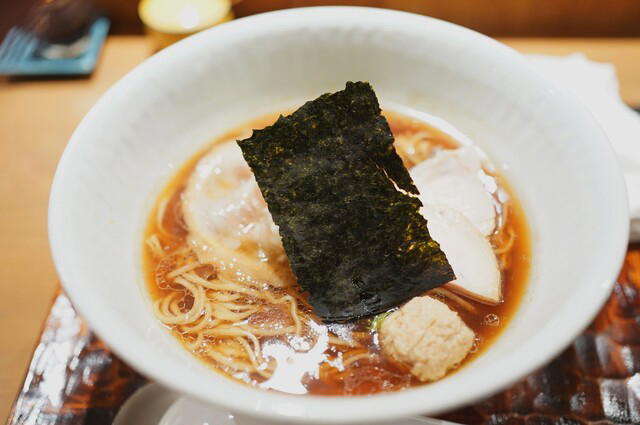
The menu
What to order
- Shio ramen
- Shoyu ramen
- Miso ramen
- Tan-men
- Tsukemen
- Abura soba
- Shumai dumplings
- Drinkable hiyashi chuka with straw-grilled bonito
Tokyo is not only the polished city of hotel lobbies and tasting-menu choreography. It is also a place of train noise, short errand-to-errand walks, and everyday meals judged with unusual seriousness. Here, ramen reads less as tourist trophy than precise urban meal: fast, repeatable, and subject to local judgment. Motenashi Kuroki fits that grammar as a Tokyo ramen venue, placing it in the city’s modern noodle conversation rather than in a generic luxury-dining frame.
Tokyo ramen is now a technical field with many dialects. Some counters chase density and richness; others work through lighter stocks, seasoning, noodle texture, and careful balance. Read this address through that wider ramen lens rather than as a grand-restaurant substitute. The Tabelog Hyakumeiten recognition in 2025 matters because Tokyo ramen is brutally competitive at everyday prices. A venue in the JPY 1,000 to JPY 1,999 band must win through execution, not décor spend.
Ramen in a city that keeps refining the bowl
The recent Tokyo ramen shift favors specialization. Serious shops increasingly behave like small laboratories: a clear direction, tight service, and enough repeat local traffic to punish inconsistency. Ramen absorbed Chinese noodle culture, then became Japanese through tare, dashi logic, noodle texture, and regional variation. In Tokyo, sharp contemporary counters use that flexibility to move between global noodle technique and domestic ingredients, especially when the shop’s own menu and sourcing make those choices explicit.
Motenashi Kuroki belongs inside that evolution. The point is not rarity, but the discipline of translating a focused idea into a bowl that satisfies in one sitting. The format matters because pacing, heat, and noodle texture are time-sensitive. A ramen meal works best when the distance between assembly and eating is short, and the judgment is immediate.
Against other Tokyo entries supplied for context, the positioning is narrow and clear. Hashimoto belongs to the unagi tradition, a separate craft of freshwater eel and sauce. nôl sits in a contemporary, higher-price restaurant bracket. Stone occupies a similar low-price band, but without the same ramen-category framing here. Gracia’s listed spend rises higher at dinner. This makes the Tokyo venue useful for one decision: where to place a serious, award-recognized ramen meal among Tokyo restaurants without turning lunch into a multi-hour event.
Tokyo gives the counter its rhythm
The city is part of the argument. Tokyo’s transport logic, dense dining culture, and quick-meal habits suit ramen especially well. The meal works between appointments, shopping circuits, and rail transfers; it does not need the theatrical isolation of a destination dining room. Motenashi Kuroki should be understood simply as a Tokyo ramen stop, best approached with the same planning and flexibility that serious local dining often requires.
The room keeps expectations calibrated around the ramen format rather than luxury extras. This is not the place to evaluate by private-room comfort, drawn-out pacing, or hotel-style polish. Diners come for a focused bowl, everyday pricing, and the compact directness that defines much of Tokyo’s strongest casual dining. It is better suited to a purposeful meal than to lingering, large-group entertaining, or a heavily staged occasion.
The 2025 Tabelog Hyakumeiten recognition gives the address a signal beyond social-media heat. It also explains why a casual price band does not mean casual demand. In Tokyo ramen, modest cost can coexist with serious attention, and the difference between an ordinary bowl and a memorable one is judged quickly by repeat diners.
How to fit it into a Tokyo eating itinerary
For EP Club readers, the smarter use is not comparison with grand restaurants. Place it between categories. A ramen venue like this can anchor a Tokyo day without competing with dinner, especially if the evening is reserved for yakitori, sushi, kaiseki, or a bar program. It also corrects the idea that Tokyo dining credibility always requires high prices. In ramen, recognition often sits where the format began: a short service window, direct cooking, and a bowl that must justify itself immediately.
Those mapping a broader city plan can use Our full Tokyo restaurants guide for dining context, then branch into adjacent categories through Our full Tokyo hotels guide, Our full Tokyo bars guide, Our full Tokyo wineries guide, and Our full Tokyo experiences guide. Nearby and category-adjacent options in the wider EP Club index include other Tokyo dining rooms, casual counters, and everyday restaurants that can be paired around a ramen stop.
For readers extending the Japan food map beyond Tokyo, the same index logic connects regional cooking and casual formats across the country without requiring the meal to become formal or expensive. Outside Japan, the casual-Japanese thread can also be followed generically through small bars, noodle shops, and quick-service counters in other cities.
The editorial case is clear: a small Tokyo ramen venue with 2025 Tabelog Hyakumeiten recognition, low everyday pricing, and logistics that reward planning. It is not a long lunch, private-room meal, or polished luxury setting. It is a focused Tokyo bowl in a city that suits the form.
Frequently asked questions
Is Motenashi Kuroki good for families?
Motenashi Kuroki is a Tokyo ramen venue. Family suitability can depend on timing, seating, and each party’s needs, so check the venue's official channels for the latest details.
What kind of setting is Motenashi Kuroki?
It is a ramen venue in Tokyo. It was recognized by Tabelog Hyakumeiten in 2025. Check the venue's official channels for the latest details.
How much does it cost to eat at Motenashi Kuroki?
Pricing at Motenashi Kuroki is listed as Dinner: JPY 1,000 - JPY 1,999; Lunch: JPY 1,000 - JPY 1,999.
What days is Motenashi Kuroki closed?
Check the venue's official channels for the latest schedule.
Cost and Credentials
Comparable venues by category and price.
| Venue | Cuisine | Price | Awards | Notes |
|---|---|---|---|---|
| Motenashi KurokiThis venue (the venue you are viewing) | Modern Japanese Ramen | $10–20 | Tabelog 100 #75 | Not listed |
| Pelican | Traditional Tokyo shokupan bakery | $1–10 | Tabelog 100 #60 | Taitō, Traditional Tokyo shokupan bakery |
| Kissa Ko | Traditional Japanese Sweets & Coffee Cafe | $1–10 | Tabelog 100 #5 | Taitō, Traditional Japanese Sweets & Coffee Cafe |
| Koukai Bou | Classic Tokyo ramen & tsukemen | $10–20 | Tabelog 100 #18 | Kōtō, Classic Tokyo ramen & tsukemen |
| Kamezawa Do | Japanese Confectionery (Wagashi) | Not listed | Tabelog 100 #20 | Chiyoda, Japanese Confectionery (Wagashi) |
| Kagaribi | Handmade Shoyu Ramen Counter | $10–20 | Tabelog 100 #33 | Chūō, Handmade Shoyu Ramen Counter |
Recognition history
Dated appearances from independent guides and award organizations, with the underlying list record or original source where available.
Tabelog 100 #75 · No. 75
Tabelog · Tabelog 100 - Ramen - TOKYO - 2025
Continue exploring
More in Tokyo
Restaurants in Tokyo
All restaurants in Tokyo →


Bars in Tokyo
All bars in Tokyo →







Details
- Cozy
- Lively
- Well Known
- Solo
- Casual Hangout
- After Work
- Family
- Chefs Counter
- Standalone
- Sake Program
- Local Sourcing
- A La Carte
- Counter Dining
- Sake
- Beer
Current opening hours
- Monday
- 11 AM–3 PM
- Tuesday
- 5–8 PM
- Wednesday
- 11 AM–3 PM
- Thursday
- 11 AM–3 PM
- Friday
- 11 AM–3 PM
- Saturday
- 11 AM–3 PM
- Sunday
- Closed
Hours can change for holidays and private events. Hours as of .
A tiny counter-only ramen shop near Asakusabashi/Akihabara with a relaxed but energetic atmosphere, focused on precise ramen preparation rather than decor, often busy with guests queueing outside.