Mosquito Supper Club
Mosquito Supper Club on Dryades Street operates in the tradition of Louisiana's community supper table, where Cajun and Creole cooking is grounded in generational technique rather than fine-dining spectacle. The format rewards regulars who understand the rhythm of the room and the seasonal logic behind what appears on the table. Plan ahead: seats fill well before service nights.
Pearl is the En Primeur Club membership app — saves, bookings, and concierge access live there. Same editors, same standards.
- Address
- 3824 Dryades St, New Orleans, LA 70115
- Phone
- +1 504 494 9777
- Website
- mosquitosupperclub.com
- Directions
- Get directions
 Saves & bookings on Pearl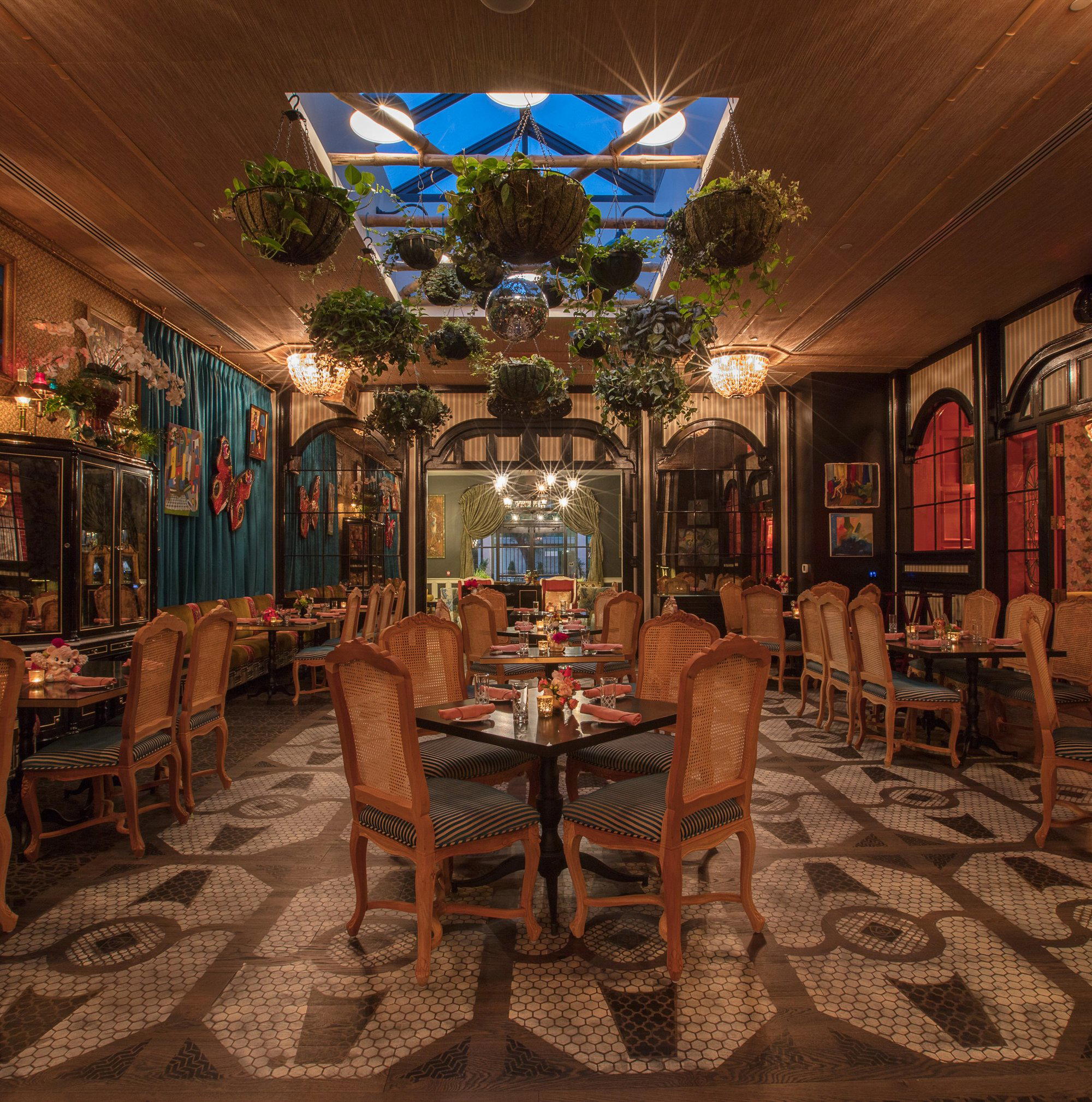
The Supper Table as Social Contract
New Orleans has never lacked for restaurants with a story. What it has lacked, periodically, is restaurants that operate like actual dinner parties, where the host sets a single menu, the table is communal or near-communal, and the food follows the season rather than the server's ability to upsell. The supper club format, which predates most of what passes for experiential dining in American cities today, is a more honest structure than most. There is no à la carte safety net. You eat what is being cooked. In that sense, Mosquito Supper Club is a Gulf Coast Cajun supper club in New Orleans, serving dinner at 3824 Dryades St with a fixed, reservation-essential format. It belongs to a category of American dining that has more in common with a well-run farmhouse kitchen than with the tasting-menu theater found at destinations like The French Laundry in Napa or Le Bernardin in New York City.
The address, 3824 Dryades St, places it outside the French Quarter entirely, in a residential stretch where the restaurants that survive do so on neighborhood loyalty rather than tourist foot traffic. That geography is not incidental. It shapes who comes, how often they return, and what the room actually feels like on a service night.
What Keeps the Regulars Coming Back
The supper club model self-selects its audience. Diners who prefer to negotiate their meal dish by dish tend not to return. Those who do return are, by definition, people who have ceded some control to the kitchen, and found the exchange worthwhile. At Mosquito Supper Club, that exchange is framed around south Louisiana's larder: the bayou seafood, the rice dishes, the slow-cooked proteins that define Cajun cooking at its least performative. This is not the roux-heavy pageant version of Louisiana cuisine. It is closer to what families in the Atchafalaya Basin have been cooking for generations, before the cuisine became a marketing category.
For regulars, the pull is partly the food and partly the format. A fixed menu removes the low-grade anxiety of ordering. The communal table structure, common to supper clubs operating in this tradition, creates the kind of incidental conversation that restaurant designers spend considerable money trying to simulate and rarely achieve. The room on Dryades does not need to simulate it. It is what the format produces naturally when the capacity is kept modest and the pace is unhurried.
Supper clubs operating in this mode sit in a distinct tier of the American dining scene. They are not competing with Smyth in Chicago or Atomix in New York City on technical ambition. They are competing on something harder to engineer: a sense of place and a coherent point of view about what a meal is for. In New Orleans specifically, where Emeril's and Bayona represent the established fine-dining register and Saint-Germain occupies the contemporary end of the market, the supper club format operates in a deliberately different register, one where the meal feels less like a performance and more like an occasion.
Louisiana Cooking in Its Less-Documented Form
The cuisine tradition that Mosquito Supper Club draws from is Cajun in its bones, but the reference point is home cooking rather than the restaurant version of Cajun that became nationally legible in the 1980s. That distinction matters for understanding what is on the table. The dishes that define this tradition, gumbos built over several hours, crawfish preparations that reflect the season's catch, rice-based dishes that carry the French and West African influences baked into south Louisiana's food history, are not inherently difficult to cook. They are time-intensive, ingredient-dependent, and nearly impossible to fake at scale. That is precisely why the supper club format suits them: a small operation cooking for a defined number of seats can source and prepare this food honestly in a way that a 200-cover restaurant cannot.
Nationally, the restaurants that execute a comparable commitment to regional American cooking at small scale, Blue Hill at Stone Barns in Tarrytown, Single Thread Farm in Healdsburg, tend to operate at higher price points and with more elaborate production. The supper club tradition achieves something similar in spirit, if different in register: cooking that is accountable to a specific place and season rather than to a globally sourced larder.
Placing It in the New Orleans Scene
The Uptown corridor that houses Mosquito Supper Club is not where most visitors to New Orleans anchor their dining itineraries. The French Quarter and the Central Business District claim the majority of restaurant attention, with venues like Re Santi e Leoni and Zasu serving the contemporary end of the market. Dryades Street operates on a different rhythm: neighborhood restaurants that have earned their clientele through repetition and consistency rather than press cycles.
For visitors building a New Orleans itinerary around food, the supper club represents a counterweight to the city's more theatrical dining options. The city's Creole fine-dining tradition, exemplified by Commander's Palace, and its Cajun seafood specialists, such as Pêche Seafood Grill, are both worth knowing. But neither format replicates what a supper club achieves in terms of intimacy and narrative coherence.
For the comparative frame: diners who have found value in the set-format dinners at Lazy Bear in San Francisco or the mission-driven cooking at Providence in Los Angeles will recognize the instinct behind the restaurant's format, even if the cuisine traditions are entirely different. The common thread is a kitchen that has decided what it wants to cook and built the service format around that decision rather than the other way around. A similar discipline, expressed through European regional traditions, shows up at Frasca Food and Wine in Boulder and, at a more elaborate scale, at Atelier Moessmer Norbert Niederkofler in Brunico. Equally, Addison in San Diego and The Inn at Little Washington demonstrate how set-format dining can sustain loyal clientele across different price brackets.
Planning Your Visit
The restaurant operates on a supper club schedule, meaning fixed service nights rather than full-week restaurant hours. The format is appointment dining: you are attending a specific event rather than dropping into a restaurant. Seats book out ahead of service dates, and the lead time required reflects the loyal base that fills the room before first-time visitors have the opportunity. Arriving without a reservation is not a viable approach. The Dryades Street address is accessible from Uptown, and the residential neighborhood warrants an early arrival to settle into the pace before the meal begins.
Cost and Credentials
Comparable venues nearby, for context on price, style, and recognition.
| Venue | Cuisine | Price | Notes |
|---|---|---|---|
| Mosquito Supper ClubThis venue — the venue you are viewing | Milan, Gulf Coast Cajun Supper Club | $$$$ | Not listed |
| Commons Club New Orleans | Not listed | $$$$ | Arts District, Contemporary Southern with Mediterranean Influences |
| Easy Virtue | Not listed | $$$ | Arts District, Modern American Brunch & Tapas |
| 13 | Not listed | $$$ | Marigny, Traditional New Orleans Late-Night Bites |
| Jacques-Imo's | Carrollton, New Orleans Cajun & Creole | $$$ | Not listed |
| New Orleans Hamburger & Seafood Co | Not listed | $$ | Milan, New Orleans Cajun Seafood & Burgers |
Continue exploring
More in New Orleans
Restaurants in New Orleans
Browse all →
Bars in New Orleans
Browse all →
At a Glance
- Intimate
- Rustic
- Cozy
- Classic
- Special Occasion
- Group Dining
- Celebration
- Private Dining
- Standalone
- Historic Building
- Natural Wine
- Craft Cocktails
- Beer Program
- Farm To Table
- Local Sourcing
- Sustainable Seafood
Current opening hours
- Monday
- Closed
- Tuesday
- Closed
- Wednesday
- 5:30–9:30 PM
- Thursday
- 5:30–9:30 PM
- Friday
- 5:30–9:30 PM
- Saturday
- 5:30–9:30 PM
- Sunday
- 5:30–9:30 PM
Hours can change for holidays and private events. Last verified .