


Michelin Plate · Gault & Millau Türkiye 1 Toque
Our verdict
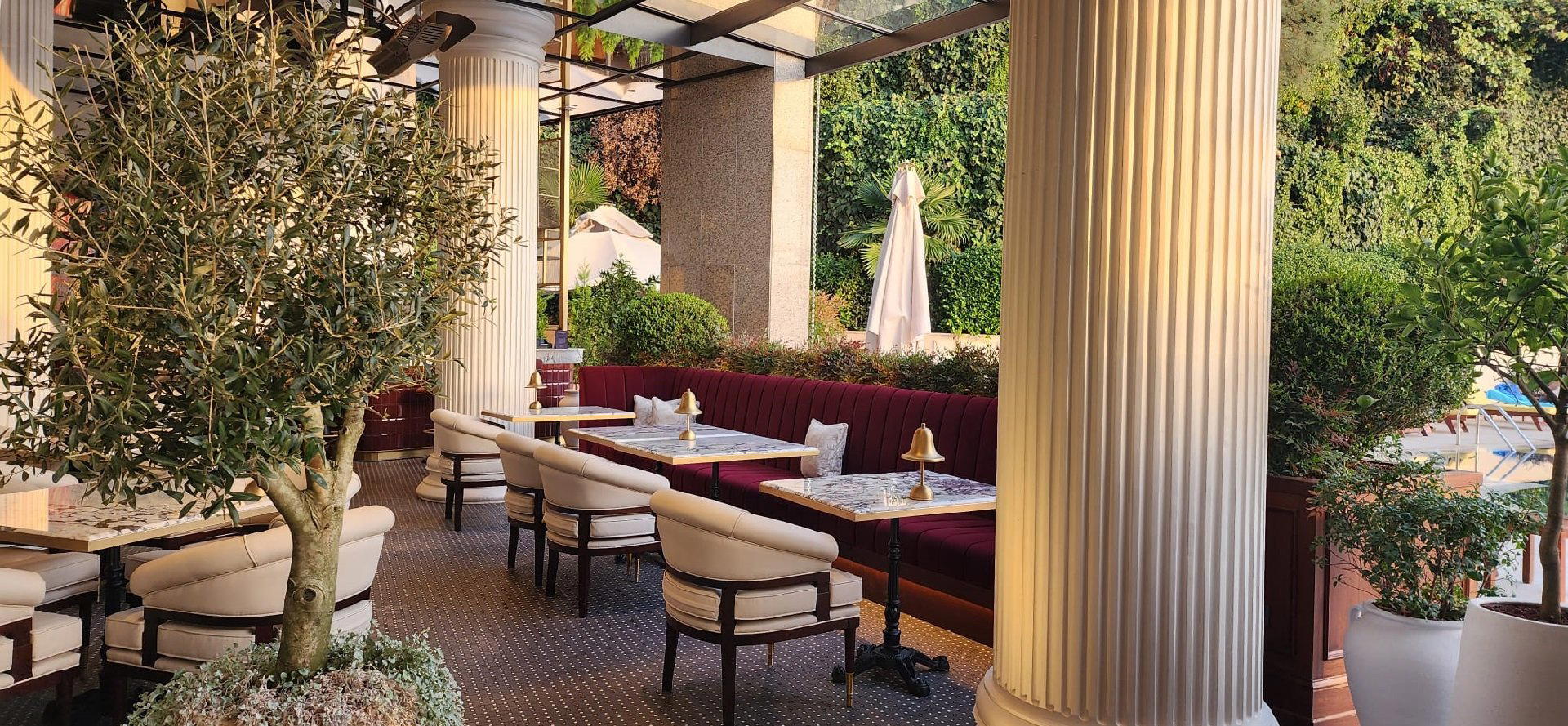
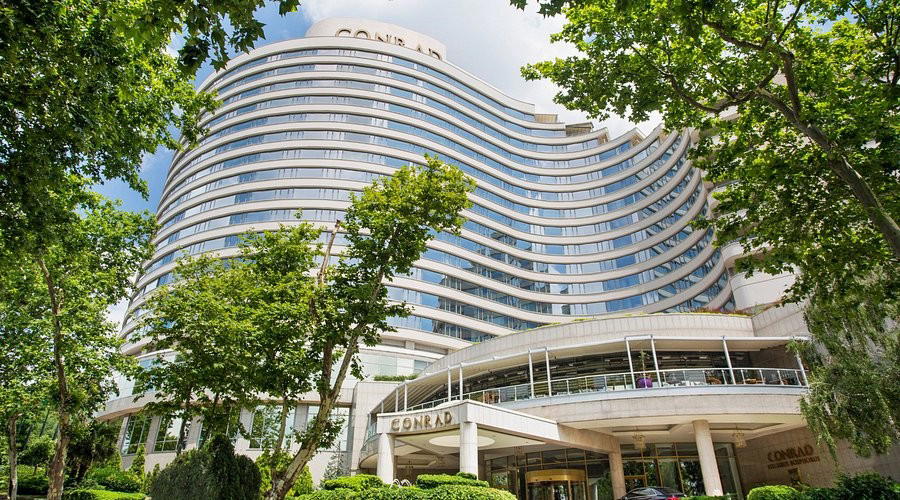
Inside the Conrad Hotel in Beşiktaş, Monteverdi Ristorante anchors its menu in Lombard culinary tradition while drawing selectively from across Italy's regions. Porcini risotto and Neapolitan pizza sit on the same card, connected by a commitment to authentic technique rather than fusion logic. The setting matches the kitchen's register: polished, attentive, and calibrated for a long evening.

Pearl is the En Primeur Club membership app, where members save venues, book tables and use the concierge.
The menu
What to order
- Negroni Tuna
- Swordfish Carpaccio
- Pizza Vittoria
- Mushroom Risotto
Italian regionalism in a city that rarely makes room for it
Istanbul's premium dining scene has consolidated, over the past decade, around a particular idea: the city's own culinary identity, reinterpreted through modern technique. Tables at Turk Fatih Tutak, Mikla, and Neolokal are built around the argument that Anatolian and Ottoman cooking, treated with contemporary rigour, needs no external reference point. That argument is largely correct. But it leaves a specific gap: a serious Italian table, run with regional discipline rather than generic Mediterranean breadth, has had limited representation in the city's upper tier. Monteverdi Ristorante, operating inside the Conrad Hotel on Saray Caddesi in Beşiktaş, occupies that gap.
The hotel-restaurant format carries its own baggage. Across the world, hotel dining rooms have historically defaulted to safety: long menus, broad appeal, nothing that would unsettle a guest who booked without reading reviews. Monteverdi works against that tendency. Its kitchen team anchors the program in Lombard cuisine, the cooking of Lombardy in northern Italy, a tradition defined by risotto, braised meats, butter-led sauces, and dairy in forms that range from taleggio to mascarpone. That is a specific regional commitment, not a default to "Italian food."
What the menu architecture reveals
The structure of Monteverdi's menu makes a clear editorial statement about how the kitchen thinks. Lombard cuisine functions as the spine, but the card does not exclude the rest of Italy. Neapolitan pizza appears alongside northern preparations, and this is not a contradiction. It reflects a particular philosophy of Italian cooking that has precedent in the country itself: the recognition that certain dishes have earned cross-regional status through quality of execution rather than geographic purity. A properly made Neapolitan pizza, with correct fermentation, temperature, and crust structure, is as serious a proposition as a slow-cooked osso buco. The two can coexist on a menu if the kitchen has the range to execute both without compromise.
Approach also signals something about the intended diner. A menu that commits to Lombard tradition while incorporating Neapolitan technique is not trying to please everyone with a single generalised Italian vocabulary. It is addressing a guest who can tell the difference between a risotto made with correct stock reduction and one padded with cream, and who appreciates the precision involved in either format. Dishes like a porcini and Parmesan risotto, or sea bass paired with sun-dried and fermented tomatoes, olives, and courgette ribbons around mascarpone, are built around contrast and textural discipline rather than direct comfort.
Fermented tomato detail in the sea bass preparation is worth noting specifically. Fermentation as a technique in Italian cooking is not new, but its appearance on a hotel restaurant menu in Istanbul, applied to a Mediterranean fish, points to a kitchen that is paying attention to process rather than defaulting to crowd-pleasing simplicity. That same attention is visible in the risotto: porcini and Parmesan is a combination with enough classical weight that it can easily be rendered flat by under-reducing the stock or over-salting. When executed with precision, it becomes a benchmark dish. The menu does not describe these preparations in terms of spectacle; it frames them as technique applied to strong ingredients, which is the right framing.
Setting, service, and the Conrad context
Physical environment at Monteverdi carries the register of the Conrad Hotel, a property in Beşiktaş that positions itself in Istanbul's upper accommodation tier. The dining room follows that logic: polished without being stiff, formal enough to support a long business dinner, relaxed enough to absorb a table of friends ordering pizza alongside a northern Italian pasta. The service approach is described as attentive, which in this context means calibrated rather than intrusive. A kitchen running Lombard preparations alongside Neapolitan formats requires a floor team that can explain both without defaulting to the same script for every table.
Beşiktaş itself sits on the European shore of the Bosphorus, north of Sultanahmet and Beyoğlu, with a character that combines residential weight with commercial density. The Conrad's address on Saray Caddesi places the restaurant within reach of the Çırağan Palace corridor, one of the Bosphorus's more historically significant stretches. For visitors staying in the area, or for Istanbul residents looking for an Italian table that does not require crossing to the city's more tourist-facing districts, the location is practical.
For comparison within the city's high-end restaurant field, Monteverdi occupies a different register than the modern Turkish tables that dominate the premium tier. Where Arkestra or Casa Lavanda work with fusion or traditional Anatolian frameworks, Monteverdi's loyalty is to Italian regional cooking. That specificity is its point of differentiation. Internationally, the standard for serious Italian cooking in a hotel context is set by operations like Le Bernardin in New York or the more ingredient-led rooms attached to major American properties such as Emeril's in New Orleans. Monteverdi is working in a comparable register: serious cooking in a supported hotel environment, with a menu that makes an argument rather than just filling a brief.
Planning a visit
Monteverdi sits inside the Conrad Hotel at Cihannüma, Saray Caddesi No:5 in Beşiktaş, making it accessible from both the hotel's guest floors and as a standalone dining destination for Istanbul visitors. Given the Conrad's position in the city's hotel market, the restaurant operates at a premium price point consistent with the property's tier, though specific pricing is best confirmed directly with the venue. Reservations are advisable, particularly for weekend evenings when the room fills with both hotel guests and local diners. For those exploring Istanbul's wider dining and hospitality options, EP Club's full Istanbul restaurants guide, hotels guide, bars guide, wineries guide, and experiences guide cover the broader picture.
Turkey's wider dining scene extends well beyond Istanbul, with strong regional tables at Maçakızı in Bodrum, Narımor in Izmir, 7 Mehmet in Antalya, Agora Pansiyon in Milas, Ahãma in Göcek, and Aravan Evi in Ürgüp, each representing a distinct strand of what Turkish cooking looks like outside the capital's high-density dining district.
Frequently asked questions
Is Monteverdi Ristorante okay with children?
The menu's range works in favour of younger diners. Neapolitan pizza sits alongside Lombard specialities such as porcini and Parmesan risotto, giving families a format that doesn't force anyone into unfamiliar territory. The Conrad Hotel's positioning as an upper-tier property in Beşiktaş suggests a room that handles mixed-age groups with practiced ease.
How would you describe the vibe at Monteverdi Ristorante?
Monteverdi operates at the register of its address: a composed, service-led room inside the Conrad Hotel on Saray Caddesi. Attentive staff and a menu that balances the familiar with the complex keep the atmosphere from tipping into formality, but this is not a casual drop-in. Come expecting a deliberate dinner, not a quick bite.
Does Monteverdi Ristorante have a Michelin star or similar recognition?
Monteverdi Ristorante has received recognition including: Enter the luxurious Conrad Hotel and allow yourself to be escorted to the equally stylish Monteverdi Ristorante. The kitchen team specialises in Lombard cuisine but draws inspiration from across Italy's regions, so Neapolitan pizzas feature….
What do people recommend at Monteverdi Ristorante?
The Lombard preparations carry the clearest signal of the kitchen's intent. The porcini and Parmesan risotto and the sea bass with sun-dried and fermented tomatoes, olives, and mascarpone-wrapped courgette ribbons both illustrate the menu's balance between regional authenticity and composed complexity. If you're leaning lighter, the Neapolitan pizza represents a confident departure from the northern Italian core.
How do I find Monteverdi Ristorante?
Monteverdi Ristorante is located at Cihannüma, Saray Caddesi No:5, Beşiktaş, Istanbul.
Accolades, Compared
Comparable venues nearby, for context on price, style, and recognition.
| Venue | Cuisine | Price | Awards | Notes |
|---|---|---|---|---|
| Monteverdi RistoranteThis venue (the venue you are viewing) | Modern Northern Italian Fine Dining | Not listed | Michelin Plate · Gault & Millau Türkiye 1 Toque | Not listed |
| Terrazza Italia | Modern Italian Fine Dining | $50–100 | Michelin Plate · Gault & Millau Türkiye 2 Toques | Levazim |
| Sapa İstanbul | Modern Turkish Fine Dining | Not listed | Michelin Plate · Wine Spectator Award of Excellence | Kucukbakkalkoy |
| Aila | Modern Turkish | Not listed | Michelin Plate · Gault & Millau Türkiye 2 Toques | Fulya |
| Sunset Grill & Bar | Fusion Grill with French, Asian & Sushi Influences | Not listed | Michelin Plate · Gault & Millau Türkiye 2 Toques | Kurucesme |
| Alaf | Modern Anatolian Nomadic Cuisine | $30–50 | Michelin Plate · Gault & Millau Türkiye 2 Toques | Kurucesme |
Recognition history
Dated appearances from independent guides and award organizations, with the underlying list record or original source where available.
Michelin Plate
Michelin · 2026 Michelin Plate
Gault & Millau Türkiye 1 Toque
Gault & Millau · Gault & Millau Türkiye 2026 - 1 Toque
World Culinary Awards Türkiye's Best Hotel Restaurant 2025 #1
World Culinary Awards
Continue exploring
More in Istanbul
Restaurants in Istanbul
All restaurants in Istanbul →
Bars in Istanbul
All bars in Istanbul →
Monteverdi Ristorante
The wine
- Extensive wine list
- Sommelier-led
- Craft cocktails
Details
- Elegant
- Sophisticated
- Romantic
- Cozy
- Date Night
- Business Dinner
- Special Occasion
- Celebration
- Hotel Restaurant
- Extensive Wine List
- Craft Cocktails
- Sommelier Led
- A La Carte
- Cocktails
- Italian Wine
- Vegetarian Friendly
Current opening hours
- Monday
- 12–3 PM, 6:30–11 PM
- Tuesday
- 12–3 PM, 6:30–11 PM
- Wednesday
- 12–3 PM, 6:30–11 PM
- Thursday
- 12–3 PM, 6:30–11 PM
- Friday
- 12–3 PM, 6:30–11 PM
- Saturday
- 12–3 PM, 6:30–11 PM
- Sunday
- 12–3 PM, 6:30–11 PM
Hours can change for holidays and private events. Last verified .
Elegant and comfortable with modern-classic decor, warm lighting, and a lively yet refined atmosphere ideal for special occasions.