Modus brings the pantry of Cilento to Milan's Via Andrea Maffei, building its pizza around region-specific ingredients — nduja, sun-dried tomatoes, yellow cherry tomatoes, and local olives — rather than generic Neapolitan convention. An open kitchen, a dough that holds both elasticity and flavour, and a wine-and-beer list with genuine range make it a serious address for anyone tracking where Italian regional produce is landing in the city.
 Discover on Pearl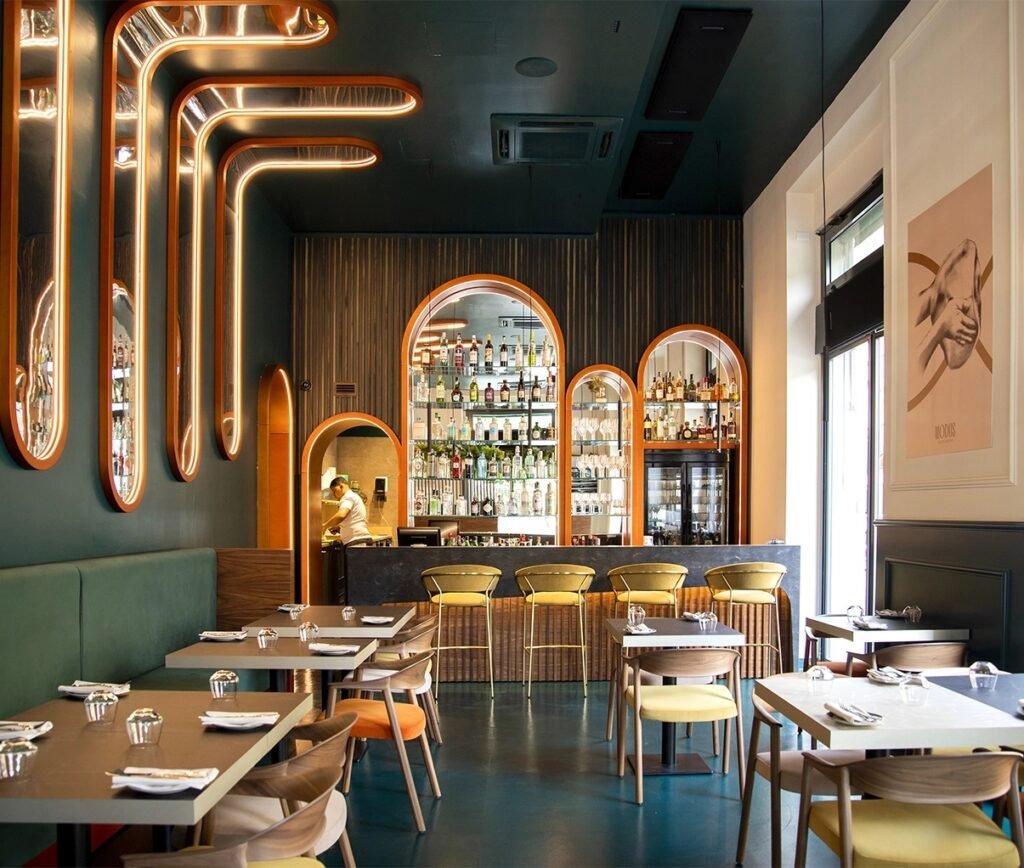
A Southern Pantry in a Northern City
Milan's pizza scene has long been split between faithful Neapolitan imports, Roman-style thin-crust outposts, and a newer wave of dough-focused independents using provenance as a differentiator. Modus, on Via Andrea Maffei in the Porta Romana neighbourhood, belongs to that third category. Its defining editorial argument is geographic: the menu is structured around Cilento, the coastal and inland territory in southern Campania that sits south of the Cilento and Vallo di Diano National Park, and whose producers remain less trafficked by the restaurant supply chains that feed Milan's higher-profile kitchens.
Cilento's ingredient profile is specific. Nduja — the spreadable, fermented pork salume spiked with Calabrian chilli — appears here alongside sun-dried tomatoes, black olives, and yellow cherry tomatoes that carry a sweetness distinct from the San Marzano varieties that dominate pizza conversations. These are not interchangeable ingredients swapped in from a broader southern Italian category; they represent a particular regional terroir that Modus uses as its organising principle. In a city where Enrico Bartolini, Andrea Aprea, and Seta are exploring Italian ingredients at the €€€€ tier through tasting menus and fine-dining formats, Modus makes a related argument at a completely different price point and register: that sourcing specificity is not the exclusive domain of haute cuisine.
The shortlist, unlocked.
Hard-to-book tables, cellar releases, and concierge-planned trips.
Get Exclusive Access →The Dough as Foundation
Italian regional pizza traditions diverge most visibly in the dough. Neapolitan pizzas rely on high hydration and short bake times in wood-fired ovens to produce the characteristic leopard-spotted crust and soft, collapsible centre. Roman-style doughs trend crispier and thinner. Modus occupies a middle position: the dough is described as soft and elastic, with a flavour that suggests careful fermentation and quality flour rather than a rapid industrial mix. In pizza-making terms, dough flavour is almost entirely a function of fermentation time and ingredient quality , a slow-leavened dough at correct hydration develops organic acids and aromatic compounds that a short-process dough cannot replicate. The impression here is that the raw materials are doing the work, which places this in the same sourcing-first conversation that is reshaping how attentive diners read menus across Italy.
Chef Paolo De Simone's role at Modus reflects a consistent pattern across Italy's better regional-ingredient restaurants: the kitchen's credibility comes from what it chooses to source, not from technical spectacle or high-concept plating. That restraint is itself a position. For comparison, the multi-course ambition of Cracco in Galleria or the creative formats at Verso Capitaneo represent one end of Milan's restaurant spectrum; Modus sits at the other, where the craft is in the sourcing and the dough rather than the construction.
Vegetarian Range and the Cilento Vegetable Tradition
One underreported aspect of Cilento's food culture is the depth of its vegetable tradition. The region's cucina povera heritage produced a repertoire of preserved and fresh vegetable preparations that predate the current interest in plant-forward cooking by several generations. Sun-dried tomatoes, dried legumes, wild herbs, and preserved olives are not trend-driven additions to Modus's menu , they are the baseline of the cuisine it is referencing. The restaurant's emphasis on vegetarian options reflects this honestly rather than chasing a contemporary dietary market. For Italian ingredient-driven restaurants at a regional scale, this distinction matters: it is the difference between a kitchen that understands its source material and one that has retooled for a customer segment.
This kind of regional specificity is becoming a more visible marker of quality across Italy's mid-tier dining scene. Restaurants like Quattro Passi in Marina del Cantone and Uliassi in Senigallia have built their reputations partly on hyper-local coastal sourcing at the fine-dining level. Modus makes a comparable argument in an everyday register, which is arguably where ingredient provenance has the most to prove.
Room and Service
The physical environment at Modus supports the food's argument rather than distracting from it. The open kitchen is a structural choice with consequences: it signals transparency about process and removes the theatrical distance that some higher-end formats maintain between preparation and table. The room is described as modern and welcoming, which in practical terms means that the design does not impose a mood at odds with informal eating. Service , knowledgeable and attentive even during peak periods , is a meaningful credential in a city where busy neighbourhood restaurants frequently deprioritise floor competence once covers stack up. A staff that can speak to the Cilento origins of the ingredients adds another layer to the sourcing argument the menu is already making.
What to Drink
The wine and beer list at Modus carries genuine range. For a pizza-focused restaurant, a thoughtful beverage program is less common than it should be: the category has historically leaned on a short, formulaic wine selection or a default to craft beer without editorial intent. A list with real depth , covering both wine and beer with apparent curation , suggests that the kitchen's interest in quality raw materials extends to what arrives in the glass. Southern Italian wines, particularly from Campania, would logically complement the Cilento ingredient focus, though the specific composition of the list is not documented in detail here.
For readers who want to map Modus against the broader range of Italian fine dining, the country's upper tiers are represented elsewhere in our coverage: Osteria Francescana in Modena, Enoteca Pinchiorri in Florence, Atelier Moessmer Norbert Niederkofler in Brunico, and Dal Pescatore in Runate each demonstrate how Italian regional identity scales into Michelin-recognised territory. Modus operates far below that price and formality tier, but the underlying sourcing logic , lead with the region's produce, let quality ingredients speak , is consistent across levels.
For those building a broader Milan itinerary, our full Milan restaurants guide, hotels guide, bars guide, wineries guide, and experiences guide cover the city at each category level. At the international reference end, Le Bernardin in New York and Atomix in New York show how ingredient sourcing and regional identity translate across very different culinary traditions.
Know Before You Go
- Address: Via Andrea Maffei, 12, 20135 Milano MI, Italy
- Chef: Paolo De Simone
- Neighbourhood: Porta Romana / Corso Magenta area, central Milan
- Price range: Not published , check directly with the venue
- Dietary: Strong vegetarian options across the menu
- Drinks: Wine and beer list with notable range for the format
- Kitchen style: Open kitchen; modern, informal room
- Booking: Contact the venue directly for reservation availability
The shortlist, unlocked.
Hard-to-book tables, cellar releases, and concierge-planned trips.
Get Exclusive Access →Frequently Asked Questions
Fast Comparison
A quick peer list to put this venue’s basics in context.
| Venue | Cuisine | Price | Awards | Notes |
|---|---|---|---|---|
| Modus | In the very central Corso Magenta, Modus offers a truly unique pizza in the choi… | This venue | ||
| Enrico Bartolini | Creative | €€€€ | Michelin 3 Star | Creative, €€€€ |
| Cracco in Galleria | Modern Cuisine | €€€€ | Michelin 1 Star | Modern Cuisine, €€€€ |
| Andrea Aprea | Modern Italian, Italian Contemporary | €€€€ | Michelin 2 Star | Modern Italian, Italian Contemporary, €€€€ |
| Seta | Modern Italian | €€€€ | Michelin 2 Star | Modern Italian, €€€€ |
| Contraste | Progressive Italian, Modern Cuisine | €€€€ | Michelin 1 Star | Progressive Italian, Modern Cuisine, €€€€ |
Need a table?
Our members enjoy priority alerts and concierge-led booking support for the world's most difficult tables.
Get Exclusive AccessThe shortlist, unlocked.
Hard-to-book tables, cellar releases, and concierge-planned trips.
Get Exclusive Access →