Mirchi Indian Cuisine
Our verdict
Mirchi Indian Cuisine brings the layered spice traditions of the subcontinent to downtown Franklin, Tennessee, a dining scene better known for upscale American and farm-to-table formats. The restaurant occupies a central position on East Central Street, placing it within easy reach of Franklin's compact historic core. For a city still expanding its international dining range, Mirchi represents a distinct point of difference.

Pearl is the En Primeur Club membership app — saves, bookings, and concierge access live there. Same editors, same standards.
- Address
- 14 E Central St, Franklin, MA 02038
- Phone
- (508) 613-5292
- Hours
- Mon–Thu 11 AM–9 PMFri–Sat 11 AM–10 PMSun 11 AM–9 PM
- Website
- mirchimass.com
- Directions
- Get directions
- Booking
- Book on SevenRooms
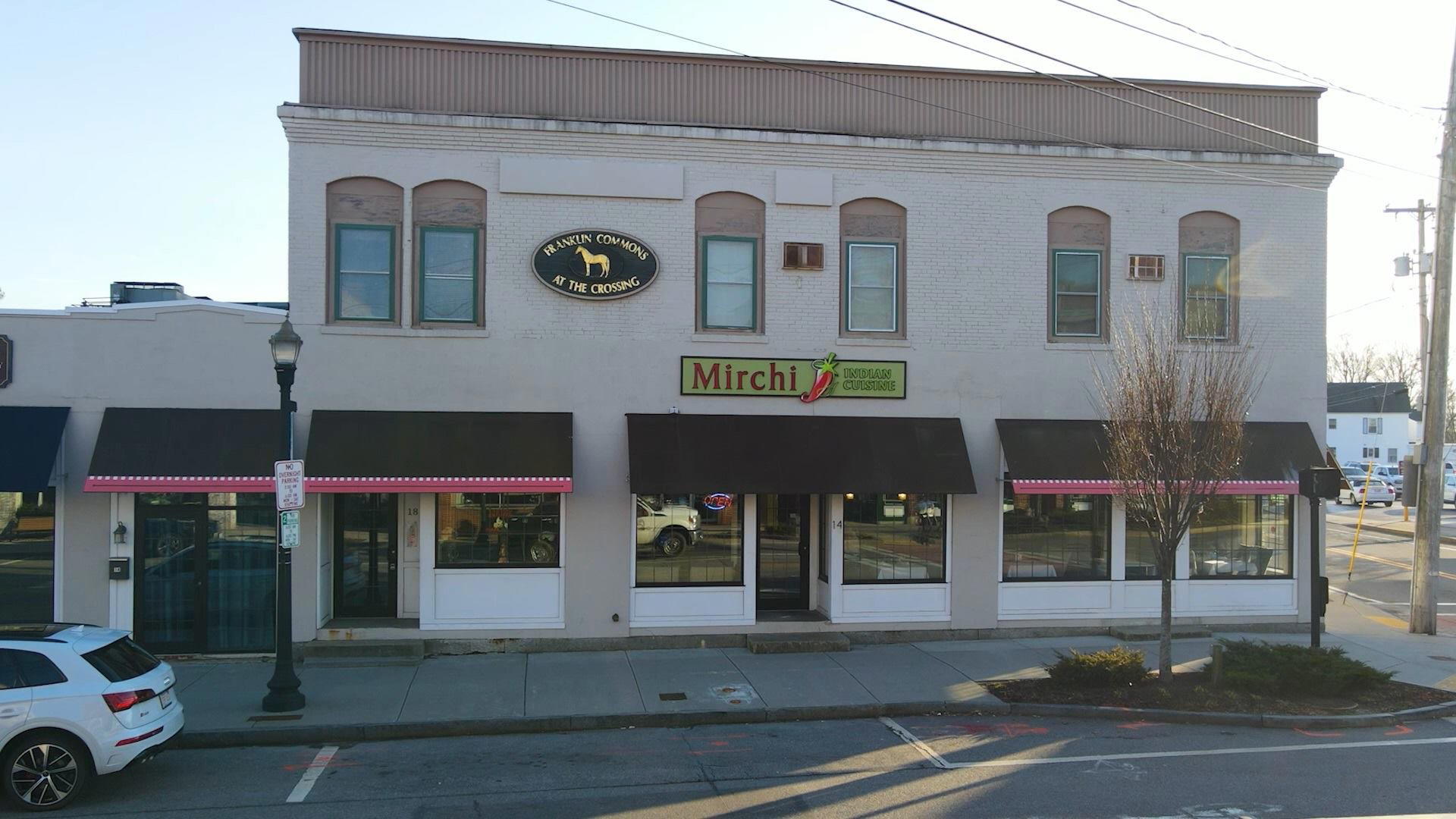
Indian Cuisine in a Southern American Town
Franklin, Tennessee has spent the last decade building a dining identity anchored in American formats: steakhouses, farm-driven tasting menus, and Southern-inflected gastropubs. Venues like Cork & Cow and January ($$$$ · American) have established the city as a credible destination for upscale domestic cooking. Against that backdrop, a restaurant committed to the spice-forward traditions of the Indian subcontinent occupies a genuinely different position in the local mix. Mirchi Indian Cuisine, on East Central Street in Franklin's historic core, is part of a small but growing category of international restaurants finding an audience in mid-sized American cities that have historically skewed toward European or American culinary references.
That broader pattern matters because it reflects a real shift in provincial American dining. Smaller cities across the South and Midwest are absorbing more diverse culinary traditions as their populations change and as diners who have eaten widely in larger metro areas return home expecting more range. Indian cuisine, with its deep regional variation, its centuries-old spice economy, and its distinct vegetarian traditions, is among the more complex international categories to land in a new market — and the degree to which a restaurant meets or simplifies that complexity tells you a great deal about its ambition.
The Cultural Depth Behind the Spice Rack
Indian cooking is not a single tradition. The subcontinent's culinary geography spans the butter-enriched gravies of Punjab, the coconut-and-tamarind sourness of Kerala, the dry, seed-heavy preparations of Rajasthan, the mustard-oil intensity of Bengal, and the slow-cooked meat traditions of Hyderabad, among many others. What reaches most international markets is a condensed version of this range, typically centered on North Indian and Mughal-influenced dishes — tandoori preparations, creamy kormas, dal-based curries, and flatbreads from the tawa or tandoor oven.
The name Mirchi, the Hindi and Urdu word for chili pepper, signals a kitchen oriented toward spice as a primary ingredient rather than a background note. Across Indian culinary history, the chili pepper arrived relatively late, brought by Portuguese traders in the sixteenth century, yet its adoption was so rapid and total that it now anchors the flavor identity of nearly every regional tradition. A restaurant operating under that name is making an implicit statement about where it sits on the heat and intensity spectrum, though the degree of customization available to diners varies widely between establishments in this category.
For diners arriving from a more familiar frame of reference, comparing Indian dining across American cities reveals clear tiers. Urban centers like New York, Chicago, and Los Angeles have developed sophisticated Indian dining scenes with regional specialists, tasting-menu formats, and high-production environments, a trajectory visible in how Korean-American fine dining at places like Atomix in New York City has demonstrated that immigrant culinary traditions can reach the best of the critical establishment when the format and investment align. Indian cuisine in smaller American cities typically operates in a more accessible, community-facing register, where the priority is consistent execution of familiar dishes at approachable prices rather than avant-garde reinterpretation.
East Central Street and Franklin's Dining Geography
Franklin's dining scene clusters tightly around its downtown historic district, where a walkable concentration of restaurants, bars, and cafes serves both local residents and visitors drawn to the city's Civil War history and preserved Victorian streetscape. East Central Street places Mirchi within this core, in close proximity to the broader range of options that makes downtown Franklin function as a genuine dining destination rather than a drive-through corridor.
That positioning puts it in direct comparison with the other international and non-American concepts in the city, a category that remains thin relative to the volume of American, Italian-American, and Southern-inflected options. Venues like Coal Town Public House and 3 Restaurant anchor the casual end of the local market, while etch - Franklin operates in a more polished register. Indian cuisine in this context serves a distinct function: it offers a flavor profile and culinary logic that nothing else in the immediate vicinity replicates. That distinctiveness is itself a form of market positioning, and it tends to generate a loyal local following even when the restaurant operates below the radar of mainstream food media.
For context on what ambitious Indian-American dining can look like when resources and market scale align, it's worth noting what restaurants like Providence in Los Angeles or Le Bernardin in New York City have demonstrated about the relationship between culinary tradition, technical discipline, and critical recognition, none of which operate in the Indian category, but all of which illustrate the ceiling that format discipline and consistent execution can reach.
Planning Your Visit
Mirchi Indian Cuisine is located at 14 East Central Street in downtown Franklin, Tennessee, placing it within walking distance of the city's main commercial and historic strip. Current contact details and hours are best confirmed directly through a search prior to visiting, as the restaurant's digital presence is limited in publicly available databases at the time of writing. Franklin's downtown is compact enough that parking near East Central Street is generally available in the surrounding blocks, and the street itself is accessible on foot from most of the city's central accommodation options.
For diners building a wider itinerary around Franklin's food scene, the full Franklin restaurants guide maps the complete range of options across price points and formats. Those extending a trip to explore the broader American dining landscape will find useful reference points in cities like San Francisco, where Lazy Bear demonstrates what community-rooted dining can achieve at scale, or Chicago, where Alinea represents the technical extreme of American fine dining, both useful poles for understanding where a neighborhood Indian restaurant fits within the wider spectrum of dining ambition and execution.
Frequently asked questions
Where do I go for Mirchi Indian Cuisine?
Mirchi Indian Cuisine is located at 14 E Central St, Franklin, MA 02038, Franklin.
Is Mirchi Indian Cuisine a good option for groups visiting Franklin's historic downtown?
Located at 14 East Central Street, Mirchi sits within the walkable core of Franklin's historic district, making it a practical stop before or after exploring the downtown strip. Confirming capacity in advance is advisable for groups of six or more.
What's the best thing to order at Mirchi Indian Cuisine?
Without a current published menu on record, the safest approach is to ask the kitchen what regional tradition they're drawing from that day. Indian cooking spans dozens of distinct cuisines — Punjabi, South Indian, Bengali, and beyond — and a restaurant named Mirchi (Hindi for chili) often signals a focus on spice-forward preparations. Ask specifically whether the kitchen offers anything beyond the standard North Indian-American canon, such as coastal or lentil-based dishes, which tend to be where smaller restaurants show their range.
Do I need a reservation for Mirchi Indian Cuisine?
No booking contact or reservation system is publicly listed for Mirchi Indian Cuisine at 14 East Central Street in Franklin. For a downtown Franklin restaurant on a weekend evening, walking in without a plan carries some risk given how tightly the historic district fills up; calling ahead when contact details become available is the practical move.
Price and Positioning
Comparable venues nearby, for context on price, style, and recognition.
| Venue | Cuisine | Price | Notes |
|---|---|---|---|
| Mirchi Indian CuisineThis venue — the venue you are viewing | Traditional Indian Cuisine | $10–20 | Not listed |
| 3 Restaurant | American Barbecue | Not listed | Downtown Franklin, American Barbecue |
| The Chateau - Franklin | Classic French Bistro | Not listed | West End, Classic French Bistro |
| Mela | Authentic Indian | $20–30 | South End, Authentic Indian |
| The Maharaja | Royal North Indian | $30–50 | West Cambridge, Royal North Indian |
| Mumbai Spice | Mumbai Street Food & Indo-Chinese | $20–30 | Back Bay, Mumbai Street Food & Indo-Chinese |
Continue exploring
More in Franklin
Restaurants in Franklin
Browse all →
Bars in Franklin
Browse all →
Hotels in Franklin
Browse all →

Wineries in Franklin
Browse all →

Details
- Cozy
- Lively
- Casual Hangout
- Family
- Group Dining
- Standalone
- A La Carte
- Vegetarian Friendly
Current opening hours
- Monday
- 11 AM–9 PM
- Tuesday
- 11 AM–9 PM
- Wednesday
- 11 AM–9 PM
- Thursday
- 11 AM–9 PM
- Friday
- 11 AM–10 PM
- Saturday
- 11 AM–10 PM
- Sunday
- 11 AM–9 PM
Hours can change for holidays and private events. Last verified .
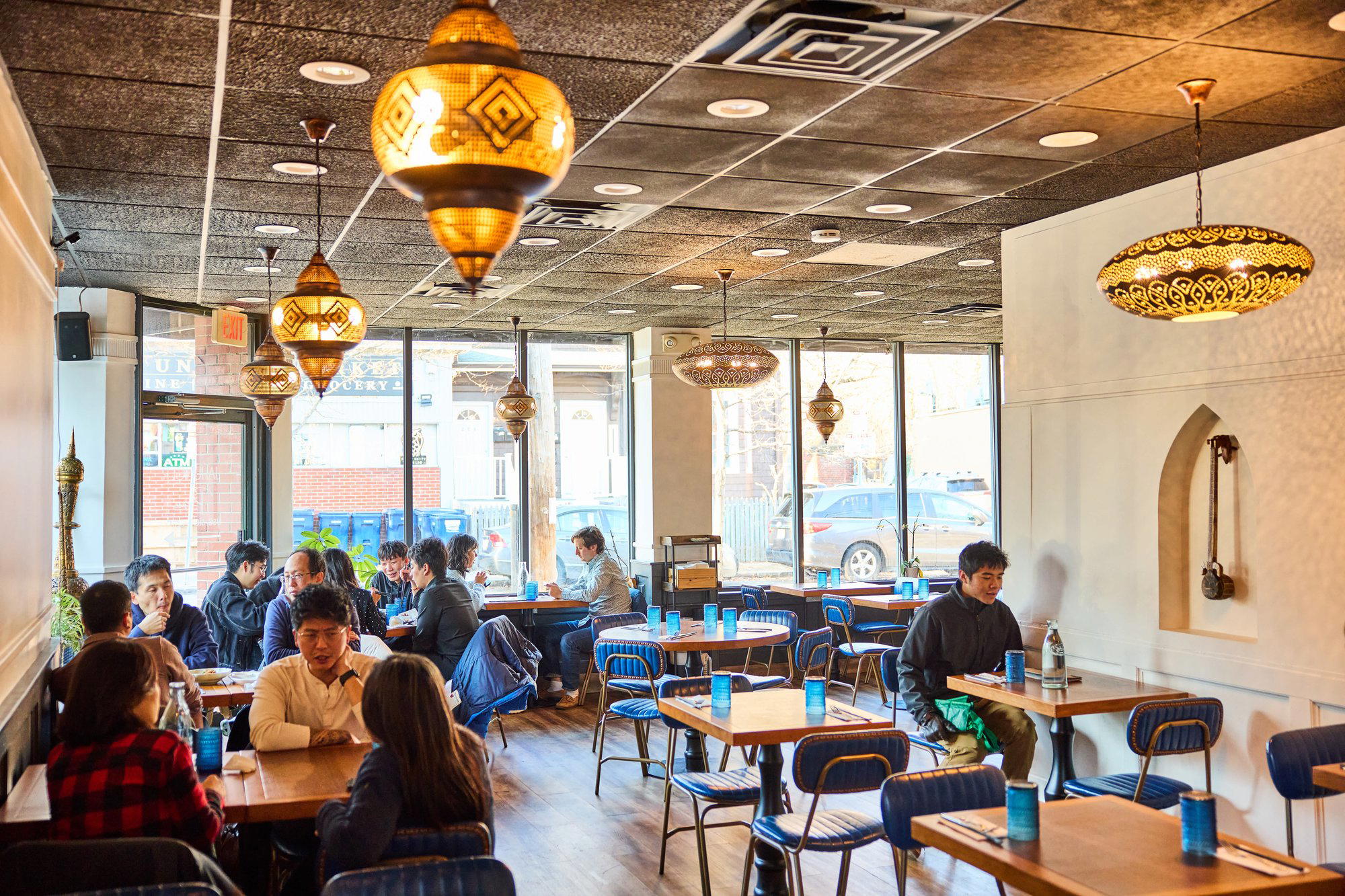
Cozy and lively atmosphere with welcoming staff creating a beloved neighborhood dining experience.