Middle Eats
Middle Eats on Gratiot Avenue brings Middle Eastern cooking to Roseville's increasingly varied dining corridor, where casual storefronts often carry more culinary seriousness than their exteriors suggest. The address places it squarely in Macomb County's working dining strip, a stretch that rewards the traveler willing to look past surface-level signage for kitchens rooted in genuine regional tradition.
Pearl is the En Primeur Club membership app — saves, bookings, and concierge access live there. Same editors, same standards.
- Address
- 31503 Gratiot Ave, Roseville, MI 48066
- Phone
- +15867013287
- Website
- middleeats.com
- Directions
- Get directions
 Saves & bookings on Pearl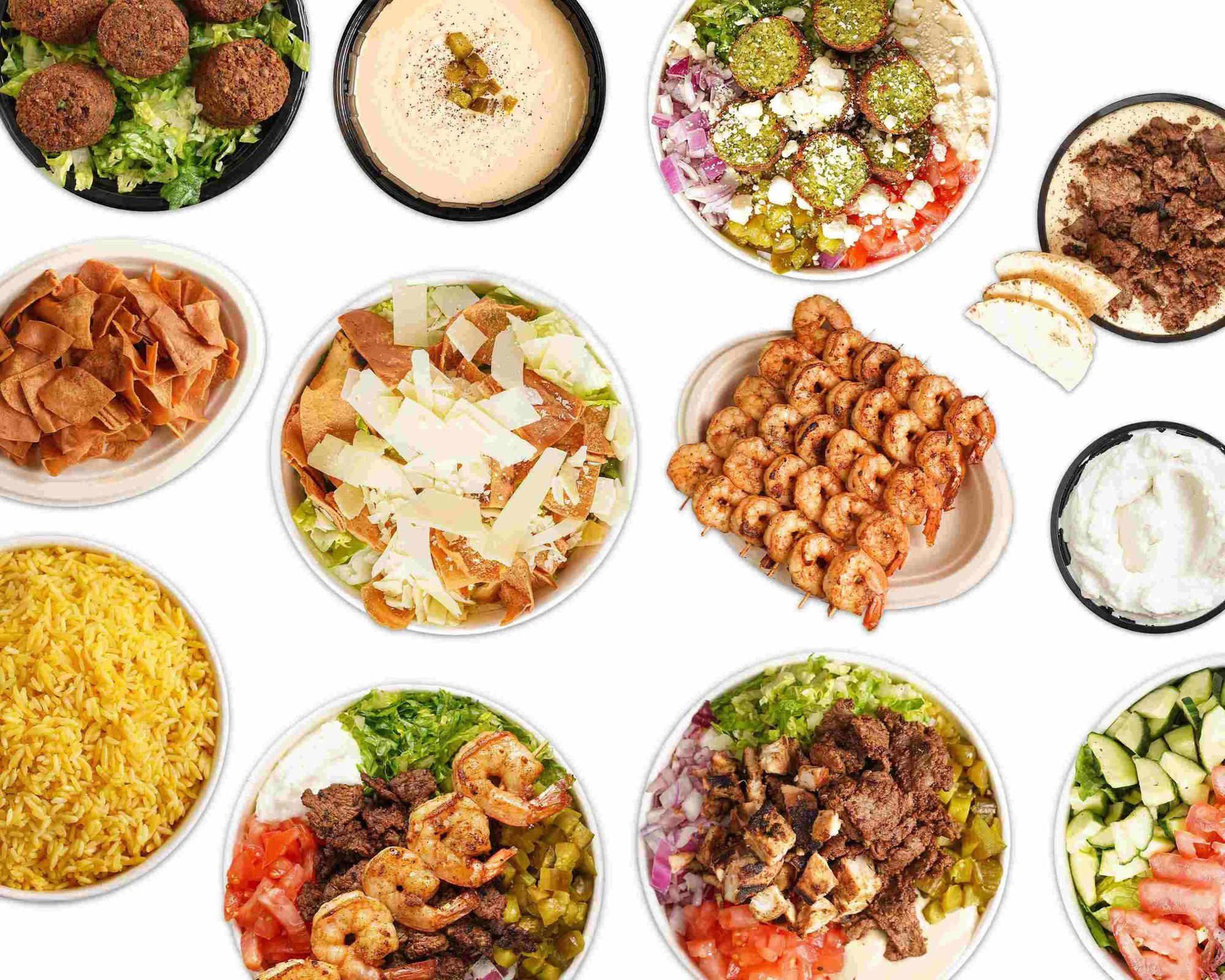
Gratiot Avenue and the Case for the Strip-Mall Kitchen
There is a particular kind of American dining experience that plays out almost exclusively along commercial arterials like Gratiot Avenue in Roseville, Michigan. The buildings are utilitarian, the parking lots practical, and the signage functional rather than designed. What these corridors produce, when they work, is food shaped by community demand rather than investor pitch decks. Middle Eats at 31503 Gratiot Ave is a fresh Mediterranean restaurant in Roseville, MI, with.
Roseville sits northeast of Detroit in a suburban corridor that has absorbed successive waves of migration over the past four decades. That demographic layering is visible in the dining options along Gratiot, which range from long-established American comfort kitchens to newer arrivals reflecting the region's growing Arab-American and Middle Eastern communities. In that context, a restaurant named Middle Eats is not making a novel cultural claim. It is participating in a food tradition that the greater Detroit metro area has cultivated more seriously than almost any other American city outside Dearborn.
What Middle Eastern Cooking Means in the Detroit Metro
The greater Detroit area holds one of the largest concentrations of Arab-American residents in the United States. That population density has produced a culinary ecosystem with standards: shawarma is judged against dozens of competing versions, hummus arrives made in-house or not at all, and the spice profiles of Lebanese, Yemeni, and Syrian kitchens remain distinct rather than blurred into a generic "Mediterranean" category. Diners in this region have generational reference points for what these dishes should taste like, which means restaurants operating in this space are cooking for an audience that knows the difference.
That context matters when assessing any Middle Eastern restaurant in Macomb County. The competition is not abstract. It includes family operations that have been refining the same recipes for thirty years, and community anchors where the clientele returns weekly. A newcomer or a smaller-format spot earns its place through specificity: the right bread, the correct char on a kebab, fat rendered properly on slow-cooked lamb. These are not details that can be faked by a kitchen without genuine grounding in the cuisine.
The Cuisine and Its Reference Points
Middle Eastern cooking, in its serious iterations, is not a simple category. The culinary traditions that fall under that broad label span Levantine mezze culture, Gulf-influenced rice and spice traditions, North African techniques that traveled through the Ottoman network, and the Persian cooking that inflects so much of the region's pantry. What unites many of these traditions at the table level is a commitment to slow preparation: stocks built over hours, dough given time to prove properly, spice blends assembled from whole components rather than pre-mixed shortcuts.
In American suburban contexts, the challenge for any kitchen working in this space is maintaining that commitment without the volume economics that make it viable. A restaurant on a strip like Gratiot Avenue needs to turn tables efficiently, which puts pressure on dishes that reward patience. The kitchens that thread that needle, and there are several in the Detroit metro that manage it, tend to specialize tightly rather than offering an exhaustive menu. A focused card of five to eight preparations executed with consistency will always outperform a sprawling menu of twenty dishes cooked to varying standards.
For restaurants in Roseville's price tier and format range, comparison points might include Chicha Peruvian kitchen, which navigates a similar challenge of bringing a diaspora cuisine's specificity into a suburban American context, or Bennett's Kitchen, which represents a different corner of Roseville's current dining breadth. The shared condition across these addresses is that the cuisine has to carry the experience, because neither decor nor location does that work for you.
Where Middle Eats Sits in Roseville's Dining Corridor
Roseville's restaurant scene has broadened in recent years, moving beyond the steak-and-sports-bar template that historically defined suburban Macomb County dining. Axel's - Roseville and Baldamar represent the upscale American end of that corridor, while spots like CRAVE - Roseville point toward national casual-dining formats. The restaurant occupies a different tier entirely: the independent, cuisine-specific category where the draw is cultural authenticity rather than format or brand recognition.
That tier is where interesting dining in any American suburb usually happens. The same pattern holds across the country's dining cities, even if the reference points change. At the upper register, kitchens like Le Bernardin in New York City, Alinea in Chicago, or The French Laundry in Napa are making arguments about cuisine through formal investment and institutional recognition. But the cultural work of keeping a cuisine's specificity alive in an American context often happens in much smaller rooms, at much lower price points, run by people with deep personal stakes in getting it right. Atomix in New York City makes a version of that argument for Korean cooking at a fine-dining level; the restaurant is working in a different register but the underlying dynamic, a cuisine's integrity being maintained by a community-rooted kitchen, is related.
Planning Your Visit
The restaurant is located at 31503 Gratiot Ave in Roseville, MI 48066, on a commercial strip that is most easily reached by car, as is standard for this part of Macomb County. Current hours are Mon: 10 AM to 11 PM; Tue: 10 AM to 11 PM; Wed: 10 AM to 11 PM; Thu: 10 AM to 11 PM; Fri: 10 AM to 12 AM; Sat: 10 AM to 12 AM; Sun: 11 AM to 8 PM. The restaurant is walk-in friendly.
Cost Snapshot
Comparable venues nearby, for context on price, style, and recognition.
| Venue | Cuisine | Price | Notes |
|---|---|---|---|
| Middle EatsThis venue — the venue you are viewing | Gratiot Avenue, Fresh Mediterranean | $$ | Not listed |
| Mr. Shawarma Grille | Not listed | $$ | Gratiot Ave area, Mediterranean Shawarma Grill |
| Ernie's | Clinton Township, Mediterranean Grill | $$ | Not listed |
| Shogun | Not listed | $$ | Sterling Heights, Japanese Steakhouse & Sushi |
| KPOT Korean BBQ & Hot Pot | Sterling Heights, Korean BBQ & Hot Pot | $$ | Not listed |
| Mojave Cantina - Clawson | Clawson, Tex-Mex | $$ | Not listed |
Continue exploring
More in Roseville
Restaurants in Roseville
Browse all →
Bars in Roseville
Browse all →

At a Glance
- Lively
- Trendy
- Casual Hangout
- Group Dining
- Family
Current opening hours
- Monday
- 10 AM–11 PM
- Tuesday
- 10 AM–11 PM
- Wednesday
- 10 AM–11 PM
- Thursday
- 10 AM–11 PM
- Friday
- 10 AM–12 AM
- Saturday
- 10 AM–12 AM
- Sunday
- 11 AM–8 PM
Hours can change for holidays and private events. Last verified .
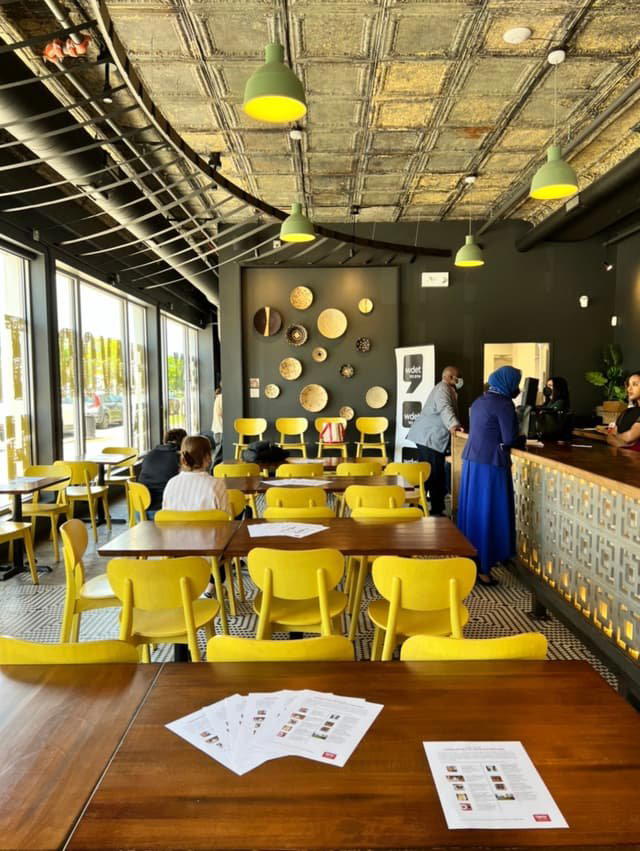
Energetic and lively atmosphere with good vibes emphasized during grand openings and events.