Memphis Minnie’s
On the Lower Haight, Memphis Minnie's has served as San Francisco's primary reference point for low-and-slow barbecue for years, occupying a position in the city's dining scene that no fine-dining tasting menu can replicate. The kitchen's commitment to long-cook brisket and wood smoke places it in a different competitive conversation than the city's Michelin-tracked restaurants, answering a different question entirely about what San Francisco can feed you.
Pearl is the En Primeur Club membership app — saves, bookings, and concierge access live there. Same editors, same standards.
- Address
- 576 Haight St, San Francisco, CA 94117
- Phone
- (415) 864-7675
- Website
- memphisminniesbbqjoint.com
- Directions
- Get directions
 Saves & bookings on Pearl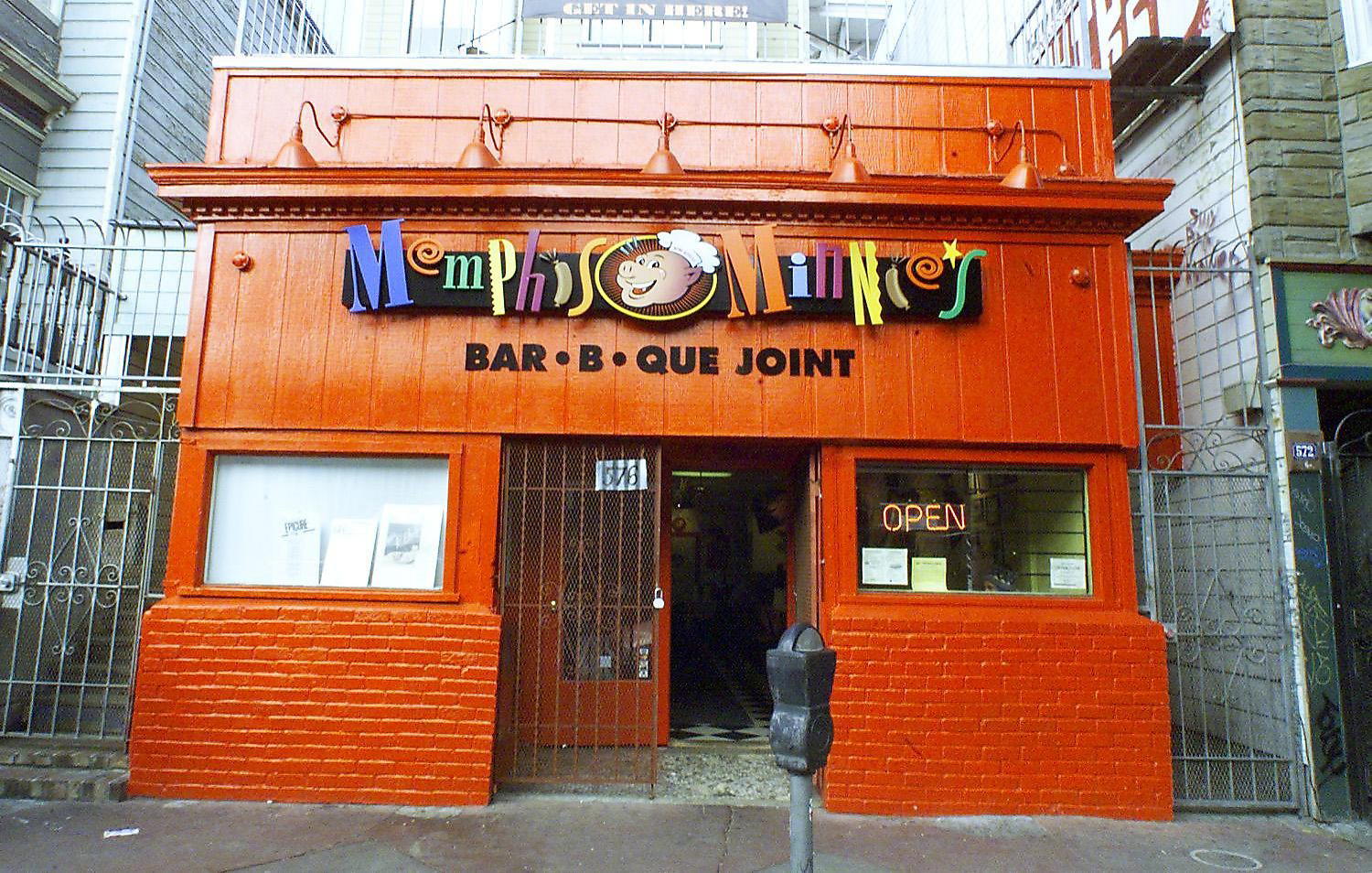
Wood Smoke on Haight Street
San Francisco's dining identity is most loudly associated with its tasting-menu circuit: the $$$$ counters and dining rooms where Lazy Bear, Atelier Crenn, Benu, and Quince define one tier of the city's ambition. But San Francisco has always had a parallel track, quieter and less photographed, where the question isn't which chef's biography shaped the menu but whether the bark on the brisket was built right. Memphis Minnie’s, at 576 Haight St in the Lower Haight, has occupied that parallel track for long enough to become a genuine fixed point in the city's barbecue conversation.
Approaching the address on a weekday, the signal arrives before the signage does. Low-and-slow barbecue is a kitchen process that announces itself through the neighbourhood, the particular quality of oak or hickory smoke has a lateral reach that no amount of ducting fully contains. The Lower Haight is not a tourist corridor; it runs between the boutique density of Hayes Valley to the east and the residential stretch toward the Panhandle to the west. A barbecue counter here serves a neighbourhood crowd rather than a destination audience, and that distinction shapes everything from the room's register to the speed of the line.
The Brisket as Argument
In American barbecue, brisket is the discipline that separates a kitchen that understands the craft from one that approximates it. A beef brisket is a large, heavily worked muscle with a pronounced fat cap, and its conversion from tough to yielding requires sustained low heat, typically somewhere between ten and fourteen hours, with enough smoke penetration to build the dark outer layer known as the bark. The bark is not crust in the culinary sense; it is a product of the Maillard reaction operating slowly over many hours at temperatures that hover between 225°F and 275°F, combined with the deposition of smoke compounds on the meat's surface. Get the fire management wrong at hour six and the damage compounds through to hour twelve.
What distinguishes the better brisket operations from the adequate ones is trim and patience. The fat cap must be left thick enough to baste the meat through the cook but not so thick that it insulates the surface from the smoke. The point end, which carries more intramuscular fat than the flat, demands different handling than the flat itself, and most barbecue joints resolve that tension by separating them or by pulling the whole cut slightly earlier than the point prefers. The places that do it consistently well, including serious operations like CorkScrew BBQ in Spring and InterStellar BBQ in Austin, treat the brisket program as a daily decision process rather than a standardized procedure. Memphis Minnie's operates in a city where the sourcing pressures and real estate costs are unlike anything a Texas or Tennessee pitmaster deals with, which makes a committed long-cook program here a different kind of operational statement.
San Francisco's Barbecue Position
California barbecue has never achieved the cultural gravity of its Texas or Carolina counterparts, and the reasons are partly agricultural, partly demographic, and partly a function of the state's food culture gravitating toward produce-forward cooking. The Bay Area's higher land and labour costs make the economics of low-and-slow harder than they are in regions where the pit tradition is embedded in local identity. Horn Barbecue, which opened in Oakland with a focused Texas-style program, represents one contemporary answer to how serious wood-fire cooking survives in the Bay Area's cost environment. Memphis Minnie's represents an earlier answer, rooted in the Lower Haight rather than a larger-format production kitchen.
The comparison matters because it frames what kind of barbecue experience each is selling. A larger-format operation can run longer holds, produce more consistent yields, and manage costs through volume. A neighbourhood counter on Haight Street operates closer to the margins, which tends to mean smaller daily quantities and a first-come logic to what's available. For the reader planning a visit, that operational reality is important piece of logistical intelligence: barbecue of this type often sells out of specific cuts before the end of service, and brisket is almost always the first to go.
Where It Sits in the City's Dining Map
San Francisco's restaurant ecosystem is among the more reviewed and documented in the United States, with a dense concentration of nationally recognised kitchens across a relatively compact geography. The city's fine-dining tier, the tasting-menu rooms that compete with The French Laundry in Napa, Single Thread Farm in Healdsburg, Le Bernardin in New York, or Alinea in Chicago, draws significant critical attention. But the city also has a long tradition of neighbourhood eating that runs independent of the award cycle, and Memphis Minnie's belongs to that tradition.
For visitors building a San Francisco itinerary that covers the full range of the city's eating, the Lower Haight stop functions as a counterweight to the tasting-menu circuit. It is the kind of meal that requires no reservation architecture, no dress calibration, and no course-by-course decision-making, just a direct transaction with smoke and protein. For a city that can feel, at its most refined end, almost performatively elaborate (compare the experience at a place like Emeril's in New Orleans or Providence in Los Angeles), that directness is itself a form of value.
Planning a Visit
Memphis Minnie's sits at 576 Haight St, in the Lower Haight neighbourhood, accessible by MUNI lines serving the Haight corridor. Given the nature of low-and-slow production, arriving earlier in the service window is the practical move, brisket quantities are finite and the kitchen cannot accelerate a twelve-hour cook to restock mid-service. The Lower Haight has street parking but the neighbourhood's density makes it inconsistent; foot or transit access is the more reliable approach.
- pork butt sandwich with vinegar slaw
- ribs
- smoked brisket
- fried chicken
- pulled pork
- hamburger on baguette
A Minimal comparable set
Comparable venues nearby, for context on price, style, and recognition.
| Venue | Cuisine | Price | Notes |
|---|---|---|---|
| Memphis Minnie’sThis venue — the venue you are viewing | Hayes Valley, Southern-Style BBQ | $$ | Not listed |
| Alta CA | Mid-Market, Modern California | $$ | Not listed |
| Hearth | Not listed | $$ | Castro/Upper Market, Modern American Comfort |
| Nourish Cafe SF | Not listed | $$ | Lower Nob Hill, 100% Plant-Based Healthy Cafe |
| Jasper's Corner Tap & Kitchen | Tenderloin, New American Gastropub | $$ | Not listed |
| Cafe Sebastian | Not listed | $$ | Chinatown, Californian Neighborhood Bistro |
Continue exploring
More in San Francisco
Restaurants in San Francisco
Browse all →
Bars in San Francisco
Browse all →
Hotels in San Francisco
Browse all →
At a Glance
- Lively
- Rustic
- Bohemian
- Casual Hangout
- Group Dining
- Solo
- Family
- Standalone
- Beer Program
Current opening hours
- Monday
- Closed
- Tuesday
- 11 AM–10 PM
- Wednesday
- 11 AM–10 PM
- Thursday
- 11 AM–10 PM
- Friday
- 11 AM–10 PM
- Saturday
- 11 AM–10 PM
- Sunday
- 11 AM–9 PM
Hours can change for holidays and private events. Last verified .
Casual, unpretentious atmosphere with lively energy; rustic decor featuring long communal tables, paper towel napkins, and good music playing in the background. Quirky, bohemian vibe typical of the Haight-Ashbury neighborhood.