Maruyoshi Shokudo
Our verdict
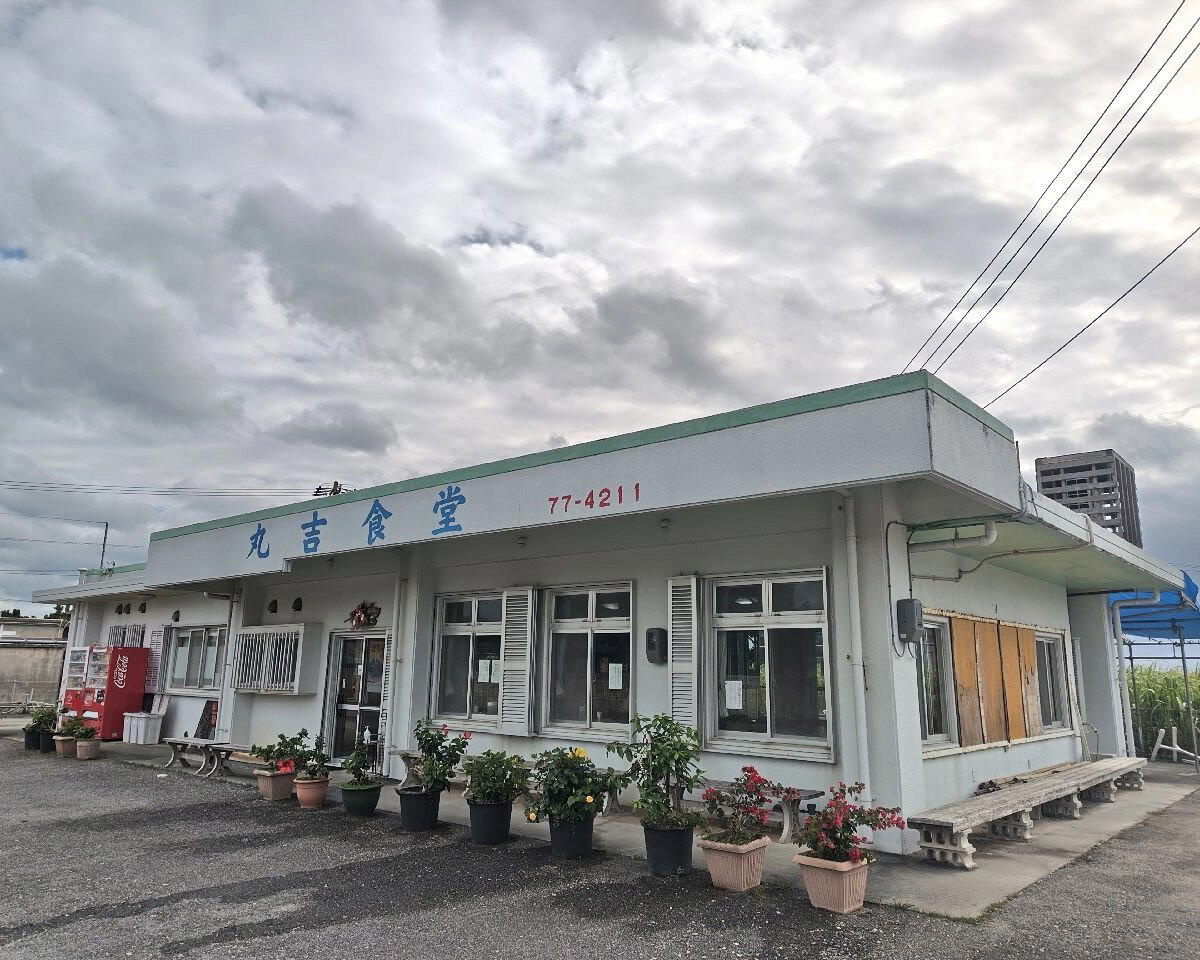
Maruyoshi Shokudo sits within Miyakojima's compact dining scene, where the distance from Japan's mainland culinary centers shapes a quieter, more local register of eating. Set against the island's reef-edged character, it occupies the kind of position that rewards visitors willing to look past the resort corridor and into the everyday fabric of the island.

Pearl is the En Primeur Club membership app — saves, bookings, and concierge access live there. Same editors, same standards.
- Address
- Okinawa (Miyakojima), Japan
- Directions
- Get directions
The menu
What to order
- Miyako Soba
- Soki Soba
Eating on Island Time: Miyakojima's Local Dining Register
Miyakojima operates on a different frequency from the rest of Japan's dining world. The island sits roughly 300 kilometres southwest of the Okinawan main island, far enough from Naha's modest restaurant density and entirely removed from the Michelin-tracked circuits of Tokyo, Osaka, or Kyoto. There are no three-star counters here, no omakase rooms with three-month waitlists of the kind you find at Harutaka in Tokyo or the refined kaiseki tradition represented by Gion Sasaki in Kyoto. What Miyakojima offers instead is a dining culture shaped by geography, seasonal fish, and the particular self-sufficiency that comes from being an island community. Maruyoshi Shokudo belongs to that register.
The word shokudo is itself a framing device. In Japanese, it signals an unpretentious eating house, the kind of place where the overhead is low, the menu is handwritten or short, and the food is calibrated to the people who live nearby rather than those passing through. It sits in a different category entirely from the izakaya-bar hybrids popular in tourist zones, or the resort dining rooms that dominate beachside Miyakojima. Understanding that distinction is the starting point for understanding Maruyoshi Shokudo's place in the island's food life.
Where the Island Eats: Miyakojima's Dining Geography
Miyakojima's restaurant map divides roughly into three zones. The resort corridor along the western and northern coasts concentrates the higher-price operations, where menus are often bilingual and dishes are adapted toward visitor expectations. Hirara, the island's administrative center, holds most of the everyday dining options, including the soba houses, set-lunch spots, and family-run shokudo that serve the working population. A third, thinner tier exists in smaller settlements outside both those areas, where a single local restaurant may anchor an entire neighbourhood's social life.
Maruyoshi Shokudo operates within that local, non-resort tier. This positioning matters for the visitor deciding how to spend a meal. Choosing a shokudo over a resort restaurant is a choice about what kind of encounter you want with a place. It is the difference between eating food shaped by where you are versus food shaped for where you came from. For a useful comparison of how this plays out across the island, Koja Sobaya represents the island's soba tradition, while Doug's Burger and Goya offer further points on the local eating spectrum. Together, they form a shorthand map of how Miyakojima's non-resort dining is distributed. Our full Okinawa (Miyakojima) restaurants guide covers the broader picture.
Okinawan Food Logic: What Shapes a Menu Here
Okinawan cuisine follows a logic distinct from mainland Japanese cooking. The culinary tradition draws on centuries of trade with China, Southeast Asia, and the Ryukyu Kingdom's own agricultural base before the islands became part of Japan in the modern era. Pork is central in ways that mainland Japanese food is not, goya (bitter melon) appears in dishes that have no equivalent in Honshu kitchens, and the island's surrounding reefs supply fish species rarely seen on Tokyo menus. Even the sweetness profile differs: Okinawan black sugar, drawn from locally grown sugarcane, adds a molasses depth to preparations that marks the food as distinctly of this place.
The shokudo format channels these ingredients through a practical, daily-meal framework. Expect set meals rather than a la carte architecture, with rice, miso, pickles, and a main component arranged to fuel rather than impress. This is the Okinawan teishoku tradition, and it carries its own kind of discipline: the cook's skill shows in the balance of the set rather than the theatrics of any single dish. In that sense, comparing a Miyakojima shokudo to a multi-course destination restaurant like HAJIME in Osaka or the tasting format at akordu in Nara is a category error. They operate on different axes entirely. The shokudo's reference points are other shokudo, and within that frame, consistency and ingredient sourcing are the meaningful measures.
Japan's broader regional dining circuit includes places where locality shapes everything: the seafood-forward discipline at Goh in Fukuoka, the ingredient-specific focus at establishments like 一本木 石川制 in Nanao, and the distinct regional registers carried by restaurants in Sapporo, Takashima, and Nishikawa Machi. Okinawa's contribution to that regional diversity is its Ryukyuan culinary base, and it is most legible not in resort hotel menus but in places like Maruyoshi Shokudo.
Planning a Visit: What to Know Before You Go
Given that no booking information, hours, or contact details are currently available through public records, visiting Maruyoshi Shokudo operates on the logic that governs most local shokudo in Japan: arrive at a mealtime, read what is available, and adjust accordingly. Lunch service is the primary operating window for most shokudo of this type in Okinawa, typically running from late morning through early afternoon. Going early in that window usually means a fuller choice of daily dishes; arriving late means certain set options will have sold out, which is in itself a reliable signal that something is worth ordering.
Miyakojima is a small island, and distances between neighbourhoods are short by car. Visitors based along the resort coast can reach Hirara and the island's local dining areas within fifteen minutes. For first-time visitors, building one or two shokudo meals into a stay alongside a reservation at a more structured restaurant covers the full range of what the island's food offers. This is also, practically speaking, how most independent travellers eat well on a limited-access island: mix formats rather than committing entirely to one.
For comparative reference on how the casual dining tier works across different Japanese cities, the local-institution model operates similarly in spots tracked elsewhere in Japan, though the cuisine type and price level vary considerably from the yakitori focus at Birdland in Sakai to the French-influenced approach at Bistro Ange in Toyohashi. The principle holds: local-format restaurants calibrated to their immediate community rather than visitor demand tend to offer a more honest read of a place. Maruyoshi Shokudo fits that pattern on Miyakojima. For those travelling further afield and wanting a contrast with destination-level fine dining, Le Bernardin in New York City or the Korean-inflected tasting format at Atomix in New York City sit at the opposite end of the formality scale, as do comparable Japanese high-end operations like 夕仙山乃 in Sapporo, 湖畔荘 in Takashima, 庭羽屋 in Nishikawa Machi, and Blue Ocean Steak in Nakagami District. Understanding the full range sharpens what a well-placed local shokudo actually represents in the hierarchy of a trip.
Frequently asked questions
Is Maruyoshi Shokudo a good option for eating outside the resort areas of Miyakojima?
Maruyoshi Shokudo sits within Miyakojima's local dining geography rather than the resort corridor that lines the island's western and northern coasts. That distinction matters: shokudo of this type serve the island's resident population first, which generally means shorter menus, lower price points, and Okinawan cooking that hasn't been adjusted for outside tastes. For visitors staying in Miyakojima who want a reference point for how the island actually eats, venues in this category are the relevant comparison set.
What do people recommend at Maruyoshi Shokudo?
That said, shokudo in Miyakojima typically rotate through Okinawan staples shaped by the island's Chinese and Southeast Asian trade history — think stewed pork preparations, bitter melon dishes, and noodle-based sets. Given the venue's position in Miyakojima's local dining register rather than the resort corridor, the draw is almost certainly everyday Okinawan cooking at everyday prices.
How hard is it to get a table at Maruyoshi Shokudo?
Small shokudo on the island tend to operate on limited hours with limited covers, so arriving at off-peak times — before noon or early evening — is the practical approach. No advance reservation mechanism has been documented.
What's the defining dish or idea at Maruyoshi Shokudo?
The defining idea is the shokudo format itself: a fixed-register, short-menu operation grounded in Okinawan home-cooking logic rather than tourist-facing interpretation. Miyakojima's food tradition draws on centuries of contact with China and Southeast Asia, producing a culinary register distinct from mainland Japanese cooking. Maruyoshi fits within that local continuum rather than departing from it.
Do they accommodate allergies at Maruyoshi Shokudo?
No allergy or dietary accommodation policy is documented for Maruyoshi Shokudo. Okinawan shokudo cooking frequently incorporates pork, soy, and gluten at a foundational level, making substitution difficult in a short-order kitchen context. Visitors with serious dietary restrictions should clarify directly on arrival, though language support cannot be assumed at a local island operation of this type.
Just the Basics
Comparable venues nearby, for context on price, style, and recognition.
| Venue | Cuisine | Price | Awards | Notes |
|---|---|---|---|---|
| Maruyoshi ShokudoThis venue — the venue you are viewing | Traditional Miyako Soba | $10–20 | Not listed | Not listed |
| Koja Sobaya | Authentic Miyako Soba | $1–10 | Not listed | Hirara, Authentic Miyako Soba |
| Goya | Hirara Nishizato, Okinawan Izakaya | Not listed | Not listed | Not listed |
| Doug's Burger | Local-style American burger shop | $10–20 | Tabelog 100 #63 | Hirara, American Gourmet Burger |
| Fujiya NOODLE | Chūō, Modern Sapporo miso ramen counter | Not listed | Not listed | Not listed |
| Ninniku Tori Yakiniku San | Not listed | Not listed | Not listed | Tennōji, Garlic Chicken Yakiniku & Yakitori Izakaya |
Continue exploring
More in Okinawa (Miyakojima)
Restaurants in Okinawa (Miyakojima)
Browse all →
Bars in Okinawa (Miyakojima)
Browse all →
Details
- Classic
- Rustic
- Cozy
- Casual Hangout
- Family
- Standalone
- Sake Program
- A La Carte