Marlena
Marlena sits on Naples Plaza in Long Beach's canal district, where the cooking draws on Southern California's year-round produce abundance and applies technique borrowed from the fine-dining tradition that defines the state's better kitchens. The address places it within an unusually well-fed residential neighbourhood, removed from downtown Long Beach's louder dining corridor yet connected enough to matter to the city's broader scene.
 Discover on Pearl
Pearl is the En Primeur Club membership app — saves, bookings, and concierge access live there. Same editors, same standards.
- Address
- 5854 E Naples Plaza, Long Beach, CA 90803
- Phone
- +15622031500
- Website
- marlena-longbeach.com
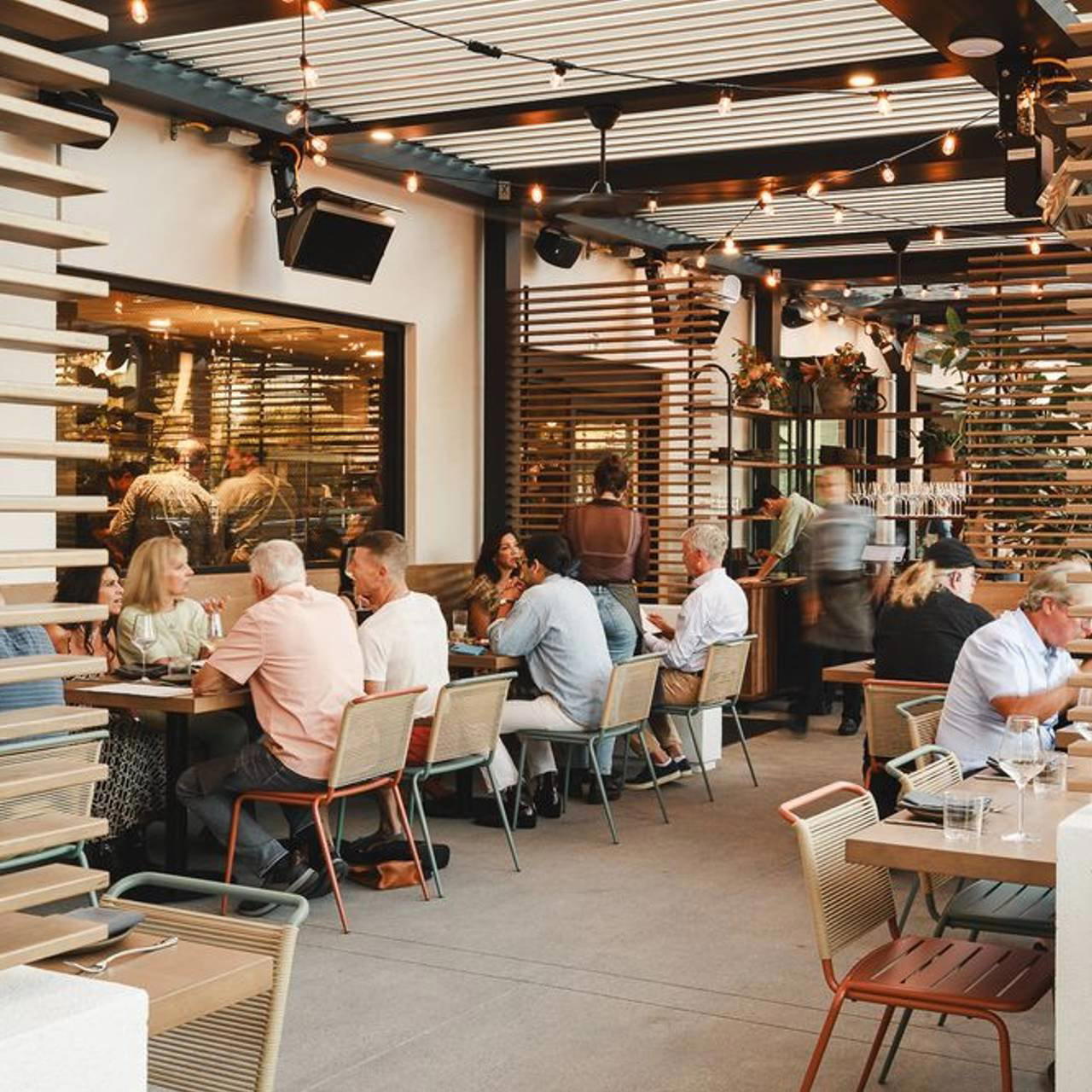
Canal-Side Dining and the California Technique Problem
The neighbourhood of Naples, built on man-made islands and threaded with gondola canals in the southeast corner of Long Beach, has always operated at a slight remove from the city's more heavily trafficked dining corridors. That distance is partly geographical and partly psychological: residents here tend to eat close to home, and the restaurants that survive on Naples Plaza do so by earning local loyalty rather than chasing visitor traffic. It is a pattern familiar in well-heeled residential enclaves across Southern California, where the highest-performing tables often sit on quiet streets rather than the obvious boulevards.
Marlena occupies that position at 5854 East Naples Plaza, in a city whose dining scene has matured considerably over the past decade. Long Beach now sustains a range of serious tables across multiple price tiers and cuisines, from the heavy steakhouse format of 555 East to the market-driven Californian cooking at Heritage (Californian). Marlena's Naples Plaza address places it in a different orbit from those downtown-adjacent anchors, which shapes how the room functions and who fills it on any given evening.
Where Local Produce Meets Applied Technique
The editorial angle that matters most in understanding kitchens like Marlena's is one playing out across the American West: what happens when cooks trained in or deeply influenced by the classical European fine-dining tradition apply those methods to the extraordinary raw material Southern California produces year-round. It is the question that animates restaurants from Providence in Los Angeles at the highest end to smaller neighbourhood rooms operating without the infrastructure of a destination restaurant.
California's produce calendar runs nearly uninterrupted. Citrus peaks in winter and early spring, stone fruit dominates summer, brassicas and root vegetables arrive in autumn, and the Pacific coast delivers consistent seafood across all of it. The challenge for any ambitious kitchen in the region is not sourcing but selection and restraint: deciding which techniques from the European or Asian canon serve the ingredient rather than overwhelm it. Single Thread Farm in Healdsburg and The French Laundry in Napa have built internationally recognised programs around that tension. At a neighbourhood scale, the same discipline applies, even if the platforms differ in size and resources.
The intersection of local sourcing and imported technique also defines how restaurants like Marlena sit relative to their peers. Compare the approach to Addison in San Diego, where the French brigade structure is applied to Southern California ingredients with formal rigour, or to Blue Hill at Stone Barns in Tarrytown, which uses farm proximity as the organising principle of the entire menu architecture. The spectrum from ingredient-first to technique-first is wide, and where a kitchen lands on it determines almost everything about the experience: pacing, portion logic, plating register, and the flavour priorities of any given dish.
The Long Beach Dining Context
Long Beach's restaurant scene is more internally diverse than outside visitors typically expect. The city's Vietnamese community has produced serious cooking along Anaheim Street; the downtown core sustains gastropubs, craft cocktail bars, and a few white-tablecloth rooms; and the waterfront corridor draws visitors who mix tourist and local traffic in ways that affect how kitchens calibrate their menus. Naples, by contrast, functions almost entirely for the neighbourhood. Restaurants here do not rely on convention centre overflow or cruise ship passengers. That constraint tends to produce either very casual spots or the kind of quietly confident room where regulars drive quality through sustained feedback.
For a fuller map of where Marlena sits within the city's dining ecosystem, our full Long Beach restaurants guide provides category-level context across price tiers and neighbourhood geography. Among the city's other options worth tracking: Boathouse on the Bay for waterfront seafood, Benley for Vietnamese, and Alli Kaphiy for a lighter, cafe-adjacent format that fills a different hour of the day.
Framing Marlena Against Wider Reference Points
The category of ambitious neighbourhood restaurant operating below the formal fine-dining tier is well represented nationally. Lazy Bear in San Francisco built a nationally recognised program out of an unconventional communal format that started at a lower-profile address. Emeril's in New Orleans demonstrated for decades that technique-forward cooking can sustain a loyal local base independent of destination-dining circuits. More recently, Atomix in New York City has shown how deeply researched cultural specificity can operate alongside classical technique to produce something with a clear identity in a competitive market. And at the formal extreme, Le Bernardin in New York City, Alinea in Chicago, and The Inn at Little Washington in Washington define what the full apparatus of culinary ambition looks like. Marlena operates at a different scale but participates in the same underlying conversation about what cooking can do with excellent ingredients and applied skill. Even 8 1/2 Otto e Mezzo Bombana (Hong Kong) in Hong Kong illustrates, at an international level, what European technique transplanted into a non-European ingredient environment can produce when the approach is genuinely committed rather than superficially applied.
Planning Your Visit
Marlena's Naples Plaza address is most easily reached by car, with street parking available around the island's perimeter. The neighbourhood is walkable from the gondola canal paths if you are already in Naples, and the surrounding streets have a residential calm that distinguishes the arrival experience from downtown Long Beach's more transactional dining blocks. Seasonal timing matters in this part of Southern California: autumn and winter bring the citrus and brassica windows that tend to produce the most interesting produce-driven dishes in kitchens of this type, while summer's stone fruit and tomato abundance shapes menus toward brighter, more acid-driven profiles.
Comparable Venues
Comparable venues nearby, for context on price, style, and recognition.
| Venue | Cuisine | Price | Notes |
|---|---|---|---|
| MarlenaThis venue — the venue you are viewing | Wood-Fired Mediterranean | $$$ | |
| Nettuno | Coastal Italian Seafood | $$ | Downtown Long Beach |
| El Viejon Mariscos & Sushi | Nayarit Coastal Seafood & Sushi | $$ | Downtown Long Beach |
| The Carvery | Classic American Steakhouse | $$$ | Downtown Long Beach |
| Noble Rotisserie | Elevated Rotisserie Chicken | $$ | 2nd & PCH |
| Nick's on 2nd | Classic American Comfort Food | $$ | Belmont Shore |
At a Glance
- Trendy
- Modern
- Cozy
- Brunch
- Date Night
- Casual Hangout
- Open Kitchen
- Craft Cocktails
- Local Sourcing
Artsy atmosphere with warm lighting from wood-fired ovens and a balance of cafe coziness and restaurant elegance.