Market Café
Market Café in Incheon occupies the hotel-buffet tier where international spreads meet Korean morning traditions. The format sits across from casual poolside options like Pool House, offering a broader range of Korean side dishes alongside Western breakfast staples. It reads as a practical, well-positioned choice for travellers transiting through or staying near Incheon's resort corridor.
 Discover on Pearl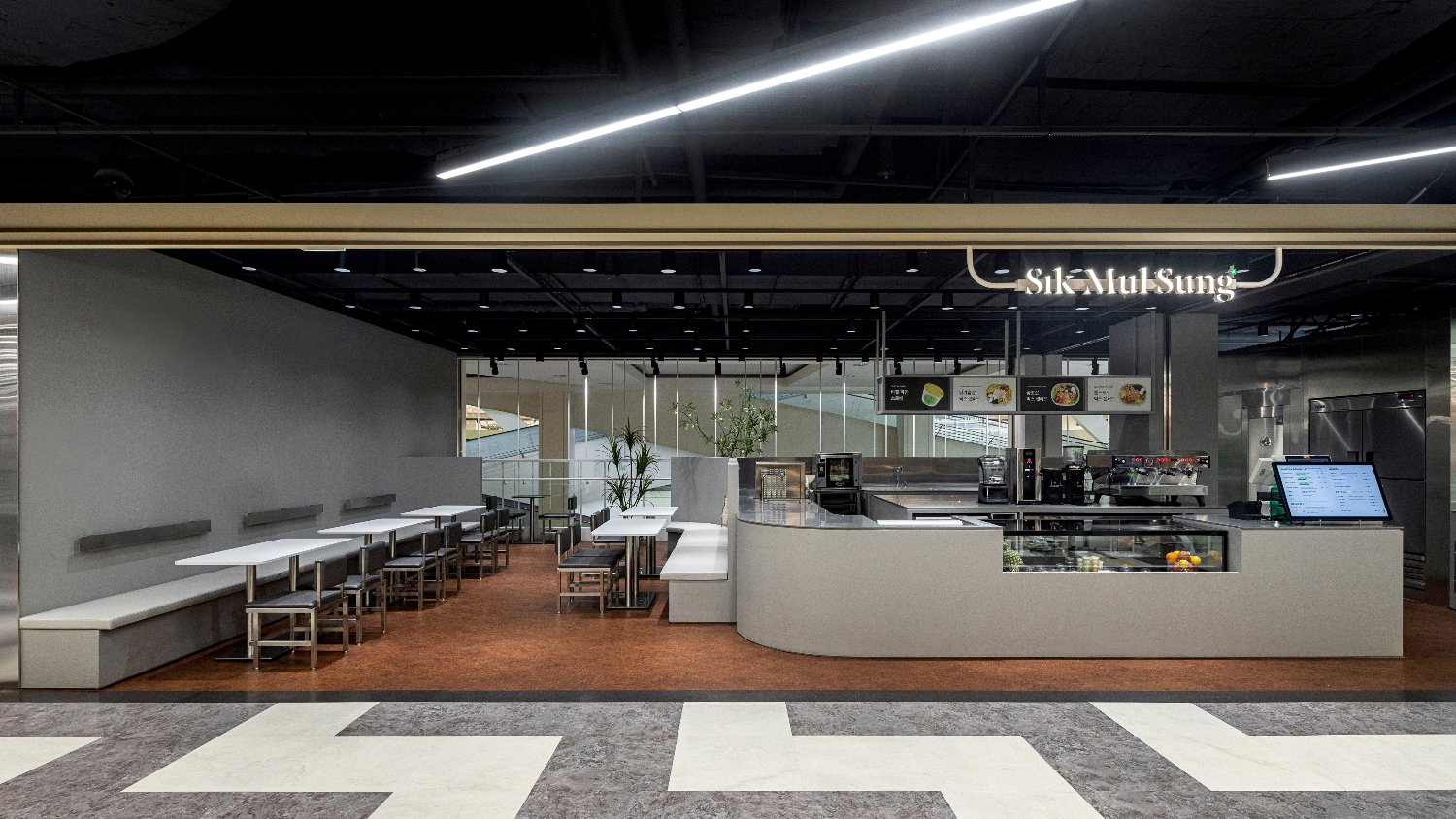
Where the Buffet Table Meets the Banchan Tradition
Hotel breakfast buffets in South Korea occupy a distinct position in the country's dining hierarchy. At their most considered, they function as a compressed introduction to Korean table culture: the array of small dishes, the interplay of fermented, pickled, braised, and fresh preparations, the expectation that variety itself is the meal. Market Café, positioned within Incheon's resort hotel circuit, works within this format, combining an international breakfast spread with the Korean side-dish tradition that makes these buffets more than a collection of eggs and pastries.
The banchan philosophy, which governs much of Korean communal eating, holds that the table should arrive with accompaniments before the main course defines the meal. In a buffet context, that principle translates into an array of prepared items that reward attention: the distinction between a well-lacquered japchae and a rushed version, between kimchi that has fermented at the right pace and kimchi that has been hurried through production. For travellers arriving through Incheon International Airport, which handles some of the highest passenger volumes in Asia, a setting that takes the side-dish array seriously offers a more grounded entry point to Korean food than a grab-and-go terminal option.
The shortlist, unlocked.
Hard-to-book tables, cellar releases, and concierge-planned trips.
Get Exclusive Access →The Incheon Hotel Dining Context
Incheon's dining scene divides between the city proper, where local restaurants serve the port city's working population, and the purpose-built resort corridor near the airport and Paradise City complex. Market Café operates in that second tier, where the audience is predominantly travellers: business passengers on layovers, families at resort hotels, and international visitors who will connect onward without spending significant time in Seoul or the Korean interior. This creates a specific editorial challenge for any restaurant in the space: serve Korean food in a way that is accessible to visitors unfamiliar with the cuisine, while not so simplified that it loses its character.
The buffet format, when handled with care, resolves that tension reasonably well. It allows diners to self-select across familiar and unfamiliar dishes without the pressure of a single-course commitment. Compared to a format like Pool House, which leans toward casual barbecue and snacks in a poolside register, Market Café positions itself at the more structured end of the hotel dining spectrum. The Pool House (Hyatt Regency Incheon Paradise City) and the Market Café (Hyatt Regency Incheon Paradise City) represent the two poles of resort hotel dining in this corridor: one casual and outdoor-oriented, the other a more composed all-day or breakfast-focused spread.
The Buffet as Cultural Text
Korean breakfast traditions differ from their Western counterparts in ways that a buffet format can either illuminate or flatten. The juk, a rice porridge that appears in regional variations across the peninsula, is one marker of quality: a well-made juk requires patient preparation and seasoning, and its presence on a hotel buffet signals that the kitchen is working with some attention to the Korean morning tradition rather than simply appending a few kimchi dishes to a continental spread. The banchan array, whether it runs to six items or twelve, similarly tells you something about the kitchen's priorities. Fermented vegetables, seasoned namul greens, and braised dishes each carry preparation signatures that a buffet either respects or shortcuts.
For context on where serious Korean cooking sits nationally, venues like Mingles in Seoul and Kwon Sook Soo in Gangnam-gu operate at a different register entirely, where the banchan tradition is filtered through contemporary fine-dining techniques. Regional Korean cooking at the temple food level, represented by places like Baegyangsa Temple in Jangseong-gun, takes a more austere and vegetable-focused approach. A hotel buffet in Incheon is not competing in either of those tiers. Its reference points are the other international hotel breakfast rooms in the region, and against that peer set the inclusion of a thoughtful Korean component is a meaningful differentiator.
Who Eats Here and Why It Works
The transit-hotel buffet serves a specific traveller: someone who may be in Incheon for twelve to thirty-six hours, who wants a composed meal rather than a terminal sandwich, and who may be using the meal as a first or last encounter with Korean food before a long-haul flight. That traveller benefits from a format that presents Korean side dishes, rice, soup, and protein options alongside the international staples that reduce decision fatigue at an early hour or after a long flight. The logic is similar across well-run airport-adjacent hotel restaurants in Asia: do the international components competently, and do the local components with enough care that they teach the diner something, however briefly.
For travellers planning more extended Korean dining, Mori in Busan and Double T Dining in Gangneung represent the regional restaurant scene in very different registers, as does the casual American-inflected The Flying Hog in Seogwipo. For a broader map of where to eat, drink, and stay in the city, our full Incheon restaurants guide, our Incheon hotels guide, our Incheon bars guide, our Incheon wineries guide, and our Incheon experiences guide cover the full picture. For international comparisons on what composed buffet and all-day dining looks like at the higher end, Le Bernardin in New York City, Atomix in New York City, Emeril's in New Orleans, and Lazy Bear in San Francisco illustrate different points on the spectrum of what a kitchen's intentions look like in practice.
Planning Your Visit
Market Café sits within the resort hotel zone near Incheon International Airport, making it most accessible to guests staying in the immediate resort corridor. Booking through the hotel is the most direct route, and given the buffet format, advance reservations are typically less fraught than at fixed-menu counters. Morning service aligns with the international breakfast tradition, making it a practical choice for early departures or post-arrival meals. As specific hours, pricing, and seasonal menu changes are not confirmed in available data, prospective guests should confirm details directly with the property before planning around specific timings.
The shortlist, unlocked.
Hard-to-book tables, cellar releases, and concierge-planned trips.
Get Exclusive Access →Frequently Asked Questions
Comparable Spots, Quickly
These are the closest comparables we have in our database for quick context.
| Venue | Cuisine | Price | Awards | Notes |
|---|---|---|---|---|
| Market Café | International breakfast buffet; Korean cuisine | This venue | ||
| Pool House | casual buffet, barbecue, snacks | casual buffet, barbecue, snacks | ||
| Market Café (Hyatt Regency Incheon Paradise City) | International cuisine with Korean dishes / breakfast buffet | International cuisine with Korean dishes / breakfast buffet | ||
| Pool House (Hyatt Regency Incheon Paradise City) | Casual buffet, snacks, barbecue | Casual buffet, snacks, barbecue |
Need a table?
Our members enjoy priority alerts and concierge-led booking support for the world's most difficult tables.
Get Exclusive AccessThe shortlist, unlocked.
Hard-to-book tables, cellar releases, and concierge-planned trips.
Get Exclusive Access →