Our verdict
On Kutchery Road in central Ajmer, Mango Curry occupies a corner of the city where Rajasthani cooking traditions meet the practical demands of a busy pilgrimage town. The kitchen draws on the ingredient logic of the region — dried spices, pulses, and slow-cooked preparations that carry the weight of local larder economics. A reliable address for those spending time near the Dargah circuit.

Pearl is the En Primeur Club membership app — saves, bookings, and concierge access live there. Same editors, same standards.
- Address
- Suchna Kendra Rd, Kutchery Road, Hathi Bhata, Ajmer, Rajasthan 305001, India
- Phone
- +919828580801
- Hours
- Daily 9 AM–11 PM
- Website
- mangomasala.com
- Directions
- Get directions
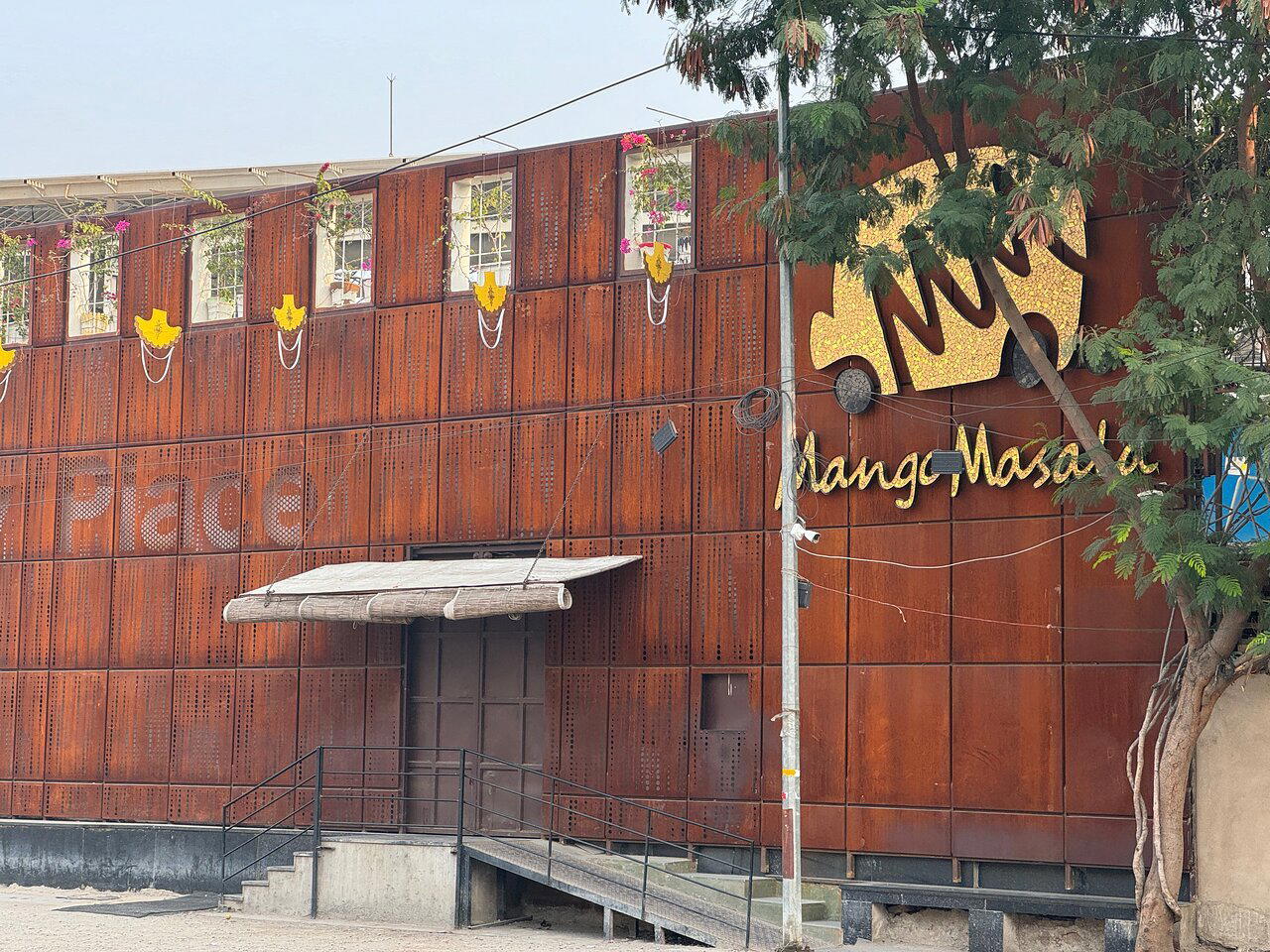
Ajmer's Ingredient Logic, On a Plate
Rajasthan's culinary character is shaped less by abundance than by constraint. The state's arid geography and centuries of trade-route positioning produced a cooking tradition built around preservation: dried lentils, sun-cured vegetables, clarified butter that resists spoilage, and spice combinations designed as much for shelf life as for flavour. That logic persists in Ajmer's working restaurants, where kitchens source from local mandis and seasonal availability still dictates what appears on the table. Mango Curry, located on Kutchery Road in the Hathi Bhata area, operates within this same ingredient framework — a neighbourhood address in a city where the pilgrimage economy keeps dining pragmatic and the sourcing local.
The Setting: Kutchery Road and What It Tells You
Kutchery Road sits in the administrative and commercial belt of Ajmer, a stretch that serves government workers, traders, and the steady flow of visitors moving between the railway station and the Dargah Sharif. This is not the tourist-facing strip; it is where the city eats on its own terms. Restaurants here tend toward utility over theatrics — the room is functional, the service direct, and the menu anchored to what the local supply chain reliably produces. For a traveller accustomed to Delhi's polished dining rooms, this kind of address, alongside places like Bukhara in New Delhi, offers a useful corrective: the food's authority comes from repetition and sourcing, not from design investment.
Ajmer sits roughly at the geographical centre of Rajasthan, which means its kitchens draw from multiple regional directions. Influence arrives from the Marwari cooking of Jodhpur and Nagaur to the west, the Dhundhari belt toward Jaipur to the east, and the Mewari traditions of Udaipur to the south. The result is a cooking vocabulary that can accommodate the curry as a category in its broadest sense: thick, spice-laden gravies built from a base of onion, tomato, and regional whole spices, with protein or vegetable determined by season and market price.
What the Ingredient Sourcing Reflects
In a city like Ajmer, where the population includes both a large permanent residential base and a transient pilgrimage population from across South Asia, restaurant kitchens face a specific provisioning challenge. Demand is unpredictable, margins are narrow, and the expectation of halal-compliant preparation is widespread given the city's significance as a Muslim pilgrimage destination. These pressures tend to produce kitchens that source frequently and locally, working with whatever the weekly mandi offers rather than locking into fixed supply contracts. The cooking that results from this model is often more honest than its upmarket counterparts: it reflects what is actually in season and what is actually available.
This contrasts with the sourcing philosophy visible at higher-investment Indian restaurants elsewhere on the subcontinent. Farmlore in Bangalore, for instance, has built its identity around documented farm-to-table sourcing with traceable provenance. The Ajmer model is the inverse: sourcing is local by necessity rather than by programme, and the result is a different kind of authenticity, one rooted in logistics rather than curation. Neither approach is superior; they serve different dining contexts entirely.
For a point of reference within the pilgrimage-town dining category, Esphahan in Agra shows what happens when heritage cuisine receives investment in both sourcing and presentation. Ajmer's mid-range addresses operate in a different register, where the emphasis falls on feeding people well and quickly, with ingredients that the kitchen knows and trusts.
Ajmer in the Context of India's Smaller Dining Cities
India's restaurant conversation is still heavily weighted toward its metro centres. The fine dining discourse runs through Mumbai, Delhi, and Bangalore, with occasional consideration of Kolkata and Chennai. Cities like Ajmer, Budaun, or Orchha, all of which sustain serious local food cultures, receive less critical attention, which means the traveller who arrives without a fixed itinerary is often relying on local knowledge rather than published reviews. Dadi Ki Rasoi in Budaun and Dragon in Orchha represent the same tier of city, where the local dining ecosystem rewards curiosity.
This is not a problem that technology has fully solved. For cities without a dense layer of critical coverage, restaurants like Mango Curry exist largely through word of mouth, repeat custom, and the practical endorsement of locals who return. That pattern of endorsement is itself a trust signal, even if it doesn't translate into the formal award structures that govern metro dining. Compare this to the institutional recognition attached to addresses like Le Cirque Delhi or Atomix in New York City, the critical infrastructure simply doesn't extend this far into India's secondary cities.
For the travelling reader, this means arriving with calibrated expectations. Mango Curry is not the place to benchmark against Le Bernardin or the destination-kitchen ambitions of Naar in Kasauli. It is an address that serves Ajmer's working population and its visitors, and its value lies in that function. See our full Ajmer restaurants guide for a broader map of where the city eats.
Planning Your Visit
Frequently asked questions
Does Mango Curry work for a family meal?
Kutchery Road draws a broad cross-section of Ajmer residents — government workers, traders, and visiting families — and Mango Curry's position in that belt makes it a practical choice for groups. The setting is accessible rather than formal, which suits multigenerational dining. Ajmer's transient pilgrimage traffic means restaurants in this zone are accustomed to feeding mixed-size parties.
What's the overall feel of Mango Curry?
The address on Suchna Kendra Road places the restaurant squarely in Ajmer's working commercial core, not in a tourist enclave. The atmosphere reflects that: functional, local, and oriented toward the city's everyday dining rhythm rather than occasion eating. It is the kind of room that fills with regulars at lunch and neighbourhood visitors in the evening.
Is Mango Curry a good option for vegetarian diners visiting Ajmer?
Ajmer's population includes a substantial Jain and Hindu community, and the city's broader dining culture has long accommodated vegetarian requirements as a default rather than an afterthought. Restaurants along Kutchery Road, including Mango Curry, operate within that tradition. Rajasthan's ingredient heritage — built around pulses, dairy, and dried produce — means plant-based preparations are central to the regional cooking rather than supplementary to it.
What do regulars order at Mango Curry?
Rajasthani cooking in Ajmer typically draws on a pantry shaped by the region's arid geography — dried lentils, preserved vegetables, and spice-forward preparations that reflect centuries of trade-route provisioning. What reaches the table at a Kutchery Road address like this tends to track that local ingredient logic rather than pan-Indian crowd-pleasers.
What's Mango Curry's location?
Mango Curry is located at Suchna Kendra Rd, Kutchery Road, Hathi Bhata, Ajmer, Rajasthan 305001, India, Ajmer.
Fast Comparison
Comparable venues nearby, for context on price, style, and recognition.
| Venue | Cuisine | Price | Notes |
|---|---|---|---|
| Mango CurryThis venue — the venue you are viewing | Indian Multicuisine | Not listed | Not listed |
| Dilli StreEAT | Indian Street Food | Not listed | Indira Gandhi International Airport |
| Niros Restaurant | Multi-Cuisine Indian with Rajasthani Specialties | $10–20 | Mirza Ismail Road |
| Aanch | North-West Frontier North Indian | $10–20 | Niranjanpur |
| Tadka | Awadhi & North-West Frontier Indian Fine Dining | Not listed | Cantonment |
| Jamavar Goa | Dining | Not listed | Mobor |
Continue exploring
More in Ajmer
Hotels in Ajmer
Browse all →
Details
- Cozy
- Family
- Casual Hangout
- Standalone
- A La Carte
- Vegetarian Friendly
- Vegan Options
- Gluten Free Options
Current opening hours
- Monday
- 9 AM–11 PM
- Tuesday
- 9 AM–11 PM
- Wednesday
- 9 AM–11 PM
- Thursday
- 9 AM–11 PM
- Friday
- 9 AM–11 PM
- Saturday
- 9 AM–11 PM
- Sunday
- 9 AM–11 PM
Hours can change for holidays and private events. Last verified .
Cozy and refined with warm lighting, tasteful decor, and a pleasant family atmosphere praised in reviews.