Our verdict
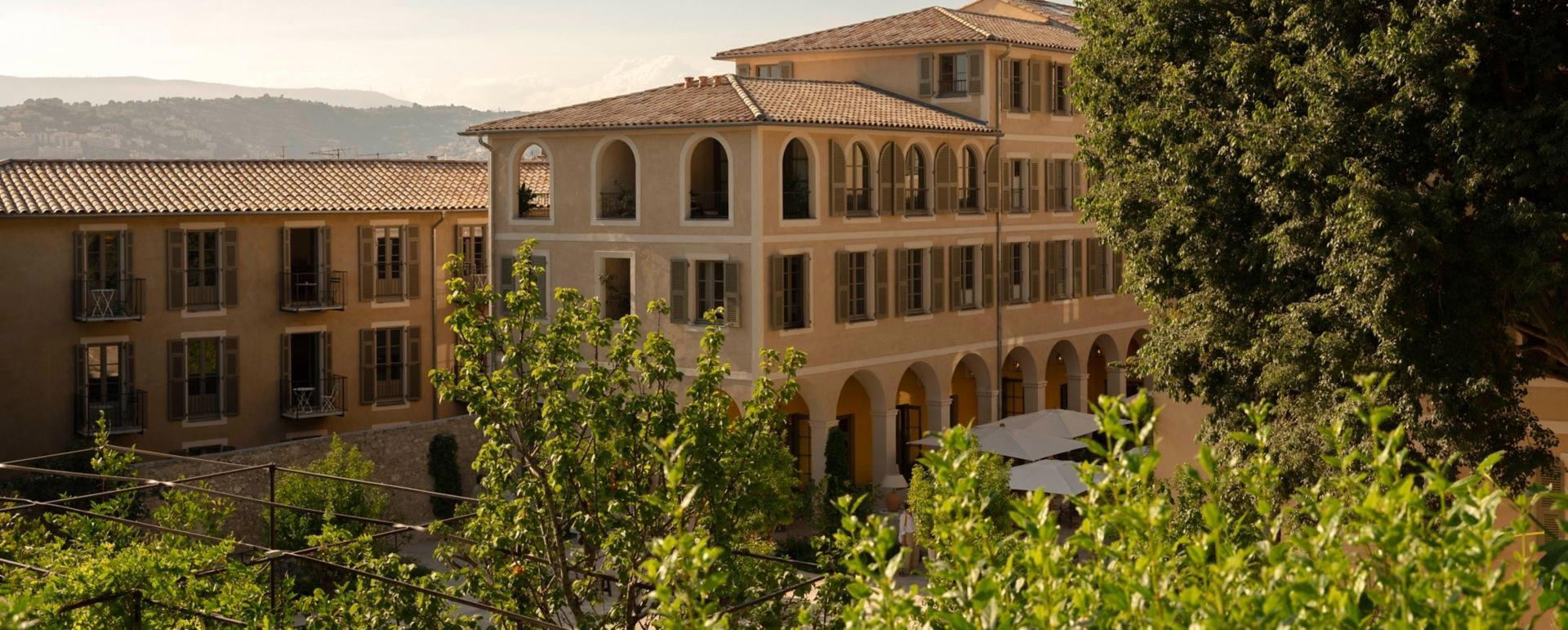
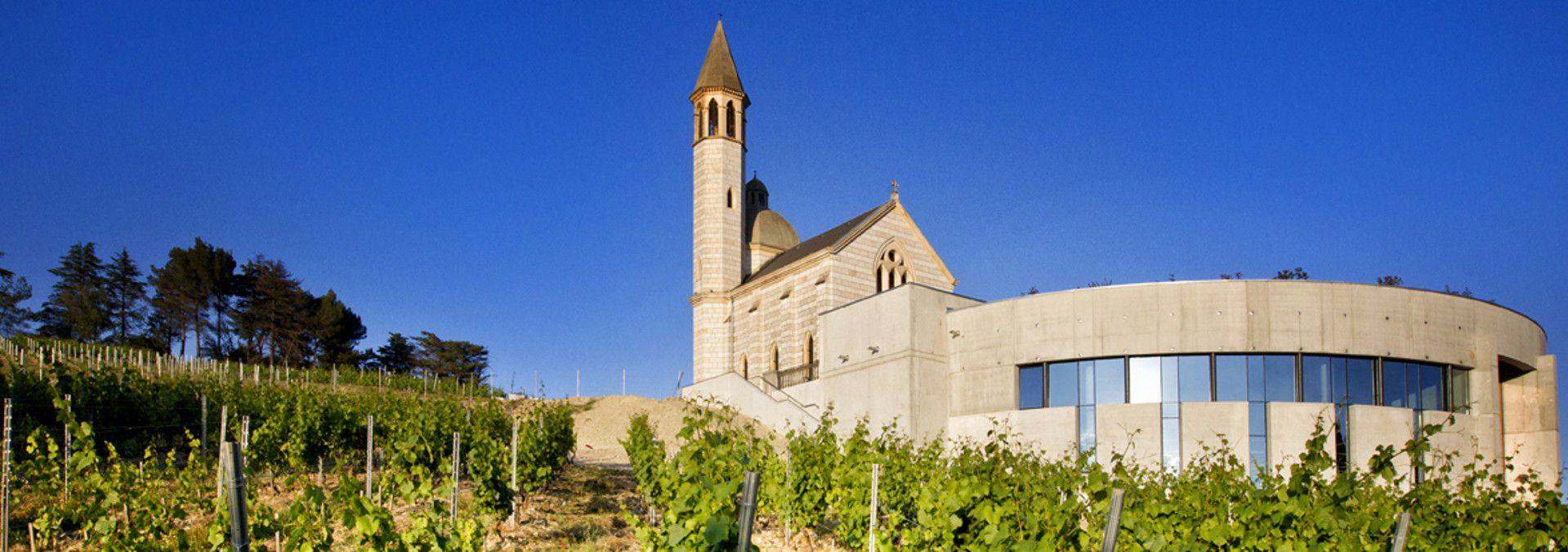
Maison Bellet sits along the Route de Bellet in Nice's little-known wine country, a hillside address that places it firmly outside the Promenade des Anglais circuit. The surrounding Bellet AOC vineyards frame the experience before you arrive, making location as much a part of the visit as anything on the table. For those tracing Nice beyond its seafront, this is where the city's agricultural identity surfaces.

Pearl is the En Primeur Club membership app, where members save venues, book tables and use the concierge.

A Hillside Address That Reframes Nice
Most visitors to Nice orientate themselves along the coast: the Promenade des Anglais to the west, the Cours Saleya flower market in the old town, the Ligurian-inflected trattorias of the port quarter. The city's hillside wine country, by contrast, remains largely off the tourist map. The Route de Bellet climbs northwest from the urban grid into terrain that feels improbably agricultural for a Mediterranean resort city: terraced vines, limestone slopes, and a density of olive and citrus that belongs more to the Var interior than to a coastal capital. Maison Bellet sits at 407 Route de Bellet, inside that pocket, and the address alone signals a different kind of Nice experience from anything offered at sea level.
The Bellet AOC is one of France's smallest controlled appellations, covering fewer than 60 hectares in active production across the hillsides north and northwest of the city. Its wines, built primarily on Rolle for whites, Braquet and Folle Noire for reds and rosés, are produced in quantities too small for meaningful export, which means they circulate largely within Nice itself and among collectors who seek them out. A venue positioned in that territory sits inside a story about place and agricultural specificity rather than coastal tourism, and that positioning shapes the entire logic of a visit.
What the Location Means for the Experience
Arriving at an address on the Route de Bellet from Nice city centre requires either a car or deliberate planning, the hillside sits beyond easy walking distance from the main tourist zones. That friction is part of the proposition. Venues accessible only to those who specifically seek them out attract a different visitor than those fed by foot traffic on the Promenade. The surrounding terrain, with its cultivated terraces and views back toward the Baie des Anges, provides context that a city-centre room cannot manufacture. You understand, arriving here, that Nice is a city with an agricultural hinterland as well as a seafront.
That hinterland shapes what Bellet AOC producers and associated venues have always represented locally: a counterpoint to the internationalist hospitality of the Côte d'Azur, something more rooted in the specific geology and microclimate of the arrière-pays niçois. The limestone and clay soils of the Bellet hillsides produce wines with minerality and aromatic character distinct from the broader Provençal style, which tends toward high-volume rosé production for the summer tourist trade. Bellet's small-production whites and reds occupy a different register entirely.
For a broader sense of how Nice's restaurant scene has developed beyond its traditional Niçoise identity, the city now supports several serious kitchens. Flaveur and L'Aromate both operate at the upper end of modern French cuisine, while Le Chantecler anchors the grand hotel dining tradition. Les Agitateurs and ONICE represent a newer, more experimental register. Our full Nice restaurants guide maps the city's dining character across all price points and styles.
Bellet in the Context of French Regional Wine Country Dining
France has a long tradition of estate-connected dining addresses, places where geography, viticulture, and table are understood as a single system rather than separate commercial propositions. Some of its most durable restaurant institutions have been built around exactly this logic: Auberge de l'Ill in Illhaeusern in Alsace, Bras in Laguiole on the Aubrac plateau, and Flocons de Sel in Megève in the Alps each derive much of their meaning from the specificity of their terrain. The address is the argument.
At the other end of the ambition spectrum, France's fine dining has concentrated around Paris, Alléno Paris au Pavillon Ledoyen being one of the capital's most decorated addresses, and along routes that connect major gastronomic cities: Troisgros in Ouches, Paul Bocuse's Auberge du Pont de Collonges near Lyon. The Côte d'Azur anchors one end of the southern arc, with Mirazur in Menton representing the region's highest international profile. AM par Alexandre Mazzia in Marseille extends the southern French fine dining map westward.
Regional addresses outside those headline circuits, institutions like Assiette Champenoise in Reims, Au Crocodile in Strasbourg, or a hillside estate address in the Bellet hills, represent a different logic: terrain-specific, locally anchored, and largely legible only to those already inside the regional context. That insularity is a feature, not a limitation. It is precisely what keeps a small appellation like Bellet coherent and distinct rather than absorbed into the generic Provençal tourism economy.
For context on how France's restaurant culture has projected internationally, Le Bernardin in New York and Atomix both reflect the degree to which French technique has dispersed globally, even as the regional anchors at home remain the reference points.
Planning a Visit
The Route de Bellet is most practically reached by car from central Nice, where the drive northwest takes you through the Vallée du Var and into the hillside estates within roughly twenty minutes depending on traffic. The hillside position means the address is not serviceable as a spontaneous addition to a city-centre evening, it requires advance planning and a return route, particularly if wine is central to the visit. Spring and autumn tend to offer the most considered visiting conditions: summer on the Côte d'Azur compresses the tourist economy toward the coast, while the hillside terrain is quieter and more navigable in the shoulder season. Visitors tracing the Bellet AOC specifically should note that the appellation's producers are distributed across multiple estates along the hillside rather than concentrated in a single village, making the Route de Bellet address a useful navigational anchor for a broader afternoon in the area.
Frequently asked questions
Where do I go for Maison Bellet?
Maison Bellet is located at 407 Rte de Bellet, 06200 Nice, France, Nice.
Is Maison Bellet worth visiting just for the wine, even if you're not staying nearby?
AOC Bellet is one of France's smallest appellations, producing wines almost entirely consumed locally and rarely found outside the Alpes-Maritimes region. The address at 407 Route de Bellet places Maison Bellet within that producing zone, making it one of the few opportunities to encounter these wines in context rather than through a merchant. For anyone already based in Nice, the drive into the Vallée du Var hills adds purpose to what is otherwise a difficult appellation to access.
What's the best thing to order at Maison Bellet?
Because Maison Bellet sits within the AOC Bellet appellation on the Route de Bellet above Nice, the wines produced in this microclimate are the primary reason to visit, this is one of France's smallest and least-exported appellations, and tasting them at source carries obvious logic. Food selections are best understood as supporting the wine rather than competing with it, in the tradition of French estate-table dining.
Do they take walk-ins at Maison Bellet?
The Route de Bellet address sits well beyond central Nice and requires a car or deliberate planning to reach, which means spontaneous walk-ins are logistically unlikely for most visitors. Contacting them directly before making the drive from Nice is the sensible course.
Style and Standing
Comparable venues nearby, for context on price, style, and recognition.
| Venue | Cuisine | Price | Notes |
|---|---|---|---|
| Maison BelletThis venue (the venue you are viewing) | Modern Niçoise Bistro | $50–100 | Not listed |
| Hely | Modern French Small Plates | $30–50 | Nice Historique |
| Le Tire Bouchon | Bistronomic French | $30–50 | Nice Historique |
| Lou Pantail | Niçoise & Italian Specialties | $20–30 | Cœur de Nice |
| Les Sens | Modern French Mediterranean | $30–50 | Cœur de Nice |
| Le clin d'œil | Niçois Bistronomie | $20–30 | Cœur de Nice |