Our verdict
On Mary Street in Dublin 1, Madina Street Food Co sits within a stretch of the north inner city that has become one of the more honest cross-sections of how Dublin actually eats day to day. The kitchen draws on street food traditions that rarely surface in the city's fine-dining conversation, placing it in a distinct tier from the tasting-menu circuit that dominates critical attention in the capital.

Pearl is the En Primeur Club membership app — saves, bookings, and concierge access live there. Same editors, same standards.
- Address
- 60 Mary St, North City, Dublin 1, D01 CD40, Ireland
- Phone
- +353 1 872 6007
- Directions
- Get directions
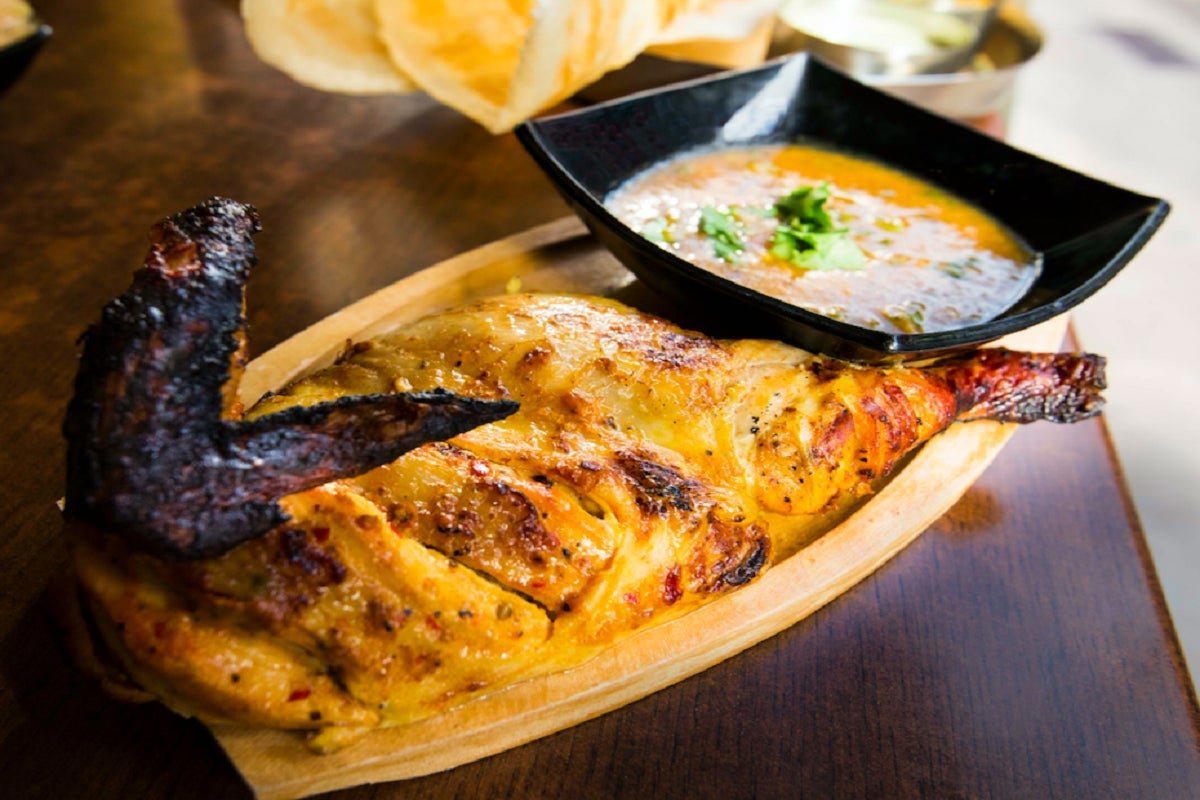
The menu
What to order
- Butter Chicken
- Lamb Vindaloo
- Dosa
- Golappa
- Chole Poori Halwa
Mary Street and the Street Food Register
Mary Street runs north from the Henry Street shopping axis into a part of Dublin 1 that doesn't perform for visitors. The facades are functional, the foot traffic is local, and the eating options reflect a city that has changed faster in its demographics than in its restaurant criticism. It is precisely this kind of address that tends to produce the more direct, less mediated food experiences in any European capital. Madina Street Food Co, at number 60, operates within that register.
Street food in this context means something specific: a kitchen format shaped by tradition rather than by the conventions of the Irish restaurant industry. Where much of Dublin's critical attention flows toward modern Irish tasting menus, places like Chapter One by Mickael Viljanen or the long-established Patrick Guilbaud, a street food operation on Mary Street answers to a different set of pressures entirely. Speed, value, and flavour intensity matter more than progression or presentation.
The Arc of the Meal
Street food formats in many traditions are structured around sequencing even when that structure isn't named as such. A meal at Madina Street Food Co would likely begin with something lighter or preparatory, move through a central protein-led course, and close with something sweet or restorative. That arc, familiar from West African, South Asian, and East African street food cultures, is not arbitrary. It reflects centuries of practical knowledge about how flavour builds and resolves across a sitting, even an informal one.
The distinction from Dublin's more formal dining rooms is worth holding in mind. At Bastible on Leonard's Corner or Glovers Alley in the city centre, a meal's progression is orchestrated explicitly, with described courses and deliberate pacing. Street food achieves similar results through different means: through the sequencing habits of regular customers who know what to order and when, and through a kitchen that works within well-worn rhythms rather than composed menus.
The spice logic in many street food traditions also creates its own progression. Aromatic leading notes arrive early, heat builds through the meal, and cooling elements, a yoghurt-based side, a starchy base, arrive as counterpoint. This is not a lesser version of the tasting menu's arc. It is a parallel one with its own coherence.
Dublin 1 as a Dining District
North inner city has not attracted the same density of food media coverage as the Liberties or the South William Street corridor. That gap is partly a function of where food critics eat and partly a function of which restaurant formats attract awards infrastructure. Michelin and the 50 Best lists reward a particular kind of kitchen discipline and service formality. D'Olier Street and operations in the south city's more photographed postcodes sit closer to those frameworks.
But Dublin 1 has been absorbing the city's newer communities for longer than most Dublin postcodes. The restaurants that follow those communities tend to be more direct about what they are: they feed people rather than constructing dining experiences. For a city whose culinary reputation was built slowly and is still in active development, these operations carry an argument about what Dublin eating actually looks like beyond its award-winning rooms.
The broader Irish dining scene, from Aniar in Galway to Campagne in Kilkenny to coastal operations like dede in Baltimore and Bastion in Kinsale, has moved toward a confident regionalism rooted in Irish produce and landscape. That is one valid direction. The north inner city's street food operations represent a different direction: a confident cosmopolitanism rooted in the city's actual population. Neither is more legitimate than the other.
Placing Madina in the Broader Picture
A useful comparison frame is what happens in other cities when street food from diaspora communities reaches a certain critical mass. In London, in Manchester, in New York, specific cuisines move from community-facing to broader city recognition once enough people from outside those communities start eating there regularly. The food doesn't change. The audience does. Dublin is at an earlier point in that cycle than most comparable European cities.
Internationally, the street food format at its most developed produces kitchens that earn serious critical attention on their own terms. The hawker stalls of Singapore that hold Michelin recognition are the clearest example of that phenomenon. Ireland has not yet developed the critical infrastructure to make that crossover happen reliably, but the kitchens are there.
For context on what ambition looks like in a format-defying dining room, Lazy Bear in San Francisco offers a useful reference point: a space that operates outside the traditional restaurant format and has built its reputation entirely through word of mouth and peer recognition rather than conventional review channels. That model of recognition, built from the bottom up rather than assigned from the leading down, is one Madina Street Food Co operates within by default.
Planning a Visit
Madina Street Food Co is at 60 Mary Street, Dublin 1, in the North City, a short walk from the Liffey and within easy reach of the Henry Street shopping district. The format suggests a casual, walk-in friendly operation rather than a reservation-dependent dining room. For visitors mapping a broader Dublin eating day, the north inner city works well as a starting point before moving south toward the more formal rooms of the city centre. Those looking to complete a picture of contemporary Irish dining might also consider the longer reaches of the island, from Liath in Blackrock and The Morrison Room in Maynooth to further-afield destinations like Terre in Castlemartyr, The Oak Room in Adare, Homestead Cottage in Doolin, and Chestnut in Ballydehob. Our full Dublin restaurants guide maps the city across price tiers and neighbourhoods.
Frequently asked questions
Where is Madina Street Food Co located?
Madina Street Food Co is located at 60 Mary St, North City, Dublin 1, D01 CD40, Ireland, Dublin.
How does Madina Street Food Co fit into Dublin's broader diaspora food scene?
Dublin 1, particularly around Mary Street and the north inner city, has become one of the more concentrated areas for diaspora-run food businesses in the city, serving communities that are largely underrepresented in mainstream Dublin dining coverage. Madina Street Food Co at 60 Mary Street operates within that context, offering a street food format that reflects culinary traditions rarely found in the city's better-documented restaurant districts. For visitors tracking how Dublin's food culture has shifted over the past decade, the north inner city now functions as a more accurate read of the city's actual demographic range than the south side dining corridors.
What do people recommend at Madina Street Food Co?
Visitors to 60 Mary Street tend to reference the value and portion size relative to the area's other options. Arriving without a fixed order in mind and asking what's freshest is the approach that tends to produce the best results at counters like this.
Is Madina Street Food Co reservation-only?
No booking infrastructure is documented for Madina Street Food Co, and the street food format at 60 Mary Street, Dublin 1 points toward walk-in service rather than a reservation system. Street food operations in this register typically run on counter service with quick turnover. Arriving at off-peak hours is the practical hedge if you're concerned about wait times.
What do critics highlight about Madina Street Food Co?
Madina Street Food Co sits in Dublin 1's north inner city, a part of the city that has received less food media attention than the Liberties or the South William Street corridor. That editorial gap means formal critical coverage is limited rather than absent. What the venue represents — diaspora street food operating outside the city's established restaurant press circuit — is itself the recurring frame when writers do engage with this end of Mary Street.
Where the Accolades Land
| Venue | Cuisine | Price | Awards | Notes |
|---|---|---|---|---|
| Madina Street Food CoThis venue — the venue you are viewing | Indian & Pakistani Street Food | $10–20 | Not listed | Not listed |
| Patrick Guilbaud | Modern French Fine Dining | $150–200 | 2 Michelin Stars · La Liste Top Restaurants | Irish - French, Modern French |
| Bastible | Modern Irish | $100–150 | 1 Michelin Star · The Sunday Times Ireland’s 100 Best Restaurants | Modern Cuisine |
| Host | Modern Italian | $50–100 | Michelin Plate | Not listed |
| mae | Modern Irish Fine Dining | $50–100 | Michelin Plate · The Sunday Times Ireland’s 100 Best Restaurants | Not listed |
| Matsukawa | Authentic Edomae Omakase | $100–150 | Michelin Plate · La Liste Top Restaurants | Not listed |
Continue exploring
More in Dublin
Restaurants in Dublin
Browse all →
Bars in Dublin
Browse all →
Hotels in Dublin
Browse all →
Wineries in Dublin
Browse all →
Details
- Casual
- Lively
- Casual Hangout
- Group Dining
- Solo
- Standalone
- A La Carte
- Vegetarian Friendly
Casual, unpretentious street food atmosphere with a small, popular dining space focused on authentic culinary experience rather than ambiance.