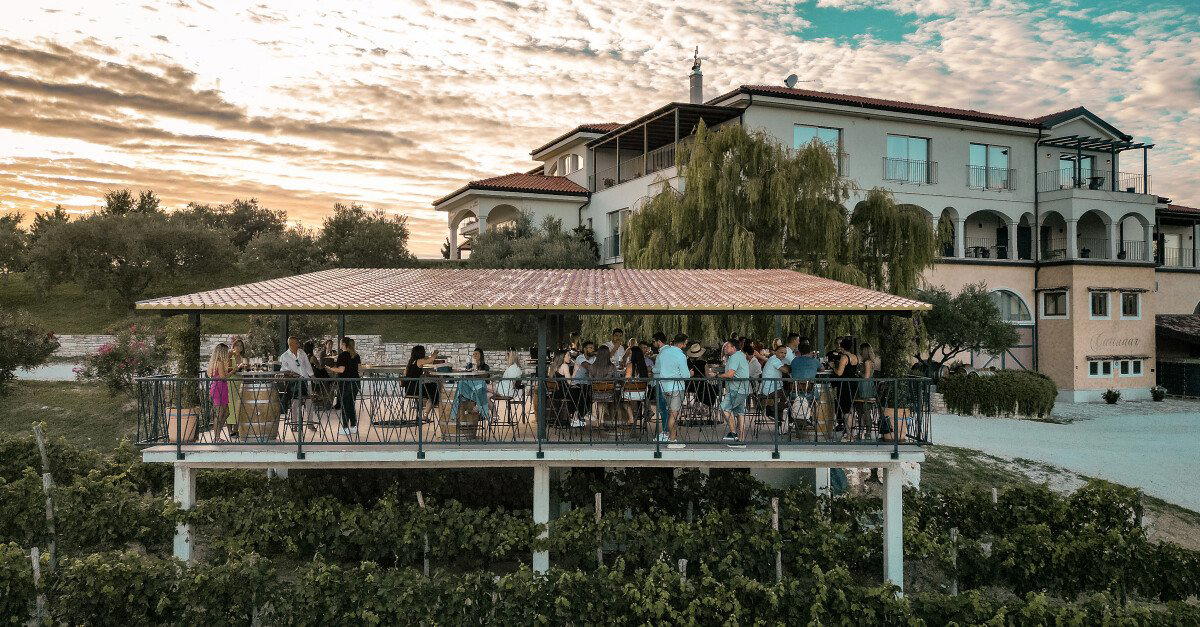
In the small Istrian village of Tar, Madalu occupies a quiet address on Ul. Istarska where the peninsula's agricultural character shapes the table more directly than in the coast's busier resort towns. The kitchen works within a tradition where proximity to growers, olive producers, and truffle foragers is less a marketing point than a practical reality. For travellers moving through inland Istria, it sits on a circuit worth mapping deliberately.
Pearl is the En Primeur Club membership app — saves, bookings, and concierge access live there. Same editors, same standards.
- Address
- Ul. Istarska 58, 52465, Tar, Croatia
- Phone
- +385958546708
- Directions
- Get directions
 Saves & bookings on Pearl
Tar and the Istrian Interior: A Different Kind of Table
The Istrian peninsula divides, culinarily speaking, into two distinct registers. The coastal strip from Rovinj to Poreč runs on tourist volume: busy terraces, grilled fish menus calibrated for turnover, wine lists that lean on the region's Malvazija and Teran as shorthand for local credibility. Move a few kilometres inland, toward the low hills and scattered villages, and the pace shifts. Tar is one of those villages. It does not have a waterfront or a marina. What it has is proximity to the fields, groves, and forests that actually supply Istrian kitchens, which is a more useful thing if food is your reason for being in the area.
Madalu sits on Ul. Istarska 58, a direct village-street address that signals nothing of the resort-dining economy. In that sense, its location is already an editorial statement about what kind of table it intends to be. Istria's premium dining tier, represented at the coast by places like Agli Amici Rovinj in Rovinj, operates with polish and international ambition. What the interior offers is something different: a shorter supply chain, less performance, and a closer relationship between the land visible from the window and the food arriving at the table.
Where Istrian Ingredients Begin
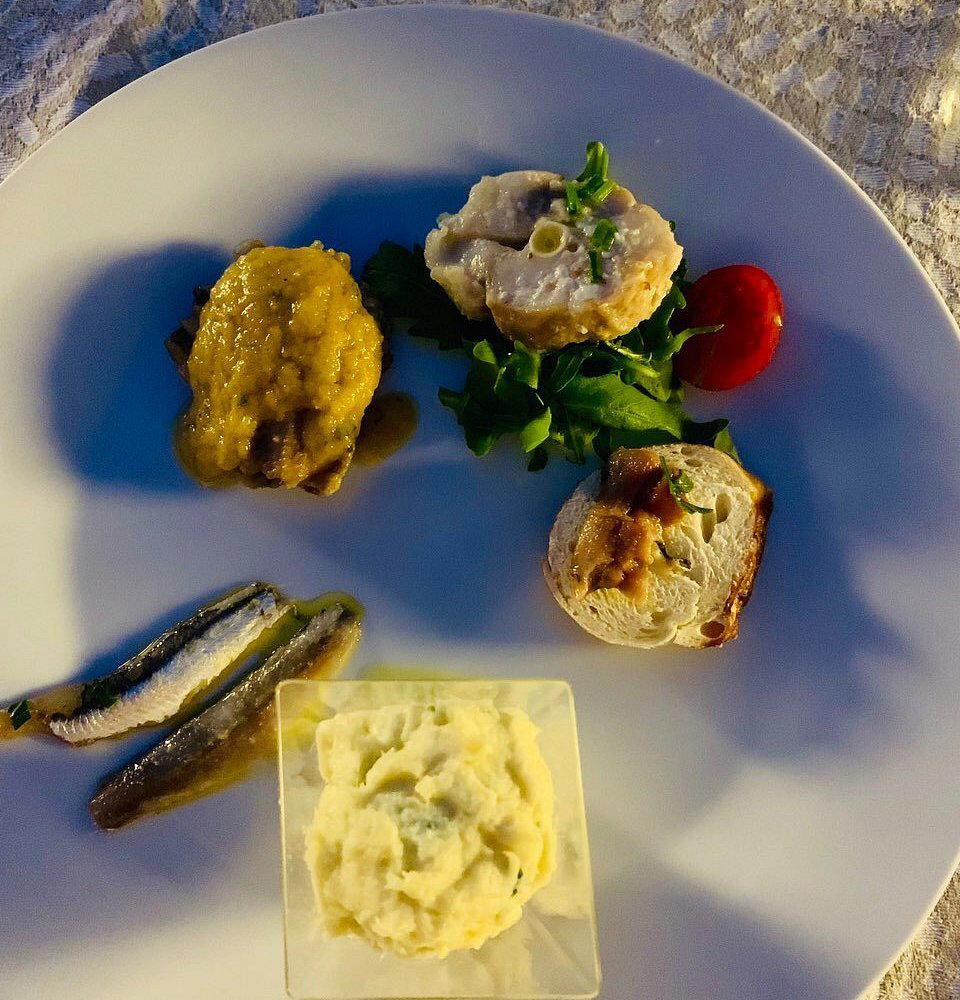
Ingredient sourcing is not a trend in inland Istria; it is the baseline condition of the kitchen. The peninsula's food identity rests on a tight cluster of raw materials: white and black truffles from the forests around Motovun and Buzet, olive oil from groves that have been in continuous production for centuries, dry-cured meats from the interior villages, and sheep's milk cheeses that rarely travel far from where they are made. These are not luxury imports or seasonal specials. They are the standard vocabulary of Istrian cooking at every price point.
What distinguishes a serious kitchen in this context is how it handles that vocabulary, whether it treats ingredients as background noise or as the actual subject of the plate. Croatia's most discussed restaurants, from Pelegrini in Sibenik to Restaurant 360 in Dubrovnik, have built their reputations partly on articulating local produce with precision and technical confidence. In a village like Tar, the sourcing advantage is structural: the truffles, the oil, the cured meats are often closer to the kitchen door than they are to any wholesale distributor.
Istria's truffle season runs in two distinct windows. Black truffles are most available from late autumn through winter; white truffles, the more volatile and expensive variety, concentrate in October and early November. A kitchen in this part of the peninsula, positioned between Poreč and Novigrad, has reasonable access to both. Travellers timing a visit around the truffle harvest, a period that draws serious food tourists to the region, will find Tar a more grounded base than the coastal towns, which tend toward spectacle during peak season.
The Atmosphere and the Setting
Village restaurants in inland Istria tend toward one of two formats. The first is the konoba: stone walls, checked tablecloths, menus of grilled meats and pasta, priced accessibly and aimed at locals and passing traffic alike. The second is the smaller, more considered operation that takes the same local ingredients but applies more deliberate thinking to how they are presented and sequenced.
What the setting guarantees is quiet. Tar is not on the main tourist circuit. The relative calm of a village table, compared to a busy Rovinj terrace in August, has its own value, the kind of dining where conversation competes only with ambient village sound rather than adjacent tables packed at holiday density. For reference on what a more ambitious Istrian coastal operation looks like by comparison, Nebo by Deni Srdoč in Rijeka and Cubo in Opatija represent the Kvarner coast's more formal end of the spectrum.
Croatia's Broader Dining Trajectory
Croatian fine dining has moved quickly in the past decade. Michelin's entry into the Croatian market accelerated a conversation the industry was already having, about local sourcing, about technique, about how Adriatic and continental ingredients could be handled with the same precision applied to them in Vienna or Milan. Dubravkin Put in Zagreb and Boskinac in Novalja sit at different points on that arc, both making arguments for Croatian produce as a serious subject rather than a rustic backdrop.
Istria has benefited disproportionately from that shift, partly because its ingredient base was already strong and partly because its proximity to Italy gave it both culinary vocabulary and a tourist demographic already attuned to thinking carefully about what they eat. The peninsula now has a cluster of serious kitchens at multiple price points, from the leading coastal addresses down to village operations that punch beyond their scale. Korak in Jastrebarsko and BioMania Bistro Bol in Bol represent analogous moves elsewhere in Croatia, smaller towns, ingredient-driven menus, operating outside the main resort economy. Madalu fits that pattern geographically, even if the specific format awaits confirmation.
For context on what internationally benchmarked ingredient-focused cooking looks like at its most technically ambitious, Le Bernardin in New York City and Atomix in New York City represent the ceiling of that approach in a different market, useful reference points for understanding how far the conversation about sourcing and technique has traveled globally, and why Istria's raw material advantage matters in that context.
Planning a Visit to Tar
Tar sits between Poreč and Novigrad in central-western Istria, reachable by car in under fifteen minutes from either town. That proximity makes it a realistic lunch or dinner detour rather than a dedicated destination trip, though the village is worth the drive on its own terms.
Nearby restaurants worth building into the same Istrian circuit include Alfred Keller in Mali Lošinj for a contrast in island-coast cooking, and LD Restaurant in Korčula for how Dalmatia handles the same local-produce framework. Within Istria itself, Krug in Split and Bodulo in Pag extend the comparison across the Adriatic's range of regional cooking traditions. Burin in Crikvenica and Cantilly Garden Restaurant in Samobor show how the same ingredient-first logic plays out in Croatia's continental north.
Quick Comparison
Comparable venues nearby, for context on price, style, and recognition.
| Venue | Cuisine | Price | Notes |
|---|---|---|---|
| MadaluThis venue — the venue you are viewing | Fresh Istrian Seafood | $$$ | Not listed |
| Porto Salvore | Traditional Croatian Seafood | $$$ | Savudrija |
| Čok | Fresh Istrian Seafood | $$ | Novigrad |
| Toni | Fresh Seafood Mediterranean | $$ | Zambratija |
| Segutra | Mediterranean Seafood | $$ | Old Town |
| Lanterna | Traditional Croatian Seafood | $$$ | Pjescana Uvala |
Continue exploring
More in Tar
Restaurants in Tar
Browse all →
Bars in Tar
Browse all →
Hotels in Tar
Browse all →

At a Glance
- Rustic
- Cozy
- Intimate
- Family
- Casual Hangout
- Standalone
- Local Sourcing
Simple, hospitable fishing hut atmosphere with a welcoming family vibe.