Google: 4.7 · 8,312 reviews

Śląska Prohibicja on Krawczyka 1 brings traditional Silesian cooking into a setting that reflects the industrial architectural character of Katowice. The kitchen draws from the region's deep culinary traditions, serving dishes rooted in the coal-mining communities that shaped Upper Silesia's identity. For visitors wanting to understand what this city actually eats, it sits in a different register from Poland's modernist dining wave.
 Discover on Pearl
Pearl is the En Primeur Club membership app — saves, bookings, and concierge access live there. Same editors, same standards.
Where Silesian Cooking Meets Its Own History
Katowice is not a city that has spent the last decade softening its industrial past into aesthetic nostalgia. The architecture along streets like Krawczyka carries the weight of the region's character without apology, and Śląska Prohibicja works within that grain rather than against it. The building at Krawczyka 1 fits the city's architectural vernacular in a way that positions the restaurant before a single dish arrives: this is Silesia, and the food follows the same logic.
That matters because Silesian cuisine occupies a specific position in Poland's wider food conversation. While Warsaw and Kraków have driven the country's modernist cooking moment, the restaurant scenes in cities like Katowice have often worked differently, with stronger ties to working-class tradition and regional ingredient logic. Śląska Prohibicja sits within that current, serving food that draws from the cultural memory of Upper Silesia's coal-mining communities rather than from the European fine-dining circuit. For context on how this fits Katowice's broader offer, see our full Katowice restaurants guide.
The Cultural Logic of Silesian Food
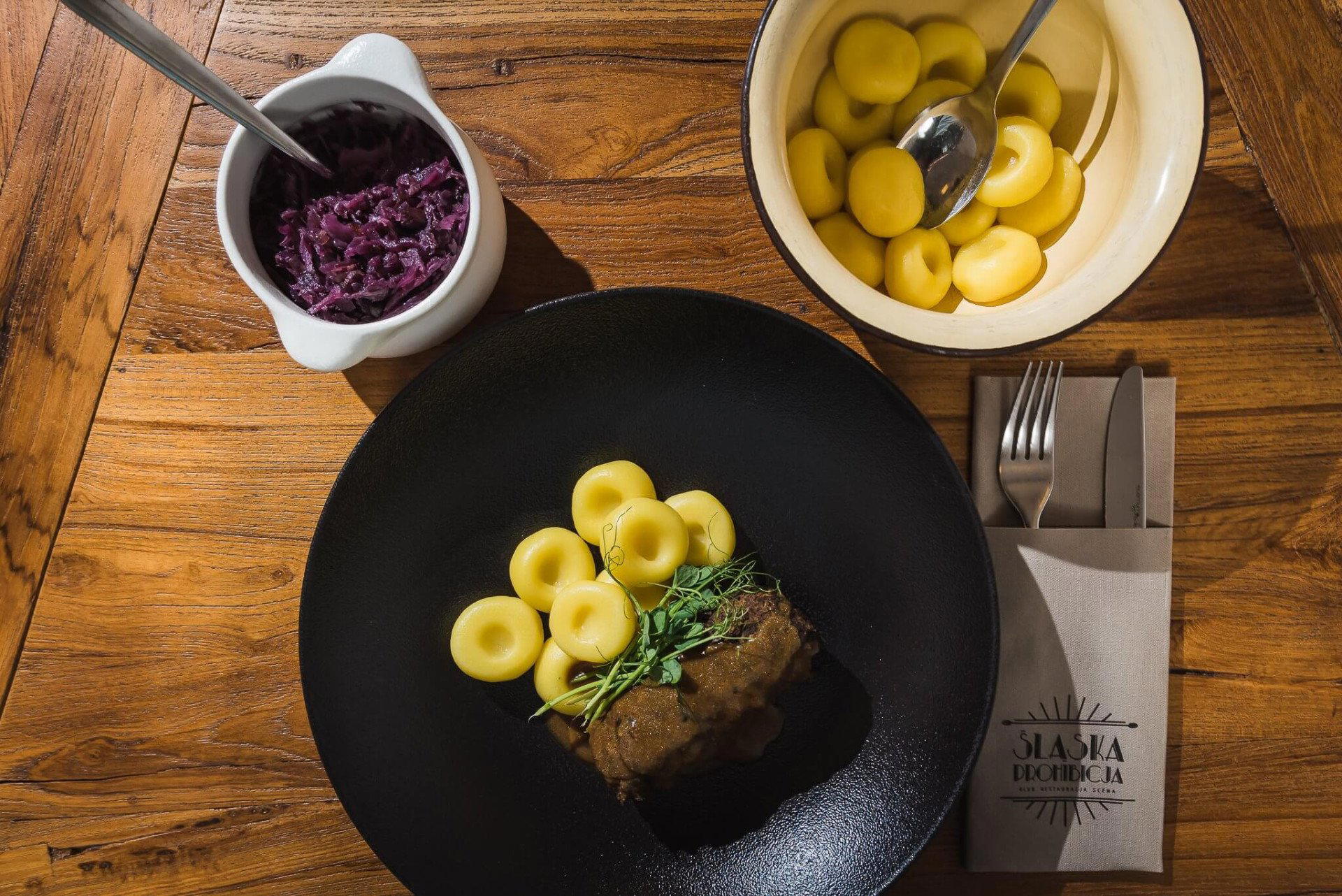
Upper Silesia developed one of Central Europe's most distinct regional food cultures, partly because of geography and partly because of labour. The coalfields created a population that needed dense, sustaining food and had access to the agricultural produce of the surrounding countryside. The result was a cuisine built around slow-cooked meats, dumplings with specific regional variations, and preparations that survive long shifts and cold winters. Rolada śląska, kluski śląskie, and modra kapusta represent that tradition, but they are not museum pieces. In households across Katowice and the surrounding Śląskie voivodeship, these dishes remain active parts of domestic cooking in a way that has no real parallel in Warsaw's more internationally oriented food culture.
The name carries a historical reference point. Prohibition-era tensions and underground culture had their own expressions in Silesia, and framing a restaurant around that period signals an intention to engage with the region's social history rather than simply serve its dishes in a neutral container. Whether that framing extends into the interior design and broader atmosphere is part of what the space communicates at Krawczyka 1.
This regional specificity positions Śląska Prohibicja in a different competitive conversation from places like Kaktusy Kato Koncept Kulinarny, Katowice's other notable restaurant entry in this guide, which operates in a more contemporary culinary idiom. Neither approach is a correction of the other; they reflect the two poles that define interesting city restaurant scenes: the avant-garde and the rooted. Both have a place in understanding what Katowice has become as a food city.
Silesia in the Polish Restaurant Context
Poland's restaurant scene has diversified considerably over the past decade. Warsaw addresses like hub.praga represent an urban creative current, while Kraków supports more formally ambitious tables like Bottiglieria 1881. Coastal cities have their own directions, with Arco by Paco Pérez in Gdańsk and Biały Królik in Gdynia reflecting a northern European sensibility, and Vinissimo in Sopot anchoring the fine-dining end of the Tricity's offer. Further afield, Muga in Poznań, Acquario in Wrocław, and Giewont in Kościelisko each show how regional Polish cuisine intersects with modern cooking ambitions in different ways. Śląska Prohibicja is not operating in that modernist register; it belongs to the parallel strand of Polish dining that takes regional specificity seriously on its own terms.
That strand is arguably the harder act to sustain. Modernist cooking has a shared international reference library; the restaurant serving regional food well has to move through the gap between what locals remember and what visitors can engage with without a prior relationship to the tradition. Done poorly, it becomes a theme park. Done with genuine kitchen commitment, it functions as primary source material for understanding a place.
Visiting Śląska Prohibicja: What to Know
The restaurant is at Krawczyka 1, 40-423 Katowice, in a part of the city that reflects the density and character of Upper Silesian urban architecture. Katowice's centre is compact enough that the address is accessible from most accommodation options without significant travel. For planning the surrounding visit, the guides to hotels in Katowice, bars in Katowice, experiences in Katowice, and wineries in Katowice offer additional context for structuring time in the city.
Price range, hours, and booking method are not confirmed in the available data. Given that Śląska Prohibicja operates in the traditional Silesian cooking segment rather than the tasting-menu tier, pricing is likely accessible rather than celebratory-occasion territory, but direct confirmation with the restaurant before visiting is the sensible approach. Phone and website details are not currently listed in this record.
Visitors arriving in Katowice specifically to understand Silesian food culture, and who are also travelling through other parts of Poland, might cross-reference with Drukarnia Smaku Cristina in Zakopane or Luneta and Lorneta Bistro Club in Ciekocinko for a sense of how other Polish regional food traditions present themselves in a restaurant context. For a wider international frame of reference, the commitment to place-specific cooking that characterises the serious end of this segment has parallels at institutions like Emeril's in New Orleans, where a regional American food tradition sustains long-term identity, or at the other end of the formality spectrum, the ingredient precision of Le Bernardin in New York City, which demonstrates what sustained focus on a single culinary tradition can produce over decades.
Budget Reality Check
These are the closest comparables we have in our database for quick context.
| Venue | Cuisine | Price | Awards |
|---|---|---|---|
| Śląska Prohibicja | |||
| Giewont | Modern Cuisine | €€€ | Michelin 1 Star |
| Rozbrat 20 | Modern European, Modern Cuisine | €€€ | Michelin 1 Star |
| alewino | Modern Polish, Traditional Cuisine | €€ | |
| Bez Gwiazdek | Modern Polish, Modern Cuisine | €€€ | |
| Butchery & Wine | Bistro, Meats and Grills | €€ |
At a Glance
- Cozy
- Elegant
- Historic
- Industrial
- Family
- Group Dining
- Date Night
- Celebration
- Historic Building
- Garden
- Open Kitchen
- Extensive Wine List
- Craft Cocktails
- Local Sourcing
- Garden
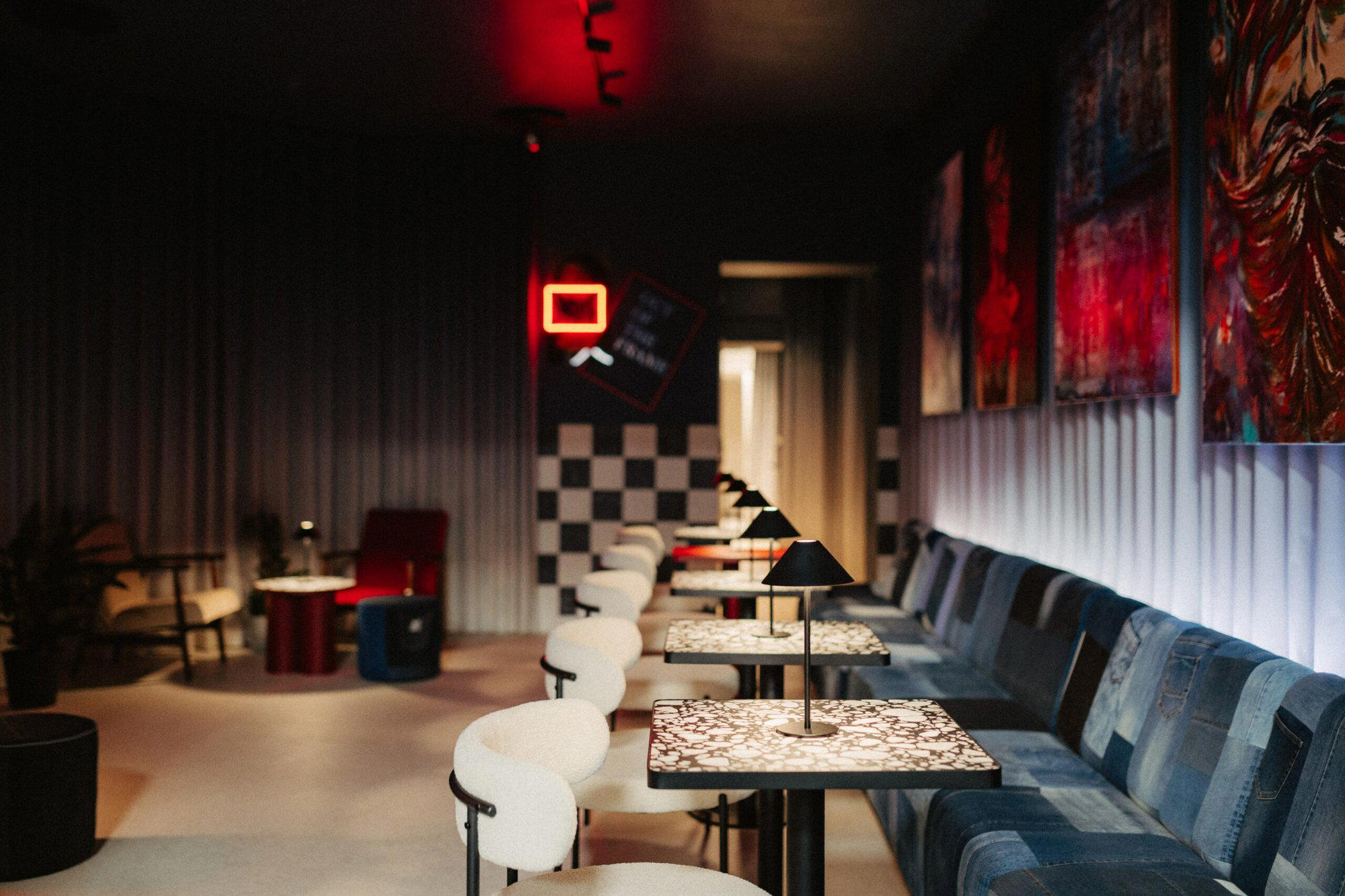
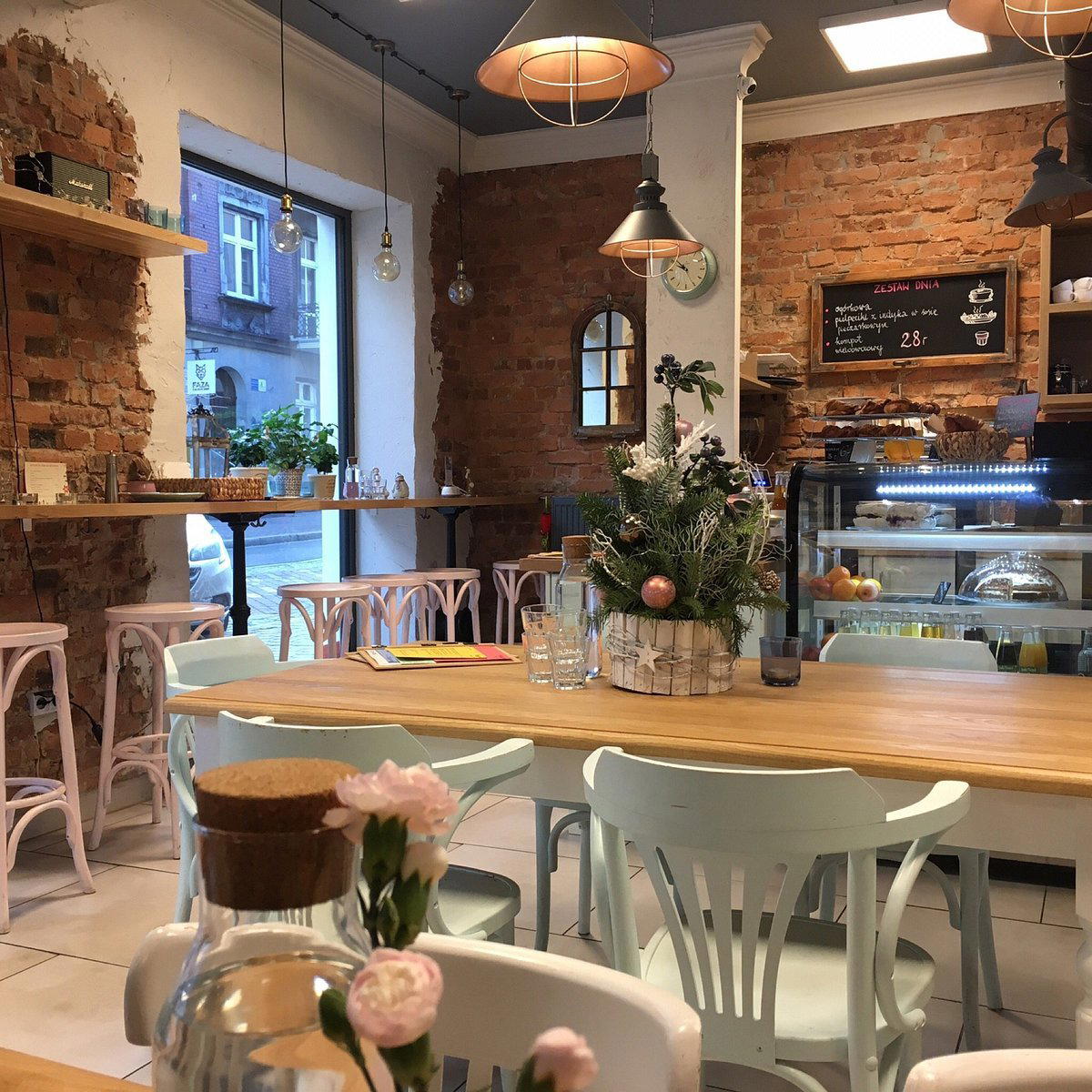
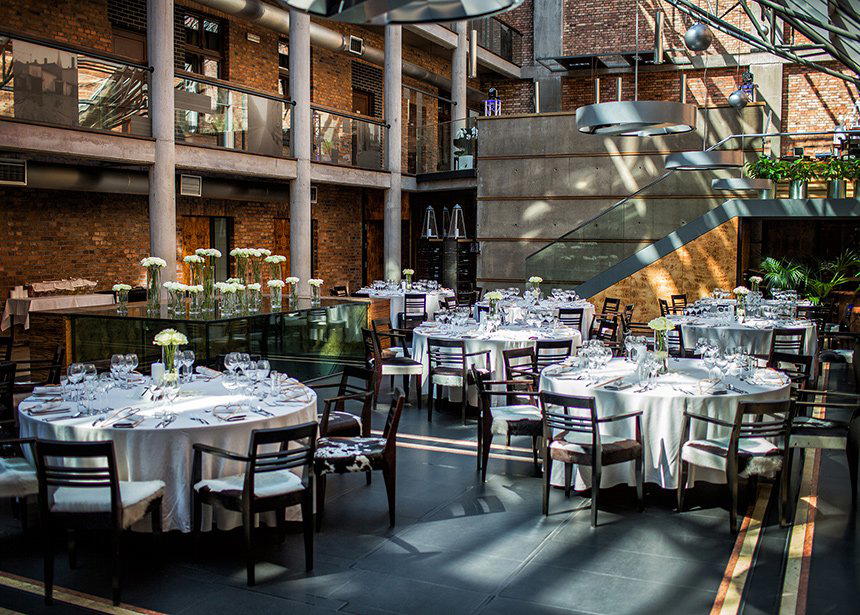
Stylish and elegant with a homely 1920s atmosphere in modernly arranged historic tenement house interiors.