Ramen in Katowice has quietly developed its own character, and Madara Ramen on Moniuszki Street sits at a considered point in that scene. The kitchen draws on Japanese broth-building traditions adapted to Central European context, placing it in a category where sourcing discipline and preparation depth matter more than novelty. For a city still finding its fine-casual identity, it represents a serious approach to a format that rewards attention.
Pearl is the En Primeur Club membership app — saves, bookings, and concierge access live there. Same editors, same standards.
- Address
- Stanisława Moniuszki 12, 40-005 Katowice, Poland
- Phone
- +48 690 233 951
- Website
- madararamen.pl
- Directions
- Get directions
 Saves & bookings on Pearl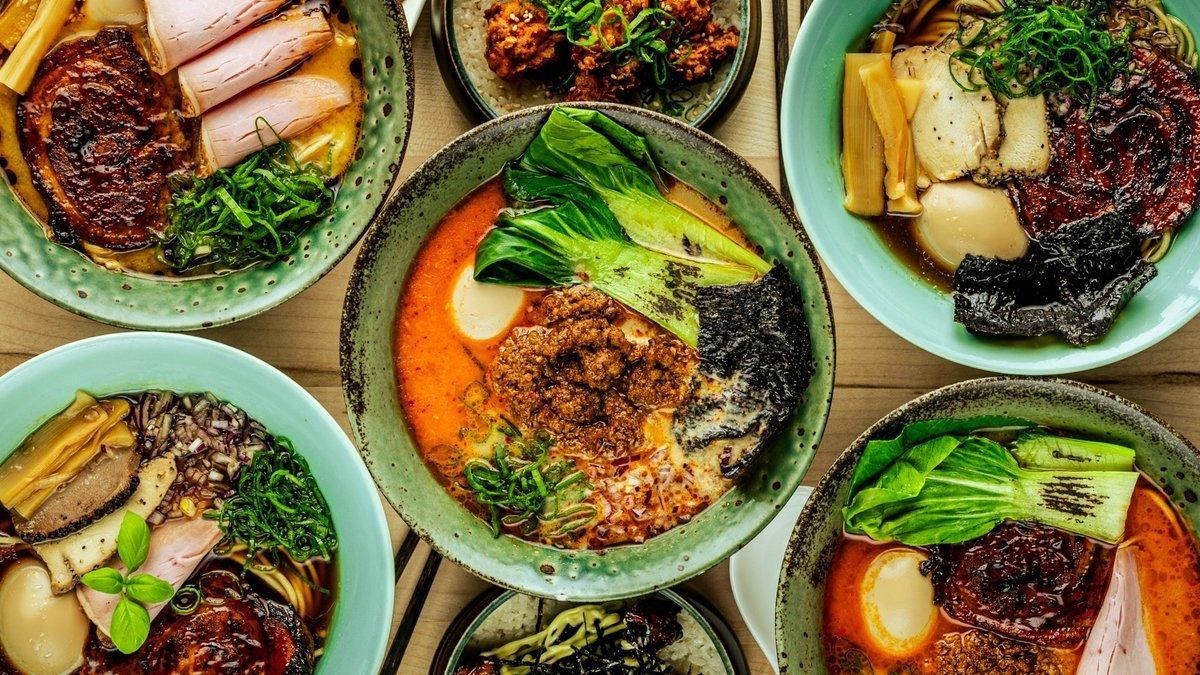
A Bowl as Argument: What Ramen Tells You About a City's Palate
Approach Moniuszki Street in central Katowice and you are walking through a district that has spent the past decade redefining what kind of city this is. The post-industrial recalibration that gave Katowice its new concert halls and gallery spaces also created an appetite for dining formats built on craft rather than spectacle. Madara Ramen is a casual ramen restaurant at Stanisława Moniuszki 12 in Katowice, serving authentic Japanese ramen at about $15 per person. Ramen arrived in this context not as a trend import but as a discipline: one of the few formats where the gap between a competent bowl and a serious one is entirely determined by what happens before service begins.
Madara Ramen, at Stanisława Moniuszki 12, sits inside that seriousness. The address places it close enough to the city centre to draw a broad audience, but the format self-selects: ramen at this level of preparation is not a quick lunch proposition. It is a commitment to a bowl that took hours, sometimes days, to build.
The Sourcing Question: Why Broth Is an Argument About Ingredients
Japanese ramen tradition is, at its core, an ingredient discipline. The split between tonkotsu, shoyu, shio, and miso styles is also a split between different sourcing philosophies: pork bones cooked to collagen dissolution, chicken frames layered into clarity, kombu and katsuobushi pulled at precise temperatures to extract umami without bitterness. Each style makes a claim about what the cook values and where they source.
In Central Europe, that sourcing argument has additional weight. The distance from Japanese ingredient supply chains means kitchens operating at this level must either import with precision or find local analogues that perform equivalently. The leading ramen operations in Polish cities have leaned into both: premium Japanese pantry staples for the elements that cannot be substituted (certain soy varieties, specific dried fish, quality nori), and regional proteins and aromatics where local supply is genuinely superior. Pork from Polish farms, for instance, often brings a fat profile that works well in long-cooked broths.
This dual-sourcing logic is not distinctive to Katowice. You see it at serious Japanese-influenced kitchens across Poland, where chefs working in formats from ramen to sushi have had to develop supplier relationships that span continents. The result, when executed with consistency, is a bowl that reads as coherent rather than compromised. For context on how Japanese-influenced kitchens operate elsewhere in the country, Hashi Sushi in Gdansk and Hattori Hanzo in Czestochowa represent different points on the same spectrum of Japanese culinary adaptation in Polish cities.
Katowice's Dining Scene and Where Ramen Fits
Katowice does not yet have the density of recognized fine-dining addresses that Kraków or Warsaw carry. Bottiglieria 1881 in Kraków operates at a Michelin-starred tier that Katowice has not yet produced, and hub.praga in Warsaw reflects a capital city's capacity for format experimentation at scale. But Katowice has developed something different: a mid-tier restaurant culture with genuine ambition, where the leading addresses are not chasing awards but building consistent craft practices.
In that context, a ramen kitchen with sourcing discipline occupies an interesting position. Ramen is not a prestige format in the Western critical framework, which means it rarely appears in the award conversations that draw attention to a city's dining. But it is one of the more technically demanding bowl formats in global cooking, and a kitchen that executes it properly is demonstrating skills that translate across cuisines: broth-making patience, seasoning calibration, timing precision across multiple components arriving at the bowl simultaneously.
Katowice's broader food scene rewards this kind of attention. Alongside Madara Ramen, the city's more considered addresses include Art Katowice, Kaktusy Kato Koncept Kulinarny, and Kolorowo bistro, each occupying a different register of the city's evolving fine-casual spectrum. For visitors who prefer something more grounded in burger format, Carlos Burger&Lunch; sits in the same neighbourhood orbit, and Yami Vegan Sushi represents Katowice's parallel interest in plant-forward Japanese-adjacent formats.
The Regional Frame: Polish Cities and Japanese Food Traditions
Poland's engagement with Japanese cuisine has deepened considerably over the past decade. What began as sushi bars in major cities has expanded into a more varied conversation: izakaya-influenced formats, dedicated ramen kitchens, omakase counters in Warsaw, and Japanese-Polish fusion approaches that use local seasonal produce within Japanese structural frameworks. Cities like Poznań (where Muga demonstrates the sophistication of the local scene) and Białystok (see Kwestia Czasu) show that this shift is not confined to the two largest cities.
Katowice's participation in this shift is meaningful because the city's dining audience skews practical and value-conscious, shaped by its industrial-city history. When a Japanese format builds a following in Katowice, it does so without the built-in prestige audience that Warsaw or Kraków provide. That self-selection dynamic produces a loyal, knowledgeable regular base, which is exactly the kind of audience a sourcing-led ramen kitchen needs to survive.
For comparison at the international level, the gap between a bowl at the restaurant and what chefs like those behind Atomix in New York City are doing with Korean fine dining, or the seafood precision at Le Bernardin, is a useful reminder of how ingredient sourcing discipline scales across formats and price points. The underlying commitment to where things come from and what that means for the final plate is the same conversation, at different register.
Other Polish addresses worth cross-referencing for regional context: Arco by Paco Pérez in Gdańsk, Giewont in Kościelisko, Cudne Manowce in Olsztyn, and Górnik in Krakow each illustrate different approaches to serious cooking in smaller Polish cities.
Planning Your Visit
The restaurant is located at Stanisława Moniuszki 12 in central Katowice, a short walk from the main railway station and the Spodek arena district. Current booking details, hours, and pricing are not listed here.
Fast Comparison
Comparable venues nearby, for context on price, style, and recognition.
| Venue | Cuisine | Price | Notes |
|---|---|---|---|
| Madara RamenThis venue — the venue you are viewing | Authentic Japanese Ramen | $$ | Not listed |
| Yami Vegan Sushi | Vegan Japanese Sushi | $$ | Katowice |
| Carlos Burger&Lunch | Mexican and American Burgers | $$ | centrum |
| Śląska Prohibicja | Modern Silesian | $$ | Nikiszowiec |
| Art Katowice | Modern Silesian and European | $$ | Centrum |
| Kaktusy Kato Koncept Kulinarny | Modern Silesian Polish | $$$ | Śródmieście |
Continue exploring
More in Katowice
Restaurants in Katowice
Browse all →
Bars in Katowice
Browse all →
Hotels in Katowice
Browse all →
At a Glance
- Cozy
- Modern
- Casual Hangout
- Street Scene
Current opening hours
- Monday
- Closed
- Tuesday
- 1–9 PM
- Wednesday
- 1–9 PM
- Thursday
- 1–9 PM
- Friday
- 1–9 PM
- Saturday
- 1–9 PM
- Sunday
- 1–8 PM
Hours can change for holidays and private events. Last verified .
Cozy and intimate small place with a pleasant view of the Silesian Theatre.