
A Michelin Bib Gourmand recipient in both 2024 and 2025, L'Osteria della Trippa on Via Goffredo Mameli serves the foundational dishes of Lazio cooking at prices that sit well below Rome's fine-dining tier. Tripe, coratella, cacio e pepe, and artichokes alla giudia make up the core of what arrives at the table: generous, carefully prepared, and rooted firmly in the Roman tradition.
Pearl is the En Primeur Club membership app — saves, bookings, and concierge access live there. Same editors, same standards.
- Address
- Via Goffredo Mameli, 15/16, 00153 Roma RM, Italy
- Phone
- +39 06 4555 4475
- Website
- losteriadellatrippa.it
- Directions
- Get directions
 Saves & bookings on Pearl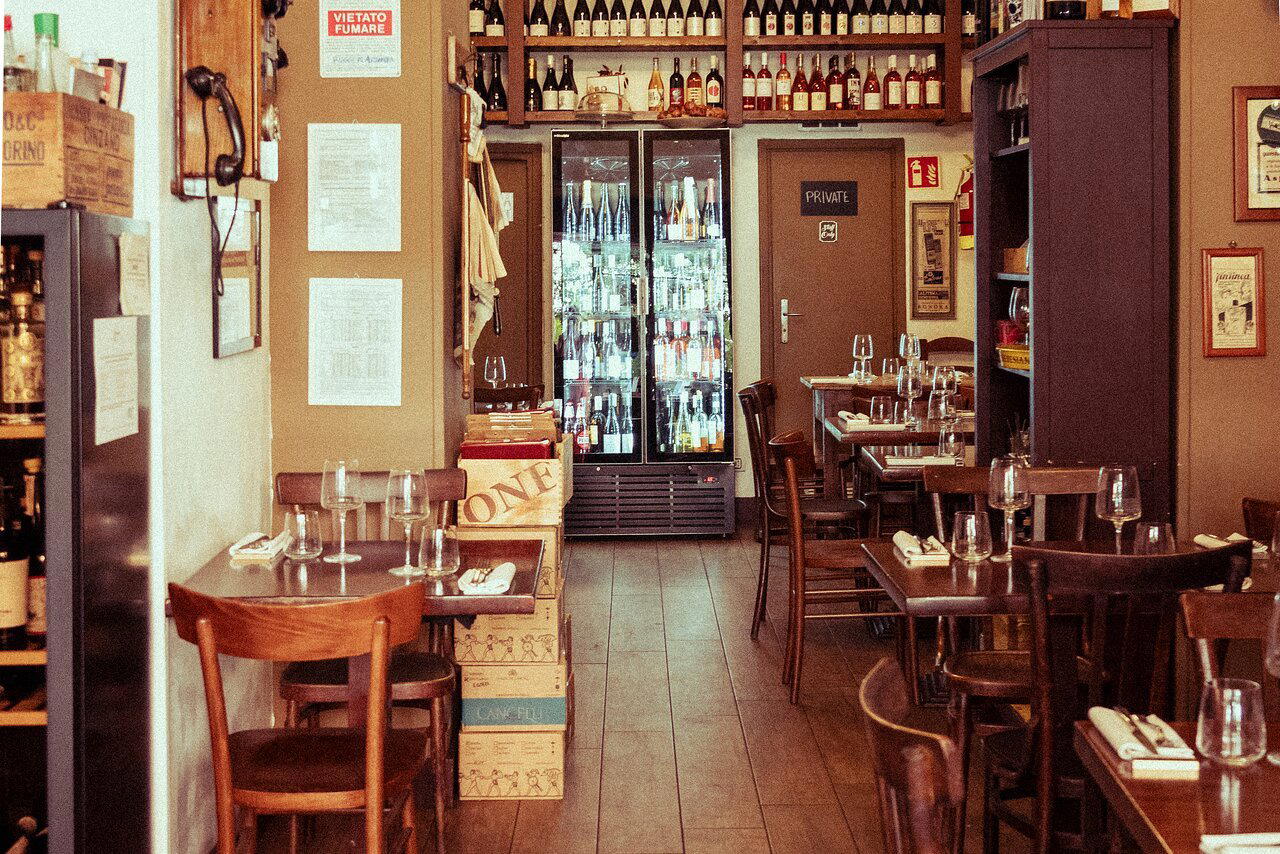
Where Trastevere Meets the Roman Table
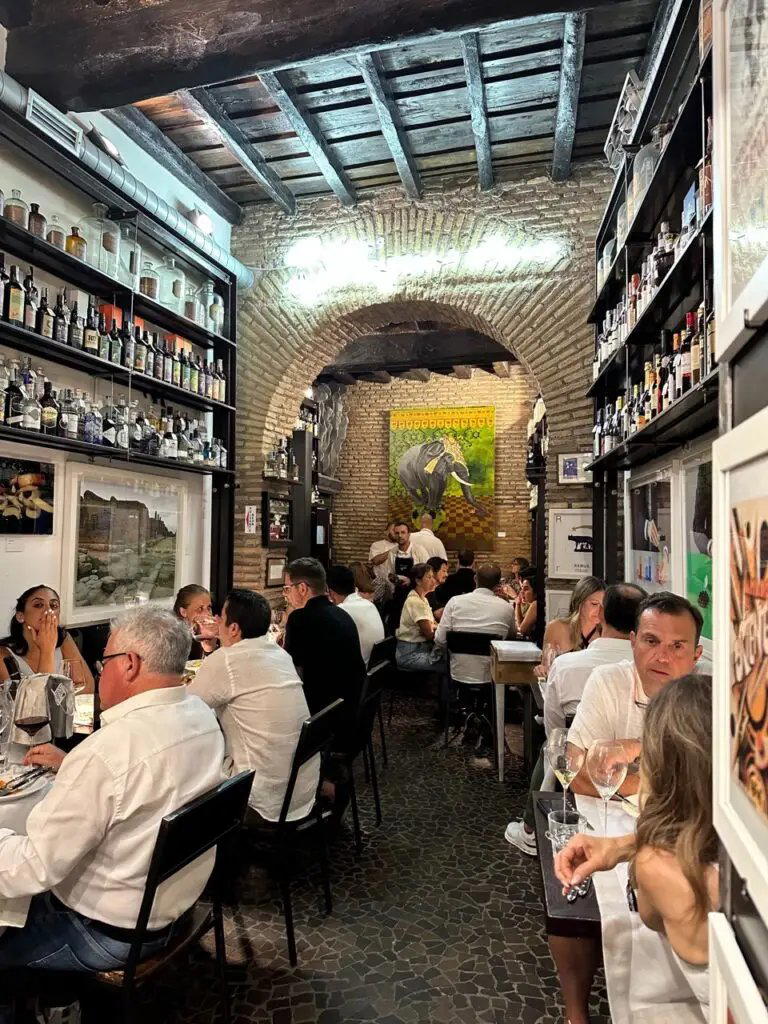
Approach Via Goffredo Mameli on a weekday evening and the signals are familiar to anyone who has spent time in Trastevere: cobblestones worn smooth by foot traffic, the low murmur of conversation spilling from doorways, the smell of rendered lard and braised vegetables threading through cooler street air. L'Osteria della Trippa sits within this neighbourhood grain rather than against it. There is no elaborate signage, no curated staging for passing tourists. The room communicates through the simpler language of set tables, close seating, and a menu that arrives without apology or excessive explanation.
This is the register in which Roman trattoria cooking has always operated, and it is a register that a generation of tasting-menu restaurants has not displaced. Rome's Michelin landscape is dominated at its upper end by the kind of addresses where a single evening costs as much as a short flight: Enoteca Pinchiorri in Florence or Osteria Francescana in Modena represent that tier nationally, and locally, La Pergola and Il Pagliaccio occupy equivalent ground. L'Osteria della Trippa operates at the opposite end of the price axis, with a single-euro-sign price point, and has earned consecutive Michelin Bib Gourmand recognition in 2024 and 2025 for doing so.
The Cuisine of Lazio, Without Dilution
Roman cooking is not shy about what it is. The cuisine that emerged from the city's working-class neighborhoods, the cucina povera of the quinto quarto (the offal cuts left after the prime meat had gone to wealthier buyers), is direct, fatty, and unapologetically specific. Tripe cooked in tomato, guanciale, and pecorino. Coratella, the lamb heart, lung, and liver combination that still divides first-time visitors. Artichokes fried in olive oil until the outer leaves go crisp and the inner ones collapse into tenderness. These are not dishes that soften well for an international audience, and they do not need to.
At L'Osteria della Trippa, the menu holds to this logic. The tripe referenced in the name signals the kitchen's allegiance clearly. Alongside it, the pasta courses cover the canonical Lazio sauces: amatriciana, with its guanciale-and-tomato base and the sharp finish of pecorino; carbonara, the egg-and-cured-pork standard that has been imitated globally and rarely matched outside Rome; cacio e pepe, the three-ingredient pasta that is as demanding technically as it appears simple. The artichokes alla giudia, deep-fried in the manner preserved by Rome's Jewish community for centuries, appear as they should: golden, opened flat, the outer petals gone to crunch while the heart remains soft.
Chef Alessandra Ruggeri heads the kitchen, and her cooking fits squarely within the tradition of Lazio cuisine rather than departing from it. The Bib Gourmand distinction, awarded twice consecutively, recognises generous portions of carefully prepared regional specialities at accessible prices: that is precisely the compact this kitchen maintains. For comparison, Degli Angeli in Magliano Sabina and Mingone in Carnello work within the same Lazio tradition from different provincial settings; the restaurant carries that tradition into the capital without adjusting it for the city's tourist footfall.
The Sensory Register of the Room
The experience of eating at an address like this one is inseparable from its physical register. Roman trattatorie of this type run warm: the combination of small spaces, close tables, active kitchens, and cold-weather dishes means that the room holds heat and noise together. Conversation carries. The smell of braised offal and rendered fat is present from the moment the door opens. These are not incidental atmospheric details; they are structural to the experience. A room that smelled of nothing and seated its guests in acoustic comfort would be serving a different meal.
The guests who leave positive reviews are, by and large, describing recognition: the right dish, at the right temperature, served without theatre in a room that looks and smells like the cooking it produces.
Where This Sits in Rome's Eating Options
Rome's restaurant scene has stratified considerably over the past decade. At one end, the city's €€€€ addresses pursue contemporary Italian or Mediterranean fine dining and carry Michelin star recognition: La Pergola holds three stars, Enoteca La Torre and Il Pagliaccio hold two, Aroma and Idylio by Apreda hold one each. These restaurants set the conversation at the summit of the market. At the other end, a cluster of trattoria and osteria addresses serve the cucina romana that predates all of it, and the better ones earn Bib Gourmand recognition for doing so at budget-accessible price points.
The restaurant belongs to that second group, but with slightly more reach than most. It sits closer to addresses like Trattoria Pennestri and ConTatto than to the fine-dining circuit. For Lazio cuisine in a regional rather than Roman-urban frame, Cacciani, Li Somari, and Sora Maria e Arcangelo offer useful comparison points from the wider province. Nationally, the technical ambition of Le Calandre in Rubano, Enrico Bartolini in Milan, Atelier Moessmer Norbert Niederkofler in Brunico, and Dal Pescatore in Runate sits in a different category entirely, though all draw on the same Italian regional principle of cooking from place.
The Trastevere address also positions the restaurant within one of Rome's most visited neighbourhoods, which means that demand from international guests is consistently present.
Know Before You Go
- Address: Via Goffredo Mameli, 15/16, 00153 Roma RM, Italy
- Neighbourhood: Trastevere, Rome
- Price range: € (budget-accessible; Bib Gourmand tier)
- Awards: Michelin Bib Gourmand 2024 and 2025
- Cuisine: Cuisine from Lazio; tripe, coratella, artichokes alla giudia, pasta with amatriciana, carbonara, and cacio e pepe
- Chef: Alessandra Ruggeri 3 from 743 reviews
- Booking: Advance reservation recommended
- Dress code: Smart casual
Price and Positioning
Comparable venues nearby, for context on price, style, and recognition.
| Venue | Cuisine | Price | Awards | Notes |
|---|---|---|---|---|
| L'Osteria della TrippaThis venue — the venue you are viewing | Cuisine from Lazio | $$ | Bib Gourmand | Not listed |
| Pinocchio | Fiumicino, Italian Trattoria with Pizza | $$ | Michelin Plate | Not listed |
| Domenico dal 1968 | Not listed | $$ | Bib Gourmand | Appio-Latino, Classic Roman Trattoria with Seafood |
| Romanè | Trionfale, Authentic Roman Trattoria | $$ | Bib Gourmand | Not listed |
| Luciano Cucina Italiana | Parione, Modern Roman Italian | $$$ | Michelin Plate | Not listed |
| Il Forno Campo de' Fiori | Parione, Roman Pizza al Taglio & Bakery | $$ | Not listed | Not listed |
Recognition history
Dated appearances from independent guides and award organizations, with the underlying list record or original source where available.
Michelin Bib Gourmand
Michelin
Michelin Bib Gourmand
Michelin
Michelin Bib Gourmand
Michelin
Continue exploring
More in Rome
Restaurants in Rome
Browse all →
Bars in Rome
Browse all →
Hotels in Rome
Browse all →

At a Glance
- Cozy
- Rustic
- Classic
- Date Night
- Casual Hangout
- Special Occasion
- Historic Building
- Extensive Wine List
- Local Sourcing
Current opening hours
- Monday
- Closed
- Tuesday
- Closed
- Wednesday
- Closed
- Thursday
- Closed
- Friday
- Closed
- Saturday
- Closed
- Sunday
- Closed
Hours can change for holidays and private events. Last verified .
Cozy atmosphere with wooden tables, mustard-hued walls, and a convivial neighborhood trattoria feel.