
A century-old family institution in Frascati's Castelli Romani hills, Cacciani has held its place in the region's dining conversation by doing the opposite of chasing trends. The €€ pricing sits well below what the kitchen's discipline and longevity would justify in Rome proper, making the 40-minute drive from the capital one of the more considered value decisions in the region. Michelin Plate recognition in both 2024 and 2025 confirms the consistency.
Pearl is the En Primeur Club membership app — saves, bookings, and concierge access live there. Same editors, same standards.
- Address
- Via Armando Diaz, 13, 00044 Frascati RM, Italy
- Phone
- +39 06 942 0378
- Website
- cacciani.it
- Directions
- Get directions
 Saves & bookings on Pearl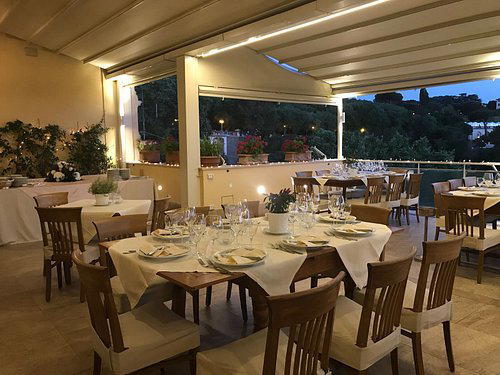
The View Before the Food
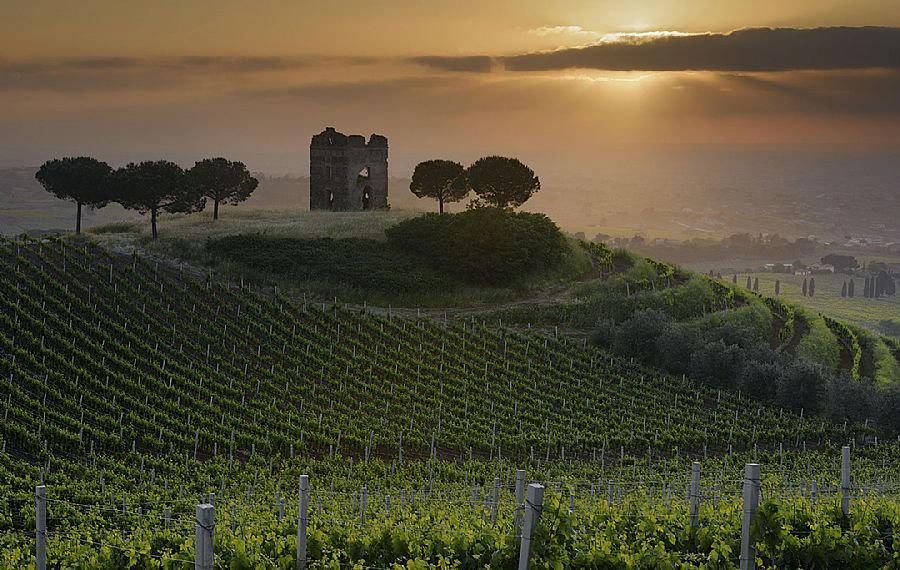
Frascati sits in the Castelli Romani hills southeast of Rome, and the approach to Via Armando Diaz makes the restaurant's setting legible before you've read a menu. The town commands a broad sightline back toward the capital, and Cacciani's panoramic terrace has been drawing that view into the dining experience for over a century. On a clear afternoon, the geography alone explains why this stretch of the Alban Hills developed a tradition of destination dining: the distance from Rome is short enough for a day trip but sufficient to shift the register entirely, from city tempo to something slower and more deliberate.
Inside, the dining room carries the weight of that history without performing it. The space reads as a working restaurant that happens to be old, rather than a museum piece trading on nostalgia. That distinction matters: rooms that over-curate their heritage tend to let the kitchen coast. Here the physical setting and the cooking appear to operate on the same axis.
What a Century of Regional Cooking Looks Like
The Castelli Romani have long functioned as Rome's culinary backyard, a zone where the cucina laziale tradition runs deeper and less diluted than in the capital's tourist-facing trattorie. Cacciani has been part of that tradition for more than a hundred years, run by the same family across multiple generations. That continuity is worth naming precisely because it is rare: most restaurants that have survived a century did so by adapting to whatever the market wanted. Cacciani's profile suggests the opposite approach. The menu holds to classic dishes from Lazio, resisting the pressure toward modernisation that has reshaped much of Italy's mid-to-upper dining tier.
The practical consequence is a menu that reads as a document of regional identity rather than a chef's creative project. Dishes from Lazio's canon appear alongside a handful of fish and seafood options, a nod to the Tyrrhenian coast that sits within the region's culinary orbit. The focaccia served alongside the bread course has drawn specific notice from Michelin's inspectors, a small but telling detail: when a recognition body flags something as elemental as focaccia, it usually signals that the kitchen is executing fundamentals at a level that justifies the attention.
For context on where this sits within Italy's broader dining spectrum, the multi-starred tasting-menu tier is well represented by venues like Osteria Francescana in Modena, Enoteca Pinchiorri in Florence, Le Calandre in Rubano, Enrico Bartolini in Milan, and Atelier Moessmer Norbert Niederkofler in Brunico. Cacciani operates in a different register entirely: lower in price, grounded in a single regional tradition, and measuring itself against the depth of its own continuity rather than against creative peers.
The Value Calculus
Cacciani's €€ price positioning is the editorial fact that most needs examination, because it shapes what the visit actually represents. In Rome proper, the comparison restaurants operating at Michelin-recognised levels trend sharply toward the €€€€ tier: La Pergola, Enoteca La Torre, Il Pagliaccio, Aroma, and Idylio by Apreda all occupy that upper bracket, where tasting menus and wine markups reflect the overhead of central Rome addresses. The Michelin Plate, which Cacciani has held consecutively through 2024 and 2025, signals cooking that inspectors consider worth seeking out, positioned just below the starred tier.
The combination of that recognition with €€ pricing and a 40-minute drive from central Rome creates an unusual situation in the regional dining market. You are effectively accessing a century-old family institution with consistent Michelin attention at a price point that would buy a competent but undistinguished meal in the capital. The overhead differential between Frascati and Rome's centro storico is significant, and Cacciani's pricing reflects local economics rather than tourist-market premiums. For readers who think about restaurant value in terms of what the kitchen actually delivers relative to what the bill requires, this is the relevant comparison.
Within the Lazio regional category specifically, the picture remains consistent. Degli Angeli in Magliano Sabina and Mingone in Carnello represent the same tradition of cucina laziale in smaller towns beyond Rome, each making the case that the region's most considered cooking happens away from the city centre.
Frascati in Context
The town is also a wine appellation, and Frascati DOC, historically one of Lazio's most recognised whites, has undergone a quiet rehabilitation in recent years as producers have moved away from the thin, industrial versions that defined much of the twentieth century. A meal at Cacciani sits naturally within a day that takes in the local wine culture, the hill town architecture, and the broader Castelli Romani circuit. The drive from Rome via the Via Tuscolana passes through a landscape that shifts from suburban sprawl to agricultural hill country within twenty minutes, and arrival in Frascati itself carries a sense of purposeful distance from the capital that a restaurant booking inside the GRA simply cannot replicate.
How It Reads Against Rome's Trattoria Scene
For readers already familiar with Rome's neighbourhood dining options, Cacciani occupies a different category from the city's traditional trattorie. Venues like ConTatto, L'Osteria della Trippa, Li Somari, Sora Maria e Arcangelo, and Trattoria Pennestri anchor the city's cucina romana conversation. Cacciani does not compete with that set directly: it is a destination in its own right, drawing from Rome rather than serving its residential neighbourhoods. The distinction is between a local institution embedded in a city's daily dining life and a regional institution that requires a specific decision to visit. That decision, given the price and recognition, is a direct one.
High review volumes at a restaurant of this age and type typically reflect a mixed audience of locals, regional visitors, and Rome day-trippers; that breadth of appeal across different diner types is its own quality indicator.
Planning the Visit
Cacciani sits at Via Armando Diaz, 13 in Frascati, approximately 25 kilometres from central Rome. The drive is manageable in under 40 minutes outside peak traffic hours, and Frascati is also accessible by train from Roma Termini on the regional line, making the excursion viable without a car. The €€ pricing means a full meal with wine from the local appellation remains within a range that compares favourably to mid-tier Rome addresses. Advance booking is the sensible approach for the terrace in the warmer months, when the panoramic view over the Roman plain becomes as much a part of the experience as the menu.
Similar Picks
Comparable venues nearby, for context on price, style, and recognition.
| Venue | Cuisine | Price | Notes |
|---|---|---|---|
| CaccianiThis venue — the venue you are viewing | Traditional Roman-Lazio Cuisine | $$$ | Not listed |
| ConTatto | Modern Lazio Regional | $$$ | Frascati |
| La Ciambella | Modern Roman Trattoria | $$$ | Pigna |
| Retrovino | Modern Italian Tasting Menu | $$$ | Campo Marzio |
| NUH Osteria Contemporanea | Modern Italian Osteria | $$$ | Tivoli |
| Campocori | Modern Italian Fine Dining | $$$$ | Regola |
Recognition history
Dated appearances from independent guides and award organizations, with the underlying list record or original source where available.
Michelin Plate
Michelin
Michelin Plate
Michelin
Michelin Plate
Michelin
Continue exploring
More in Rome
Restaurants in Rome
Browse all →
Bars in Rome
Browse all →
Hotels in Rome
Browse all →

At a Glance
- Classic
- Elegant
- Sophisticated
- Special Occasion
- Celebration
- Group Dining
- Terrace
- Historic Building
- Panoramic View
- Extensive Wine List
- Local Sourcing
- Skyline
Classic dining room evoking long history with elegant, refined mise en place; panoramic terrace offers dramatic vistas in a pleasant, professional atmosphere.