
In the hill town of Agnone, Locanda Mammì delivers modern Molisan cooking grounded in regional ingredients, with chef Stefania Di Pasquo shaping a menu that reads as a direct conversation between the surrounding countryside and the plate. The dining room, warmed by an open fireplace and punctuated with copper details, sits in deliberate harmony with the farmhouse hills outside. Guestrooms mean the evening can extend into an overnight stay.
 Discover on Pearl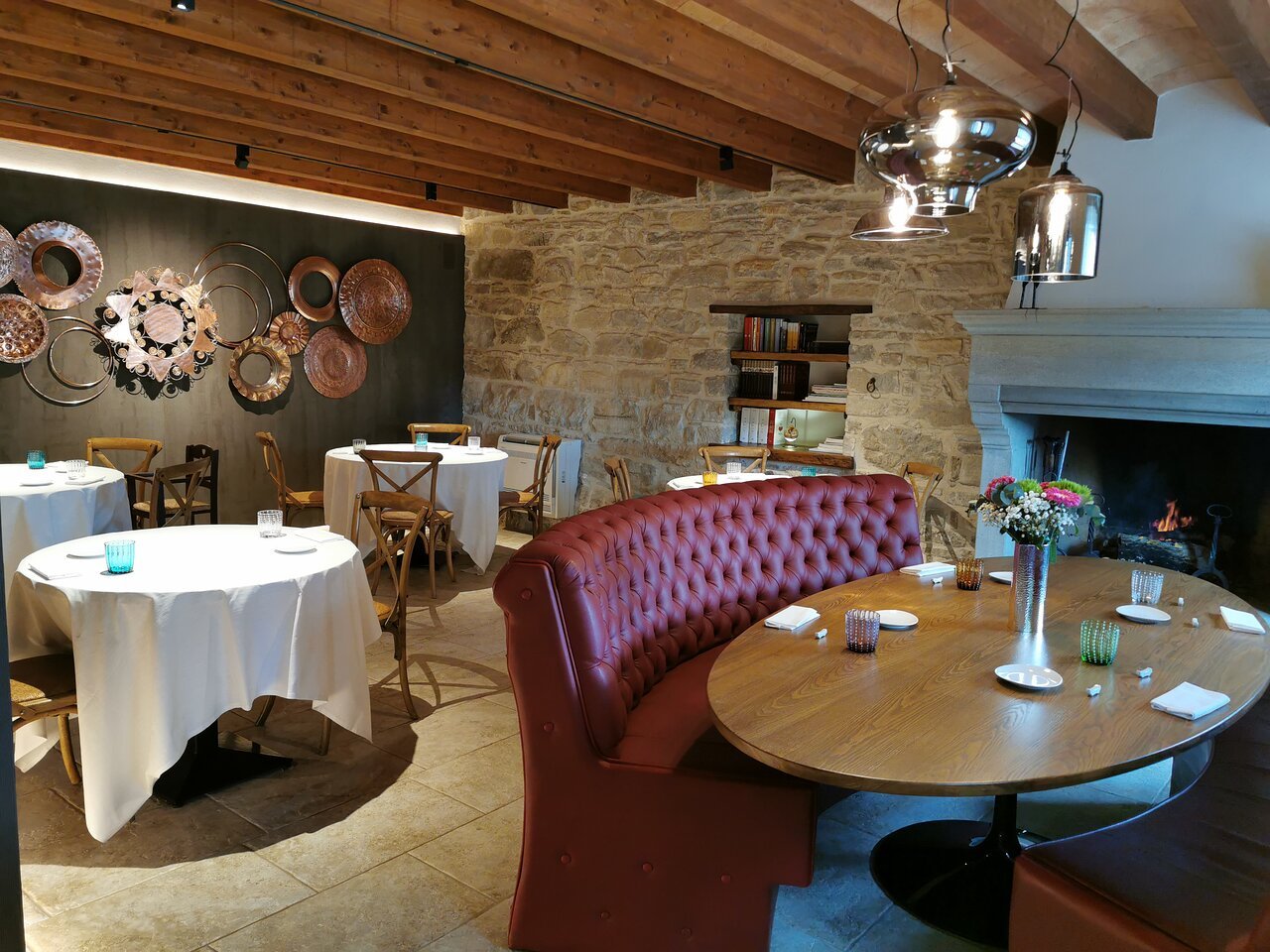
Where the Apennine Interior Meets the Plate
The Alta Molise is not a region that announces itself. The drive to Agnone through the upper Apennines passes beech forests, stone-walled fields, and the kind of agricultural steadiness that has defined this stretch of central Italy for centuries. That context is not incidental to eating at Locanda Mammì — it is the subject. Restaurants that claim a connection to local landscape are common; ones that sit physically within it, with the hills visible through the window and the ingredients traceable to those hills, are rarer. Locanda Mammì belongs to the latter category.
The address, Contrada Castelnuovo, places it outside the town centre of Agnone in the countryside proper. Arriving, the setting does the first work: the surrounding farmhouses and terraced land frame what you are about to eat before a menu is handed over. The dining room continues that logic indoors, where copper objects on display and an open fireplace draw the aesthetic directly from the material culture of the Molisan rural interior. This is not a restaurant that has decorated itself with agrarian references; it is a room that reads as a continuation of the outside.
The shortlist, unlocked.
Hard-to-book tables, cellar releases, and concierge-planned trips.
Get Exclusive Access →The Sourcing Logic Behind Modern Molisan Cooking
Molise is Italy's second-smallest region and one of its least discussed in mainstream food publishing. That marginality has a practical consequence for the cooking here: the ingredients in circulation are deeply local by default. The regional food traditions of the Alta Molise rely on lamb, pork, foraged herbs, pulses, and the particular cheeses — caciocavallo, scamorza , that have been produced in these mountains for generations. There is no broad tourist market to dilute the supply chain toward safer, more generic produce. What grows and is raised here is what gets used.
Chef Stefania Di Pasquo works within that supply reality but does not treat it as a constraint. The approach, described as applying a personalised and modern touch to regional ingredients, positions the cooking in a recognisable Italian category: the chef who trained on or absorbed classical technique and redirects it toward hyper-local produce rather than imported prestige ingredients. This is a different project from the headline restaurants of the Italian north. Osteria Francescana in Modena, Enoteca Pinchiorri in Florence, and Enrico Bartolini in Milan operate in cities with deep-pocketed domestic and international audiences and pantries that pull from across Italy and beyond. Locanda Mammì's premise is the opposite: the source territory is small and fixed, and the kitchen works with that specificity rather than against it.
That sourcing logic also aligns Locanda Mammì with a group of Italian destination restaurants where geography is the point. Reale in Castel di Sangro is the most prominent example from the neighbouring Abruzzo, where Niko Romito has spent years making a case for the interior Apennine pantry as a fine-dining foundation. Atelier Moessmer Norbert Niederkofler in Brunico does something comparable in the Alto Adige, with a strict regional sourcing philosophy at a higher price tier. Locanda Mammì operates at the €€ price point, which positions it as the accessible end of this tradition rather than its flagship expression, but the underlying premise , that an out-of-the-way Italian region has something specific to say through its food , is shared.
The Wine List and Why It Matters Here
Molise has a small but legitimate wine identity, anchored largely by Tintilia, an indigenous red variety that had nearly disappeared before a revival beginning in the 1990s. A wine list in Agnone that takes the region seriously involves those local producers alongside the broader Italian selection that most restaurants at this level maintain. The list at Locanda Mammì is overseen by sommelier Thomas Torsiello, and its scope extends to champagne , an indication that the ambition runs beyond a purely regional pour list. The pairing opportunity here is double-directional: you can drink Molisan Tintilia alongside dishes that come from the same hills, or you can reach into broader Italian and French selections when the dish calls for it. That flexibility is a practical expression of a thoughtful wine program rather than a statement about provenance purity.
For reference, Uliassi in Senigallia and Le Calandre in Rubano demonstrate what deeply curated wine programs look like at the three-star tier. Locanda Mammì is not competing in that bracket, but the presence of a dedicated sommelier at a €€ restaurant in a town of this size signals a seriousness about the wine dimension that is worth noting when you plan your visit.
The Room, the Stay, and How to Plan the Visit
The dining room's open fireplace is not decorative in the way that city restaurants sometimes use fireplaces , as a mood prop. In the Apennine interior, where winters are cold and the elevation is significant, a working fireplace is a practical and atmospheric fact of the room. The copper items displayed in the space connect to Agnone's documented metalworking tradition; the town has produced copper bells, most famously through the Marinelli foundry, for centuries. The room therefore carries local material history without having to manufacture it.
Guestrooms at Locanda Mammì make this a viable overnight destination, which changes the calculus of the visit. Agnone sits in the province of Isernia, roughly equidistant between the Adriatic and Tyrrhenian coasts, and the drive from either direction through the mountain interior is rewarding in its own right. The case for combining dinner and a room here is direct: the nearest concentration of comparable restaurants is not in Agnone, and leaving after a full tasting-length dinner and a wine pairing on mountain roads makes less sense than staying. For those exploring the region more broadly, our full Agnone hotels guide covers the wider accommodation picture, while our full Agnone restaurants guide maps the broader dining context in town.
Agnone rewards the kind of visitor who is interested in the Alta Molise as a place, not just as a backdrop. Those planning a longer stay can consult our full Agnone bars guide, our full Agnone wineries guide, and our full Agnone experiences guide for a fuller picture of what the area offers.
For comparison across the broader Italian fine-dining field, Dal Pescatore in Runate, Quattro Passi in Marina del Cantone, Piazza Duomo in Alba, and Casa Perbellini 12 Apostoli in Verona each represent the regional-produce-led approach in different parts of Italy, with varying price tiers and formats. Locanda Mammì's distinction is operating in a region where access to that tradition requires the journey itself.
Frequently Asked Questions
- Is Locanda Mammì good for families?
- At the €€ price point in a rural Molisan setting, the format is more suited to couples or small groups of adults looking for a sit-down dinner with serious food and wine than to families with young children.
- What should I expect atmosphere-wise at Locanda Mammì?
- The room runs warm in register: an open fireplace, copper objects drawn from Agnone's craft heritage, and countryside views through the windows. The price tier is €€, which places it well below the formal austerity of Italy's top-end addresses, and the overall tone reads as a rural trattoria that has been given genuine culinary ambition rather than a fine-dining room that has been softened with rustic props.
- What do regulars order at Locanda Mammì?
- The kitchen's stated approach centres on regional Molisan ingredients given a modern interpretation by chef Stefania Di Pasquo, so the dishes most worth seeking are those that depend on what the Alta Molise specifically produces: local lamb, indigenous pulses, and the mountain cheeses that are hard to find outside this part of the Apennines. The Michelin recognition attached to the venue confirms that the kitchen's treatment of those ingredients holds up to scrutiny.
A Quick Peer Check
These are the closest comparables we have in our database for quick context.
| Venue | Cuisine | Price | Awards | Notes |
|---|---|---|---|---|
| Locanda Mammì | €€ · Modern Cuisine, Classic Cuisine | Situated amid beautiful countryside with views of the tranquil hills and rustic… | This venue | |
| Atelier Moessmer Norbert Niederkofler | Italian, Creative | €€€€ | Michelin 3 Star | Italian, Creative, €€€€ |
| Dal Pescatore | Italian, Italian Contemporary | €€€€ | Michelin 3 Star | Italian, Italian Contemporary, €€€€ |
| Enoteca Pinchiorri | Italian - French, Italian Contemporary | €€€€ | Michelin 3 Star | Italian - French, Italian Contemporary, €€€€ |
| Enrico Bartolini | Creative | €€€€ | Michelin 3 Star | Creative, €€€€ |
| Osteria Francescana | Progressive Italian, Creative | €€€€ | Michelin 3 Star | Progressive Italian, Creative, €€€€ |
Need a table?
Our members enjoy priority alerts and concierge-led booking support for the world's most difficult tables.
Get Exclusive AccessThe shortlist, unlocked.
Hard-to-book tables, cellar releases, and concierge-planned trips.
Get Exclusive Access →