Little Alley

A Michelin Bib Gourmand recipient in Murray Hill, Little Alley delivers serious Shanghai-focused cooking at mid-range prices. Chef Yuchun Cheung's menu covers the full register of regional Chinese comfort food, from pork and crab soup dumplings to silken mapo tofu. The wood-paneled interior draws a younger, lively crowd that keeps the room energized well into the evening.
Pearl is the En Primeur Club membership app — saves, bookings, and concierge access live there. Same editors, same standards.
- Address
- 550 3rd Ave, New York, NY 10016
- Phone
- (646) 998-3976
- Website
- littlealley.nyc
 Saves & bookings on Pearl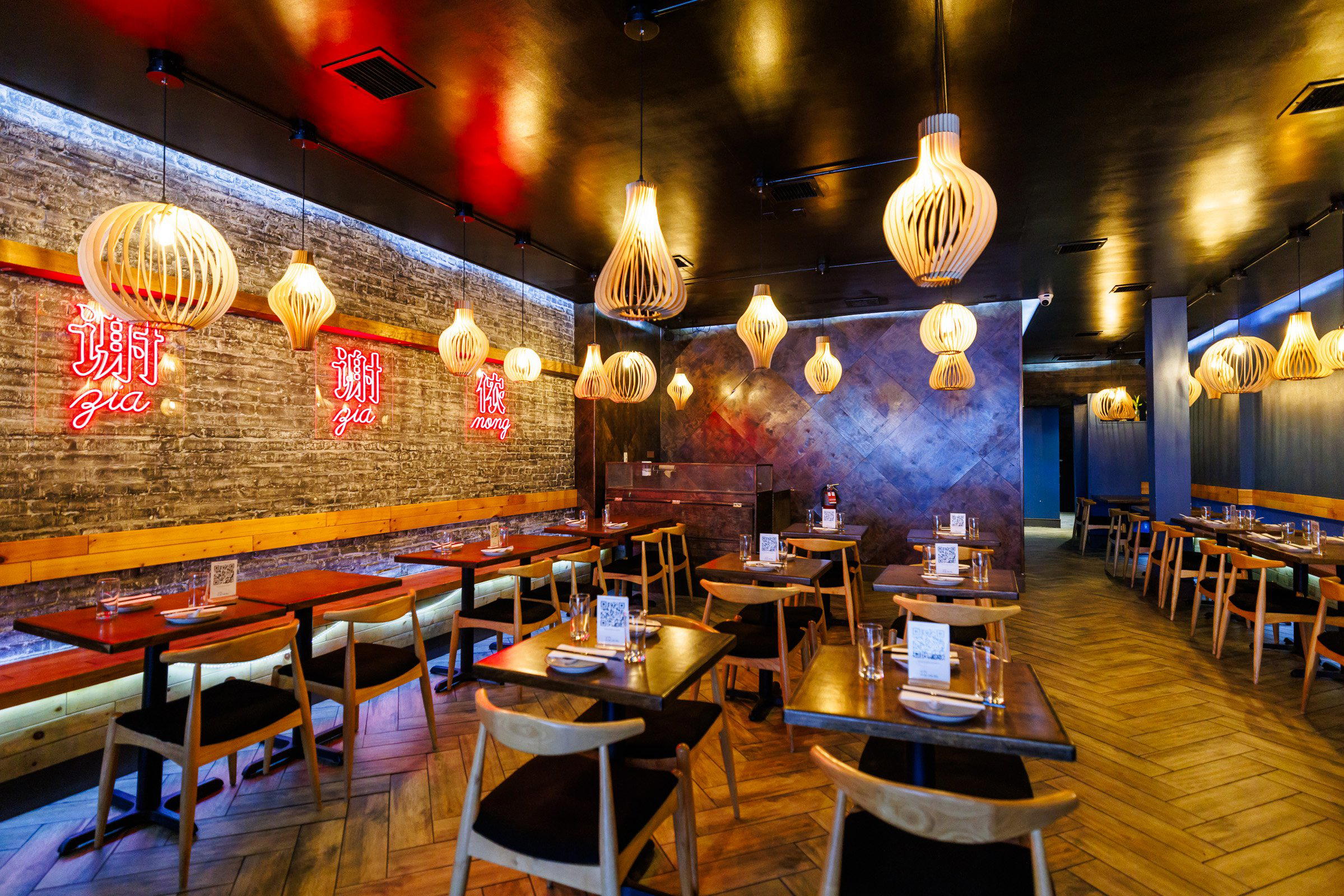
Murray Hill's Shifting Appetite for Regional Chinese
Murray Hill has never been the first neighbourhood name invoked when New York's Chinese dining conversation turns serious. That distinction typically goes to Flushing, the East Village's Sichuan corridor, or Chinatown's older Cantonese institutions. Yet the area around 3rd Avenue has quietly developed a tier of Chinese restaurants that compete on technique and ingredient quality rather than price-per-head, and Little Alley sits at the sharper end of that group. Its 2024 Michelin Bib Gourmand places it in a category that reviewers reserve for cooking worth seeking out at a price that doesn't require deliberate planning.
For context on how New York's Chinese restaurant scene stratifies, consider the distance between a $$$$ omakase counter and the neighbourhood tables that sustain a community over decades. Little Alley occupies neither extreme. It operates in the middle register where the Bib Gourmand tends to concentrate: committed cooking, a legible menu with clear regional roots, and a room that works for both a quick weeknight dinner and a slower weekend meal. Comparable positioning appears at venues like Alley 41 and Blue Willow, though Little Alley's Shanghai emphasis gives it a distinct lane.
The Room at Different Hours
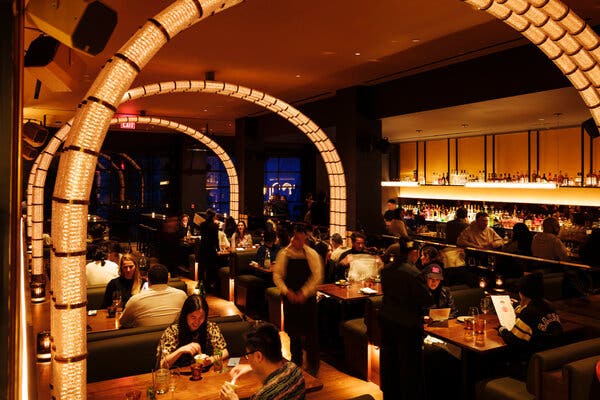
The interior logic at 550 3rd Ave is worth noting before considering the menu, because the room performs differently depending on when you arrive. Dark walls, wood furniture, and warm, low lighting create a close, settled atmosphere that suits evening eating, the kind of environment where a second round of dumplings gets ordered without much negotiation. A small bar near the entrance softens the boundary between waiting and starting, which matters in a neighbourhood where street-level dining tends to be more transactional.
The evening hours attract a younger crowd that raises the ambient energy without tipping into noise that crowds the conversation. That demographic is worth noting editorially: Shanghai-rooted cooking in this price tier often skews toward older regulars or family groups. The fact that Little Alley draws a younger room suggests it has found a way to present traditional regional cooking as contemporary without diluting the technique. That's not a trivial achievement in a city where Chinese restaurants are frequently asked to choose between authenticity and accessibility.
Daytime service operates in a different register entirely. The same dark interior that reads as cozy at 8pm reads as a lunch retreat at midday, quieter, less performative, better suited to a focused solo meal or a working lunch where the food takes full attention. The Shanghai vegetable-forward menu lends itself to lighter daytime eating in a way that a Cantonese roast duck operation or a late-night Sichuan spot does not. A meal built around stir-fried cauliflower with dry chili and a bowl of soup dumplings lands differently at noon than at dinner, and the kitchen's technical range supports both approaches without requiring a separate menu.
What the Shanghai Focus Means on the Plate
Shanghai cooking operates on different principles than the Sichuan and Hunan styles that dominate New York's recent Chinese dining conversation. Where Chongqing and Sichuan traditions reach for numbing heat and aggressive spice layering, as at Chongqing Lao Zao, the Shanghai register tends toward sweetness, braising, and delicate savory balance. Soup dumplings, cold appetizers, and seafood preparations that reward restraint define the tradition.
Chef Bob McDonough's menu at the restaurant works within that framework while covering enough range to satisfy a table with varied preferences. The pork and crab soup dumplings are neatly constructed and self-contained, a distinction that signals technical precision over theatrical effect. The mapo tofu delivers custardy, silken texture alongside its spice rather than using spice to substitute for textural care, which places it above the standard version served at most mid-range Chinese restaurants in the city.
The crispy eel is the dish that tends to hold tables, sweet, glossy, and compulsively edible in the way that well-executed Shanghai preparations often are. Stir-fried cauliflower with dry chili carries what Michelin characterizes as bright, numbing heat: a Sichuan-inflected flourish that sits comfortably alongside the predominantly Shanghai-rooted menu without creating a tonal contradiction. The menu's structure rewards the kind of ordering that mixes cold appetizers, vegetable dishes, and one or two dumplings over multiple shared rounds rather than a conventional single-dish per person approach.
For comparison across the Chinese dining spectrum in New York, Big Wong in Chinatown anchors the Cantonese comfort end, while Asian Jewel Seafood Restaurant represents the banquet-format seafood tradition. The restaurant occupies a different position: smaller in scale, more focused in regional identity, and oriented toward the kind of meal that rewards attention to individual dishes rather than table-wide abundance.
The Shanghai-focused model also invites comparison beyond New York. Mister Jiu's in San Francisco takes a different approach to Chinese regional cooking in a Western urban context, more architecturally modern, more explicitly fusion-inflected, and priced well above the Bib Gourmand tier. Restaurant Tim Raue in Berlin represents an even further departure, applying European fine-dining logic to Chinese-influenced cuisine. The restaurant sits closer to the tradition-rooted end of that spectrum, treating Shanghai cooking as a sufficient framework rather than a starting point for reinvention.
How It Compares to Its Neighbourhood Tier
New York's Chinese dining scene at the $$ price point is large enough that Michelin recognition functions as meaningful signal rather than courtesy. The Bib Gourmand is not awarded to restaurants that do adequate work at fair prices; it identifies kitchens where the cooking clears a distinct quality bar. In Murray Hill, where the default dining options skew toward delivery-optimized pan-Asian and mid-range American, that bar matters. The restaurant earns its position in the neighbourhood's dining hierarchy not by default but by delivering Shanghai cooking that competes on the merits with venues in more celebrated Chinese dining corridors.
4 across 931 ratings, a score that reflects sustained, cross-demographic satisfaction rather than a spike from a single wave of press attention. The volume of reviews also suggests a regular local clientele rather than tourist traffic, which is consistent with a Murray Hill address and a price point that supports repeat visits.
For reference points at the other end of the city's dining spectrum, Alinea in Chicago, The French Laundry in Napa, Lazy Bear in San Francisco, Single Thread Farm in Healdsburg, Providence in Los Angeles, and Emeril's in New Orleans illustrate where tasting-menu formats and $$$$ price tiers take a different category of dining.
Practical Planning
The restaurant is located at 550 3rd Avenue, Murray Hill, New York, NY 10016. Pricing sits in the $$ range, consistent with the Bib Gourmand tier. The room's design, with dark walls, warm lighting, and a front bar, suits evening meals. Chef Bob McDonough leads the kitchen.4 from 931 reviews. Michelin Bib Gourmand, 2024.
What Should I Eat at Little Alley?
The menu rewards a shared ordering approach that runs across cold appetizers, vegetable dishes, and dumplings rather than single-plate per-person ordering. The pork and crab soup dumplings and mapo tofu are the dishes that draw consistent attention from Michelin and regular reviewers alike. The crispy eel, a Shanghai-style preparation with a sweet glaze and crunchy texture, functions as a table-holding dish that tends to disappear quickly. Stir-fried cauliflower with dry chili offers a Sichuan-inflected contrast to the predominantly Shanghai register. A meal built primarily around appetizers and vegetable dishes holds up as a complete, satisfying experience without requiring the full menu, a useful framing for smaller groups or solo diners.
A Tight Comparison
Comparable venues nearby, for context on price, style, and recognition.
| Venue | Cuisine | Price | Notes |
|---|---|---|---|
| Little AlleyThis venue — the venue you are viewing | Chinese | $$ | Not listed |
| Chuan Tian Xia | Not listed | $$ | Sunset Park (Central), Authentic Sichuan |
| Hupo | Not listed | $$ | Long Island City-Hunters Point, Modern Sichuan Chinese |
| Szechuan Gourmet | Midtown-Times Square, Authentic Szechuan | $$ | Not listed |
| Peppercorn Station | Paulus Hook, Contemporary Szechuan | $$ | Not listed |
| MáLà Project | East Village, Sichuan Dry Pot | $$ | Not listed |
Recognition history
Dated appearances from independent guides and award organizations, with the underlying list record or original source where available.
Michelin Bib Gourmand
Michelin
Michelin Bib Gourmand
Michelin
Continue exploring
More in New York City
Restaurants in New York City
Browse all →
Bars in New York City
Browse all →

Hotels in New York City
Browse all →
Wineries in New York City
Browse all →


At a Glance
- Cozy
- Lively
- Intimate
- Family
- Group Dining
- Business Dinner
- Casual Hangout
- Open Kitchen
- Craft Cocktails
Current opening hours
- Monday
- 11 AM–2:45 PM, 5–9:15 PM
- Tuesday
- 11 AM–2:45 PM, 5–9:15 PM
- Wednesday
- 11 AM–2:45 PM, 5–9:15 PM
- Thursday
- 11 AM–2:45 PM, 5–9:15 PM
- Friday
- 11 AM–2:45 PM, 5–9:45 PM
- Saturday
- 11 AM–2:45 PM, 5–9:45 PM
- Sunday
- 11 AM–2:45 PM, 5–9:15 PM
Hours can change for holidays and private events. Last verified .
Cozy lighting with wood furniture, dark walls, and a small bar creating an intimate yet lively atmosphere popular with younger crowds.